


Farming
Gove’s Oxford speech sparks debate on farming’s future


DEFRA Secretary Michael Gove used a keynote speech to the Oxford Farming Conference to say that if UK agriculture does not embrace change we will be left behind, and Brexit offers the opportunity to shape that change and how we meet the challenges ahead.
SUBSIDIES CONTINUE TO 2024
Mr Gove guaranteed farmers the same level of subsidy until 2024, but said that CAP was created for a post-war world which is no longer relevant.
He said: “Paying land owners for the amount of agricultural land they have is unjust, inefficient and drives perverse outcomes. Indeed, perversely, it rewards farmers for sticking to methods of production that are resource-inefficient.”
In his paper, Farming for the Next Generation, as well as moving away from subsidies, Mr Gove’s proposals for future agricultural policy are based on incentivising innovation and giving the farmers the tools they need to progress, maintaining the UK’s reputation for quality food and high welfare, and building on natural capital to sustain the countryside for the future. He is also aware of the Government’s responsibility to public health.

Mr Gove told his audience: “I want to ensure we develop a coherent policy on food – integrating the needs of agriculture businesses, other enterprises, consumers, public health and the environment.
“I want to develop a new method of providing financial support for farmers which moves away from subsidies for inefficiency to public money for public goods.
“I want to give farmers and land managers time and the tools to adapt to the future, so we avoid a precipitate cliff edge but also prepare properly for the changes which are coming.
“And I want to ensure that we build natural capital thinking into our approach towards land use and management so we develop a truly sustainable future for our countryside.”
Addressing both the pace of demographic change and the challenges posed by Brexit, Mr Gove said: “We can’t stop change coming, we simply leave ourselves less equipped to deal with the change. There is a tremendous opportunity for productivity in our farms. We have some of the best performing farms in the world and there is no reason why our farmers cannot lead the way in achieving better levels of productivity throughout adoption of best practice and new technologies.”
Touching on the vexed issue of migrant labour’s importance to farming, Mr Gove suggested that seasonal labour would still be easily available and looked to a future where labour-intensive farming was replaced by as yet undefined new technology.
The government now proposes to keep similar payments to the BPS available until 2024. The current EU payments may well end at the end of 2020 to tie in with the EU budget, and Mr Gove suggested that area-based support payments would be phased out over a longer period after that, but “we won’t perpetuate that forever”.

‘PERVERSE’ SUBSIDY SYSTEM BENEFITS THE WEALTHY
Responding to Michael Gove’s speech, Professor Ian Bateman, Director of the Land, Environment, Economics and Policy Institute (LEEP), at the University of Exeter, said: “Michael Gove’s reaffirmation that the public money supporting farm subsidies should be spent on delivering public goods is to be welcomed; if this is carried through then he will deserve to be congratulated on breaking more than four decades of failure in agricultural policy. But it is disappointing to see that the system of paying most subsidies on a per acre basis is going to carry on for several years.
“At present 75% of public subsidies go to just 25% of farms; the largest farms in the country. This rewards multi-millionaire estate owners while other farmers remain in poverty. I have no problem with large farms getting payments if they produce high levels of public goods; but to get these payments just because they are large is perverse. It’s good to hear that this scheme may be capped, but it needs to end.”
INCENTIVES SHOULD TARGET ANIMAL WELFARE
RSPCA head of public affairs David Bowles said: “Paying farmers to achieve high animal welfare standards is a no-brainer. Farm subsidies targeted at animal welfare will be good for new trade deals, good for consumers and good for the animals.
“If post-Brexit farm support schemes include ring-fenced incentives for farmers to improve animal welfare, the government’s laudable ambitions for the UK to produce the highest quality food will be met. This, coupled with Environment Secretary Michael Gove’s newly announced comprehensive food labelling system which includes, amongst other things, indicators on animal welfare standards, would be the icing on the cake.
“As the UK leaves the EU and nationalises the farming support system this presents us with a once-in-a-generation chance to radically transform the Common Agricultural Policy (CAP) into a British policy for humane animal and sustainable land management.
“If we get it right now, the UK’s food quality can become the world’s gold standard – and that can only happen with the highest possible animal welfare.”
The RSPCA also welcomed Environment Secretary Michael Gove’s commitment to a much more comprehensive food labelling system that measures how a farmer or food producer performs against a number of indicators, including animal welfare.
ENVIRONMENTAL INCENTIVES WELCOMED
Helen Browning, CEO of the Soil Association said: “We warmly welcome the move towards an agricultural policy that prioritises environmental protection and the new emphasis on the vital links between food, farming and public health. The clear timetable provides much-needed certainty for farmers, whilst the commitments on public procurement and better labelling are important for food producers and consumers alike. We now need to see more detail on how farmers will be enabled and encouraged to shift to higher animal welfare systems, move away from synthetic pesticides, restore degraded soils and improve water quality.
“We don’t see these proposals as leading to a reduction in UK food production – but rather about a fundamental shift in how we produce food so that farming systems are truly sustainable. In many areas, we want to see more domestic production to meet demand, especially fruit and vegetables and organic.
“The greatest test of this transition is whether the UK’s food and farming system measures up to the monumental challenges of public health, which was highlighted in the speech, and climate change, which received just two mentions. The Government must also make an ambitious and unambiguous commitment to organic and other agro-ecological approaches which are proven to deliver on animal welfare, biodiversity, soil health and climate change – both during the transition and after 2024.”
CAP BAD FOR THE COUNTRYSIDE
Countryside Alliance Chief Executive Tim Bonner said: “Michael Gove’s speech confirmed the direction of travel for British agricultural policy post-Brexit.
“The move away from area based payments to rewards for delivering environmental and public goods is far from the revolution some have hailed, but it will be significantly accelerated by a departure from the Common Agricultural Policy.”
Mr Bonner continued: “Interestingly, just about the only thing that all sides of the Brexit argument, from the Liberal Democrats to Farming minister and Brexiteer George Eustice, seem to agree on is that CAP has been bad for the countryside, consumers and farmers. Attempts to reform the CAP have been achingly slow as the EU convoy moves only at the speed of the slowest. Brexit creates an opportunity for the UK to create our own farming policy for the first time in more than 40 years and move ahead of the pack.”
However, Tim Bonner sounded a cautionary note: “That is the good news, but there are also valid reasons for concern. There remains an inherent contradiction between agricultural productivity and protecting the environment which has not yet been addressed in detail by the Government and which goes to the heart of the big long-term question: how much will the public be willing to continue to pay for the countryside that farmers maintain?
“Under the CAP the question of farm support has been decided in Brussels and the combined weight of the European farming lobby has had a significant influence. Post Brexit levels of farm support will become a direct domestic political issue for the first time for a generation. The farm support budget will have to compete with the NHS, Defence, Education and all other areas of Government expenditure in future spending rounds. In order to maintain levels of support farmers will have to persuade the public, and through them politicians of all parties, that the public goods they provide continues to justify the money they receive from the taxpayer. This will be the greatest challenge for UK farming outside the EU.”
‘A TRIUMPH OF HOPE OVER PRACTICALITY’
TFA Chief Executive George Dunn said “We are used to having our hopes dashed of hearing a meaty Oxford Farming Conference speech from incumbents as DEFRA Secretaries of State but not this time. Like or loathe what we heard, we received a fairly firm view of future Government policy, the like of which we have not seen since Hillary Benn’s speech in 2010 in which he set out his 20 year plan to boost domestic food production. That plan fell by the wayside when Labour lost the 2010 General Election later that year and we will have to wait to see if the Gove plan survives the political choppy waters of our time.
“Disappointingly, there was a triumph of hope over practicality in the extent to which Mr Gove seems to be relying upon technological change to provide the swift answers we need to address labour shortages and the urgent need to increase farm productivity. Also on the negative side, there was nothing said specifically about the tenanted sector of agriculture, and there also continues to be too much reliance on the market being the means by which we sort out our food safety and food standards issues in a free trading environment.” said Mr Dunn.
“On the plus side there was a clear understanding of the need for a sufficient period of transition to a new policy framework. A commitment for the Government to act as a strong champion of British produce at home and abroad. A pledge to deal with market failure in the food chain and a promise that no one entering into an agri-environment scheme today will be disadvantaged when new schemes are developed for the post Brexit era,” Mr Dunn concluded.
FUW WANTS ‘MEAT ON BONES’
The Farmers’ Union of Wales described the as welcome, but says Welsh farmers remain in the dark over many important issues.
FUW President Glyn Roberts said: “We very much welcome Mr Gove’s apparent commitment to agricultural funding until 2024, and the general thrust of his speech, which described a prosperous and forward looking post-Brexit industry which is rewarded for delivering the very best in terms of food, the environment and social contributions to society.
“However, the nuts and bolts of turning such a vision into reality are where the obstacles will lie, and we look forward to seeing more meat on the bones in the long-awaited DEFRA white paper, due in the spring.”
Mr Roberts said many Welsh farmers would also be concerned that nothing was said about progress on talks between devolved regions on how devolved powers and funding might operate once we leave the legal framework of the Common Agricultural Policy (CAP).
“Wales currently has devolved powers over agricultural and rural development spending and policy, but this is within the limits laid down in the CAP framework.
“The FUW fully supports such devolved powers continuing. But, we now need to ensure that devolved powers are fully respected by all 4 nations and that we don’t see the creation of support mechanisms that benefit one nation over another. Therefore we need to develop a UK framework which ensures equivalence between producers in the four nations, which respects devolved powers and allows a degree of flexibility.”
While acknowledging that this was a difficult balance to strike, especially given political differences between devolved regions, Mr Roberts said progress was necessary.
“We currently have such a system, so it is not difficult to see how a framework could be developed which strikes a sensible balance between respecting devolved powers and avoiding the dangers of a free-for-all.”
Mr Roberts said reaching sensible agreement on spending frameworks should be a priority, in order to avoid inappropriate and unfair divergence between spending areas in devolved nations.
He also emphasised the need for Mr Gove’s vision for the future of UK agriculture to be underpinned by an acceptable post-Brexit trade deal with the EU.
“I therefore welcome his fellow speaker’s, Professor De Castro’s, confirmation of the EU’s desire to ensure tariff-free trade between the UK and EU post-Brexit,” he added.
Mr Roberts also welcomed USA Under-Secretary McKinney’s comments regarding the desire to increase agricultural trade between the UK and US, but warned that care needed to be taken to ensure any new arrangements did not compromise existing markets.
“Standards in the US are very different to those in established UK and EU markets, and we need to ensure new arrangements do not compromise or undermine established markets.”





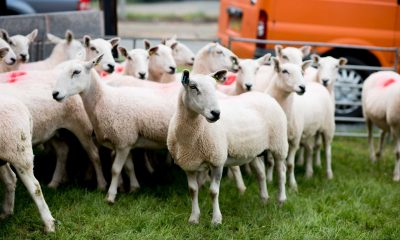








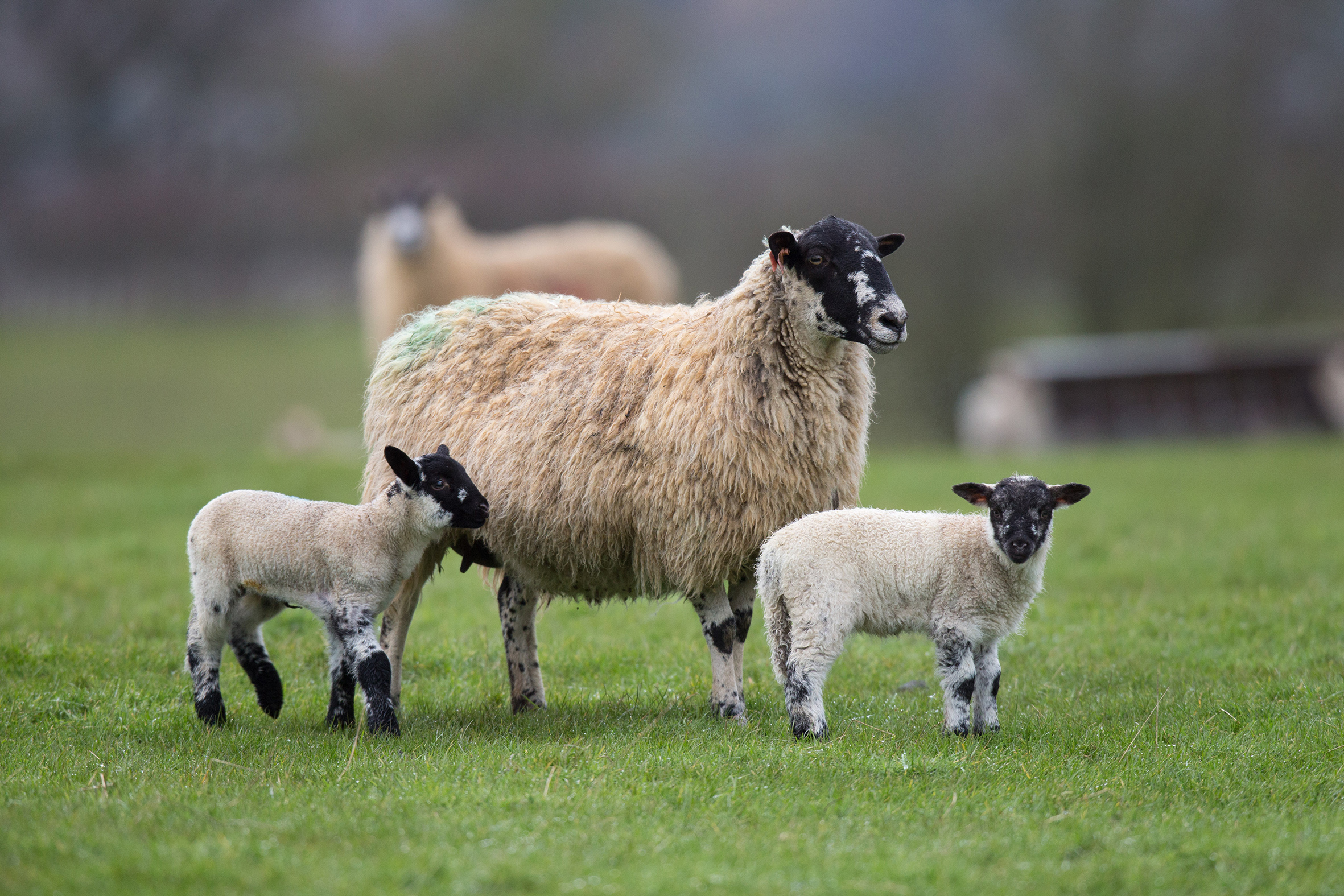
PEMBROKESHIRE sheep farmers are being urged to use weaning as a key opportunity to check ewe condition and deal with any problems before tupping.
With many local flocks now moving towards weaning, farmers are being advised to assess body condition score, as well as checking teeth, feet and udders, while there is still time to improve nutrition ahead of the breeding season.
Dr Alison Bond, Technical Services Manager at Rumenco, said close monitoring at this stage can help avoid major changes in ewe condition and improve overall flock productivity.
She said weaning at around 12 weeks was a good target, when lambs should usually be between 25kg and 30kg and taking very little milk from the ewe.
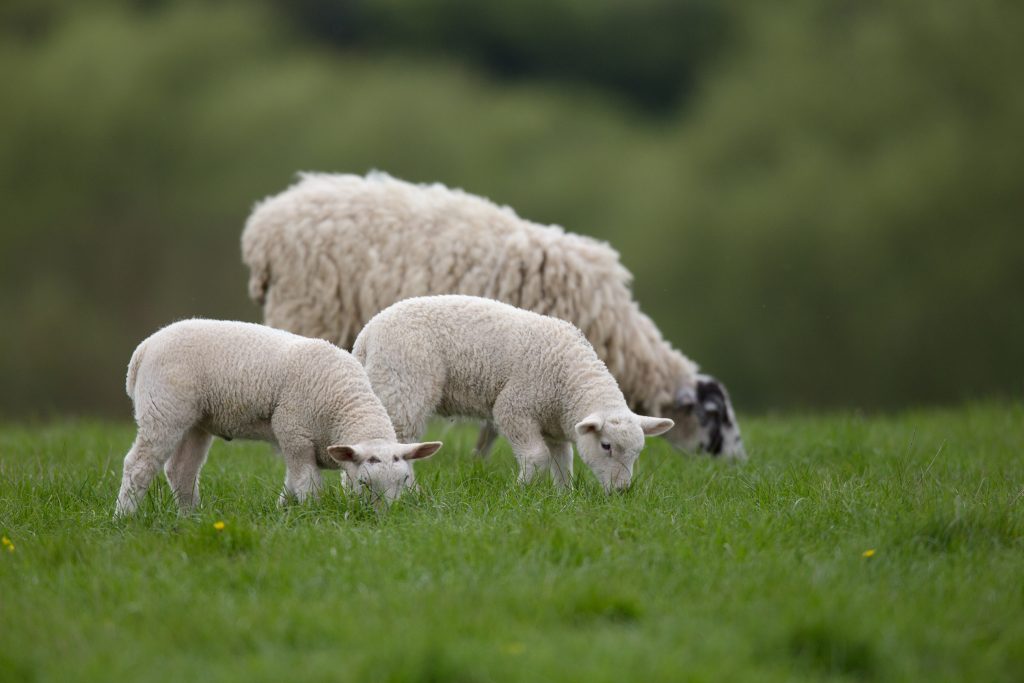
“There will of course be a focus on the lambs’ readiness for market at this stage, but it is equally important to put a hand across the ewes to assess their condition,” she said.
For lowland flocks, ewes with a body condition score below 2.5 at weaning should be given priority, as they may struggle to reach the target score of around 3.5 by tupping.
Those poorer condition ewes should be grouped separately, moved onto the best available grazing and given appropriate supplementary feeding where needed.
Dr Bond said waiting until closer to tupping could be less effective and may affect performance.
She added that ewes in good condition at tupping are more likely to scan with more lambs, produce healthier lambs after birth, and rear heavier lambs by eight weeks of age.
“It affects the whole production cycle, and not just one element,” she said.
The advice will be particularly relevant to farms across Pembrokeshire, Carmarthenshire and Ceredigion, where sheep remain a major part of the rural economy and where grass quality can vary sharply depending on weather, soil type and stocking pressure.
Dr Bond said the aim should be to keep ewes between body condition score 2.5 and 3.5 throughout the cycle, avoiding big dips and peaks.

Routine checks at weaning, she said, give farmers the best chance of correcting problems before the tups go in two to three months later.
Pic: Farmers are being urged to check ewe condition at weaning to protect flock performance ahead of tupping (Pic: Tim Scrivener/Agriphoto).
LOW UPTAKE HAS RAISED FRESH QUESTIONS OVER THE FUTURE OF SUPPORT FOR WELSH FARMERS
REFORM WALES has called for an urgent review of the Sustainable Farming Scheme after figures showed only around half of eligible farmers have signed up.
The party said the lower-than-expected uptake showed that serious concerns remained within the farming community over the complexity of the scheme, compliance rules and uncertainty about how it will operate in the long term.
Laura Anne Jones MS, Reform Wales’ Shadow Cabinet Minister for Food, Farming and Rural Affairs, raised the issue during questions to the Welsh Government.
She said: “The figures released by the Welsh Government today confirm what many farmers have been saying for some time: the Sustainable Farming Scheme is too complex, too restrictive and too bureaucratic.
“Farmers need certainty and security, not endless paperwork and rigid requirements that fail to reflect the realities of farming in Wales.
“Reform Wales believes the scheme should be reviewed as a matter of urgency, with a greater focus on flexibility, common sense and practical outcomes.
“Welsh farmers deserve a scheme that works with them, not against them.”
The Sustainable Farming Scheme is due to replace previous systems of agricultural support in Wales and has been one of the most contentious issues facing the rural sector.
Farming unions and campaigners have repeatedly warned that any new system must be practical for family farms and must not add unnecessary red tape at a time when many businesses are already under pressure from rising costs, bovine TB and market uncertainty.
Reform Wales said the Welsh Government must now explain how it intends to respond to the level of take-up and whether changes will be made before the scheme is fully rolled out.
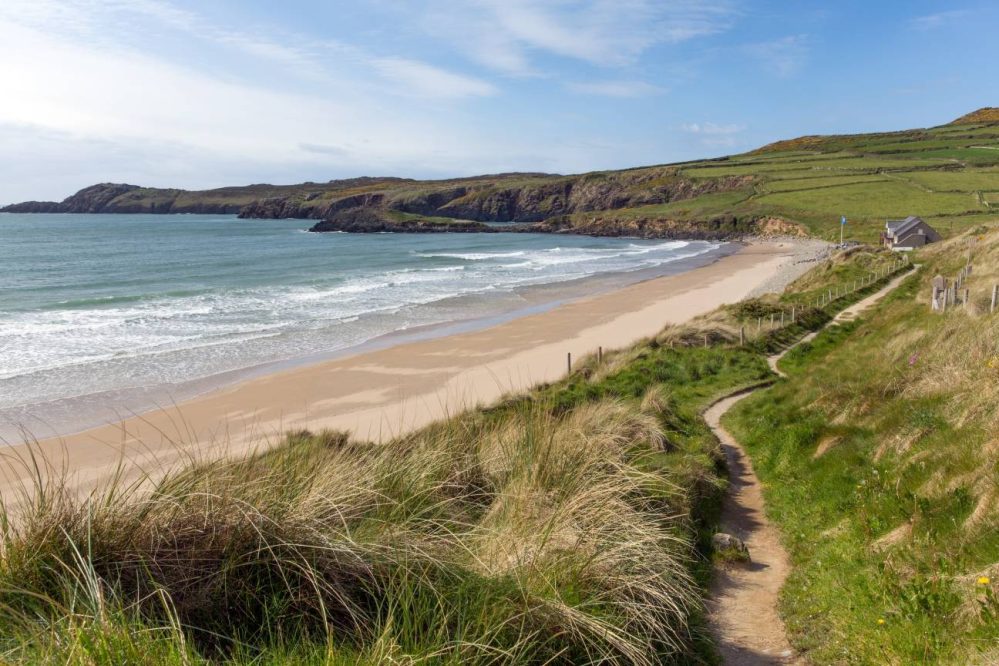
PLANS to convert historic farm buildings near north Pembrokeshire’s Whitesands beach for use as holiday accommodation have been given the go-ahead, but their use doesn’t have to be restricted to just that purpose.
In an application to Pembrokeshire Coast National Park, Matthew James of James Properties, through agent Harries Planning Design Management sought permission for the conversion of two derelict barns to two self-catering holiday accommodation units at Porthmawr Ganol, Whitesands, St Davids.
An officer report said: “The farmstead occupies a prominent position within a landscape characterised by open agricultural fields enclosed predominantly by traditional dry-stone walls, exposed coastal pasture and areas of heathland associated with Carn Llidi.”
It added: “The site lies within the Porthmawr Historic Landscape Character Area, an area recognised for its historic pattern of dispersed settlement, traditional farmsteads, dry-stone wall field boundaries and evidence of medieval and post-medieval agricultural activity.
“The retention and reuse of the existing buildings therefore has the potential to preserve an important element of the area’s historic landscape character whilst securing a viable long-term future for structures that would otherwise continue to deteriorate.”
It said that insufficient evidence had initially been submitted to demonstrate that the buildings were unsuitable for permanent residential conversion and only for self-catering accommodation and therefore an affordable housing contribution should be secured.
Policy would lead to a contribution of £36,400, the report said, but a financial viability assessment by the applicant “demonstrated that the development would not be viable if required to provide the full policy contribution,” the maximum contribution capable of being supported whilst maintaining viability was £12,641.
This reduced figure was accepted, the officer report saying: “Whilst this represents a reduced contribution when compared with the full policy requirement, the submitted viability evidence demonstrates that the development could not reasonably support the full contribution whilst remaining deliverable.
“In these circumstances, securing a reduced contribution is considered preferable to losing the opportunity to secure the restoration and beneficial reuse of the historic buildings.”
It stated that, with the affordable contribution, the scheme would not be limited to self-catering development only.
The application was conditionally approved by Park planners.



Charity10 hours ago
Toy Story fans fill charity toy box at Haverfordwest cinema
Donations pour in for SNAP Specialist Play as families embrace Toy Story 5 launch A TOY STORY-themed charity appeal at...


Community15 hours ago
Lord Rhys emerges from the mist in St Davids
Giant puppet begins historic journey marking 850 years since the first Eisteddfod MIST swirled around St Davids Cathedral on Friday...


News2 days ago
Tragic tribute paid to Haverfordwest man after A4075 collision
FAMILY REMEMBERS “KIND AND LOVING” CALLUM HANSON THE FAMILY of a 22-year-old man from Haverfordwest who died following a road...


News3 days ago
Motorcyclist, 22, dies in A4075 crash in Pembrokeshire
A 22-year-old woman remains in hospital after two-vehicle collision A MOTORCYCLIST has died following a serious two-vehicle crash on the...


Community3 days ago
Why police will be visiting every home in Pembrokeshire
New operation aims to knock on more than 257,000 doors across Dyfed-Powys over the next three years DYFED-POWYS POLICE has...


Crime3 days ago
Prisons at breaking point: MPs warn Wales is paying the price of a failing system
Frozen healthcare budgets, overcrowded jails, homelessness on release and mounting pressure on staff are undermining rehabilitation across Wales, according to...


News3 days ago
Brexit at 10: How Britain was sold a dream that cost us dearly
A decade after the referendum, the promised benefits remain hard to find while the economic costs are increasingly difficult to...


Crime3 days ago
Worcestershire man jailed after violent attack on woman in Tenby
Defendant was already serving a suspended sentence when serious assault took place A WORCESTERSHIRE man has been jailed for more...


Climate3 days ago
Offshore wind ‘could bring new generation of jobs to Milford Haven’
Pembrokeshire ports and Celtic Sea projects placed at centre of Wales’ green energy ambitions MILFORD HAVEN and Pembroke Dock could...


Community4 days ago
Police officer hailed hero after midnight sea rescue in Milford Haven
PC swam 100 metres offshore to save distressed woman heard calling for help in darkness A DYFED-POWYS POLICE officer has...
-

 Community6 days ago
Pembrokeshire Chess Club crowned Welsh champions
-

 Crime3 days ago
Milford Haven man jailed for breaching domestic violence protection order
-

 Local Government4 days ago
Security privately arranged by Mayor at Beating of the Bounds
-

 News3 days ago
Crash on Freeman’s Way causes school-run chaos across Haverfordwest
-

 Crime4 days ago
Man wanted by court after failing to attend hearing over alleged shop thefts
-
 Crime4 days ago
Man banned from roads after drink-driving offence
-

 Crime4 days ago
Man jailed after admitting strangulation and assaults
-

 Crime4 days ago
Man sentenced over stalking campaign and lock knife offence