


News
Debates continue about paedophile hunters following local conviction

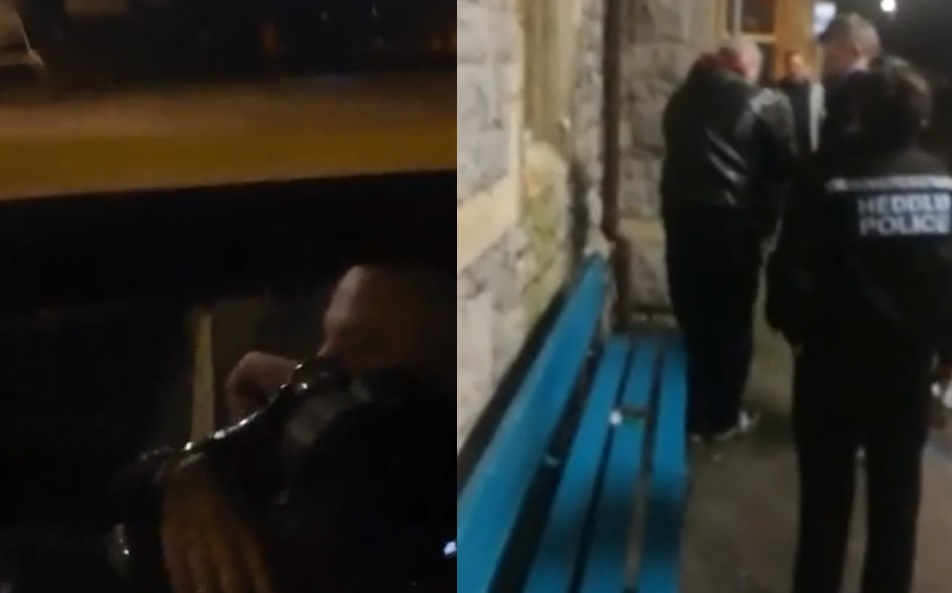
THE DEBATE rages on as to whether the police are relying too heavily on so-called paedophile hunters in investigations regarding child grooming.
In Wales, from 2015 to 2017 there were 31 cases where the police began proceedings against grooming suspects, in 19 of which, police used evidence gathered by vigilante groups.
Despite an investigation by the BBC finding that police in England and Wales used such evidence at least 150 times in 2017 – a seven-fold rise in two years, Dyfed-Powys Police have denied using evidence gathered from vigilante groups. Over the past three years, Dyfed-Powys Police recorded 82 cases, and took proceedings forward against just one person, but have not used the evidence gathered in any cases.
This comes after a man from Pembroke Dock was caught by paedophile hunter vigilante group Silent Justice, and jailed for 28 months in February. Simon Fleet, aged 43, had turned up at the town’s railway station with the aim of meeting an underage girl for sex, but instead he was met by police officers who arrested him. Fleet, of Water Street, admitted attempting to engage in sexual activity with an underage girl.
Swansea Crown Court had heard how Fleet had swapped messages with the ‘girl’ via the internet and thought he had talked her into meeting him. In fact he was exchanging messages with a group posing as children and waiting to be contacted by adults. They then try to identify those that are attempting to groom children, tracking them down and confronting them before police are called.

Judge T Mervyn Hughes warned Fleet that if the girl had existed he would have received a far longer sentence. Fleet was made the subject of a sexual harm prevention order and told to register with the police as a sex offender, both for the next 10 years.
Silent Justice are so-called ‘Child Protection Enforcers’ with a Facebook page liked by over 5,000 people, with members acting as ‘decoys’ posing as children online. They are not without controversy, removing a post from its Facebook page following the suicide of an alleged offender in Northern Ireland in August 2017.
Last year, a Cardiff judge was critical of such groups, and accused them of giving misleading evidence after the collapse of an alleged sex offender’s trial.
Judge Thomas Crowther QC had said: “This case underlines why criminal investigations should be conducted carefully, meticulously and by those who are trained and qualified to do so.”

The National Society for the Prevention of Cruelty to Children (NSPCC) has spoken out on the issue, saying that: “While we have every sympathy for people concerned about suspected abusers, we believe that identifying offenders and investigating crimes is best left to the police.
“When members of the public take the law into their own hands it can run the risk of driving offenders underground, endanger on-going police work and the legal process or result in innocent people being targeted – all of which may put more children at risk of harm.
“If someone has concerns about a child’s safety the best way they can help is to alert the police. By speaking out they may be able to help investigations and contribute vital evidence.”

The debate about paedophile hunters has recently been the focus of a Channel 4 documentary, in which filmmakers followed around a group of the vigilantes.



Licensing authorities yet to explain purpose of visit at one of the UK’s largest dog rescues
INSPECTORS have visited the premises of one of the UK’s largest dog rescue organisations, with police attending in a supporting capacity during the operation.
Dyfed-Powys Police confirmed officers were present at Many Tears Animal Rescue in Carmarthenshire on Tuesday (Mar 10) but stressed that their role was limited to preventing any breach of the peace.
The force said the visit took place without any need for police intervention, and directed enquiries about the purpose of the visit to Animal Licensing Wales, which oversees animal establishment licensing across Wales.
A spokesperson for Dyfed-Powys Police told The Herald: “Officers attended the premises in a supporting capacity only, to prevent any breach of the peace. The visit took place without any need of police involvement or intervention.”
The police statement indicates that the visit itself was led by another agency rather than being a police investigation.
The RSPCA Cymru has also confirmed it was not involved in the visit.
An RSPCA Cymru spokesperson said: “The RSPCA did not attend this premises on March 10 so did not participate in any visit that took place.”
Many Tears Animal Rescue, based near Llanelli, is one of the largest dog rescue charities operating in the UK, rehoming thousands of animals each year and receiving dogs from a range of sources including commercial breeding establishments and other rescues.
Sources have told The Herald that investigators attended the site earlier this week, though the purpose and scope of the visit has not yet been confirmed.

The Herald has contacted Animal Licensing Wales, which administers animal establishment licensing under Welsh Government regulations, to clarify whether the visit formed part of a routine inspection, a complaint-led investigation, or an enforcement action.
At the time of publication, the organisation had not yet responded.
The Herald has also approached Many Tears Animal Rescue for comment.

Animal Licensing Wales operates under the Animal Welfare (Licensing of Activities Involving Animals) (Wales) Regulations 2021, which require organisations involved in activities such as animal boarding, breeding, and rehoming to meet strict standards relating to welfare, veterinary care, record-keeping, and the management of animals on site.
Any inspection or enforcement action carried out under the regulations can result in improvement notices, licence conditions being altered, or in serious cases the suspension or revocation of a licence.
It remains unclear whether the visit to the Carmarthenshire rescue was part of a routine regulatory inspection or a response to specific concerns.
The Herald will update this story when further information becomes available.

Young performers wow audiences as Sycamore Gap sells out
THREE nights of outstanding performances from the Torch Youth Theatre culminated in a sell-out final night, with young performers from across Pembrokeshire dazzling audiences in their production of Sycamore Gap.
The show proved hugely popular, with 96% of tickets sold across the run at the Torch Theatre in Milford Haven. The production also received glowing praise from the theatre’s community and junior reviewers.
Director Tim Howe said the success of the show reflected the dedication and hard work of the young cast.
“We are so incredibly proud of our young people and everything they have achieved with this production,” he said.
“While breaking box office records with 96% of tickets sold is an incredible milestone, the greater triumph is seeing these performers gain the essential life skills that will define their future success.

“Sycamore Gap demonstrates what we at the Torch believe makes youth theatre so special. It provides a safe and creative space where young people can build friendships, grow in confidence and explore the issues that matter most to them.”
Freya, one of the Torch Theatre’s junior reviewers, said she was impressed by the standard of the performance.
“I was impressed with the singing at the beginning of the show. What a voice!” she said.
“Every actor delivered their lines as if it were a normal conversation. I didn’t even hear a single stutter or notice if anyone made an error. The skill it must take! I’d be shaking in my boots.”

The success of Sycamore Gap will be followed by one final performance at Aberystwyth Arts Centre as part of the National Theatre Connections tour.
However, the young performers will have little time to rest as preparations are already under way for their next major production.
Mr Howe explained that the Torch Youth Theatre will soon begin work on a brand-new summer show.
“Following our Aberystwyth Arts Centre performance, we move straight into our spectacular summer production, Robin Hood and the Legend of the Black Knight,” he said.
“Written specifically for our Youth Theatre, the production will see more than fifty young people take to the main house stage for a fresh retelling of the classic tale. It’s an incredibly exciting time for our performers, and we invite everyone to come along and support them.”
The story picks up ten years after Robin Hood fled into the forest. Now he has returned in search of adventure, leading audiences deep into Sherwood Forest alongside Maid Marian and a host of familiar characters.
With daring escapes, a legendary archery contest and the appearance of the mysterious Black Knight, the production promises a thrilling new take on the well-known legend as Robin and his allies stand against the tyranny of Queen Eleanor and the ruthless Sheriff of Nottingham.
Robin Hood and the Legend of the Black Knight will be performed at the Torch Theatre from Monday (July 20) to Wednesday (July 22).
Tickets are available from the Torch Theatre Box Office on 01646 695267 or online at torchtheatre.co.uk. Prices are £10, with concessions available for £8.
Image: Jasper Photography

Campaigners say mast rent reforms have damaged cooperation between operators and landowners as rural Wales continues to struggle with patchy mobile coverage
CAMPAIGNERS representing rural landowners have launched a new website aimed at gathering evidence about what they describe as a “broken mast policy”, which they say is contributing to poor mobile coverage across parts of Wales, including Pembrokeshire.
The campaign comes amid fresh analysis highlighting persistent connectivity problems in rural areas. Research by broadband intelligence firm Ookla shows that large parts of West Wales continue to lag behind the UK average for mobile download speeds. In many parts of Pembrokeshire, typical mobile data speeds are reported to sit in the mid-teens to low-twenties megabits per second, with widespread mobile “not-spots” where coverage drops out altogether.
Local residents and businesses have long complained about unreliable signal in rural parts of the county. Coastal communities, farming areas and smaller villages often struggle with patchy reception, particularly during busy tourist periods when networks come under additional strain.
Campaigners say the situation has been made worse by changes introduced under the Electronic Communications Code reforms in 2017, which significantly altered the way telecoms operators pay landowners who host mobile phone masts.
Before the reforms, landowners typically received commercial rents for hosting telecommunications infrastructure. However, the updated legislation aligned mast rents more closely with the value of the land itself rather than the commercial benefit to the operator. In many cases this has led to payments being reduced by as much as ninety per cent when existing agreements are renewed.
Landowner groups say the changes have damaged relationships between network operators and site providers, making negotiations over new sites and renewals more difficult.
A spokesperson for the campaign said the new website will allow landowners across the UK to submit evidence and case studies about how the policy has affected the rollout of mobile infrastructure.
They said: “Many rural landowners feel they have been pushed into a David versus Goliath battle with telecoms operators. The reforms drastically reduced mast rents and undermined long-standing agreements, which has damaged cooperation just at the time when better mobile connectivity is needed most.
“We are launching this platform so that landowners can record what is actually happening on the ground. Without fair relationships between site providers and operators, the rollout of modern mobile networks will continue to face unnecessary barriers.”

The campaigners argue that the breakdown in trust between operators and landowners risks slowing the expansion of mobile networks in rural areas, including the rollout of newer technologies such as 5G.
Although mobile companies say the reforms were intended to reduce the cost of infrastructure and accelerate deployment, critics argue that in practice the changes have led to legal disputes, stalled negotiations and delays to upgrades.
For counties like Pembrokeshire, where the geography is already challenging, the issue has particular significance. The county’s rugged coastline, dispersed rural settlements and areas of national park land can make it more difficult and expensive to install new masts or upgrade existing ones.
Industry and government have acknowledged the scale of the rural coverage problem. The UK Government’s Shared Rural Network programme is currently working with mobile operators to extend coverage across the countryside by upgrading existing masts and building new sites.
The programme aims to eliminate many of the UK’s so-called “partial not-spots”, where customers can only access one mobile network. However, much of the initiative is focused on expanding 4G coverage rather than directly funding widespread 5G deployment.
As a result, many rural communities are still waiting for the faster speeds and lower latency promised by next-generation mobile networks.
Local businesses say improved connectivity is increasingly essential to the county’s economy. Tourism operators rely heavily on mobile networks for bookings and contactless payments, while farmers and rural enterprises are increasingly using digital tools and connected equipment that require reliable mobile data.
Campaigners behind the new website say they hope the evidence gathered from landowners will help policymakers better understand the practical challenges facing rural connectivity.
They warn that unless the policy framework governing mast sites is reviewed, ambitions to expand mobile infrastructure across rural Britain may be harder to achieve.
Industry bodies and government officials maintain that the reforms were designed to make it easier and more affordable to deploy digital infrastructure. Landowner groups, however, insist that the changes have had unintended consequences and may ultimately slow the rollout they were meant to accelerate.
For communities across Pembrokeshire still struggling with unreliable signal, the debate over mast policy could play an important role in determining how quickly faster and more reliable mobile coverage arrives in the years ahead.



Education19 hours ago
Manorbier school closure approved while insurance claim still unresolved
Council confirms negotiations with insurer ongoing following 2022 fire PEMBROKESHIRE COUNTY COUNCIL has confirmed that negotiations with its insurer over...


Crime2 days ago
‘Knife attack’ at Spittal property leaves man in hospital
POLICE have arrested a woman following what is being described as a ‘knife attack’ at a property in Spittal on...


Community2 days ago
Pembrokeshire to receive its first banking hub in Pembroke Dock
LINK, the UK’s Cash Access and ATM network, has today announced local people and businesses in Pembroke Dock will benefit from a new banking...


Health3 days ago
Future of Withybush Hospital petition sparks urgent call for Senedd debate
CALLS have been made for an urgent debate in the Senedd over the future of services at Withybush Hospital as...

Crime4 days ago
Man jailed after threatening to chop teen’s ears off in drunken phone call
17-year-old victim said she feared for her life after a series of threats A MAN who threatened a teenage girl...


Sport4 days ago
Sean Bowen set for historic Welsh clash at Cheltenham Gold Cup
PEMBROKESHIRE jockey Sean Bowen could be part of a historic all-Welsh showdown when he lines up in the Cheltenham Gold...


Community4 days ago
Tenby still waiting as Wales hits 50 rural mobile mast upgrades
Seaside town plagued by signal congestion again absent from latest government-backed coverage improvements A NEW milestone in the UK Government’s...


Crime4 days ago
Man raped 15-year-old girl in caravan while she was on family holiday in west Wales
Jury convicts Pendine man after court hears he raped intoxicated teenager in caravan during family holiday A MAN who raped...


Community5 days ago
Crash sparks fresh questions over future of former Haverfordwest library
CONCERNS have been raised about the future of a distinctive Haverfordwest building after a car crashed into it last week,...


Community6 days ago
Councillors vote to close Ysgol Clydau despite community concerns
Petition and protests fail to prevent closure of small rural school near Tegryn PEMBROKESHIRE COUNTY COUNCIL has voted to close...
-

 Local Government2 days ago
Register now to vote in May’s Senedd election
-

 Health5 days ago
Women’s health services ‘expanding’ across mid and west Wales says Health Board
-
Community6 days ago
Councillors vote to close Ysgol Clydau despite community concerns
-

 Comment5 days ago
Manorbier deserved honesty — not false hope
-

 Entertainment7 days ago
Evening with rugby legend Shane Williams coming to Milford Haven
-

 News7 days ago
Mother’s Day treats by the coast at Milk Wood House
-

 Education7 days ago
New partnership launched to tackle Wales’ growing student support gap
-

 Charity7 days ago
RSPCA responds to Reform UK Wales manifesto on animal welfare