


Sport
Swans still sweet on Premier League survival


By Jonathan Twigg
SWANSEA’s clamber through the trials and tribulations of the Premier League can be compared to that of a child running amok in a sweet shop, so many tantalising favourites to devour, with the occasional reminder that not all sweets are sweet.
A retro walk down the Bridge Meadow Lane would have taken a child past the shop run by Connie Clarke, renowned for her welcome on the bell clanging. Supporters of Haverfordwest County and their opponents on match day, welcomed with few words but with the knowledge her confectionary delights never failed to deliver.
Following Saturday’s (Apr 14) 1-1 draw with Everton, who arrived without former Swans stars Ashley Williams and Gylfi Sigurdsson in their line-up, supporters left knowing the sweet taste of success held by the Premier League is still within their grasp.
With two of the bottom three to visit the Liberty in the final week of the season this point is one gained in search of extending their Premier League status to an eighth season, although manager Carlos Carvalhal nearly led his side to five consecutive home wins, something no other manager has done since the heady days of John Toshack in 1981.

Swansea welcomed Jordan Ayew back from a three game suspension to partner elder brother Andre as Bolton based referee Lee Mason began the game in front of 20,933, the returning brother setting the tone alongside Andy King at a sun drenched Liberty Stadium.
Carvalhal has worked some magic since his arrival on the cusp of Christmas, tactically leaving opposite number former England supremo Sam Allerdyce to venture to the touchline with his pocket ball side kick Sammy Lee to stem the tide; the blues were overrun in midfield, Jordan Ayew having a wonderful chance cleared off the line as was captain Frederico Fernadez header from the resultant corner, before Andre’s sight of goal was saved by England goalkeeper Jordan Pickford.
Alfie Mawson has grown to be imperial at the back for the Swans, attracting the interest of Manchester United, one of those mints that the longer you savour, the better it lingers. Luciano Narsingh however can be likened more to a quickly dissolving peppermint cream, releasing the taste with speed, rousing the Jack Army with an immediate hit, succulent whilst it lasts, inspiring the Swans to drive forward.
Former England captain Wayne Rooney had one of those games, like an aniseed ball, many unable to relish his taste as he left his mark, literally with some raking tackles; his class, undoubted, when it finally came to the fore.

An opening goal came with the aid of goal line technology, just before half time, Lucas Fabianski brilliantly making a double save from Bolasie, before a ricochet off Kyle Naughton and a half time lead, Fabianski thankfully however saving from Cenk Tosun a minute later.
Jordan became the first recipient of a yellow card in the second half, substitute Nathan Dyer creating a stir as the game went up by a level with a sugar surge, the vocal chords tingled with honey from a locket, in the form of striker Tammy Abraham’s arrival.
Full backs McNaughton and Martin Olsson created chances, Tom Carroll serving buckets of sweet balls, to no avail; Dyer driving forward over from twenty yards, Abraham and the Ayews creating half chances, Mawson’s header cleared off the line before the full quarter was served, Jordan levelling the game with a right foot half volley.

The final fifteen minutes rocked the stadium once more, after dinner mints were all Swansea’s, although Seamus Coleman thundered a shot against the woodwork, Abraham missed a gilt edged opportunity at the other end, whilst a tall and well positioned defensive wall directed Rooney’s set piece opportunity over the bar.
Extra strong mints were needed, alas unavailable as the toffees held firm, not fudging their lines with Beni Baningime taking a yellow card for the team, the games conclusion seeing a share of the spoils.
Carvalhal’s magic stars will have to be at their best to out fox and unwrap three points on Sunday (Apr 22) when opponents Manchester City will have champagne liquor chocolates on hand, having been crowned Premier League champions.
Swansea then have the opportunity to welcome Chelsea to ‘fortress’ Liberty the week after; wispa it quietly, as many have their eyes on the final weeks’ trio of games, starting with a trip to the South Coast in search of the bounty available at Dean Park, Bournemouth, before a starburst performance at home to Southampton on the Tuesday and Stoke City for a final day picnic. There can be no wine gums on show, just the everlasting gobstopper which is Premier League football.













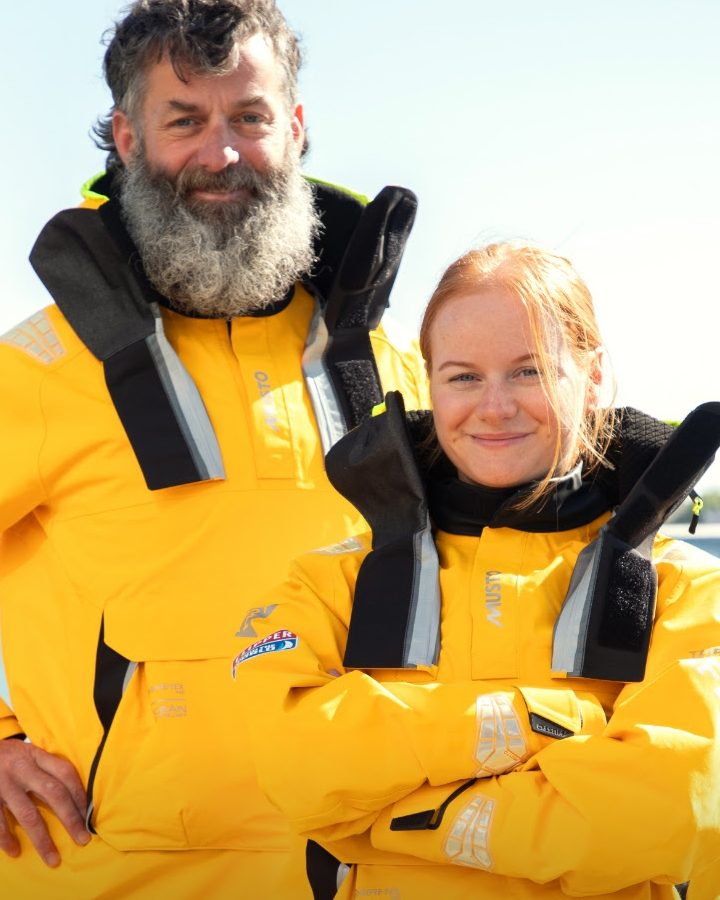
Lou Boorman celebrates home port win in round-the-world yacht race
A HAVERFORDWEST-born sailor has led her team to a landmark victory on the global stage, winning a major leg of the Clipper Round the World Yacht Race as it arrived in South Korea.
Lou Boorman, aged 23, skippered Team Tongyeong to first place as the fleet sailed into the Korean port city this week (Mar 16), marking a historic moment for the race.
The win is particularly significant as it is the first time the round-the-world event has ever stopped in Korea – and the home team claimed the top spot.
Speaking from the yacht after crossing the finish line, Lou said: “We did it, we performed under the pressure! To get a win into our home port, I can die happy!”

From Pembrokeshire to the world stage
Lou, who grew up in Haverfordwest, has quickly risen through the ranks of competitive sailing. Before taking on the challenge of leading a Clipper Race team, she had already secured titles as British, Irish and Welsh Female Champion.

Now skippering one of the race’s international teams, she is responsible not only for navigation and strategy, but also for leading a diverse crew – many of whom had never sailed before joining the race.
The Clipper Race is one of the toughest endurance challenges in sport, covering 40,000 nautical miles over eleven months, with crews facing extreme weather conditions ranging from freezing Pacific crossings to equatorial heat.

High-stakes gamble pays off
Team Tongyeong took a major risk during this stage, playing its ‘Joker’ card – a race tactic that doubles points if successful.
The gamble paid off, earning the team maximum points and securing their place at the top of the leaderboard.

Lou said: “We’ve worked really hard and put a lot of pressure on ourselves. Going into our home port there is a lot of pressure to perform, and we added to that pressure by playing our Joker – and we got twenty points, so I’m very proud of the team.”
This marks the team’s second win in recent stages, building momentum as they pass the halfway point of the global race.

Life at sea and leadership challenges
Reflecting on her journey so far, Lou highlighted the challenges of leadership as much as the physical demands of sailing.

She said: “Sometimes the sailing comes second to the people because they are the important ones. To lead them through that is one of the toughest things I’ve ever done, but it’s also one of the most rewarding.”
She added: “My favourite thing about sailing is the magic of the sea, the stars, the storms and the remoteness. I feel free and at my happiest at sea.”
Global race continues
The Clipper Race fleet will remain in Tongyeong for a week of cultural events before setting off across the North Pacific towards Seattle.
The race will later visit Panama, Washington DC, and Oban before returning to Portsmouth this summer, completing a full circumnavigation of the globe.
For Pembrokeshire, Lou’s achievement puts a local name firmly on the world sailing map – and highlights the global reach of talent from West Wales.
Six-week beginner programme offers affordable route into the sport
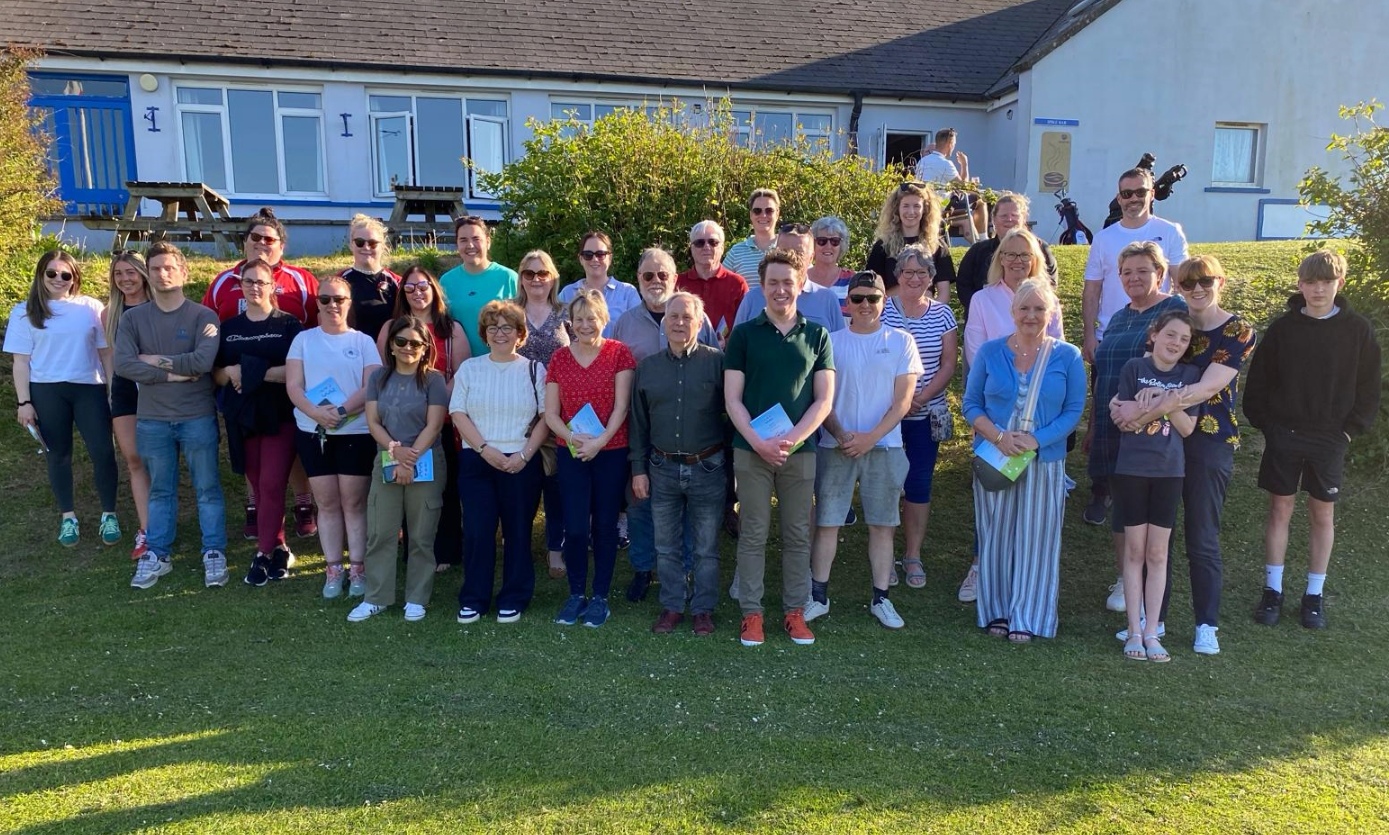
SOUTH PEMBROKESHIRE GOLF CLUB is preparing to launch its popular New2Golf scheme for 2026, with the latest intake starting on Monday (Apr 13).
Now in its eighth year at the Pembroke Dock course, the initiative offers a low-cost and welcoming introduction to golf. All equipment and professional tuition are included for a small fee, making it accessible to people of all ages and abilities – including complete beginners who have never picked up a club before.
The scheme is also ideal for those who have previously played golf and are looking to return to the game after a break.

Participants will receive coaching from qualified golf professionals at the club’s practice ground during early evening sessions over a six-week period. There will also be an option to continue with further sessions after the initial programme.
Golf provides a great opportunity to stay active, enjoy the outdoors and meet new people. As a low-impact sport, it allows players to gradually build fitness while learning new skills. Whether approached competitively or socially, it offers a relaxed and enjoyable way to spend time outdoors.

Last year’s New2Golf intake ranged in age from eight to 70, highlighting the sport’s broad appeal and accessibility.
Located in Pennar, Pembroke Dock, South Pembrokeshire Golf Club enjoys scenic views over the Haven waterway. The club has a thriving membership across junior, ladies’, men’s and seniors’ sections, and prides itself on being friendly and supportive to new players.
Members regularly help newcomers develop their skills on the course, offering guidance on rules, techniques and course play.
The clubhouse also serves as a social hub, offering home-cooked food, a bar and meeting facilities, with a busy calendar of events throughout the year.

Anyone who has ever considered taking up golf – or returning to the sport – is encouraged to get involved.
For more information or to enrol in the 2026 New2Golf scheme, contact [email protected] or visit the Wales Golf website.
New2Golf is organised and supported by Wales Golf.


Jones strike secures vital win as County stay top of play-off conference
HAVERFORDWEST County returned to winning ways on Friday (Mar 13) with a hard-fought 1-0 victory over Cardiff Metropolitan at the Ogi Bridge Meadow.
Substitute OWAIN JONES proved the difference, scoring with ten minutes remaining to seal all three points for the Bluebirds in front of a crowd of more than 500.
The result means County maintain their four-point lead at the top of the JD Cymru Premier Play-Off Conference with just four games left to play.
Slow first half
Chances were limited during a quiet opening period, with neither side able to gain control.
The game was disrupted by a lengthy 12-minute stoppage after Cardiff Met striker Lewis Rees required treatment following a collision with Panashe Makwiramiti.
When play resumed, both sides struggled to build momentum. Dylan Rees came closest for the hosts before the break, first delivering a dangerous cross that narrowly missed teammates before seeing a long-range effort drift just wide.
Cardiff Met’s best opportunity came late in the half when Dixon Kabongo fired over from inside the area.

Pressure builds after break
County looked sharper after the restart and began to apply sustained pressure.
Greg Walters saw a header deflected wide early in the second half, before the hosts had the ball in the net moments later, only for the effort to be ruled out for offside.
Dan Hawkins then forced a low save from goalkeeper Ewan Griffiths, while Walters again went close with an effort from inside the box.
With chances continuing to come and go, manager Tony Pennock turned to his bench, introducing Owain Jones and Iori Humphreys midway through the half.
Jones strikes late
The breakthrough finally came on 80 minutes.
A corner caused confusion in the Cardiff Met defence, and the ball fell kindly for JONES, who bundled it over the line from close range to send the home supporters into celebration.
The visitors pushed for an equaliser late on, but Ifan Knott was rarely troubled as County held firm through the closing stages.
The victory sees Haverfordwest County strengthen their position at the top of the Play-Off Conference as they head into the final weeks of the season.
They are back in action on Saturday (Mar 21) when they travel to Bala Town.
Cover image:
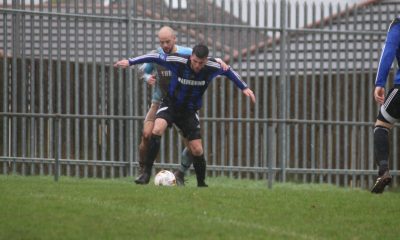
Greg Walters shifts the ball away from Cardiff Metropolitan captain CJ Craven. (Pic by Lewis Mitchell/FAW)



Education8 hours ago
Milford Haven school plans unveiled but funding not yet secured
PLANS for a new £100 million school in Milford Haven have been unveiled, but the project has not yet secured...


News9 hours ago
Council unveils plans for new state-of-the-art secondary school in Milford Haven
PEMBROKESHIRE COUNTY COUNCIL has revealed plans for a new state-of-the-art school in Milford Haven, promising modern, inspiring learning spaces for...


Health12 hours ago
NHS waiting list falls — but cancer delays and diagnostic backlog worsen
Record progress claimed by Welsh Government as critics warn key targets are still being missed THE NHS in Wales has...


Crime1 day ago
Rapist jailed after ‘abhorrent’ attacks on woman and children
Haverfordwest man told police “women won’t have sex without force” A HAVERFORDWEST man who raped a woman and a young...


News2 days ago
Reform secures first Pembrokeshire councillor in Hakin by-election win
Late Reform candidate takes seat as independent surge and Labour withdrawal shape contest REFORM UK candidate Scott Thorley has won...


News2 days ago
Scott Thorley elected as Pembrokeshire’s first Reform councillor
REFORM UK candidate Scott Thorley has won the Hakin by-election after securing 179 votes. The full result is as follows:...


News2 days ago
Police confirm man has died after being recovered from River Cleddau
Major emergency response in town centre after concerns raised for man in water A MAN has died after being recovered...


Community2 days ago
Davies and Kurtz urge groups to seek employability funding
Community organisations in Pembrokeshire encouraged to apply for new grants supporting skills and job access LOCAL Senedd Members Samuel Kurtz...


News2 days ago
Emergency services flood Haverfordwest after reports of person in river
Town centre sealed off as multi-agency response continues A MAJOR emergency response is underway in the centre of Haverfordwest after...


News2 days ago
Detectives receive surge of new information in bid to identify man found at Powys reservoir
Public response follows release of facial image as officers pursue fresh lines of enquiry DETECTIVES investigating the identity of a...
-

 Health6 days ago
Welsh Ambulance Service to host bi-monthly Board meeting
-

 News5 days ago
Rayner and Lammy visit Wales to discuss justice and community safety
-
 News5 days ago
Fishguard linked to allegations in Many Tears Animal Rescue investigation
-
News2 days ago
Emergency services flood Haverfordwest after reports of person in river
-

 Local Government5 days ago
Investigation confirmed after inspectors visit Many Tears Animal Rescue
-

 Community6 days ago
Local charity hosts cancer awareness event in Cardigan
-

 Business6 days ago
Work set to begin on £50m hydrogen plant in Milford Haven
-

 Farming7 days ago
Plea to remove decades old ‘unviable’ planning conditions from property