


Politics
Johnson’s reshuffle throws up jokers

IT WAS all about ‘The Saj’.
The shock departure of the former Chancellor from the government only a few weeks before his first Budget surprised media commentators and MPs alike.
The Chancellor of the Exchequer’s ‘did-he-fall/was-he-pushed’ resignation aside, the reshuffle was a return to the traditional way of Cabinet reshuffling Cabinet members. Out with the competent and argumentative and in with a collection of flunkies and stooges who owe everything to their loyalty to Brexit and Boris Johnson.
Julian Smith became Secretary of State for Northern Ireland in July last year. In his brief tenure in that role, he managed to re-establish the Northern Ireland Assembly and a cross-party power-sharing executive after three years of constitutional limbo during its suspension. That is the sort of signal achievement which usually leads to promotion. However, Mr Smith was an advocate of a ‘softer’ Brexit than proposed by Number Ten. He had gone so far to comment, in October last year, a no-deal Brexit would be “a very, very bad idea for Northern Ireland”.
Competent and with a record of achievement in his brief Cabinet tenure, he had to go.
His replacement is former Conservative Party Chair, Brandon Lewis. Ironically, one of the Conservative MPs who broke pairing arrangements at Mr Smith’s direction when the latter was Chief Whip.
The reaction to Julian Smith’s departure was a series of aghast tributes by all sides in Northern Ireland and Mr Lewis’ appointment greeted by the sort of ‘dangerous indifference’, Irish Taoiseach Leo Varadkar suggested was behind his predecessor’s sacking.
Mr Lewis is as loyal as a loyal thing. You tell him what to be loyal to and he’ll be loyal to it. Rather like a cushion, he bears the impression of the last backside to sit on him. He will lead the nodding dog tendency in Cabinet meetings.
The only tension in the Cabinet with him in it will be whether he or Health Secretary Matt Hancock gets the first Boris Bonio after meetings.
There weren’t only high profile departures, though. Liz Truss remains in place as Secretary of State for International Trade. No. Don’t laugh. Ms Truss’ presence at the Cabinet table is a sign of hope and a beacon to others. Her continued tenure in government is evidence that no matter how dimwitted, mediocre or out-of-their-depth a person is, this is a government of opportunity for all. Her presence shows senior backbenchers with talent, intelligence, and ability that their gifts are no substitute for those qualities’ total absence. To new Conservative MPs with room temperature IQs, her example shows that they, too, can aspire to Cabinet status.
The same might be said for Matt Hancock. The Health Secretary, who’s behaviour in the election campaign marked him out as a man to watch – preferably while he sat in a padded cell rocking to himself and murmuring the words ‘forty new hospitals’ over and over – is the only person in the country to take what the Prime Minister says at face value. The incredibly credulous Hancock has chained himself to the wheel of misfortune and will spin every disaster into a triumph with puppy-like devotion. Like a whipped dog will try to make friends with its tormentor, Matt’s loyalty is endless.
The departure of Andrea Leadsom demonstrates that even Boris Johnson thinks a joke can be taken too far. Floundering in every position she ever occupied, it is difficult to conceive that she could have been the leader of her party, and subsequently PM, barely three years ago, Ms Leadsom’s legendarily argumentative nature ushered her to the Cabinet door.
Her replacement at the Department of Business, Energy, Investment and Skills (BEIS) is Ashok Sharma. Mr Sharma’s appointment is interesting. He might be dangerously half as clever as Boris Johnson thinks he is, which means he could run rings round the PM. His ability was rewarded in a particularly cunning way. Accepting a role turned down by a former PM and a former Foreign Secretary, Mr Sharma will coordinate and chair the government’s preparations for the next round of climate change talks, due to take place in Glasgow later this year.
If the conference achieves anything, highly unlikely as the US, China and India will stall any possible progress, the praise will be the government’s and therefore Boris Johnson’s. Like the Sun King, Boris is not only a state but the state. If it all goes the well-known shape of a pear, Mr Sharma gets to take the fall. Rewarding ability with a poisoned chalice: that’s the way of government these days.
Theresa Villiers’ departure from DEFRA and her replacement with George Eustice received a cautious but warm welcome from farming unions and rural organisations. Ms Villiers’ naked enthusiasm for the benefits of free trade and blindness to the consequences of it for UK agriculture did little to instil farmer with any confidence in her to do what was best for the industry. From a farming background himself, Mr Eustice is far better placed to sell any betrayal to those farmers who, free of the EU as they wished, find their businesses going down the pan if/when imports of lower quality and lower price undercut them after December 31 this year.
The Department of Culture Media and Sport (Don’t Care Much, Seriously) has a new Secretary of State in Oliver Dowden. Mr Dowden replaces Nicky Morgan, a minister you couldn’t possibly describe as two-faced as she wouldn’t wear the one she does if she was.
Mr Dowden’s main ministerial achievement in a brief parliamentary career was his replacement by Jonny (‘Did I mention I was in the Army?’) Mercer as a junior flunky in the Cabinet Office. His task is to put into place the Government’s policy of neutering the BBC and trashing public service broadcasting. A PR man before entering parliament and – as a special advisor to David Cameron – a PR man for a PR man, Mr Dowden will have to sell the Government’s plans to dismember the BBC to the public and MPs.
The appointment that caused most comment and concern was Suella Braverman’s promotion to replace Geoffrey Cox QC as Attorney General. Brexiteers hailed Mr Cox’s independence of mind and judgement when he declined to rubber-stamp Theresa May’s proposals for an Irish Backstop as part of her doomed attempts to force a Withdrawal Agreement through Parliament. He also loudly – he doesn’t do quietly – laid into the High Court’s decision that Mr Johnson’s prorogation of Parliament was unlawful. However, Mr Cox is also a person with a deep and abiding respect for the rule of law and the need for courts to act as a check and balance on poorly-made and ill-considered legislation. The growth of Judicial Reviews of governments’ laws can be partly laid at the door of those who prepare legislative measures in haste and then repent at leisure as the Court’s painstakingly explain why they are unenforceable or unlawful. Whatever his flaws as a Government minister, Geoffrey Cox is a proper lawyer with a keen understanding that bad laws and incompetently-prepared legislation are properly subjected to scrutiny by the Courts.
Suella Braverman has no such scruples. An advocate of increasing political vetting of judicial appointments, she also has no evident skills as either an advocate for sound law and sound law-making.
The role of the Attorney General is to advise the government, as impartially as possible in the circumstances, on a range of legal issues arising from its planned legislative programme. Ms Braverman’s appointment is a sign that what Boris Johnson wants most from his law officers is a nodding-dog approach, a readiness to sign-off on any crackpot plan, and knifing the Courts for doing their job properly in a plural democracy in which an overmighty executive needs curbing.
The most rabid of Brexiteers and an appalling media performer whose backside she often confuses with her humerus, Suella Braveman cannot be relied upon to do what’s right but can be relied upon to do what Boris Johnson tells her is right. Otherwise, her main qualification for her new role seems to be the gift of forgetting that she studied at the Sorbonne under the Erasmus programme and had her post-graduate studies in Paris funded by the French embassy. In other words, precisely the sort of exposure to continental education and cultural enrichment this Government is dedicated to ending.
And finally, we come to the new Chancellor. Rishi Sunak’s rise to power is proof that enormous personal wealth, a background as a merchant banker and having a job working for his indescribably wealthy father-in-law. All that might be unfair to Mr Sunak; however, replacing state-educated Sajid Javid with a privileged alumnus of Winchester could be easily interpreted as an attempt to broaden the government’s appeal to distressed billionaires.
Mr Javid’s loaded remarks around the circumstances of his dismissal, ‘no self-respecting minister would continue to serve’ (if ordered to sack his entire team of ministerial advisors) suggests Mr Sunak’s self-respect is in inverse proportion to his self-regard. It is also a sign that Mr Johnson has restored the long-forgotten tradition of the Exchequer as a money chest at the beck-and-call of a prime-ministerial whim. Mr Sunak’s one advantage is that he can scarcely be sacked after the manner of his predecessor’s leaving. At least for as long as he does what he’s told.
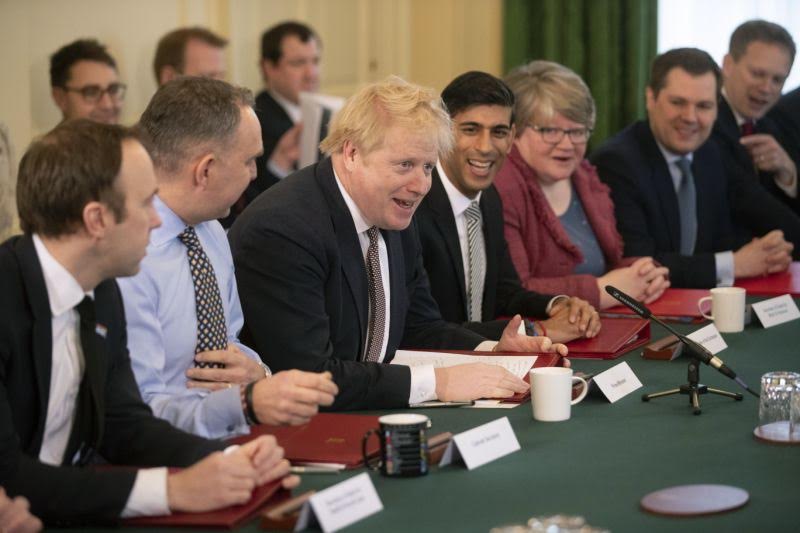
The cringe-worthy sight of Mr Johnson’s new Cabinet at its first meeting playing call and response with the class bully suggests that Boris Johnson now has a team he wants. More-or-less malleable office-holders who will do as they are told. Taking back control, it turns out, means an uncontrollable PM.


WELSH LABOUR has called on the Plaid Cymru Government to set out whether it will act on a Senedd vote backing the creation of a new negotiating body for school support staff.
The proposed School Support Staff Negotiating Body would provide a national forum for discussing pay, terms and conditions for workers such as teaching assistants, caretakers, cleaners, cooks, administrative staff and lunchtime supervisors.
Supporters say the body is needed to address long-standing inconsistencies in pay and conditions across Wales, including concerns over term-time-only contracts, limited career progression and the lack of a dedicated national bargaining structure for non-teaching school staff.
The issue was raised in the Senedd by Welsh Labour’s Huw Thomas following the passing of an Opposition Day motion last week. The motion, tabled by Labour, secured cross-party support and called for progress on establishing a Welsh SSSNB.
During questions to the Cabinet Minister for Effectiveness and the Constitution, Mr Thomas pressed the Welsh Government on whether work had begun on legislation.

He asked: “Can you confirm that as the Cabinet Minister responsible for the legislative agenda, you are respecting the Senedd’s wishes and have begun preparing legislation for a School Support Staff Negotiating Body?”
Welsh Labour says the proposal would bring Wales into line with England, where legislation has already been taken forward to create a School Support Staff Negotiating Body for workers in state-funded schools.
The policy was also a Welsh Labour manifesto pledge and has been backed by trade unions including UNISON and GMB, which have campaigned for better recognition, fairer pay and clearer career structures for school support staff.
Labour argues that support staff play a vital role in the day-to-day running of schools and in supporting pupils’ learning, wellbeing and safety, but that their pay and conditions have not always reflected the importance of their work.
Mr Thomas, Welsh Labour’s spokesperson for Finance, Democracy, Citizenship and the Welsh Language, also pressed ministers for assurances that manifesto commitments would appear in the Programme for Government in the form originally promised.
Labour said the Plaid Cymru Cabinet Minister declined to give an unambiguous commitment that all manifesto pledges would be carried forward.
However, Opposition Day motions passed by the Senedd do not in themselves create legislation. They place political pressure on ministers to respond, but the Welsh Government is not automatically required to introduce a Bill.

Any new negotiating body would also require detailed work on funding, the role of local authorities, union representation, school budgets and how national terms would interact with existing council and school employment arrangements.
Welsh Labour says ministers must now provide a timetable for legislation and explain how they intend to work with unions, councils, schools and support staff on the creation of the body.

PLANS for new guidance on mobile phone use in Welsh schools have sparked a political row, after Labour accused Plaid Cymru of sending mixed messages over whether phones could be banned during the school day.
Education Minister Anna Brychan has announced that the Welsh Government will bring forward guidance aimed at restricting pupils’ use of mobile phones in schools.
The guidance is expected to set out what schools should consider when managing phone use, amid growing concern about distraction in classrooms, behaviour, social media use, and the impact of smartphones on pupils’ wellbeing.
The move could lead to tighter rules across Wales, although the question of whether there should be a national ban — or whether individual schools should retain flexibility — remains politically sensitive.
Welsh Labour said schools needed clarity, claiming the guidance had originally been commissioned while Labour was in government.
A Welsh Labour spokesperson said: “Schools need clear guidance on what is expected of them when it comes to the use of mobile phones. We commissioned this guidance when we were in government.
“Just a few weeks ago the First Minister seemed to rule out banning phones in schools, but today the Education Minister has been clear that could still be an option. Schools need clarity.
“What’s important is that schools and unions are engaged with and the school workforce is supported in these decisions.”
The row comes as ministers face pressure to address the growing role of smartphones in young people’s lives, both inside and outside school.
Supporters of tougher restrictions argue that phones are a major source of distraction and can contribute to bullying, anxiety and poor concentration.
Others have warned that schools need clear, practical rules that staff can enforce, with proper engagement with teachers, unions, pupils and parents.
The debate now centres on whether Wales should move towards a national ban, or leave individual schools to decide how far restrictions should go.


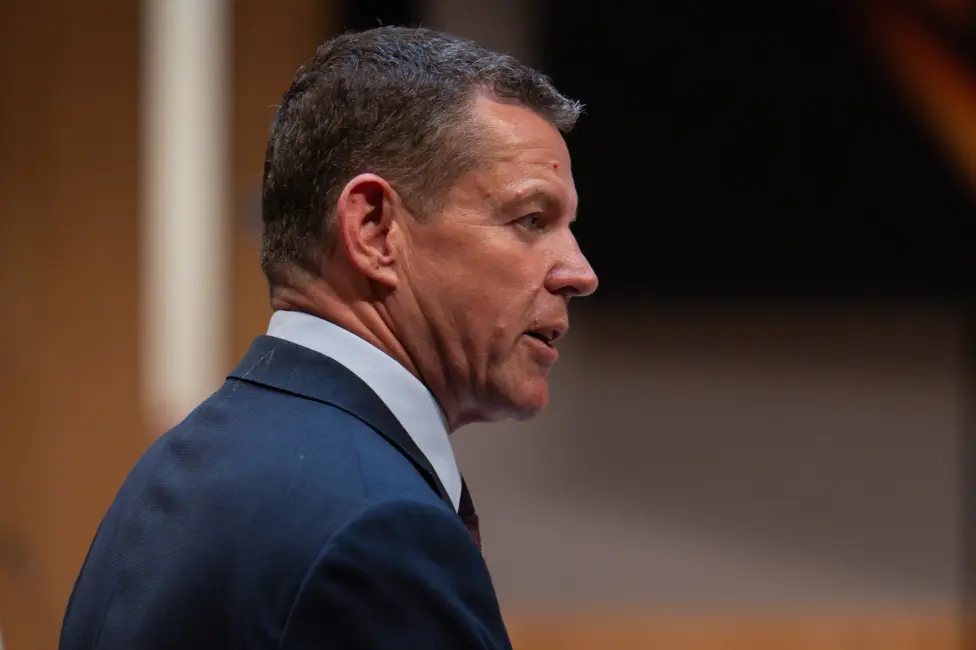
RHUN AP IORWERTH fielded questions on housing shortages, the Armed Forces, and the Nation of Sanctuary as he returned for his third First Minister’s Questions today.
The First Minister defended his new government’s work so far as he faced Senedd colleagues in the Siambr.
The First Minister clashed once again with opposition leader Dan Thomas, this time over the causes of the housing shortage.
Reform’s Welsh leader quizzed his Plaid Cymru counterpart on how the government planned to address Wales’ housing problems.
Mr Thomas said: “It is a fact that a lack of house building and uncontrolled immigration has led to a housing shortage across the UK.”
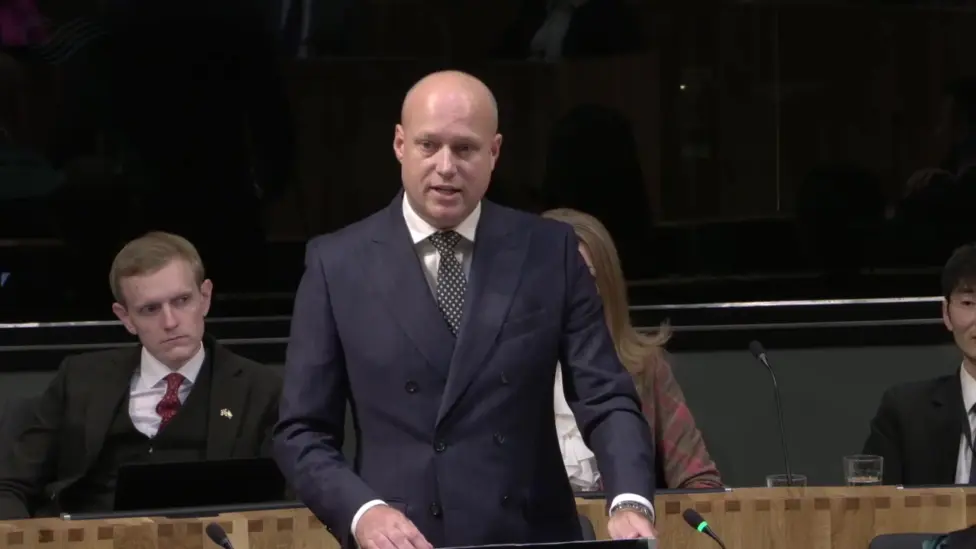
He welcomed Plaid’s promise to deliver 20,000 new homes by 2030 but said: “To deliver at that scale, we’re going to need radical reform of the planning system, we’re going to need ministerial intervention when councils do not deliver the number of homes that their communities need, and we need government and local government to work in partnership with house builders to leverage the billions of pounds that are needed to deliver 20,000 new homes.”
Acknowledging the “very real” housing problems found across Wales, Mr ap Iorwerth insisted these shortages are not driven by immigration.
He accused Mr Thomas of attempting to “create division”, arguing the government must focus on “practical solutions to the practical problem that we face”.
Mr Thomas said nobody is “blaming immigrants” but instead are “blaming uncontrolled and unplanned immigration”, which he described as having a “ripple effect” across the UK.
The opposition leader also questioned the First Minister on houses of multiple occupation (HMOs) which he described as a “big problem” across Wales, suggesting this too was caused, in part, by “uncontrolled immigration”.
Mr Thomas said HMOs are “changing the character” of streets across Wales and said: “Large companies are buying up family homes and turning them into HMOs, and people are not happy with this.”
Describing Mr Thomas as “again seeking to blame”, the First Minister said: “The leader of the opposition says he’s not blaming immigrants whilst then progressing to blame immigrants for the situation.
“He will have to forgive me for always focusing on the practical answers that are needed to the very real problems that we face, and that is a lack of social housing, which is why this government is getting on with building more social housing.”
The First Minister also clashed with another Reform member – Caerdydd Penarth MS Joe Martin.
Mr Martin questioned Mr ap Iorwerth about the “potential risks to public safety” due to the Nation of Sanctuary scheme.
The scheme, introduced in 2019, sets out how the Welsh Government can support refugees and asylum seekers in Wales.
It includes, but is not limited to: making sure refugees can find new accommodation when they leave asylum accommodation; helping refugee or asylum seeker survivors of domestic abuse to get support; and promoting an understanding of Welsh culture and heritage amongst asylum seekers.
Mr Martin said defenders of the scheme would say that it has primarily been used to support Ukrainian refugees but then added he did not know why it was “necessary” to spend additional money “over and above” what Westminster already spends to help Ukrainian families.
Mr Martin continued: “You won’t find anyone seriously contending that they’re the reason the scheme should be scrapped.
“But that’s because, so far, there have been zero instances of Ukrainian refugees trying to behead people in the streets. The same cannot be said for Sudanese asylum seekers.”
His comments were met with with disapproval from members from other parties.
Noting that it seemed the Siambr would “have to get used to this kind of contribution”, the First Minister accused Mr Martin of attempting “to drive wedges between communities”.
He said: “The Nation of Sanctuary policy did house mostly Ukrainian refugees.
“I understand the difficulty that the member has in addressing that issue given the fact that the former leader of Reform in Wales [Nathan Gill] is currently serving a lengthy jail term for taking money from the Russians, and one of the first calls made by their finance spokesperson was to tear down the Ukraine flag flying outside our Senedd.
“Let’s focus here on what unites us. Let’s focus on the leadership that’s incumbent on all of us to show in order to create cohesion between communities.”
The First Minister also noted that June 16 marks the tenth anniversary of the murder of Labour MP Jo Cox. Mr ap Iorwerth said the Senedd’s focus should be on “finding ways of getting over divisions rather than trying to create them”.
Interim Labour leader, Ken Skates, pressed the First Minister on finances, referring to a report by the Institute for Fiscal Studies which, prior to the election, said Plaid Cymru’s promises would require tax increases or cuts to services.
Mr Skates called on the First Minister to share if the Institute was right and, if necessary, to share what cuts will be made.
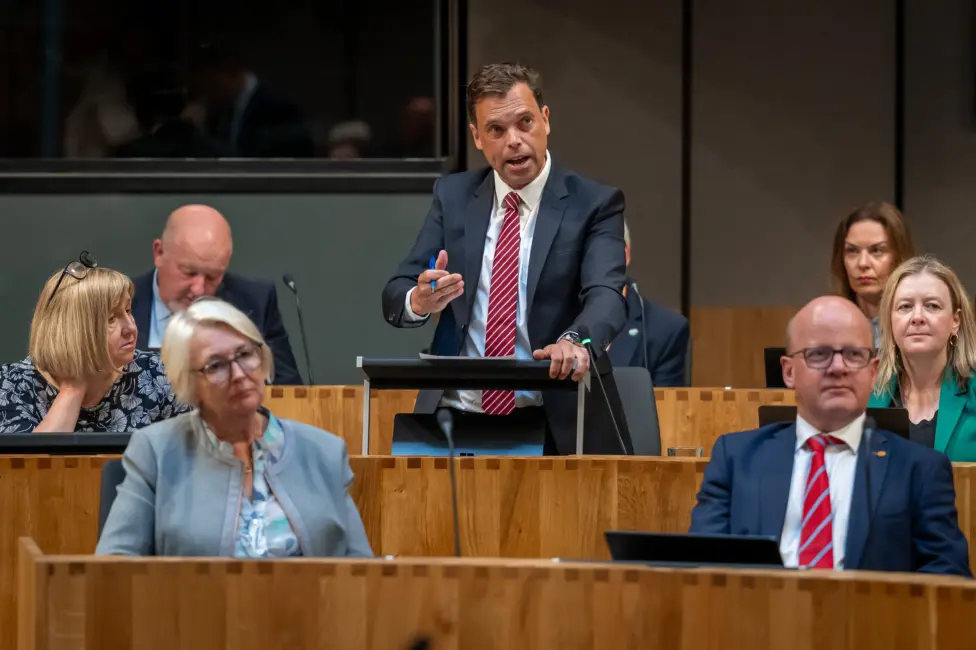
Pledging to “roll [their] sleeves up”, Mr ap Iorweth said his government will find “innovative ways” to “deliver what the people of Wales said they wanted us to.”
He also drew attention to the £55 million announced on June 16 to start delivering Plaid’s childcare offer across Wales.
Mr ap Iorwerth added: “We did more in 27 days as a government than the previous Labour administration did in 27 years.”
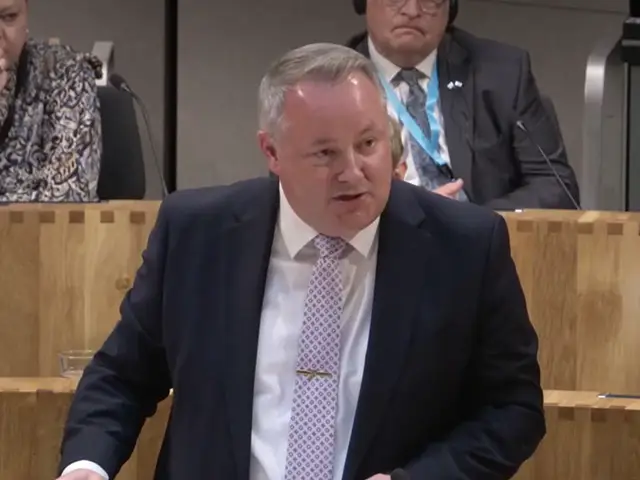
Leader of the Welsh Conservatives, Darren Millar, pressed Mr ap Iorwerth on whether he agreed that a strong defence industry in Wales is “essential” to the economy in a time when “war has returned to Europe”.
Mr Millar also called on the First Minister to pay tribute to the Armed Forces and the Welsh workers who provide them with the resources they need.
Revealing one of his first visits as First Minister was to see Rhondda-based Valley Veterans, Mr ap Iorwerth agreed with the Conservative leader noting the “very important part” the defence sector plays within the Welsh economy.
He added: “I absolutely understand that the changing face of international threats means that we need to make sure that we have the conventional forces in place that are able to stand up to that.
“At the same time, this is a government that will make sure that the ethical engagement around defence is as strong as it can possibly be. I think those are the kinds of assurances that the people of Wales want.”



Community5 hours ago
Police officer hailed hero after midnight sea rescue in Milford Haven
PC swam 100 metres offshore to save distressed woman heard calling for help in darkness A DYFED-POWYS POLICE officer has...


Local Government11 hours ago
Security privately arranged by Mayor at Beating of the Bounds
HAVERFORDWEST TOWN COUNCIL has confirmed that security personnel seen at this year’s Beating of the Bounds were privately arranged and...


Business2 days ago
Celtic Freeport five-year plan puts Milford Haven at centre of green energy future
Strategy promises investment, skilled jobs and new supply chains, but major barriers remain over grid connections, planning and delivery THE...


Education2 days ago
Closure of Ysgol Clydau approved after emotional council debate
COUNCILLORS WARNED RURAL COMMUNITIES WILL REMEMBER DECISION PEMBROKESHIRE councillors have voted to close Ysgol Clydau following an emotional debate over...


Education2 days ago
Manorbier school closure process to continue after narrow council vote
Questions remain over insurance, rebuilding costs and possible legal action by Diocese PEMBROKESHIRE councillors have voted to press ahead with...

Community2 days ago
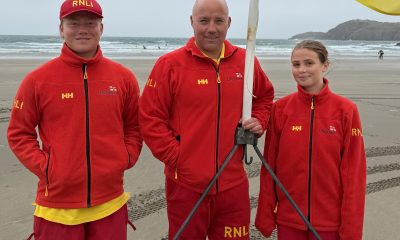
The father, son and daughter lifeguard trio saving lives in Pembrokeshire
A FATHER, son and daughter are preparing to help keep beachgoers safe on the Pembrokeshire coast this summer as part...


Community2 days ago
Beating of the Bounds brings music, boats and tradition to Haverfordwest
CENTURIES-OLD CEREMONY DRAWS FAMILIES TO THE RIVERSIDE HAVERFORDWEST’S historic Beating of the Bounds returned on Sunday (Jun 14), with boats,...


Community2 days ago
Milford Haven School pupil praised after stepping in during real-life emergency
A YEAR 11 pupil at Milford Haven School has been praised after putting his first aid training into action to...


Community3 days ago
River festival brings crowds to Haverfordwest
A CELEBRATION of the River Cleddau brought crowds into Haverfordwest on Saturday (June 13) as the town’s River Festival returned...

Charity3 days ago
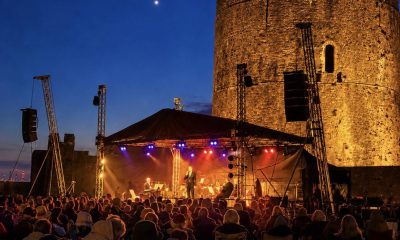
Voices at the Castle hailed as unforgettable night after weather setback
Russell Watson headlines spectacular charity concert at Pembroke Castle A SPECTACULAR evening of live music at Pembroke Castle has been...
-
 Community2 days ago
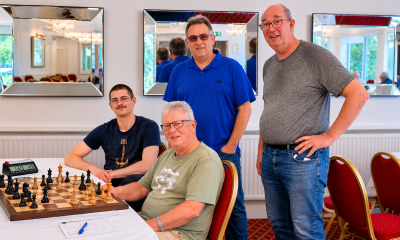
Pembrokeshire Chess Club crowned Welsh champions
-

 Crime5 days ago
Pembroke Dock teenager sentenced over train strangulation attack
-

 Education4 days ago
Diocese threatens legal action as Manorbier school closure battle intensifies
-

 Crime6 days ago
Man accused of six rapes including alleged Haverfordwest offence
-
Local Government11 hours ago
Security privately arranged by Mayor at Beating of the Bounds
-

 Local Government5 days ago
Taxi suspended after county-wide licensing checks
-

 Crime6 days ago
Brothers found guilty of causing death of Welsh dad in ‘reckless’ race
-

 Crime5 days ago
Currys worker denies stealing £2,500 of store stock