


Cymraeg
Last ditch plea to HSBC to reverse decision to axe Welsh language phone line


AN MS has issued a last ditch plea to HSBC to reverse its “unacceptable” decision to axe its Welsh language phone service.
Llŷr Gruffydd, who represents North Wales in the Senedd, has spoken out as January 15, the date when the phone line is due to come to an end fast approaches.
The Plaid Cymru politician said executives at the baking giant still have an “opportunity to do the right thing”.
HSBC came under fire after politicians were informed of the bank’s decision to axe its Welsh language service by letter on Wednesday, November 8.
The Senedd’s Culture Committee wrote to the corporation accusing it of “contempt” towards Welsh speakers.

It added that its “failure to maintain an approach consistent with its values is considered disingenuous and disturbing”.
The committee also questioned statements made by José Carvalho, HSBC’s head of wealth and personal banking, who spoke in front of it on November 29.
The banker said that the Welsh-language helpline receives around 22 calls a day, and that the bank had ended up “with only 6% of the calls that are coming in being answered in Welsh” by them.
However, the committee hit back saying this indicates a fundamental failure of service by the bank because it means 94% of calls to the service are not being answered in Welsh,.

The Committee said that the “low number of calls” to the line “reflects” the bank’s “inability to provide a functioning and coherent service that meets the needs of its Welsh speaking customers.”
Llŷr Gruffydd said: “HSBC still has an opportunity to do the right thing by reversing its unacceptable and wrongheaded decision to bring its Welsh language phone service to an end.
“Executives at HSBC should remember that many customers use their banking services because of its Welsh language phone service.

“The bank argues that there isn’t sufficient demand for the helpline because it receives 22 calls a day on average.
“But it’s abundantly clear from the data that with only 6% of those calls being answered in Welsh, they’ve not been coming anywhere near to providing an adequate service.
“Phone calls that are made to the helpline in Welsh should be answered in Welsh. It’s no wonder that a lot of Welsh speakers have given up on phoning it.
“Instead of scrapping the service HSBC’s should invest in it properly for at least 12 months, and that includes ensuring that it is well-advertised. Then at the end of that period it could make a much better assessment of demand.
“The bank’s pledge to ‘arrange a call back in Welsh, within 3 working days is astonishingly disrespectful to Welsh speakers, as well as utterly insensitive to the financial pressures some people will face.
“For a significant number of people, accessing their bank through Welsh is not a ‘choice’ as HSBC claimed.
“HSBC say they ‘have confirmed that all customers can bank in English’, which is frankly an attitude that belongs to the last century. It is also untrue, especially for many elderly and vulnerable people.
“There is understandably a huge amount of anger and frustration right across Wales with HSBC’s general attitude towards the Welsh language.
“Recently I was contacted by a constituent who was quite rightly angry because she had been asked by a member of HSBC’s customer care team to resend a Welsh language query in English.
“That is one of many examples of HSBC’s complete and utter disregard for Welsh speakers.
“As a Welsh speaker myself and as a member of the Senedd’s Culture Committee, I share the real sense of frustration that’s out there.
“Many of their customers in Wales have also seen their local branches close over the last decade.
“The impact of this on their older customers is particularly acute, as well as those who don’t have access to digital technology.
“Though HSBC likes to describe itself as the world’s local bank, it is abundantly clear that this is not the case in Wales as it abandons Welsh speakers and abandons our high streets by shutting down local branches.”


Language activists warn proposal could undermine long-term support for Welsh
CAMPAIGNERS have warned that proposals by the Nigel Farage-led Reform UK to scrap Wales’ target of one million Welsh speakers by 2050 could place the language at risk.
The comments came during the launch of Reform’s Welsh manifesto in Newport on Thursday (Mar 5), where Farage and the party’s Welsh leader Dan Thomas set out their plans for the language.
The party says it would remove what it describes as “arbitrary” targets for the number of Welsh speakers, arguing that the language is already growing naturally.
Farage told supporters that Welsh appeared to be “thriving” in parts of the country and said younger generations were increasingly learning and using the language.
He argued that Welsh culture and language should be allowed to develop organically rather than being driven by official targets or public bodies.
Questions were also raised at the event about the future of the Welsh Language Commissioner. Farage suggested there was no clear need for additional “quangos” if the language continued to grow through public interest.
However, campaign group Cymdeithas yr Iaith said the proposals demonstrate a misunderstanding of the current challenges facing the language.
Chairman Owain Meirion said it was wrong to describe Welsh as thriving when the proportion of speakers has fallen in recent census results.
According to campaigners, around 17.8 per cent of people in Wales currently report being able to speak Welsh, with the overall proportion declining over the past two censuses.

They warned that removing the 2050 target of one million speakers could weaken long-term support for the language and the communities where it is most widely spoken.
Campaigners also pointed out that the manifesto includes relatively few references to Welsh beyond cultural pledges.
Reform has said it would continue supporting events such as the National Eisteddfod and would press the UK Government to maintain funding for the Welsh-language broadcaster S4C.

Despite this, Cymdeithas yr Iaith warned that the wider approach set out in the manifesto could weaken existing structures designed to protect and promote the language.
Farage also used the Newport event to claim that Reform could challenge the long-standing dominance of the Welsh Labour in Welsh politics.
The party says its manifesto represents a plan for significant political change ahead of the next Welsh election.
Language campaigners, however, say the debate highlights continuing tensions over how best to protect the future of Welsh while ensuring policies reflect the realities facing communities across Wales.

THE WELSH LANGUAGE COMMISSIONER has published a major five-year report examining the state of the Welsh language and identifying priorities to strengthen its future.
The report, released last week (Mar 3), reviews developments between 2021 and 2025 and sets out what the next Welsh Government must do to increase the number of Welsh speakers and double the language’s daily use.
Commissioner Efa Gruffudd Jones said decisive and ambitious action would be required if Wales is to achieve the long-term goal of reaching one million Welsh speakers by 2050.
The report identifies three key opportunities where progress could make the greatest difference:
• Creating confident Welsh speakers through the education system
• Strengthening the use of Welsh within communities
• Developing workplaces that support the use of Welsh
Within these themes, the report outlines ten specific priorities aimed at strengthening the position of the language over the next five years.
The analysis draws heavily on the results of the 2021 Census, which recorded 538,296 Welsh speakers across Wales, and examines longer-term trends to understand the challenges facing the language. Our time to act – embargo 3 Mar…
According to the Commissioner, while the number of speakers has remained relatively stable for decades, population growth and inward migration mean the overall proportion of Welsh speakers has declined, placing additional pressure on the language.
Speaking ahead of the 2026 Senedd election, Efa Gruffudd Jones said the next Welsh Government must take stronger action.

“I am publishing this report as we approach the 2026 Senedd election, which will be a significant moment in our history as a nation,” she said.
“For the first time, 96 Members of the Senedd will represent the people of Wales through a new electoral system and new constituencies – many with Welsh-only names. That is a symbolic sign of national confidence and pride in our language.
“But symbolism is not enough. The next Welsh Government must act purposefully and positively in support of the Welsh language. Only bold interventions will transform the current situation if we are serious about doubling daily use and reaching a million Welsh speakers by 2050.”
The report is structured in three parts. The first analyses the 2021 Census results and what they reveal about the health of the language. The second focuses on policies aimed at creating more Welsh speakers, particularly through education and early years provision. The third examines how to increase everyday use of the language in communities and workplaces. Our time to act – embargo 3 Mar…
Among the recommendations are calls for stronger Welsh-language training requirements for teachers, greater support for Welsh-speaking communities, and a national strategy to encourage the use of Welsh in workplaces.
The Commissioner said the report is intended to provide an evidence-based foundation for action during the next Senedd term.
“I have great ambition for the Welsh language and its speakers,” she said.
“I want to see a Wales where living through the medium of Welsh is a genuine, everyday choice for people, and I will remain unwavering in my commitment to achieving that.”
The full report, titled Our time to act: The position of the Welsh language 2021–25, has been published by the Welsh Language Commissioner.

Welsh youth icon to be celebrated with music release, Aberystwyth artwork and St David’s Day events
ONE of Wales’ most recognisable youth icons is marking a major milestone this year as Urdd Gobaith Cymru launches celebrations to mark the 50th anniversary of Mistar Urdd.
The red, white and green mascot — created in 1976 — has become synonymous with the Urdd and its mission to inspire children and young people through the medium of Welsh. To launch the anniversary year, the organisation has unveiled a series of projects including a newly recorded version of the anthem Hei Mistar Urdd!, a large public mural in Aberystwyth, and a community celebration linked to St David’s Day.

The new recording, released on Thursday (Feb 20), features singer-songwriter Aleighcia Scott alongside Dom James and Lloyd, with backing vocals by Mared Williams. The track has been newly arranged by Morgan Elwy and recorded at the iconic Sain studios in Llandwrog — the same studio where the original version was produced almost half a century ago.
Siân Lewis, Chief Executive of Urdd Gobaith Cymru, said the anniversary was a moment of pride for the organisation and for Wales.
“Mistar Urdd has remained close to the hearts of the people of Wales for 50 years, and that is something to be proud of,” she said. “The character has evolved into a symbol of hope and represents the friendship, fun and pride that we share with children and young people across the country.
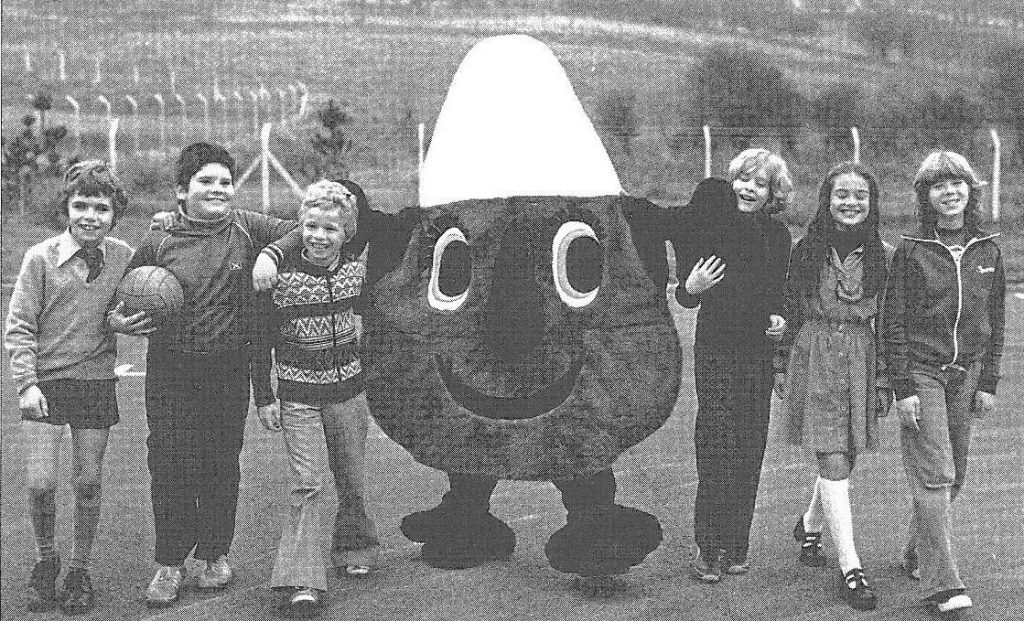
“Over the decades, Mistar Urdd has travelled to space, helped the Urdd break a Guinness World Record, greeted presidents and prime ministers, and even lent his name to a brand-new train. He also plays a key role in opening doors to the Welsh language and showing that the Urdd belongs to everyone.”
Aleighcia Scott said she was honoured to be part of the new recording.
“It’s an absolute privilege to be part of the new version of Hei Mistar Urdd! — what an icon, what an anthem,” she said. “As a Welsh learner, I love the work the Urdd does to inspire children and young people across Wales, and it’s been a joy to celebrate that spirit through this song.”
Kev Tame, Chief Executive of Sain, said the collaboration continued a long-standing partnership between the label and the Urdd.
“The anthem was originally released on Sain in 1977, and we are very proud to release this new version almost 50 years later,” he said.
The anniversary programme also includes a major public mural in Aberystwyth, due to be unveiled on Wednesday (Feb 25). The artwork has been designed by internationally recognised Welsh artist Pete Fowler — known for his work with the Super Furry Animals — with support from Cardiff-based creative studio UNIFY.
Pete Fowler said: “Mistar Urdd brings a smile to everyone’s face, and it was a pleasure to reimagine him for this milestone. I wanted to create something colourful and joyful that feels contemporary while respecting the character’s history.”
The Aberystwyth celebrations will also include school visits by Aleighcia Scott and a live performance of the new anthem at the mural site, with Mistar Urdd making a special appearance. The event has received support from the Welsh Government’s St David’s Day Fund.
First Minister Eluned Morgan said: “Mistar Urdd has been a part of so many childhoods in Wales and it is heartwarming to see him inspiring the next generation. This project shows how creativity, education and community can come together to celebrate who we are as a nation.”
Mistar Urdd was originally created by Wynne Melville Jones shortly after he became the Urdd’s publicity officer. By adding arms, legs and a face to the organisation’s triangular logo, he brought to life a character that would grow into a national symbol of Welsh youth and inclusivity.
Reflecting on the anniversary, Wyn Mel said: “Fifty years later, Mistar Urdd is still a firm favourite among the country’s children and young people. I can say hand on heart that all the hard work has paid off.”
Further anniversary activities are expected to be announced throughout the year.



Crime20 hours ago
Rapist jailed after ‘abhorrent’ attacks on woman and children
Haverfordwest man told police “women won’t have sex without force” A HAVERFORDWEST man who raped a woman and a young...


News22 hours ago
Reform secures first Pembrokeshire councillor in Hakin by-election win
Late Reform candidate takes seat as independent surge and Labour withdrawal shape contest REFORM UK candidate Scott Thorley has won...


News1 day ago
Scott Thorley elected as Pembrokeshire’s first Reform councillor
REFORM UK candidate Scott Thorley has won the Hakin by-election after securing 179 votes. The full result is as follows:...


News2 days ago
Police confirm man has died after being recovered from River Cleddau
Major emergency response in town centre after concerns raised for man in water A MAN has died after being recovered...

Community2 days ago
Davies and Kurtz urge groups to seek employability funding
Community organisations in Pembrokeshire encouraged to apply for new grants supporting skills and job access LOCAL Senedd Members Samuel Kurtz...


News2 days ago
Emergency services flood Haverfordwest after reports of person in river
Town centre sealed off as multi-agency response continues A MAJOR emergency response is underway in the centre of Haverfordwest after...


News2 days ago
Detectives receive surge of new information in bid to identify man found at Powys reservoir
Public response follows release of facial image as officers pursue fresh lines of enquiry DETECTIVES investigating the identity of a...

News2 days ago
Senedd committee urges next Welsh Government to prioritise Wales–Ireland links
A SENEDD committee has called on the next Welsh Government to continue prioritising Wales’s relationship with Ireland, describing it as...

Education3 days ago
New facilities open at Portfield School as redevelopment reaches key milestone
THE FIRST phase of a major redevelopment programme at Portfield School in Haverfordwest has been completed, marking a significant step...


News3 days ago
£377m spent saving blast furnaces months after Port Talbot closure
Government intervention keeps UK’s last primary steelmaking furnaces running THE UK GOVERNMENT spent £377 million to prevent the closure of...
-

 Health6 days ago
Welsh Ambulance Service to host bi-monthly Board meeting
-

 News5 days ago
Rayner and Lammy visit Wales to discuss justice and community safety
-

 News4 days ago
Fishguard linked to allegations in Many Tears Animal Rescue investigation
-
News2 days ago
Emergency services flood Haverfordwest after reports of person in river
-

 News7 days ago
Calls grow for water industry overhaul after Welsh Water faces £44.7m fine
-

 Education7 days ago
Manorbier school closure approved while insurance claim still unresolved
-

 Charity6 days ago
Many Tears Animal Rescue visited by inspectors as police attend in support role
-

 Farming7 days ago
Farmers’ Union warns proposed lamb welfare changes risk unintended consequences