


Politics
Council Leader confirms intention to stand down

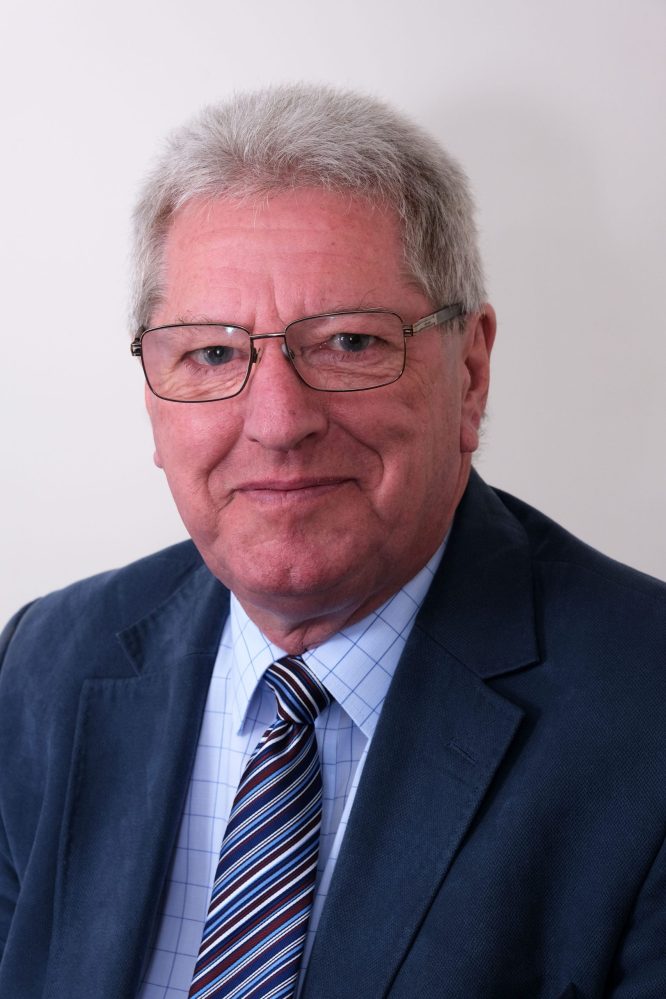
PEMBROKESHIRE County Council Leader Cllr David Simpson has confirmed his intention to stand down next month.
Cllr Simpson, who has been Leader since May 2017, will not seek re-election as Leader of the Council at the Annual General Meeting in May.
Chairing his final Cabinet meeting as Leader on Monday, Cllr Simpson said he was looking forward to spending more time with his family.
Cllr Simpson said: “I would like to thank my fellow Cabinet Members for their commitment to their roles and their support to me personally over the last seven years.
“I also want to put on record my gratitude and thanks to all Council staff for their hard work across all departments.

“I know just how dedicated these staff are, striving to improve lives here in Pembrokeshire.
“I must also thank the people of Pembrokeshire.
“It has been the honour of a lifetime to be the Leader of your council and the best part of the job has been meeting so many people who are committed to making this county a better place to live and work.”
Cllr Simpson will continue to serve as the County Councillor for Lampeter Velfrey.
A new Leader of Pembrokeshire County Council will be elected at the AGM on Friday May 10.
The meeting begins at 11am and will be webcast as normal.



New plans aim to cut delays, reduce costs and stop house sales collapsing
THOUSANDS of homebuyers across Wales could save time and money under a major overhaul of the property-buying process announced by the UK Government.
The reforms are designed to tackle long-standing problems in the housing market, including lengthy delays, failed transactions and unexpected costs which can leave buyers and sellers out of pocket.
Ministers say the changes could reduce the average time taken to buy a home by around four weeks and save first-time buyers an average of £650.
Under the proposals, sellers and estate agents would be required to provide key information about a property when it is listed for sale. New “sales packs” would include details about a home’s condition, leasehold charges and the status of any buying chain.
The Government also plans to introduce earlier legally binding agreements between buyers and sellers to reduce the number of transactions which collapse late in the process.
A major part of the reforms will focus on replacing paper-based systems with digital property logbooks, electronic signatures, online identity checks and AI-assisted conveyancing.
Welsh Secretary Jo Stevens said: “Thousands of people across Wales will benefit from these reforms which will make buying a home faster, simpler and fairer.
“For too long the system has been difficult and complex. This government’s changes will save working people and families valuable time and money when they are buying their new home.”
Prime Minister Sir Keir Starmer said the current system leaves many families “in limbo” and makes home ownership more difficult than it should be.
Housing Secretary Steve Reed said buying or selling a home should not be “a drawn-out nightmare of delays, hidden costs, and failed deals.”
The Government says the reforms will be introduced in stages, with a new Code of Practice for property agents expected later this year.
From 2027, ministers plan to consult on mandatory qualifications for estate agents and the wider use of digital tools.

Legislation requiring sales packs, binding contracts and digital property information systems is expected before the end of the current Parliament.
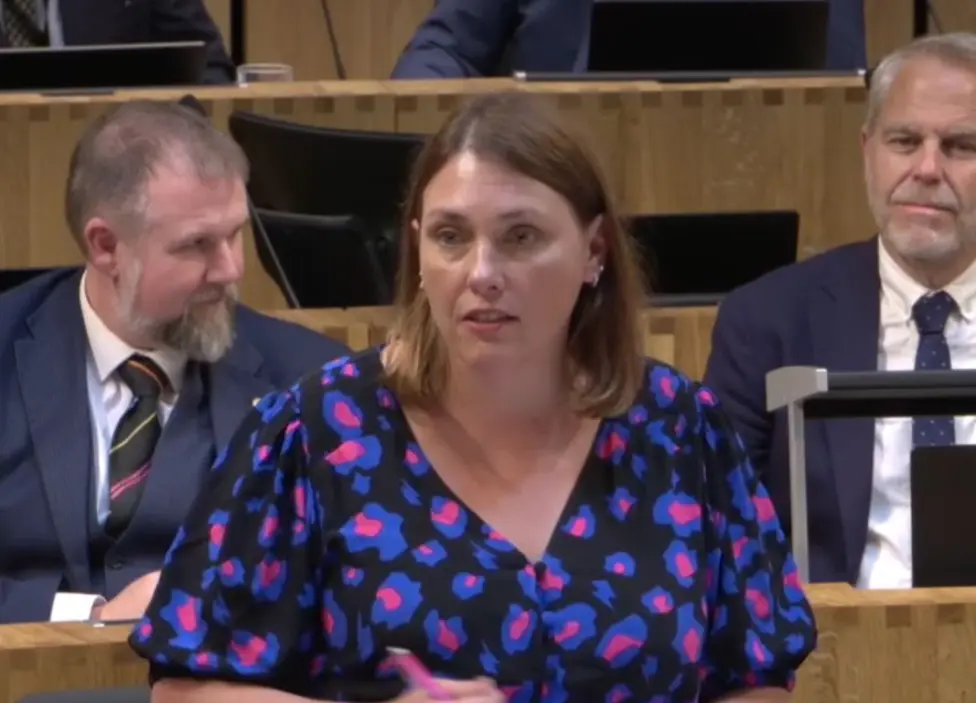
CULTURE and sport “are not a nice to have – they are part of the solution to creating a healthier, more prosperous society”, according to Wales’ new culture and sport minister.
Outlining her priorities in the Senedd on Tuesday June 16, Heledd Fychan highlighted the importance of the arts and sport in preventative health.
She also spoke of the importance of the Welsh language and Wales’ music industry, and called for the devolution of broadcasting,
“These priorities mark the beginning of a journey and the beginning of a new chapter for culture and sport here in Wales,” Ms Fychan told the Siambr.
She continued: “This government believes in the power of culture and sport to transform lives, to contribute to the vision of moving towards a preventative health agenda to put our health service on a more sustainable footing, and because we are determined to build a Wales where creativity thrives.”
Ms Fychan, of Pontypridd Cynon Merthyr, was quizzed on her government’s calls for the devolution of broadcasting.
In her statement, the minister pledged to create a “stronger media environment” which reflects a “confident and prosperous Wales”.
Laying out her priorities for broadcasting, she said: “Wales deserves a confident, diverse and sustainable media landscape rooted in public value and national ambition.
“To achieve this, Wales must have a voice in the decisions that affect us. That is why we are determined to continue to make the case for the devolution of powers over broadcasting.”
She revealed work is underway to set up a shadow broadcasting and communications authority – designed to build a “stronger and more accountable” media landscape in Wales.
She also highlighted her plans to support public-interest journalism and “safeguard the provision of high-quality news”.
Describing the development of a shadow broadcasting authority as “completely unnecessary”, Reform’s Louise Emery – who is shadow minister for culture – said: “This is more constitutional navel-gazing, more quangos, more slow state-building towards independence, and more cost.”


Ms Emery went on to criticise the government’s plans to support public-interest journalism and said: “On this side of the chamber, we feel we already have a state-funded news outlet with blatant political bias, and we don’t need any more.
“I would suggest that state-funded journalism in Wales will mean state-funded interference, and I would also suggest that ‘high-quality news’ is a highly subjective phrase. Who is going to decide what is high-quality journalism and therefore needs state help?”
She added: “How can we ensure there is no foreign interference when allocating Books Council of Wales funding to news outlets?”
Ms Emery’s comments were met with laughter in the Siambr from opposing politicians.
However, Ms Fychan made no reference to Ms Emery’s comments in her response.
Paul Davies, Welsh Conservative spokesperson for the Welsh language, culture and sport, echoed Ms Emery’s criticisms of the devolution of broadcasting powers.

Outlining his party’s opposition to broadcasting devolution, Mr Davies said: “Given the challenges that the cabinet minister has already highlighted in her statement today, surely this is not the best possible use of resources, especially given that these powers are not devolved.”
Mr Davies called for Ms Fychan to reveal how much was spent on the new authority, how it will be funded, and how it will operate.
Similarly as with Ms Emery, Ms Fychan did not reference Mr Davies’ broadcasting comments in her response.
Ms Fychan described use of the Welsh language, particularly social use, as an “integral” part of her priorities.
Discussing the upcoming Eisteddfod – which is celebrating it’s 850th anniversary – she said: “A contribution of £0.25 million from the government will support a programme of activities to inspire people to use the language and raise the international profile of the National Eisteddfod.
“Our financial support will also ensure that local low-income families have free access to the festival.
“It is vital that everybody has an opportunity to enjoy our culture, language and National Eisteddfod.”
Reform’s shadow minister noted that she was “really glad” to hear the Welsh language was being prioritised.
Responding briefly to the cabinet minister in Welsh, Ms Emery shared that she has been learning Welsh for two years and is hoping to practice her skills at the Eisteddfod this summer.
However, she questioned Plaid’s plans to get people speaking the language, adding that “coercion drives resentment, not fluency”.
She said: “If the Welsh Government is serious about one million Welsh speakers, it needs to invest in the conditions that make people choose the language, not mandate it on those who don’t speak it.
“Welsh culture, the arts and sport should lift people up and bring communities together – that we agree on. But they can do that in whatever language they choose.”
In her statement, Ms Fychan said: “For too long, culture, the arts and sport have been pitted against the NHS rather than being recognised as completely connected to it.
“These sectors are not a ‘nice to have’; they are part of the solution to creating a healthier society. Our manifesto commits to making culture and sport accessible to all.
“That includes addressing inequalities in access, whether due to cost, geography, disability or other barriers.”
Reform’s shadow minister for health, prevention and sport, James Evans, noted that he “never thought [he’d] find the day” he would agree with the minister on so much.
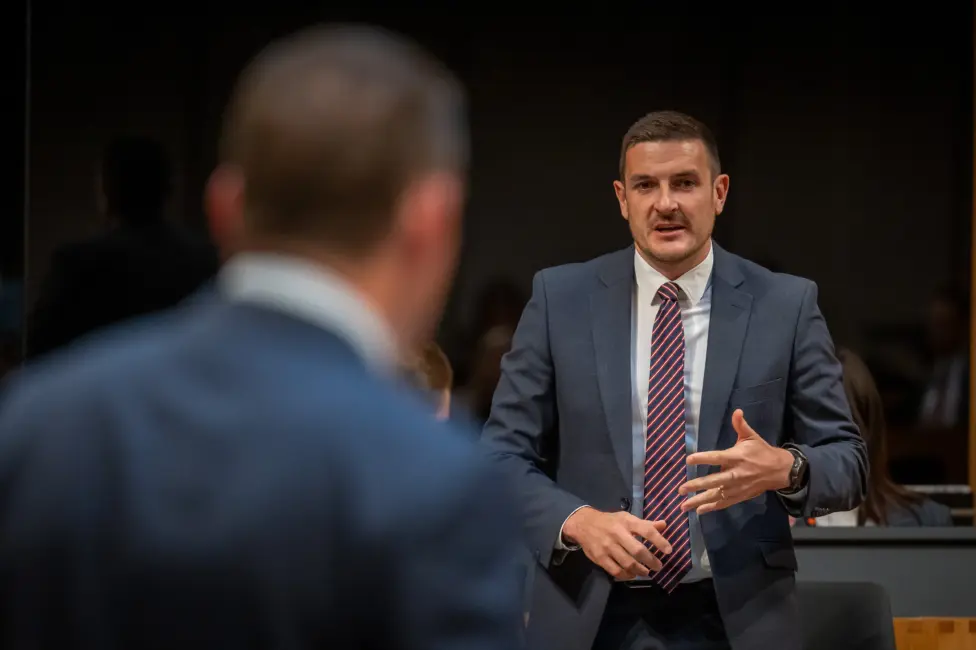
Mr Evans described sport as a “key part” of the prevention agenda, before questioning the minister on how much of the NHS budget will be reallocated to sports.
He said: “We’ve heard a lot today about money being moved, but I think a lot of the sports organisations listening to today’s proceedings would like to know exactly what proportion that’s going to be.”
In response Ms Fychan said: “In terms of the exact figures and how we will do this, this is a completely new way of working for government, and what I can give you the assurance of is that there is an acknowledgement across government of the importance of this, that we are ensuring that those discussions are now taking place within those first 100 days and we will update the Senedd as we can.”

Labour’s Mike Hedges questioned the minister on music tourism and it’s importance to both Welsh culture and the economy.
Stating that music touring in Wales, “attracted 834,000 visitors, supported 3,650 jobs, and generated £384 million for the economy” in 2024, Mr Hedges pressed the minister to commit to supporting Welsh music.
He said the Welsh Government must “grow Welsh music through smart public investment, bring down barriers to exporting Welsh music, ensure music education is accessible to all, and support home-grown creativity and new music that drives Welsh tourism”.
In response, Ms Fychan referenced a report released last year which showed that traditional music in Wales was in danger of “disappearing entirely”.
Noting that fewer children are taking GCSEs in music, drama, and art and that universities are cutting courses in creative areas, Ms Fychan said often these areas are seen as “not worth investing in” – adding that, “of course”, they are.
Closing her response to the member she said: “Hopefully we will then see, […], that there will be a future for creative people here in Wales, and a future for these sectors that are seen as economically beneficial.”
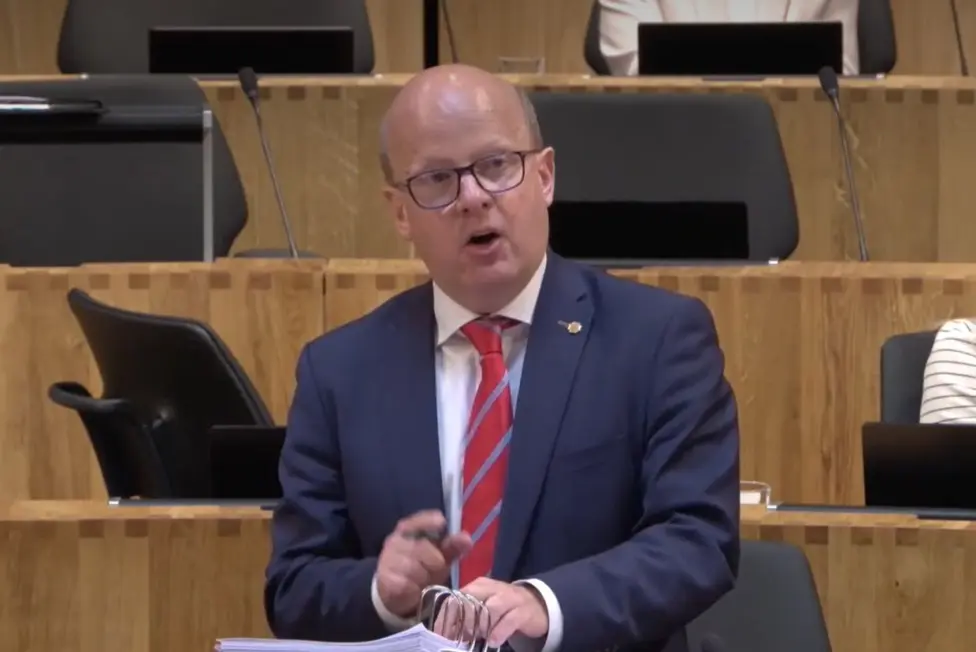
WALES needs more say over justice, policing, and rail investment, the new constitution minister has said.
Plaid Cymru’s Dafydd Trystan Davies faced questions from Senedd colleagues for the first time on Tuesday June 16.
The Caerdydd Fynnon Taf MS, who was appointed to the cabinet role last month, has responsibility for overseeing the government’s priorities, supporting oversight of the cabinet office, and constitutional affairs.
He is also responsible for the potential devolution of justice and policing.
Adrian Mason, Reform’s shadow constitution minister, challenged Dr Trystan Davies on Plaid’s plans.
Mr Mason said: “Plaid Cymru has long argued for more powers for Wales and greater responsibility here in Cardiff Bay. But Plaid cannot present itself as a new beginning after the Labour-Plaid era when, at key moments, it helped keep Labour in power.
“After 27 years of Labour-led devolution in health, education, transport and the economy, does the minister accept that Plaid shares some responsibility for that record?”
He added: “Why should Wales hand more powers to the same governing consensus that helped create the failures it now claims it can fix?”

Dr Trystan Davies emphasised that Plaid Cymru is a “new government”, set out on a “new course” which focuses on “the people’s priorities”.
He continued: “I think it is clear to everyone in this chamber that the legacy of 27 years of Labour government led to their election result. That is why so many of our fellow countrymen and women voted for a new leadership for Wales, and that is a Plaid Cymru leadership.”
The Reform shadow minister also questioned the minister on Plaid’s desire for independence.
He said: “Plaid’s manifesto is clear: it wants independence. But in the latest polling… the people of Wales do not. So, is the government pursuing independence by instalments – more powers, more separation, more institutions – without first asking the Welsh people the direct question?”

Mr Mason called for the minister to commit to “no constitutional change by the backdoor, no move towards independence, and no further substantive devolution without clear public consent”.
Dr Trystan Davies reiterated the First Minister’s election-time commitment that there will be no independence referendum during this Senedd term.
He then addressed the question of greater powers for Wales and said: “Where there are opportunities to improve the lives of the people in Wales, then [the Welsh Government] will take them.”
He said: “We are on a constitutional journey in Wales. It is a journey that is best served by consensus and collaboration, and that is what we will seek to do.”
Sam Rowlands, of the Welsh Conservatives, echoed the Mr Mason’s questions on Plaid Cymru’s constitutional reform plans.

He called on the minister to reveal how much time and resources are likely to be spent on “constitutional and independence-pursuing work” and to clarify how this will affect the government’s ability to focus on core public services.
Dr Trystan Davies said his party’s focus on constitutional matters will be in line with the priorities set out in its election manifesto.
He said: “On the constitution, [we] will be focused on those very specific priorities that we set out in our manifesto that will improve people’s lives – on water, on policing, on justice, on the Crown Estate, to improve people’s lives in Wales.”
Plaid MS Peredur Owen Griffiths, of Casnewydd Islwyn, asked his party colleague to share what steps he is taking to establish a national commission on Wales’ constitutional future.

Dr Trystan Davies noted that, in line with Plaid’s 100-day plan, a new national commission overseeing progress on further devolution and engaging with the public in a “national conversation about Wales’ constitutional future” is being developed.
He committed to updating the Senedd as the work progresses.
The minister also faced questions on potential areas of further devolution to Wales.
Plaid Cymru’s Niamh Salkeld, of Blaenau Gwent Caerffili Rhymni, asked him for an update on the progress being made to devolve rail funding to Wales.
She provided the example of Abertillery, describing the town as a “prime example of a community that is being held back by the UK Government’s chronic underfunding of Wales’ rail network.”
Discussing the proposed Abertillery spur – a passenger railway branching off the Ebbw Vale line at Aberbeeg to reconnect Abertillery to the rail network – Ms Salkeld said the proposed rail line would improve access to jobs and education, increase footfall for local businesses, and support town centre regeneration.

Dr Trystan Davies responded: “The figures are stark. The UK Government has promised an investment of £445 million, which sounds like a large figure, but when you compare it to the £4.5 billion owed to Wales under HS2 money, it is merely a drop in the ocean.
“That £4.5 billion would allow us to invest in Abertillery, it would allow us to invest in rail and bus services across the country.
“It is our fair share, it is chwarae teg for Wales. That is why I am proud that my colleague, the deputy minister for transport [Mark Hooper], is pursuing this case energetically with the UK Government. It is only right, it is only fair.”
Ms Salkeld’s calls were supported by Labour’s Mike Hedges, who said he has “consistently argued for the devolution of rail funding.”
Mr Hedges, of Gwyr Abertawe, said: “Asymmetric devolution has not worked. It hasn’t worked in Britain, it hasn’t worked in Spain. It is important that rail funding is devolved. The main question is how should the funding be calculated.”
He pressed the minister to share which form of rail funding formula he would prefer: “relative population, relative population with the 20% addition that the Barnett formula provides, relative track length, or relative passenger numbers?”
Dr Trystan Davies noted that Wales would do “pretty well” out of relative track length due to the geography of the country.
He added: “We have historically received a disproportionately low share of rail enhancement funding from the UK Government.
“Transport for Wales set out a vision of £14 billion of rail spending. That is the kind of rail funding that Wales needs to improve our rail services and to ensure that we have a 21st century rail system.”
Policing
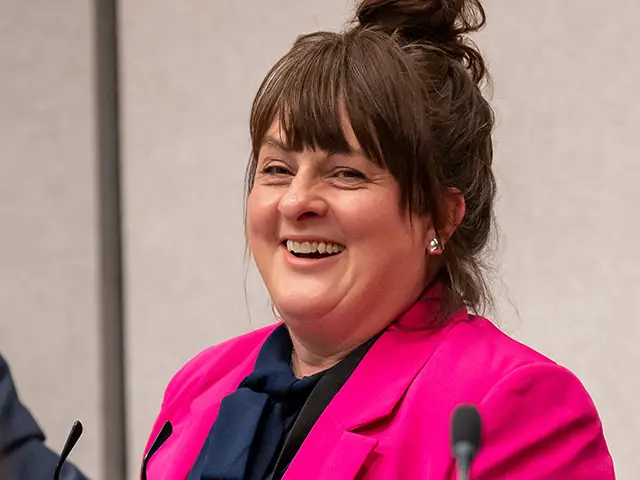
The cabinet minister also faced questions on the devolution of policing, led by Reform MS Catherine Cullen.
Ms Cullen, of Blaenau Gwent Caerffili Rhymni, told the Siambr her constituents don’t want to see money “wasted” on devolving more powers, they want “better jobs and higher salaries”.
Questioning the minister on the financial impacts of further devolution she said: “Why does this Plaid government think this should be a priority, when so many of the public services that people rely upon are already under considerable pressure?”
Dr Trystan Davies noted that devolving policing to Wales has been recommended by a series of independent commissions, including the Silk Commission in 2014.
He clarified that Plaid’s priorities remain as the NHS, schools, the economy, child poverty and childcare, but with regard to policing said: “There clearly are negotiations to be had around the transfer of functions and how effectively those resources are transferred from the UK level to the Welsh level.
“We will be robust and energetic in those discussions with our UK counterparts.”
Labour’s Mr Hedges once again weighed in on the debate, affirming his support for the devolution of policing.
He referred back to a debate he led in 2013 that received majority support in the Siambr calling for the its devolution.
He said: “Policing is devolved to Northern Ireland, Scotland, London, and other areas with elected mayors, but not to Wales.
“Different devolution settlements for Wales, Scotland, and Northern Ireland do not work, as I said earlier.
“Currently, Wales gets 20% extra for devolved services than England gets. Why would it be different for policing?”
Welsh Liberal Democrats leader, Jane Dodds, also voiced her support for the devolution of policing.
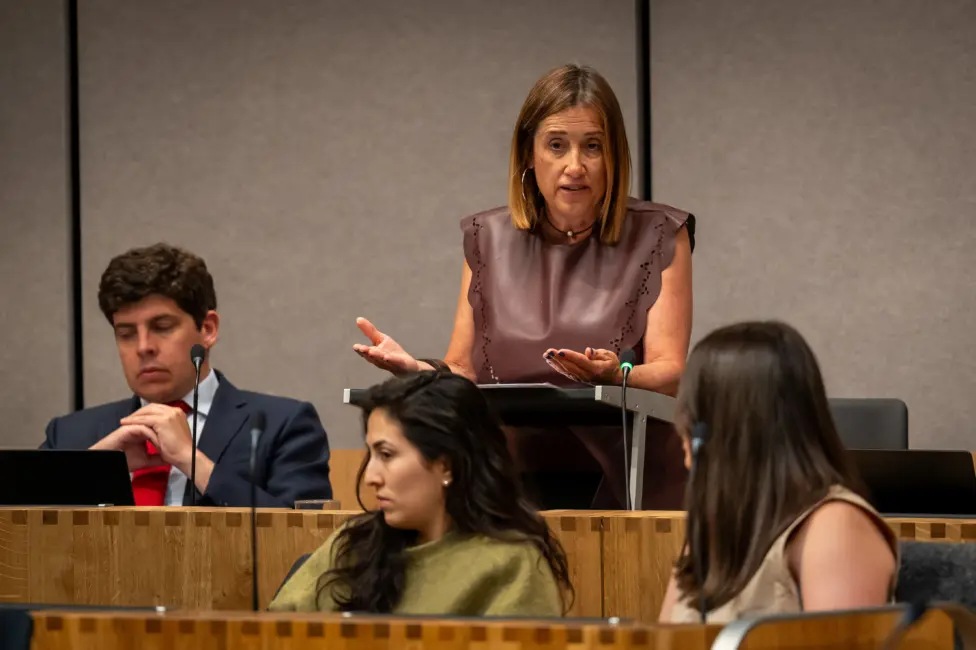
She said: “Unlike Reform UK, I do want to talk about something that affects the people of Wales directly and affects women.
“The devolution of justice and policing is not an abstract debate – it has real human consequences, and in the last Senedd, the equality and social justice committee concluded that the current devolution settlement is causing direct harm to women in Wales.”
Ms Dodds continued: “There is no women’s prison in Wales. Welsh women serving custodial sentences are held in England far from their families and far from their communities, and far from the support services that they need.”
She called on the minister to share his plans for securing these powers, along with a timetable for when it can be expected.
Dr Trystan Davies responded: “There are a number of issues there in terms of services for women that are currently not good enough under the current justice system.
“I do think that there is work to be done in terms of the justice system and devolution. There is work to be done in terms of policing that is related to devolution.
“In order to make progress on this, we must build an effective, productive relationship with the UK Government. A meeting has already been arranged with the minister for policing in the UK, the Deputy First Minister, and myself.”



Crime1 hour ago
Prisons at breaking point: MPs warn Wales is paying the price of a failing system
Frozen healthcare budgets, overcrowded jails, homelessness on release and mounting pressure on staff are undermining rehabilitation across Wales, according to...


News15 hours ago
Brexit at 10: How Britain was sold a dream that cost us dearly
A decade after the referendum, the promised benefits remain hard to find while the economic costs are increasingly difficult to...


Crime17 hours ago
Worcestershire man jailed after violent attack on woman in Tenby
Defendant was already serving a suspended sentence when serious assault took place A WORCESTERSHIRE man has been jailed for more...


Climate18 hours ago
Offshore wind ‘could bring new generation of jobs to Milford Haven’
Pembrokeshire ports and Celtic Sea projects placed at centre of Wales’ green energy ambitions MILFORD HAVEN and Pembroke Dock could...

Community2 days ago
Police officer hailed hero after midnight sea rescue in Milford Haven
PC swam 100 metres offshore to save distressed woman heard calling for help in darkness A DYFED-POWYS POLICE officer has...


Local Government2 days ago
Security privately arranged by Mayor at Beating of the Bounds
HAVERFORDWEST TOWN COUNCIL has confirmed that security personnel seen at this year’s Beating of the Bounds were privately arranged and...


Business3 days ago
Celtic Freeport five-year plan puts Milford Haven at centre of green energy future
Strategy promises investment, skilled jobs and new supply chains, but major barriers remain over grid connections, planning and delivery THE...


Education3 days ago
Closure of Ysgol Clydau approved after emotional council debate
COUNCILLORS WARNED RURAL COMMUNITIES WILL REMEMBER DECISION PEMBROKESHIRE councillors have voted to close Ysgol Clydau following an emotional debate over...


Education3 days ago
Manorbier school closure process to continue after narrow council vote
Questions remain over insurance, rebuilding costs and possible legal action by Diocese PEMBROKESHIRE councillors have voted to press ahead with...

Community3 days ago
The father, son and daughter lifeguard trio saving lives in Pembrokeshire
A FATHER, son and daughter are preparing to help keep beachgoers safe on the Pembrokeshire coast this summer as part...
-

 Community4 days ago
Pembrokeshire Chess Club crowned Welsh champions
-
Local Government2 days ago
Security privately arranged by Mayor at Beating of the Bounds
-

 Crime7 days ago
Pembroke Dock teenager sentenced over train strangulation attack
-

 Education6 days ago
Diocese threatens legal action as Manorbier school closure battle intensifies
-

 Crime7 days ago
Man accused of six rapes including alleged Haverfordwest offence
-

 Crime2 days ago
Man wanted by court after failing to attend hearing over alleged shop thefts
-

 Local Government6 days ago
Taxi suspended after county-wide licensing checks
-
 Crime2 days ago
Man banned from roads after drink-driving offence