


Politics
Councillors forced to spend £1.1m on electric vehicles

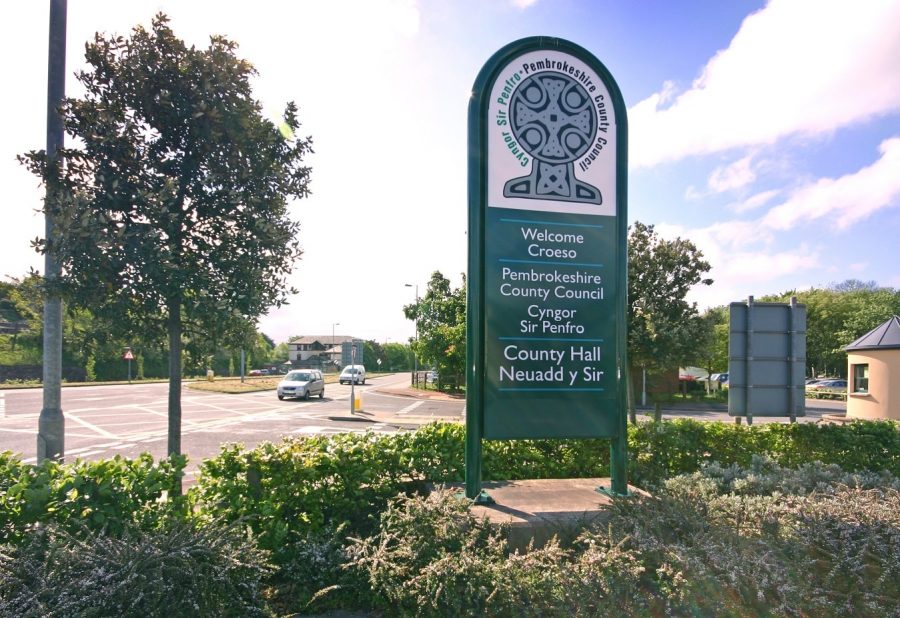
SENIOR Pembrokeshire councillors have been left to “clean up the mess” after they were asked to sign off the purchase of more than £1.1m of electric vehicles, despite the vehicles having already been bought.
Pembrokeshire County Council’s Cabinet, meeting on August 1, was asked to back the retrospective purchase of 21 small vans and 11 large vans, totalling £1,104,751.55, under the Welsh Government Electric Vehicle (EV) Collaborative Procurement Framework.
Two options were presented to Cabinet: to agree and approve the purchase, or not agree to approve the purchase, but instead require the council to negotiate with FleetEV for the return of the vehicles, noting that there is no contractual right to return them, and some of the vehicles have been adapted since being delivered.
A report for members said: “The council entered into the Welsh Government Electric Vehicle Collaborative Framework in July 2023. This is a single supplier framework used to procure EV vehicles collaboratively with other Local Authorities in Wales in order to obtain savings on purchase costs.
“In March 2024, 10 small EV vans were purchased to replace vehicles which had come to the end of their operational life.

“A further batch of 21 small vans and 11 large vans was ordered through the Welsh Government Electric Vehicle Collaborative Framework on 11 June 2024, at a total cost of £1,104,751.55 (pre VAT), and all deliveries have now been made.
“An ICM (Individual Cabinet Member decision report) was issued to the Cabinet Member for Residents’ Services [Cllr Rhys Sinnett], but this was subsequently rescinded on the basis that the report did not contain all relevant information, and should have sought retrospective approval.”
The report for members included a lengthy and comprehensive timescale leading up to the retrospective purchases with a council ‘commitment’ to purchase vehicles, the term subject to debate whether it was an interest in replacement vehicles or an outright commitment to purchase as part of the collaborative scheme.
This chronology ended up with “considerable misunderstanding around how the parties respectively had got to very different views of their positions,” the council initially considering an order of 10 Renault Kangoo electric vans, before a later order for the 32 vans, based on an understanding the procurement framework had been signed up to, with no further approval needed.

However, as this was above the limit for an officer decision, an ICM decision was needed, a report drafted on June 12, the vans shipped on June 17, before the ICM report – which had no specific reference about the purchase order having already been placed or that the vans had already been dispatched/supplied – was signed off by Cllr Sinnett.
After the June 27 sign-off was made, the decision was called-in on July 3, leading to the discovery of the omission, that sign-off rescinded on July 9.
“As a result of the circumstances described above, the Chief Executive [Will Bramble] has commissioned an audit into the governance arrangements associated with the procurement of these vehicles and the level of adherence to the authority’s Financial Procedure Rules and Contract Procedure Rules. This audit will be undertaken by the council’s Internal Audit Service,” the report said.

It added: “The Chief Executive has also initiated a management investigation into the circumstances leading to the presentation of an ICM report without the full information, and its associated recommendation for an ICM decision, which failed to include information relating to the prior purchase and receipt of the vehicles.”
While the pros and cons of electric vehicles replacing fossil fuels ones were debated at the August meeting, the main issue raised was the nature of the purchase and the inaccurate report presented for Cabinet member sign-off.
Deputy Leader Cllr Paul Miller said he was “quite happy” to back the purchase of the vehicles, the alternative option leaving the council “completely shafted” on costs, but said he was “deeply disappointed” about the background detailed.
Member for Planning & Regulatory Services Cllr Jacob Williams said: “It’s very disappointing we’re in this position; the reason we’re here today is to clear up quite a big mess. The [discussion on the] virtue of electric vehicles is a total waste of time; the ability to discuss the virtues was taken away from us by the situation we’re in.
“A mistake was made, an order was placed for vehicles when officers felt it was an ‘expression of interest,’ an attempt was made to get that decision to regularise that.”
He added: “I can’t remember a situation like this in my time as a councillor; we have no option but to approve the purchase of these vehicles retrospectively.”
He said the details only came to light after a ‘call-in’ on that decision was made by council ‘backbenchers’ over the whole virtue or otherwise of the electric vehicle purchases.
“I’m being asked, like other councillors here today, to clean up this mess; I think the vehicles being ordered is the key fact, we have no other option; what’s the alternative? Return them and get a token amount back? If they even want to purchase them.”
Members backed the three recommendations of the report: the retrospective approval of the vehicle purchases, a Chief Executive-commissioned audit into the governance arrangements associated with the procurement of these vehicles and the level of adherence to the authority’s Financial Procedure Rules and Contract Procedure Rules, along with a “management investigation into the circumstances leading to the presentation of an ICM report without the full information and its associated recommendation for an ICM decision, which failed to include information relating to the prior purchase and receipt of the vehicles”.


Politicians demand firm timeline from Hywel Dda
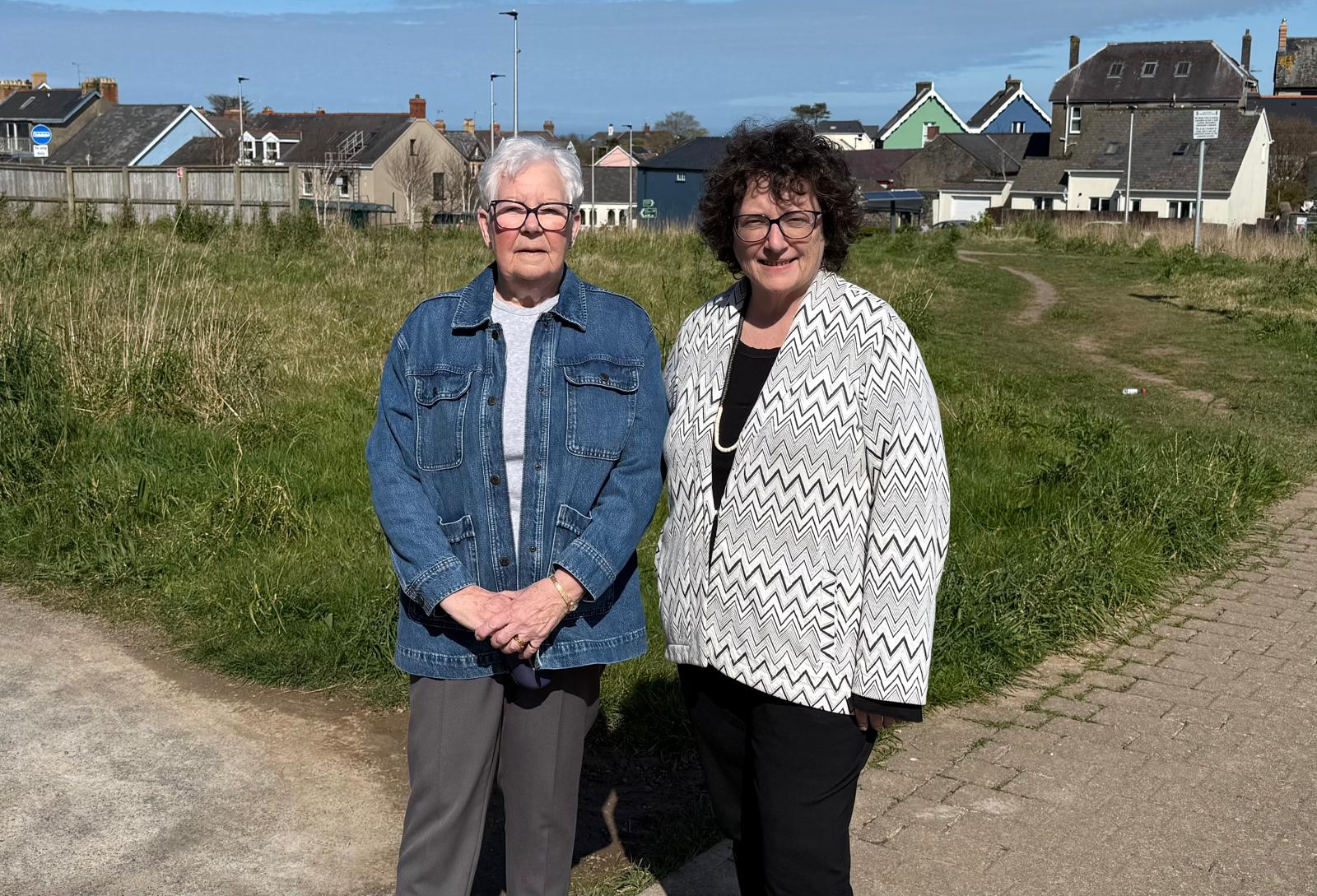
LOCAL politicians are urging Hywel Dda University Health Board to commit to delivering a long-promised integrated health and wellbeing centre for Fishguard — and to finally set out a clear timetable for the project.
The call has been made by Plaid Cymru Senedd candidate Elin Jones and Fishguard North West county councillor Pat Davies, amid growing concern that plans for the facility have stalled.
The proposed centre would serve communities across north Pembrokeshire, from St Davids and Solva to Newport, bringing a range of services together under one roof. However, despite previous expressions of support and public consultations, no confirmed funding package or delivery date has been announced.
The current health centre in Fishguard continues to operate from a building dating back to 1976.
Councillor Pat Davies said: “People in Fishguard and across north Pembrokeshire have been patient, but they deserve more than warm words. The health board has shown interest before, but interest alone is not enough.
“Our communities need a firm commitment and a clear plan. A modern, integrated health centre would transform local services and reduce the need for people to travel long distances for care that should be available on their doorstep.”
Politicians have pointed to the example of the Cardigan Integrated Care Centre, which opened in 2019. The purpose-built facility brings together GP services, dentistry, pharmacy, diagnostics, mental health and community care, and was funded through a Welsh Government budget agreement secured by Plaid Cymru.
Elin Jones said: “This is about putting in place the long-term infrastructure needed to serve north Pembrokeshire for generations.
“We have already seen what is possible when there is political will and investment. The Cardigan centre shows what can be achieved, and north Pembrokeshire deserves the same.

“I am urging Hywel Dda to move beyond the planning stage and set out a properly funded commitment to deliver this centre. If elected, I will continue to push for the investment this community needs.”
The health board has yet to confirm when, or if, the project will move forward.

Students urged to seek work overseas despite millions spent on training
NEWLY qualified paramedics in Wales are being advised to apply for jobs overseas after a recruitment freeze left graduates with no roles in the Welsh NHS.
The Welsh Ambulance Services NHS Trust has confirmed it will not be hiring newly qualified paramedics this year, citing financial and operational pressures.
The development, first reported by BBC Wales, has sparked anger among students and political figures, with some branding the situation “short-sighted” and a waste of public money.
Students left in limbo
Final-year paramedic students say they have been encouraged to look for work in countries including Canada, Australia and New Zealand.
Around 70 students are expected to graduate this summer from courses at Swansea University and Wrexham University, having completed degree-level training heavily subsidised by Healthcare Education and Improvement Wales.
Some students have undertaken placements more than 100 miles from home, expecting to move into frontline NHS roles after graduation.
Traditionally, graduates would enter the service as Newly Qualified Paramedics on Band 5 salaries, progressing to Band 6 after a period of mentorship.
However, opportunities have been shrinking. In 2025, only around a third of graduates secured paramedic posts, with others offered lower-paid technician roles instead.
‘Deeply disappointing’ decision
A spokesperson for the ambulance service said the organisation was facing a “difficult financial and operational landscape”.

They added: “Regrettably, as things stand, we are not in a position to employ newly qualified paramedics this year.”
Graduates are now being encouraged to consider roles as emergency medical technicians or to seek work elsewhere in the UK—or abroad.
Despite bursary conditions that would normally tie students to Wales, HEIW has confirmed the current cohort are now free to pursue employment outside the country.

Political backlash grows
The decision has prompted sharp criticism from across the political spectrum.
Jane Dodds described the situation as “a staggering waste of both talent and taxpayers’ money”, warning it made little sense while ambulance response times remain under pressure.
Plaid Cymru figures estimate that training costs of up to £150,000 per student could mean nearly £10 million of public investment failing to benefit Welsh patients.
Welsh Conservatives said the situation reflected a failure of workforce planning, while Welsh Labour insisted it remained committed to ensuring the NHS has the staff it needs.
Government response
A Welsh Government spokesperson said ministers were working closely with the ambulance service, HEIW and universities to address the issue and support affected graduates.
But for many students, the immediate reality is stark—after years of training for frontline roles in Wales, their careers may now begin thousands of miles away.
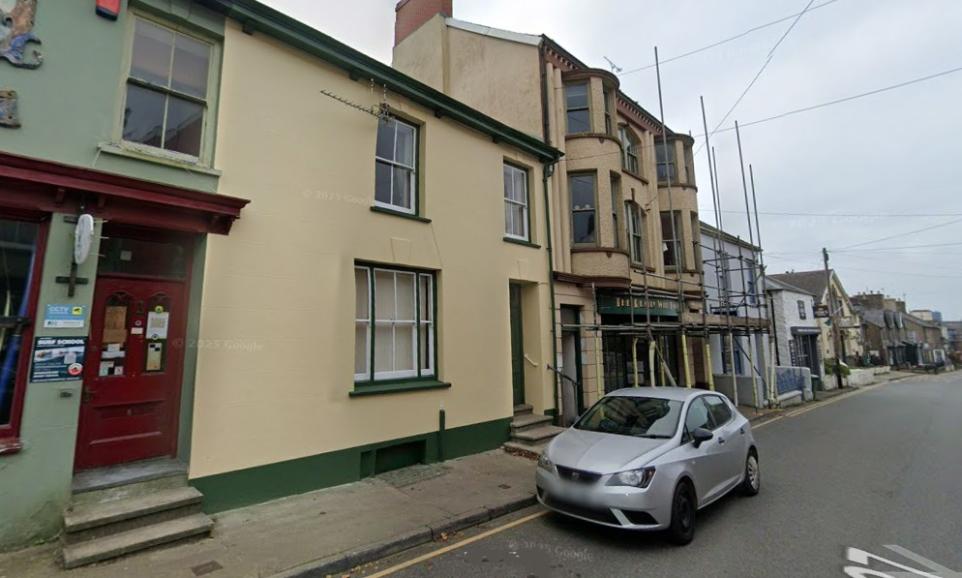
PLANS to change a former hairdressing salon in Pembrokeshire’s only city to a family-friendly coffee bar have been submitted to the national park.
In an application to Pembrokeshire Coast National Park, Gerallt Nash seeks permission for a change of use of 26 High Street, St Davids from a hairdressing salon to a family friendly coffee bar and children’s playroom.
The First floor, formerly used as accommodation of a tenant, would be used as an office and storage of business.
A supporting statement says: “It is proposed to open a family-friendly coffee bar with a children’s playroom on ground floor. It is not intended to cook food on the premises, therefore there will be no requirement for an extractor system.
“ Other than small scale repairs to part of one floor, and the installation of a sink and serving counter in the inner room (plumbing and electrics are already in place since its last use as a salon) the main work will be the redecoration of surfaces and ceilings, the provision of new light fittings and laying of new floor coverings.

“This part of High Street has been identified as a ‘commercial’ zone by PCNPA. Existing businesses close to No 26 include outdoor and surfing outlets; restaurants; clothes shops; holiday accommodation; ice cream parlour; fish and chips outlet; delicatessen and craft shops.
“The current proposal would fill a gap in the market, as most food outlets do not open until after 11am or 12pm, or only during the evenings in some cases. It would also provide somewhere for [young] families to go to unwind whilst their children can relax in the playroom.”
It says No 26, also known as ‘Preswylfa,’ was “part of a row of three shops (with dwelling accommodation above), built and owned by Thomas Evans of Solva probably during the late 1870s,” one “leased, and later purchased, by the applicant’s great grandfather, David Evans, who owned the local windmill”.
Detailing No 26’s history, it says: “Over the years, it has served as a grocery shop, veterinary surgery (before the current building at the rear of the property), café, and hairdressing salon (on at least three different occasions).

“Mrs Susan Bennett, who ran ‘Susan’s Hairdresser’ at No. 26, retired on 1 November 2024. Since then, the exterior of the property has been repainted. A new tenant, Keeley Rose, took over the lease on December 1, 2025.”
The application will be considered by park planners at a later date.



News6 hours ago
Health minister refuses to act on Withybush despite 15,000-signature petition
Senedd pressure grows as Welsh Government declines to intervene over surgery fears THE WELSH GOVERNMENT has refused to step in...

Business21 hours ago
Fishguard to Wexford rail tunnel plan backed by Elon Musk firm
Six-hour London to Dublin service proposed in £32bn project ahead of Senedd election PLANS for a rail tunnel linking west...

Charity1 day ago
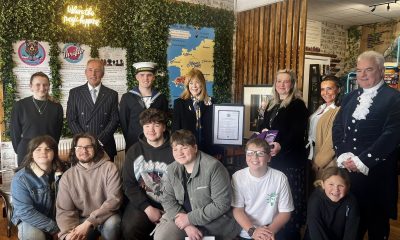
Milford Haven charity honoured with King’s Award for voluntary service
A PEMBROKESHIRE charity supporting vulnerable young people has received one of the highest honours in the UK for voluntary work....


News2 days ago
Plaid Cymru launches bid to lead next Welsh Government
Party positions itself as ‘government-in-waiting’ ahead of May election PLAID CYMRU has formally launched its campaign for the 2026 Senedd...


Crime2 days ago
Police appeal after attempted child abduction in Haverfordwest
DYFED-POWYS POLICE has launched an appeal for witnesses following a reported attempted abduction of a 12-year-old girl in Haverfordwest. The...

Crime3 days ago
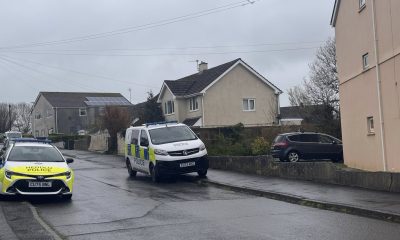
Gunshot fired by police during incident in Milford Haven
A POLICE officer discharged a firearm during an incident in Milford Haven on Saturday evening (March 28), prompting an investigation...


Community4 days ago
Three Amigos Easter Run roars through Pembrokeshire
MOTORCYCLE enthusiasts turned out in force today (Saturday, March 28) as the popular Three Amigos Easter Run returned to the...


Education5 days ago
Ysgol Henry Tudor reassures parents over Sikh ceremonial kirpan
School says religious item worn by pupil is secured, symbolic and non-functional YSGOL HENRY TUDOR has moved to reassure parents...

Crime6 days ago
Teen jailed after starting fire while others slept
Fire set in shared home left sleeping residents at risk and caused £130,000 damage A TEENAGER who started a fire...

Health6 days ago
GP crisis driving NHS pressure in Wales, Senedd report warns
Falling GP numbers and funding gaps blamed for worsening hospital delays THE NHS crisis highlighted earlier this week is being...
-
 Community6 days ago
Hero female officer keeps job after sexual touching finding
-
Education5 days ago
Ysgol Henry Tudor reassures parents over Sikh ceremonial kirpan
-
 Business6 days ago
Popular Italian restaurant hit with £278,000 tax bill plus £186,000 fine
-
Health6 days ago
GP crisis driving NHS pressure in Wales, Senedd report warns
-
 Climate6 days ago
Port Talbot confirmed as ‘cornerstone’ for wind — questions remain for Milford Haven
-
 Crime5 days ago
Taylor wins appeal as Crown Court quashes ‘no insurance’ conviction
-
Crime6 days ago
Teen jailed after starting fire while others slept
-
 Business7 days ago
Haverfordwest Cartlett chocolate factory call refused