


Politics
Drakeford warns of £7bn cuts if Welsh Government budget not passed

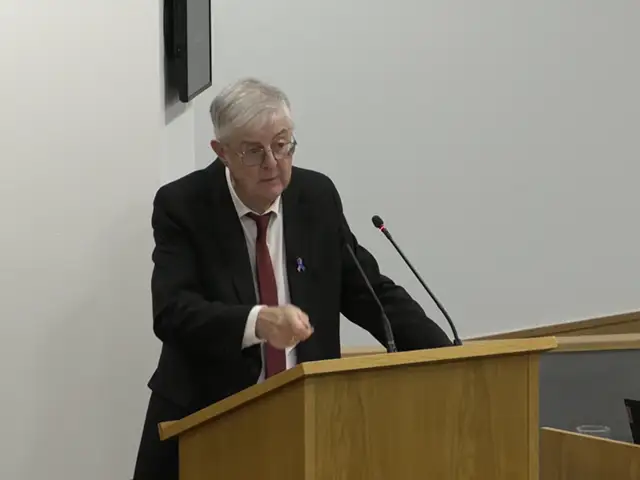
MARK DRAKEFORD has thrown down the gauntlet to opposition parties, warning that failing to pass the Welsh budget would result in cuts of up to £7bn and thousands of job losses.
The finance secretary dangled an olive branch, with £380m on the table to find “common priorities” with other parties to get the Welsh Government’s £27bn draft budget over the line.
Labour needs the support of at least one opposition Senedd member – and likely two depending on the Caerphilly by-election result on October 23 – to pass its 2026/27 budget. Failure to agree a budget would result in public services in Wales facing sweeping cuts.
Prof Drakeford warned the Senedd: “The weeks ahead must culminate in the passing of a budget… every member here will have a part to play, every political party a responsibility.”
In the event of no deal, the former first minister added: “Instead of me coming forward with a budget that adds £800m into our public services, I would be coming forward with a budget that cuts everything this Senedd does by between £6bn and £7bn.”

The £7bn figure revealed by Prof Drakeford is higher then the £4bn previously estimated by Caerphilly Observer.
During a debate on October 14 on the outline spending plans for the 12 months from April, Sam Rowlands, the Tory shadow finance secretary, pointed to his party’s offer of talks.
The Conservatives suggested their support would depend on ministers scrapping land transaction tax for people’s primary homes. Wales’ equivalent of stamp duty, which is levied on commercial and residential property purchases, is forecast to raise £401m next year.
At first minister’s questions earlier the same day – Eluned Morgan welcomed talks on a deal with the Tories, telling opposition leader Darren Millar: “I am very pleased that you’ve written to me today – this demonstrates grown up politics…. our door is open.”

Heledd Fychan, Plaid Cymru’s shadow finance secretary, expressed concerns about the impact on local government of passing the budget as drafted, warning of council tax increases of up to 20% and thousands of jobs lost to make up a shortfall.
Ms Fychan said: “The warnings have been clear, so there is a requirement on us to be mature in our approach to this debate in the coming months.”
Labour’s Mike Hedges warned of “catastrophic” consequences for the people of Wales if the budget is not passed, pointing out that Senedd politicians’ salaries could also be affected. He warned a planned 2-3% increase in the budget would result in a real-terms cut.

Jane Dodds, the leader of the Liberal Democrats in Wales and the party’s sole Senedd member, struck a deal with ministers worth about £100m to pass last year’s budget.
She told Senedd members: “I am prepared and willing to work with any party to find a constructive way forward with this budget as I did last year. We need to be ambitious.”
Prof Drakeford confirmed the draft budget does not include funding to further extend the retail, leisure and hospitality rates relief scheme. But he announced plans to cut business rates for “bricks-and-mortar” shops, with the details to follow in January’s final budget.
The finance secretary stressed the draft budget is the beginning of the process, not the end. Setting out what’s at stake, he told the Senedd: “These are people’s pay packets; they are the accounts of local businesses; the free school meals and teaching materials in our schools; the new trains on our railways and homes in our communities.
“They are the thousands of childcare placements which look after our children; the new roof on an art gallery; the prescriptions taken every day and the new life-saving medicines.”
The former first minister confirmed the Welsh Government would provide a “funding floor” in the draft budget, with the aim of ensuring no council receives less than a 2.3% increase.
In closing, he said: “We must work together to secure a final budget which can be passed…. It is our responsibility as elected members to secure the best possible budget for public services in Wales. To that end, I urge all members to engage with me in discussions over the coming weeks so this draft budget can lead to a final set of proposals which can be passed.”


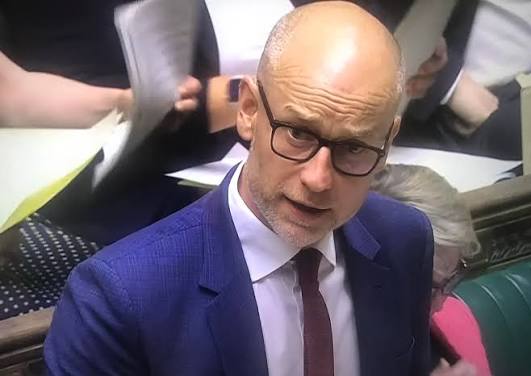
Stephen Kinnock has been named the new Secretary of State for Wales after Prime Minister Andy Burnham unveiled his first Cabinet reshuffle, replacing Jo Stevens following two years in the post.
The appointment comes as the new Prime Minister continues to shape his government after entering Downing Street, with the Wales Office among a number of departments seeing changes at ministerial level.
Mr Kinnock, the Labour MP for Aberafan Maesteg, takes over responsibility for representing Welsh interests at the Cabinet table and overseeing the UK Government’s relationship with the Welsh Government.
The 55-year-old has served in Parliament since 2015 and has held a number of ministerial positions. Before joining the Cabinet, he served as a minister in both the Home Office and the Department of Health and Social Care, where he was involved in immigration, public health and NHS-related policy.
He is also well known as the son of former Labour leader Neil Kinnock, one of Wales’ most prominent political figures, and former European Commissioner Glenys Kinnock.
Mr Kinnock replaces Jo Stevens, who has served as Secretary of State for Wales since 2024. During her tenure she worked on issues including economic investment, the transition to green energy, rail infrastructure and cooperation between the UK and Welsh Governments.
The change follows Prime Minister Andy Burnham’s first Cabinet reshuffle since taking office, with several senior ministerial appointments announced as he begins setting out the priorities of his new administration.
As Secretary of State for Wales, Mr Kinnock will be expected to play a key role in discussions over economic growth, energy, transport, the future of the steel industry, and constitutional matters affecting Wales. He is also likely to be heavily involved in negotiations between Westminster and Cardiff Bay as the Burnham Government develops its agenda.
His appointment will be closely watched across Wales, including in Pembrokeshire, where businesses, local authorities and public services will be looking for signs of how the new Government intends to deliver on its promises for investment, infrastructure and economic development.
Further announcements on the new Government’s programme are expected in the coming days.

Henry Tufnell welcomes Prime Minister Andy Burnham’s first cost-of-living measure, which will remove VAT from domestic electricity bills from October
HOUSEHOLDS across Pembrokeshire are expected to save around £45 a year after Prime Minister Andy Burnham announced that VAT will be removed from domestic electricity bills.
The UK-wide tax cut will reduce the VAT rate on household electricity from 5% to zero from October 1, in time to be reflected in the next Ofgem energy price cap.
The Government says energy suppliers will be expected to pass the full reduction on to customers, including households on fixed-price tariffs.
Henry Tufnell, Labour MP for Mid and South Pembrokeshire, welcomed the announcement and said rising energy costs had placed considerable pressure on families across the county.
Mr Tufnell said: “I know just how hard it’s been for so many people across Pembrokeshire struggling with high energy bills.
“It is fantastic to see immediate action from our new Prime Minister, focused on making life easier for people in Pembrokeshire.
“Cutting VAT on electricity will bring welcome relief to local families and shows that we have a Labour government on our side, taking swift action to ease the cost of living.”
The measure is one of the first policy announcements made by Mr Burnham since entering Downing Street.
Speaking on his second day as Prime Minister, Mr Burnham said the tax reduction was intended to provide households with immediate “breathing space” ahead of the winter.
He said: “Westminster has not been working for people for too long, with families struggling with the cost of living.
“That needs to change. I said I wanted to give people breathing space, and that’s what I’m announcing on my second day as Prime Minister.
“We’re taking immediate action to cut taxes on energy bills, put more money in people’s pockets and bring back hope.”

The Government estimates that removing VAT will reduce the annual Ofgem price cap by approximately £45 from October.
Ministers say this will be in addition to the £150 reduction in energy costs announced at the previous Budget.
Although the saving will apply across the UK, it could be particularly welcome in rural areas such as Pembrokeshire, where many households face additional transport, housing and heating costs.
The Government says the VAT reduction will initially be funded through the cancellation of the planned £1.8 billion Digital ID programme.
The electricity tax cut is expected to cost approximately £850 million during the 2026-27 financial year, although updated estimates will be published at the Budget.
Chancellor John Healey said: “For too long, too many people have struggled with the cost of living.
“Today’s energy tax cut will give families some breathing room on bills and provide some reassurance this winter.
“This measure is funded this year from cancelling the Digital ID programme, and it will help bring down inflation while supporting households in every postcode.”
Ministers estimate that the VAT cut could reduce CPI inflation by around 0.1 percentage points.
The relief will also apply to some small businesses that qualify for domestic energy VAT rates but are not VAT registered, along with eligible charities and residential care homes.
Further decisions on longer-term support for energy bills are expected to be announced alongside the Budget and an updated forecast from the Office for Budget Responsibility.

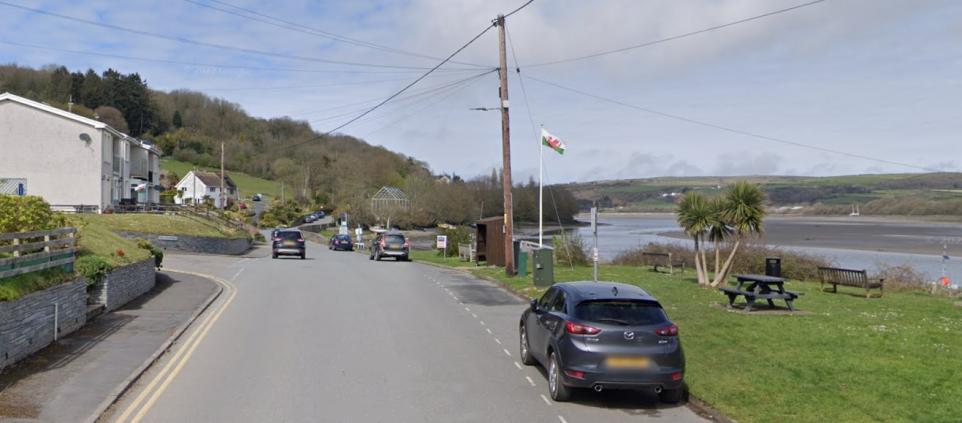
PLANS to convert a former Pembrokeshire chapel, empty for more than three decades, to a home have been approved.
In an application submitted to Pembrokeshire Coast National Park, through agent Preseli Planning Ltd, Chris Jones and Sarah Lloyd sought permission for a change of use of the former Capel Bryn Salem chapel, Cippyn, St Dogmaels, to a dwelling, along with the installation of private foul water system and associated works.
The 1850-built independent chapel, some 1.5km from Poppit Sands, had fallen into disuse by 1993, but remains in a “generally intact and in a sound condition,” a supporting statement says.
It added: “Based on the fact that the building has been disused for at least 32 years it can be concluded that there is no longer a community need for the facility.”
The statement went on to say: “The building is largely intact, and the proposal mirrors its existing form. The scheme is sympathetic to the character and appearance of the existing building and would include comparatively minor works of re-roofing (maintaining the existing pitch and appearance).”
It finished: “It has been demonstrated that the retention of the building for community or commercial uses would not be viable. The proposed dwelling would contribute to the housing stock and accord with the strategy of the LDP2, to prioritise open market housing over holiday accommodation.
“The proposal would also contribute towards the provision of affordable housing through a commuted sum in line [with adopted policy].
“Furthermore, the proposed scheme is sympathetic to the character and appearance of the building and its setting and results in an appropriate and attractive form of development.”
The application was supported by St Dogmaels Community Council but concerns by members of the public were raised including the suitability of the existing access track and bridleway to serve a residential building and other access and highways issues, as well as impacts on neighbours and the effect of the proposal on the historic character of the former chapel and the surrounding landscape and potential land ownership issues.
An officer report recommending approval said: “During the determination of the application, amended plans and additional supporting information were submitted, including a revised Transport Management Plan, amended access arrangements, additional passing opportunities, ecological information and revised drainage details. These amendments were subject to further consultation.”
It added: “Whilst officers acknowledge the concerns expressed by neighbouring residents, matters relating to private legal rights, ownership of land, easements and other civil matters fall outside the remit of the planning system.”
The application was conditionally approved.




Crime6 hours ago
Man, 37, found dead following major police response in Pembroke Dock
Death not being treated as suspicious as police make statutory referral to IOPC following active investigation A 37-YEAR-OLD man has...


Community10 hours ago
Household Cavalry drum horse returns home to Pembrokeshire for final farewell
Dyfed Willa Rose, who became Major Juno and the first mare to serve as a Household Cavalry Drum Horse, was...

News1 day ago
Jo Stevens out as Welsh Secretary as Burnham reshapes government
Cardiff East MP repeatedly visited Pembrokeshire to champion clean energy jobs, but her successor inherits unresolved questions over Milford Haven’s...


Crime1 day ago
Teen cleared of attempted murder but guilty of GBH after Milford teacher stabbed
Jury returns 11-1 majority verdict on charge of causing grievous bodily harm with intent, with sentencing set for September 3...


Community1 day ago
French troops march through Fishguard as Britain’s last invasion returns to life
Battle scenes, cavalry displays and a surrender procession brought one of Pembrokeshire’s most extraordinary stories back to the streets MUSKET...


News1 day ago
Andy Burnham promises new politics as he enters Downing Street
New Prime Minister admits politicians have “not been good enough” as he sets out a ten-year plan for Britain and...


Health2 days ago
Two new surgeons appointed as Hywel Dda admits orthopaedic waits remain too long
Health board says it is increasing capacity after figures revealed hip replacement patients waited an average of 64 weeks HYWEL...


Community3 days ago
84-year-old man rescued after falling overboard near Tenby
A MAYDAY call sparked a major nighttime rescue after an 84-year-old man fell from a tender and was swept towards...


Crime4 days ago
Jury hears final arguments in Milford Haven teacher stabbing trial
Defence says there was no motive or intention to kill as judge reviews competing accounts of classroom knife incident SPECIAL...

News4 days ago
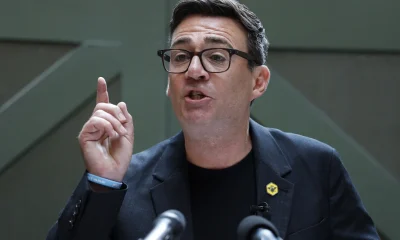
Andy Burnham becomes Labour leader and prepares to enter No 10
Former Greater Manchester mayor promises an ‘unashamedly Labour’ government after completing extraordinary return to Westminster ANDY BURNHAM has been formally...
-

 Health1 day ago
Welsh Ambulance Service invites public to AGM and Board meeting
-

 featured7 hours ago
From a father-and-son project to an award-winning campervan business
-
Crime1 day ago
Teen cleared of attempted murder but guilty of GBH after Milford teacher stabbed
-

 Crime1 day ago
What the Milford Haven School stabbing verdict really means
-

 Business2 days ago
Port appoints two new directors as energy and regeneration projects advance
-

 Entertainment1 day ago
Imperial Hotel announces four-day Bank Holiday celebration in Tenby
-
Community10 hours ago
Household Cavalry drum horse returns home to Pembrokeshire for final farewell
-

 Entertainment2 days ago
VegOut West brings food, music and festival atmosphere to Pembrokeshire