


Community
The long history of The Tiddly

 Thomas Jenkins opened a pub in ‘Low Freystrop. in 1811 and ran it for a couple of years. It was called the New Inn, and the landlady from 1813 to 1827 was Martha Cozens; the address was sometimes given as ‘Mutton Hall’. Joseph Phillips took over, but nothing more is known about this pub. It appears that when she left the New Inn, Martha Cozens opened the Lamb and Flag nearby and she carried on running this wayside inn until 1841. Coalminer Owen Jenkins was landlord from 1851 to 1861 and James Yea was in charge in 1867. The pub, which was in Lower Freystrop near the junction with the lane to Little Milford. was converted into a grocery shop shortly afterwards. It may have been the building now much modernised and called ‘The Old Manse’.
The closure of the Lamb and Flag left a gap in the market which was filled by the Travellers’ Rest at the foot of the hill; quite possibly the licence was transferred. This pub was up and running by 1869 when it was kept by William Gwilliam, a mariner, and his wife Martha. lowever she died that year, aged 26, and coal miner and publican Absalom James ran the Weary Traveller (sic) in 1871 — presumably an error in the census. George Russell was landlord of the Travellers’ Rest in 1874 and John Russell was in charge.
In 1880. George Morgan held the licence from 1891 to 1917 when the pub was better known as ‘the Tiddley’, which it still is — perhaps a throwback to the days when beer- houses were known as `Kiddleywinks’.
George Morgan was followed by William Cousins and his wife Sarah who were there for 40 years – he was always known as ‘Billy the Tiddley’. Thomas Maxted was landlord in the early 1960s followed by Freddie Holder who later ran the New Anchor in Hook. Former navy man Ron Pitt, who was there in the 1970s, played host to the pub’s most famous visitor when Prince Charles dropped in for a drink one evening with a few naval officers while he was staying at Brawdy. The Pitts were succeeded by Neville and Jane Lewis, and when they left to run the Cottage Inn at Llangwm the `Tiddley’ was taken over by Brian James.
John Fry & Adrian Price both had periods in charge before licensee, Angela Jarvis took over in 2001. The new millennium brought it’s fair share of landlords and ladies, working hard to keep the quaint, country pub alive during a stifling recession and a country being consumed by a commercial market.

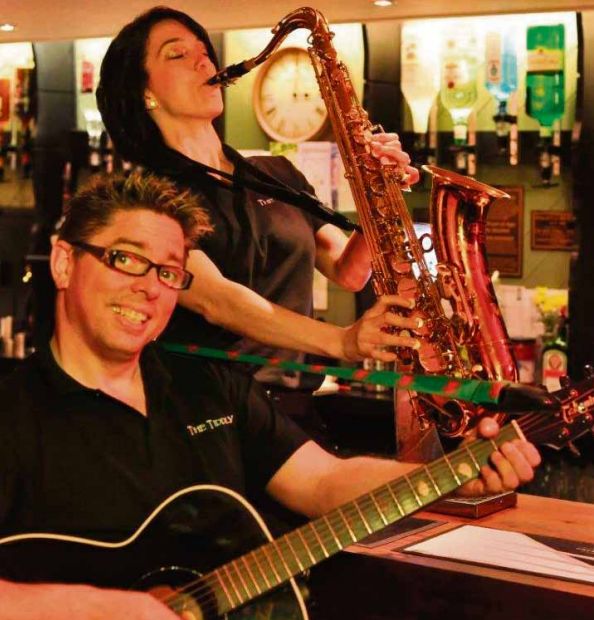
On 16 November 2013, The Tiddly will re-open in the hands of husband and wife, Matt & Ang Baker. The ambitious couple plan to bring life back into the pub and the community with delicious home-made food, an array of drinks and live entertainment that will be offered every week. Come and make history at the Tiddly.


FREE LIFE-SAVING SESSIONS AVAILABLE ACROSS THE REGION
A CARMARTHENSHIRE-based training company is offering free first aid awareness talks to community groups across West Wales.
Pinnacle Workforce Training Ltd, founded by trainer and health and social care professional Andrew James-Deakin, is inviting organisations including Women’s Institutes, U3A groups, Rotary Clubs, Probus Clubs, churches, charities and community groups to book an interactive presentation.
The session, titled Could You Save a Life? Practical First Aid for Everyday Emergencies, covers CPR awareness, defibrillator use, choking, stroke recognition, heart attack awareness, burns and scalds, falls, seizures and anaphylaxis.
Andrew, who has more than 25 years’ experience in training, assessment, quality assurance, leadership and health and social care, said: “Many people worry that they would not know what to do if someone collapsed, suffered a stroke, had a heart attack or started choking.
“These talks are designed to give people confidence and practical knowledge that could make a real difference while waiting for professional help to arrive.”
The sessions are designed to be informative, engaging and interactive, giving participants practical knowledge that could help them support family members, friends, colleagues or members of the public during an emergency.
As part of a community introduction programme, Pinnacle Workforce Training Ltd is currently offering the talks free of charge.
Organisations within 20 miles of Llanelli can book a session at no cost, while groups further afield are only asked to cover travel expenses.
Andrew added: “One of the aims of Pinnacle Workforce Training is to support local communities by making valuable skills and knowledge accessible to as many people as possible.

“If even one person leaves a session feeling more confident to help in an emergency, it will have been worthwhile.”
Community organisations interested in arranging a talk can contact Andrew James-Deakin on 07364 138827 or email [email protected].
Andrew James-Deakin: Director of Pinnacle Workforce Training Ltd, pictured on the River Towy footbridge in Carmarthen (Pic: Supplied).


‘PETTY AND MINDLESS’ ATTACK CRITICISED BY LOCAL COUNCILLOR AND MS
A PEMBROKESHIRE councillor has condemned “mindless” graffiti daubed on a wall in Johnston, saying it sends the wrong message to children, visitors and residents.
Cllr Aled Thomas, who represents Johnston, said he was “really angry” after seeing the words sprayed in blue paint in the village.
He said he was not personally offended by the abuse, but was upset by the impact on the wider community.
Cllr Thomas said: “What really angered me was what type of message this sends to visitors and young people in our community, particularly as there are so many hardworking people behind the scenes just trying to make Johnston a better place for everyone.”
He said Johnston Community Council had worked hard to improve local green spaces, including Glebelands Field, the Woodland Walk and Vine Field, as well as ensuring play parks were safe to use.
He added: “Someone throwing all that hard work by local residents down the drain by detracting from it with petty graffiti makes me angry.”
The councillor also said children walking to Johnston School should not be exposed to “mindless disgusting language”, adding that staff and governors worked hard to foster “decency and respect”.
Addressing whoever was responsible, he said: “If you have a personal problem with me or my party, I suggest you reach out to me to discuss your problems without ruining the village for everyone else.
“Failing that, you can graffiti your ballot paper next May instead and vote me out as your local councillor — but until that day comes, I’ll continue doing my very best to help Johnston and its residents thrive, and no graffiti will ever stop me.”
Paul Davies MS also criticised the vandalism, saying: “This is absolutely disgraceful. Of course, I realise that people disagree with our views as Conservatives but to vandalise, use this language and spoil our environment is totally unacceptable.”
Photo caption:
Vandalism condemned: Graffiti sprayed on a wall in Johnston has been criticised by Cllr Aled Thomas and Paul Davies MS (Pic: Facebook).

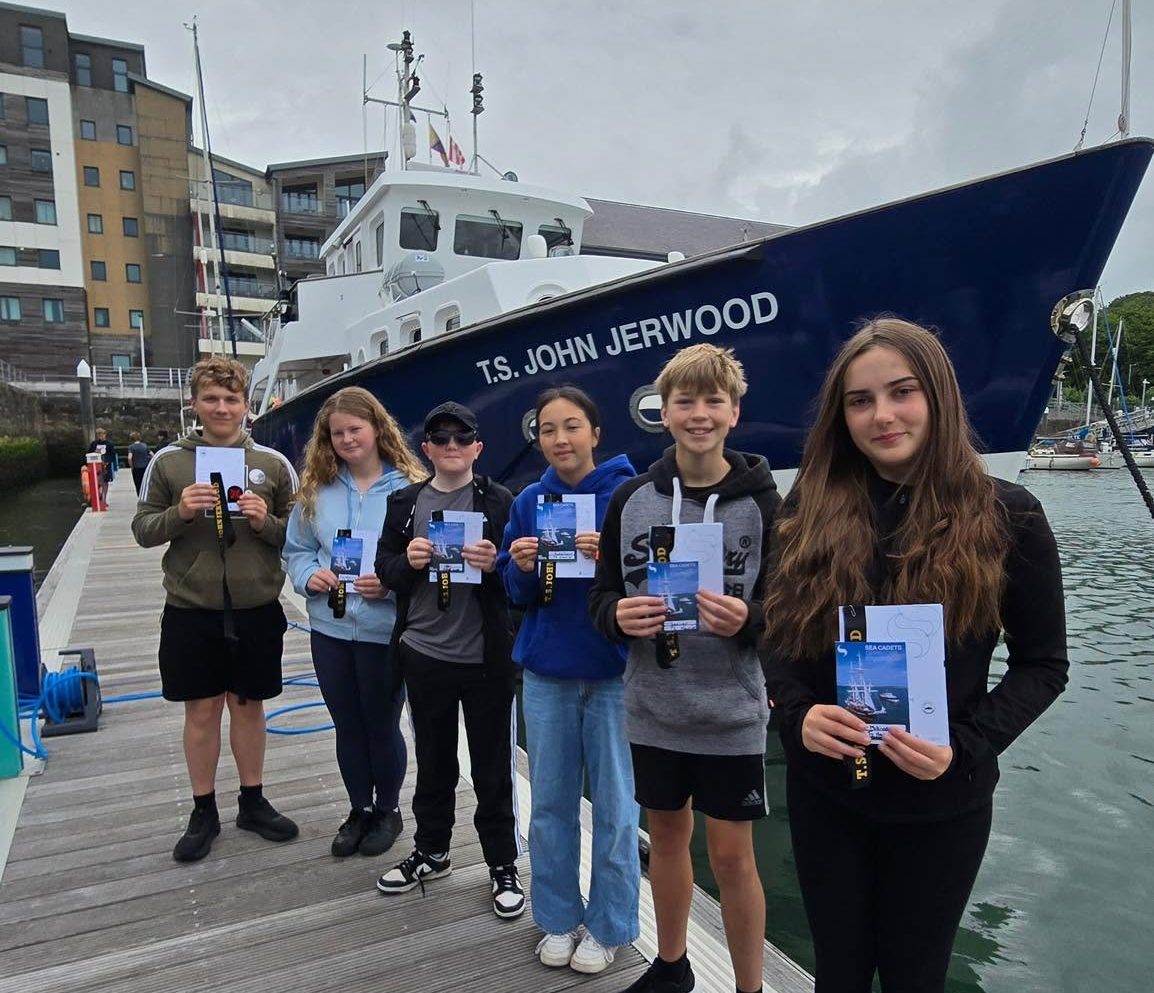
SIX CADETS from Milford Haven Sea Cadets and Royal Marines Cadets have completed a challenging week-long offshore voyage aboard T.S. John Jerwood.
The cadets took to the water for a demanding but enjoyable week, gaining a number of qualifications despite difficult weather conditions.
The unit congratulated all six cadets on their achievements and thanked the Sea Cadet Offshore team for making the voyage possible.
A spokesperson said: “Voyages like this are only made possible by the brilliant Sea Cadet Offshore team. Thank you for the amazing work you do to allow this amazing opportunity to be possible.
“BZ all!”
The Milford Haven unit also thanked West Wales District Sea Cadets, South West Area Sea Cadets, Sea Cadets Offshore, South West Area Senior Staff Officer, and RFCA for Wales for their support.



Crime1 hour ago
Families condemn failed appeal by paddleboard boss jailed over Haverfordwest tragedy
RELATIVES SAY LATEST COURT BID HAS REOPENED PAIN AFTER FOUR DEATHS ON WESTERN CLEDDAU THE FAMILIES of victims of the...

Community18 hours ago
Forgotten wartime archive found in Pembroke Dock attic after 80 years
Remarkable family collection reveals story of father and son who served through two world wars A REMARKABLE untouched family archive...


Crime21 hours ago
Milford Haven woman left with facial fractures after drunken attack
A WOMAN in her late fifties suffered facial fractures after being repeatedly punched through the window of her car during...


Crime23 hours ago
Sex offender in senior role at Tenby family hotel
CREST HOTEL GROUP says it is investigating safeguarding concerns after staff at the Imperial Hotel in Tenby raised alarm over...


Sport1 day ago
Runners tackle new route in Ras Y Castell 10k
MORE than 90 runners took to the streets and paths around Cardigan on Friday evening (June 5) for the annual...


Business2 days ago
Turkish Kitchen reaches Welsh restaurant award semi-finals
Haverfordwest café praised as small independent business flies flag for Pembrokeshire A HAVERFORDWEST café has been named as a semi-finalist...


News2 days ago
Person taken to hospital after major emergency response on Tenby Esplanade
A PERSON has been taken to hospital following a major multi-agency emergency response on The Esplanade in Tenby. Dyfed-Powys Police...


News2 days ago
St Davids lifeboat crews rescue damaged yacht and stranded kayaker
TWO St Davids RNLI lifeboats were launched within hours of each other after a yacht was left disabled in a...


Community3 days ago
D-Day 82: Milford Haven remembers sacrifice of Normandy landings
COMMUNITIES gathered in Milford Haven on Saturday (Jun 6) to mark the 82nd anniversary of D-Day. The service, held at...


News3 days ago
D-Day at 82: The secret Pembrokeshire invasion that helped prepare for Normandy
Forgotten wartime operation saw thousands of troops storm Pembrokeshire beaches in rehearsal for D-Day LONG before Allied troops landed on...
-
Crime4 days ago
Paddleboard company owner loses bid to cut sentence over Haverfordwest tragedy
-

 Crime3 days ago
Milford Haven man admits harassment and assault
-

 Crime6 days ago
Milford Haven man bit neighbour’s neck near cashpoint
-

 News3 days ago
Community appeal for privacy after serious emergency in Pendine
-

 Crime7 days ago
Milford Haven man jailed for illegal Premier League streaming service
-
Crime7 days ago
Haverfordwest man admits cocaine offence as Crown disputes basis of plea
-

 Crime6 days ago
Pembroke Dock driver avoided jail after drug-drive crash
-

 Local Government7 days ago
National Express use of new Haverfordwest interchange still subject to risk checks
Richard Jenkins
July 5, 2015 at 1:10 pm
Hi really interesting article, I do believe Thomas Jenkins may have been my been my 3rd Great Grandfather, I would love to receive any more information from the author of this article. Owen Jenkins may have been Thomas’ son. Both of whom were in Freystrop at this time. Although a later census shows Owen may have been a tailor.
Gizbo Casino Spiele
December 20, 2025 at 4:09 am
20Bet hat mit den herausragendsten Spieleanbietern zusammengearbeitet, um ein solides Kundenerlebnis
zu bieten. Um sicherzustellen, dass Sie mit der 20bet-App eine umfassende Erfahrung machen, sind alle Funktionen der Website über die Anwendung verfügbar.
Über die Anwendung können sich Benutzer registrieren und ein Konto bei 20bet erstellen. Die 20bet App
ist eine kostenlose Anwendung, die Nutzer auf ihre
mobilen Android- oder iOS-Geräte, Tablets und den Desktop herunterladen können. Sie können so viel Geld abheben, wie Sie wollen, es sei
denn, Ihr Zahlungsanbieter verlangt ein Auszahlungslimit.
Wenn Sie das Bonusguthaben für die ersten Einzahlungen beanspruchen möchten, wählen Sie im Rahmen der Registrierung einfach die gewünschte Aktion aus.
Mit einem Aufschlag von 100% können Sie sich bei Ihrer erstmaligen Einzahlung einen Bonus bis zu 120 Euro sowie 120 Freispiele für den Slot Elvis Frog in Vegas
sichern. Die Freispiele werden neuen Nutzern sofort nach der
erfolgreichen Registrierung gutgeschrieben.
Gelegenheitsspieler kommen aber auch auf ihre Kosten, da
an vielen der angebotenen Live Spiele Spieleinsätze bereits
ab 0,10€ möglich sind. Hier siehst du neben der aktuellen Auszahlungsquote der Spiele auch, wie viele andere Spieler derzeit an diesem Slot spielen. Das umfangreichste Portfolio
an Casinospielen findest du im Bereich der Spielautomaten bei
20Bet.
References:
https://online-spielhallen.de/umfassende-bewertung-des-avantgarde-casinos-ein-detaillierter-blick/
brutal porn movies
January 27, 2026 at 6:45 am
Expliciet materiaal is beschikbaar op verschillende adult websites voor vermaak.
Kies altijd voor betrouwbare adult sites.
Feel free to surf to my blog … brutal porn movies
areonlinecasinoslegalinaustralia
February 13, 2026 at 9:50 am
Best online casino Australia real money 2025 – top picks for Aussies
轧戏爱一帆
February 13, 2026 at 9:50 am
多瑙高清完整官方版,海外华人可免费观看最新热播剧集。
onlinecasinoaustraliarealmoneyeasywithdrawal
February 15, 2026 at 2:00 pm
捕风追影在线免费在线观看,海外华人专属平台,高清无广告体验。
onlinecasinosaustralia
February 18, 2026 at 1:34 am
Online casino real money Australia – easy deposits via PayID & more
recommendedonlinecasinos
February 18, 2026 at 1:34 am
Online casino real money Australia – easy deposits via PayID & more
bestcasinoonline
February 18, 2026 at 9:41 am
真实的人类第一季高清完整版,海外华人可免费观看最新热播剧集。
8800bet
March 24, 2026 at 8:10 am
Jogo do Tigrinho ao vivo: quem já ganhou big win assistindo dealer brasileiro?
pgslotdemo
March 24, 2026 at 8:10 am
Fortune Tiger cartinha misteriosa: quantas vezes você já pegou x10?
jogodotigrinhográtisdemo
March 24, 2026 at 4:23 pm
Fortune Tiger x Fortune Rabbit: qual você joga mais em 2026? Vote nos comentários!
fortune-rabbit-passo-a-passo
April 16, 2026 at 12:31 am
Pix de valor baixo segue dominando as entradas rápidas.
lucky-slots
April 16, 2026 at 7:06 am
Fortune Ox segue atraindo quem gosta de intensidade.
Dragon Hatch how to win
May 1, 2026 at 8:02 am
Treasures of Aztec on auto-spin works best with a pre-defined limit.
Marto Tibe
May 30, 2026 at 11:23 am
nicee content keep writing
Sinu Deban
May 30, 2026 at 11:49 am
I Am Going To have to come back again when my course load lets up – however I am taking your Rss feed so i can go through your site offline. Thanks.
Marto Tibe
May 30, 2026 at 12:54 pm
The post is absolutely great! Lots of great info and inspiration, both of which we all need! Also like to admire the time and effort you put into your blog and detailed information you offer! I will bookmark your website!
Sinu Deban
May 30, 2026 at 4:21 pm
Thanks for discussing the issues and covering them in a well written format.
SABONG67
May 31, 2026 at 8:46 am
Our community leaders need to read this, and look at developing some of your recommendations.
Đá Gà Trực Tiếp
May 31, 2026 at 10:19 am
you may have an ideal blog here! would you prefer to make some invite posts on my blog?
kasyno online
June 3, 2026 at 1:15 pm
However, it is virtually all done with tongues rooted solidly in cheeks, and everyone has absolutely nothing but absolutely love for his or her friendly neighborhood scapegoat. The truth is, he is not just a pushover. He is basically that special variety of person strong enough to take all of that good natured ribbing for exactly what it is.
kasyno online opinie
June 3, 2026 at 1:48 pm
We are a group of volunteers and starting a new initiative in our community. Your blog provided us with valuable information to work on|.You have done a marvellous job!
najlepsze kasyna online
June 3, 2026 at 2:07 pm
I absolutely adore your site! You aggressive me as able-bodied as all the others actuality and your broiled PS is absolutely great!
online casino
June 3, 2026 at 2:32 pm
Our communities really need to deal with this.
best online casino
June 3, 2026 at 3:04 pm
I want to see your book when it comes out.
best online casino nz
June 3, 2026 at 11:42 pm
While this issue can vexed most people, my thought is that there has to be a middle or common ground that we all can find. I do value that you’ve added pertinent and sound commentary here though. Thank you!
best online casino nz
June 4, 2026 at 12:19 am
Hi there, just became aware of your blog through Google, and found that it’s truly informative. It’s important to cover these trends.
online casino
June 4, 2026 at 12:32 am
Thanks for some other great post. Where else may anybody get that kind of information in such an ideal method of writing? I’ve a presentation next week, and I am at the look for such information.
best online casino
June 4, 2026 at 3:51 am
Developing a framework is important.
best online casino
June 4, 2026 at 4:06 am
Of course, what a great site and informative posts, I will add backlink – bookmark this site? Regards, Reader
best online casino new zealand
June 4, 2026 at 4:32 am
Might we expect to see more of these same problems in the future?
best online casino
June 4, 2026 at 4:37 am
Surprisingly good post. I really found your primary webpage and additionally wanted to suggest that have essentially enjoyed searching your website blog posts. Whatever the case I’ll always be subscribing to your entire supply and I hope you jot down ever again soon!
kasyno online
June 4, 2026 at 12:21 pm
Thanks , I’ve recently been searching for info about this topic for ages and yours is the best I have discovered so far. But, what concerning the bottom line? Are you certain concerning the source?
parhaat nettikasinot
June 4, 2026 at 12:39 pm
I came across an article that talks about the same thing but even more and when you go deeper.
najlepsze kasyna online
June 4, 2026 at 12:56 pm
It’s the best time to make some plans for the future and it is time to be happy. I’ve read this post and if I could I wish to suggest you some interesting things or tips. Maybe you can write next articles referring to this article. I wish to read even more things about it!
Τα Καλύτερα Online Casino
June 4, 2026 at 1:01 pm
You are a very smart person! 🙂
kasyno online
June 4, 2026 at 1:46 pm
Thanks for sharing the information. I found the information very useful. That’s a awesome story you posted. I will come back to scan some more.
najlepsze kasyno online
June 4, 2026 at 2:27 pm
hey thanks for the info. appreciate the good work
Τα Καλύτερα Online Casino
June 4, 2026 at 4:36 pm
Wow, amazing blog layout! How long have you been blogging for? you made blogging look easy. The overall look of your site is great, as well as the content!
cheap sex webcams
June 4, 2026 at 5:28 pm
With internet full of dupe articles it is nice to find original content like yours thank you so very much.
najlepsze kasyno online
June 4, 2026 at 6:54 pm
Wow, amazing blog layout! How long have you been blogging for? you made blogging look easy. The overall look of your site is great, as well as the content!
kasyno online
June 4, 2026 at 7:14 pm
I’m so happy to read this. This is the type of manual that needs to be given and not the random misinformation that’s at the other blogs. Appreciate your sharing this best doc.
kasyna internetowe
June 6, 2026 at 12:57 pm
Im impressed. I dont think Ive met anyone who knows as much about this subject as you do. Youre truly well informed and very intelligent. You wrote something that people could understand and made the subject intriguing for everyone. Really, great blog youve got here.
najlepsze kasyna online
June 6, 2026 at 1:38 pm
I saw a similar post on another website but the points were not as well articulated.
best online casino
June 6, 2026 at 1:50 pm
you may have an ideal blog here! would you prefer to make some invite posts on my blog?
online casino nz
June 6, 2026 at 2:32 pm
This is really interesting, You’re a very skilled blogger. I have joined your feed and look forward to seeking more of your great post. Also, I’ve shared your web site in my social networks!
best online casino
June 6, 2026 at 2:52 pm
thank, I thoroughly enjoyed reading your article. I really appreciate your wonderful knowledge and the time you put into educating the rest of us.
best online casino nz
June 6, 2026 at 2:55 pm
You are good writer. Thank you.
xem them
June 8, 2026 at 3:36 pm
Unquestionably believe that which you said. Your favorite reason seemed to be on the net the easiest thing to be aware of. I say to you, I certainly get annoyed while people consider worries that they plainly don’t know about. You managed to hit the nail on the head. Will probably be back to get more. Thanks
실시간스포츠중계
June 9, 2026 at 12:57 am
Thanks so much for this, keep up the good work 🙂
online casino nz
June 9, 2026 at 4:22 am
Hey very cool site!! Man .. Beautiful .. Amazing .. I will bookmark your website and take the feeds also…I’m happy to find so many useful information here in the post, we need develop more strategies in this regard, thanks for sharing. . . . . .
legalne kasyna online
June 9, 2026 at 5:12 am
You need to really control the comments listed here
online casino nz
June 9, 2026 at 6:08 am
I have to disagree with most of the comments here, but maybe I’m just a contrarian.
best online casino in new zealand
June 9, 2026 at 7:37 am
Just stumble upon your blog from from time to time. nice article
najlepsze kasyna online
June 9, 2026 at 7:41 am
Thanks , I’ve recently been searching for info about this topic for ages and yours is the best I have discovered so far. But, what concerning the bottom line? Are you certain concerning the source?
najlepsze kasyna online
June 9, 2026 at 7:44 am
Regards for helping out, superb info.
best online casino nz
June 9, 2026 at 7:48 am
Im impressed. I dont think Ive met anyone who knows as much about this subject as you do. Youre truly well informed and very intelligent. You wrote something that people could understand and made the subject intriguing for everyone. Really, great blog youve got here.
kasyno online
June 9, 2026 at 8:30 am
bonjour I love Your Blog can not say I come here often but im liking what i c so far….