


Farming
Clear vision for the future of farming


 “NFU CYMRU has a vision for a productive, profitable and progressive agricultural industry in Wales. We have a favourable climate and a nation bursting at the seams with passionate, dedicated and skilled farmers,” Stephen James, NFU Cymru President, told the Wales Farming Conference.
Mr James said: “As farmers we are proud of our role, first and foremost as food producers, being the cornerstone of the £6 billion Welsh food and drink industry and custodians of a countryside that we have created, cared for and continue to manage which not only supports a diverse range of species, habitats and ecosystems but also underpins a tourism industry that is worth nearly £2 billion to the economy of Wales.”
At the Wales Farming Conference, held on the Royal Welsh Showground, the Deputy Minister, Rebecca Evans, launched the Strategic Framework for Welsh Agriculture consultation document. The framework proposals have been developed jointly between Welsh Government and the farming industry.
NFU responds to future of farming proposals
Mr James said: “NFU Cymru along with other key industry stakeholders has a clear vision as to how the newly approved Wales Rural Development Programme (RDP) can be used to enhance the viability and competitiveness of our industry. Our proposals are innovative and focussed on integrating expert advice with on-farm investment to bring about widespread uptake, giving farmers the tools to drive their business forward. Crucial to the success of this framework will be Government and industry bringing these core projects to reality.”
Mr James will tell the Deputy Minister and the audience present, during his speech: “This is a difficult period for all sectors: exchange rates, retailer behaviour and commodity markets all seem to be against us at present which is why as part of this framework specific action plans must focus on how we can get the best possible returns from the market place, and this framework must interlink with the Welsh Food and Drink Strategy. Challenging targets must be set that industry and government must put all their combined resources into achieving. We must do everything possible to add value to primary produce here in Wales ensuring that all parts of the supply chain benefit.”
Mr James concluded: “Profitability is the key to delivering a prosperous, resilient industry and to achieve this we need to ensure maximum returns from the market place at the same time as making sure that what we produce is produced as efficiently as possible.”
FUW: PARTNERSHIP WORKING ESSENTIAL
FUW president Emyr Jones told delegates that Welsh farmers are facing the most challenging and difficult period for a decade, as a severely depleted CAP budget, coupled with ongoing uncertainty over what form the Basic Payment Scheme will take, added to extreme pressures caused by a crash in farm gate returns and farm incomes.
“Put simply, farming once again finds itself in depression, and the anger out there amongst the industry is evident,” said Mr Jones.
Describing the Strategic Framework for Welsh Agriculture consultation document launched by the Deputy Minister at the conference, Mr Jones said it contained aspirations for agriculture which few could disagree with, especially given the difficulties currently facing the industry, with agricultural prosperity and profitability being at the core of the framework.
Comparing the document with previous strategies, Mr Jones told delegates that “I’m glad to say that the strategy framework proposals being launched today differ significantly, even radically, in that, if adopted, this is not some 200 page strategy document which will join the others on the shelf.”
“Thanks to the joint work of government and industry bodies, it proposes the formation of an umbrella partnership group to oversee a short and to the point list of key objectives, most notably achieving and sustaining profitability.”
However, Mr Jones warned that the ability to influence many key factors which would help achieve these objectives were limited.
“We cannot control oil prices or exchange rates, and only God can change the weather which can make or break a profitable year. But the Rural Development Programme is one key toolbox we do have at our disposal. For our industry, and in particular our most important food producers who, whatever the final decision on the Basic Payment model is will lose the most significant amounts of money, the RDP is a lifeline.”
Mr Jones reminded those present of former minister Alun Davies’ commitment to using RDP funds to invest in the future of agriculture and equip it to cope with reductions in financial support and market failure, and welcomed the Deputy Minister’s commitments to strategic initiatives aimed at the red meat and dairy industries in particular.
“I welcome the Deputy Minister’s commitments to strategic initiatives aimed at the red meat and dairy industries in particular, and would urge Welsh Government to ensure that the partnership approach which it has signed up to is adopted when it comes to putting more flesh on the bones of the RDP so we can achieve the key objectives identified in this document, most importantly the profitability and prosperity of agriculture, without which all other objectives for our rural communities and landscapes become unattainable and irrelevant.”
MINISTER LAUNCHES MAJOR CONSULTATION
Delivering a keynote speech, Deputy Minister for Farming and Food, Rebecca Evans presented proposals for a new strategic framework for Welsh Agriculture.
These proposals have been developed jointly between the Welsh Government, FUW, NFU Cymru, CLA Wales and other key stakeholders.
The strategic framework sets out the challenges and threats facing the agriculture sector in Wales, but also highlights the opportunities, and importantly, the need for industry and Government to work together to secure a more prosperous and resilient future for the industry.
Taking the stage with Emyr Jones, President of the FUW, and Stephen James, President of the NFU-Cymru the Deputy Minister officially launched a 12-week consultation on the ‘Strategic Framework for Welsh Agriculture’.
She said: “Our vision is of a prosperous, sustainable industry. Successful, profitable farm businesses which have long-term futures are fundamental to success. We want an industry that is forward looking; uses best practice and works to safeguard and enhance soil, water and the natural environment – the bedrock of farm production.”
The Deputy Minister added that the Rural Development Programme, which was approved by the European Commission at the end of May, will provide financial support for many of the changes needed to farming and associated rural businesses, to help realise that vision.
She said: “With a value of over £900 million to rural Wales, much of which will be funded directly by the Welsh Government, this is the largest and most ambitious RDP we have ever proposed. The emphasis will be on ‘green growth’, supporting only those actions that are good for our rural economy, good for communities, good for the environment. For agriculture in particular, the new RDP will make significant, integrated investments in skills and knowledge, business development, fostering collaboration and improved land management. Our guiding principles are that we will achieve much more by working together and that farming must be a sustainable industry in the widest sense. The Welsh Government and its partners look forward to your response about how you want to take our industry forward.”
The deadline for responses is August 27 and the consultation is available on gov.wales


BIRD keepers in Wales are being urged to remain vigilant after the all-Wales Avian Influenza Prevention Zone was lifted today.
Mandatory biosecurity measures for poultry and other captive birds were introduced in January 2025 to help prevent the spread of avian influenza from wild birds and other sources.
The Welsh Government said the decision to lift the remaining measures follows the latest outbreak assessment, which reduced the risk of bird flu transmission from wild birds to kept birds in Great Britain from “medium” to “low”.
Mandatory housing measures had already been removed in April. The lifting of the Welsh zone has been coordinated with similar moves in England and Scotland.
Chief Veterinary Officer for Wales Richard Irvine said: “I am pleased the latest reduction in avian influenza risk means we are now able to lift the all-Wales Avian Influenza Prevention Zone.

“This is good news for our bird keepers, and I would like to thank the sector, who have worked hard and shown great vigilance through a sustained and challenging period.
“I also want to be very clear that low risk does not mean no risk.
“Avian influenza remains a serious disease, and we know that conditions can change. I urge every bird keeper, no matter the size or type of flock, to keep protecting their birds – from bird flu and other diseases.
“Good hygiene practices are your first and most effective line of defence. Vigilance and prompt reporting of any suspicion of disease also remain absolutely vital.”

Bird keepers are being reminded to continue good hygiene and biosecurity practices, including keeping bird areas clean and tidy, controlling access to birds and housing, minimising contact between kept birds and wild birds, regularly disinfecting equipment, clothing and footwear, and reporting signs of disease promptly to the Animal and Plant Health Agency.
The Welsh Government said it would continue to monitor the bird flu situation closely. Further guidance, including biosecurity self-assessment checklists for small flocks, commercial poultry keepers and game bird keepers, is available on the Welsh Government website.

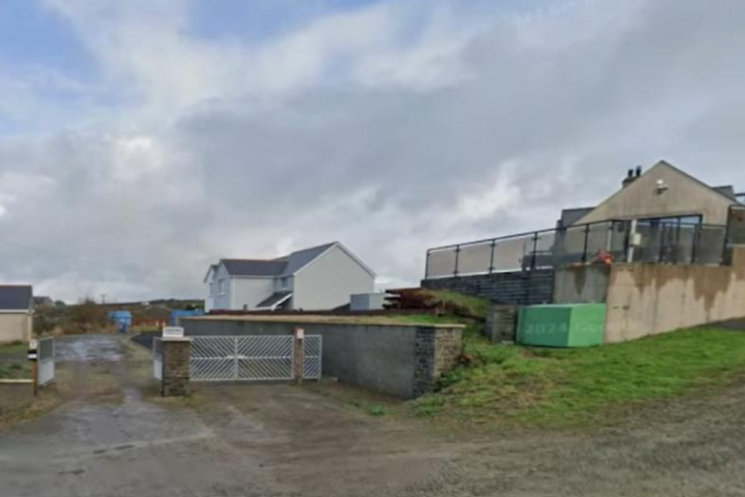
A CALL for a time extension for plans for housing on the site of a former “blot on the national park” seaside turkey farm has been given the go-ahead.
In an application recommended for delegated approval to senior officers at the June meeting of Pembrokeshire Coast National Park’s development management committee, Mark Chapman, through agent Hayston Developments & Planning Ltd sought permission for a further three years’ time extension for a previously-granted scheme to build four homes at the former turkey farm, on land off Blockett Lane, Little Haven.
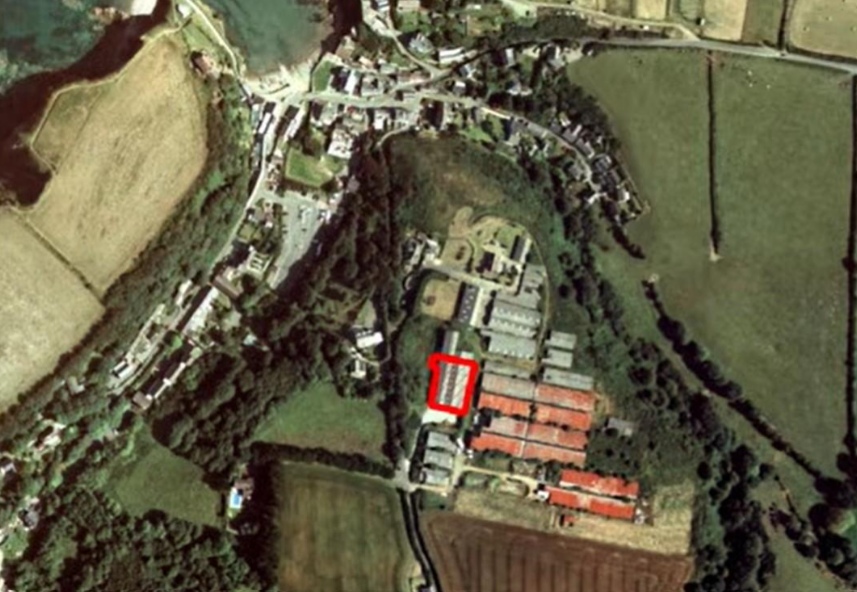
The application was before the committee as it was recommended for approval despite the local community council, The Havens, objecting to the scheme, and it being a departure from the local development plan.
The Havens had objected to the scheme on the same grounds it objected to the original 2021 application for four dwellings granted in 2022, saying there was a poor access road, very narrow, with no pavement leading to the village for pedestrian use.
An officer report recommending approval said: “The application site comprises a parcel of brownfield land which historically formed part of a turkey farm complex located to the south of Little Haven. The wider site has been subject to extensive residential redevelopment, with several dwellings completed and others under construction on adjacent land. The site is also subject of a current enforcement notice relating to storage of shipping containers.
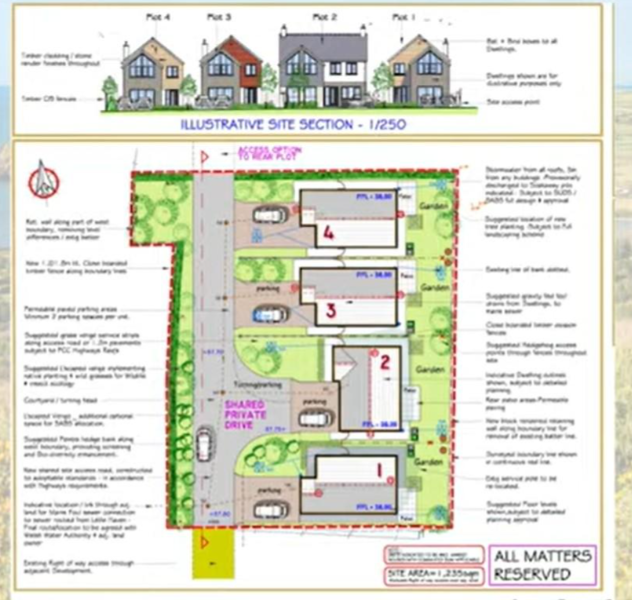
“The applicant has advised that development has been delayed due to an ongoing civil dispute relating to access rights, which has prevented commencement within the original timeframe but which the applicant believes to be resolvable.
“As the application is in outline form and seeks only a time extension, there are no changes to the scale, layout, or form of development for assessment at this stage with only indicative plans having been received.”
Speaking at the meeting, agent Andrew Vaughan-Harries of Hayston reiterated it was hoped the civil matter could be addressed to “deliver this important development”.
He added: “The old turkey farm and sheds were a real blot on the national park, on a sensitive spot on the clifftop, a real eyesore.”
He said developments on-site so far had seem them cleared, with the “sensitive development” expected to net up to £90,000 in affordable housing contributions to the authority.
On the community council access concerns, he said: “Perhaps they are newer members who don’t remember a busy turkey farm and its traffic; at the end of the day Little Haven is a pretty little village with narrow roads on all sides.”
Committee chair Cllr Simon Hancock, said committee-viewed aerial pictures of the turkey farm site were “stark” in comparison with its now-cleared state, moving approval, which included some 16 conditions.

Members backed the recommendation of approval.
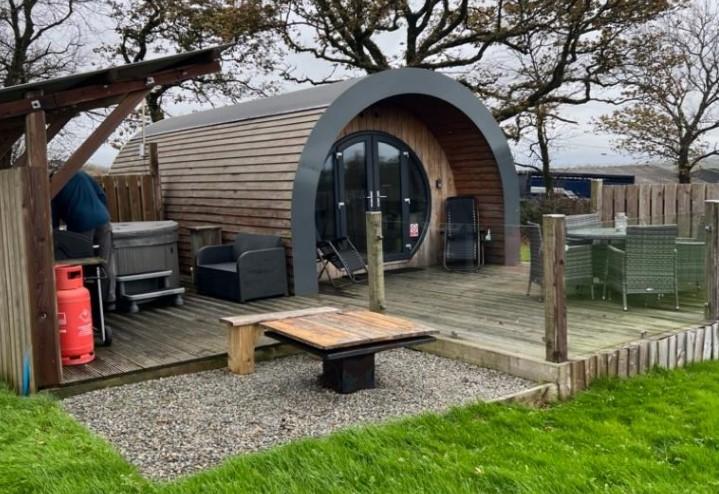
A CALL to keep a holiday pod sited on a Pembrokeshire farm, as part of a wider holiday pod farm diversification over two areas which saw the larger part supported, has been approved by county planners.
In an application given delegated approval at the June meeting of Pembrokeshire County Council’s planning committee, Bill Ridge of Vaynor Farm Ltd, Bethesda, through agent Gerald Blain Associates Limited, sought retrospective permission to keep a self-catering pod at Broomley Farm, Sodston, Narberth, works having been completed in 2022.
The application is part of a wider scheme of holiday pods diversification encompassing two farms.
Back in December 2025, Pembrokeshire County Council’s planning committee granted delegated retrospective permission to Vaynor Farm Ltd for the siting of two self-catering holiday accommodation pods at The Cart House, Vaynor Farm, Bethesda, near Narberth as part of a farm diversification enterprise.
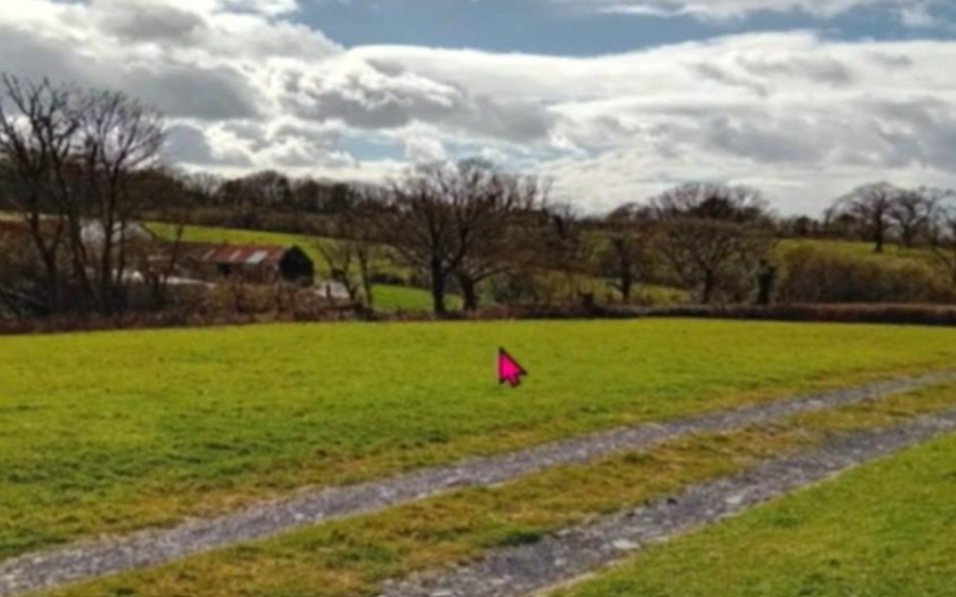
A supporting statement accompanying the latest application said: “Vaynor farm is a 400-acre working dairy farm with a herd of 700 milking cows. The enterprise comprises of three self-catering pods. Two of the pods are situated at the Vaynor homestead and another at the opposite end of the holding at Broomley farm.
“The first unit was sited adjacent to Vaynor farm stead some four years ago and a further two added in subsequent years. The units have enjoyed successful occupancy rates over several years offering a unique secluded tourism offer on a working dairy farm, more detail of which is outlined within the supporting business plan.”
It said the Broomley farm application before committee was a resubmission of a previously refused scheme, adding: “It should be noted that this application was originally part of [the application] which was recommended approval at planning committee in December 2025. This element however was separated due to its location on another part of Vaynor farm deeming it not possible to be considered under the same application.”
At the December meeting, an officer report said: “A business plan has been submitted with [that] application, which explains that due to uncertainties associated with dairy farming, the applicant has sought to diversify the farm enterprise to incorporate tourism accommodation.”
An officer report accompanying the latest application for members said: “The development of the accommodation pod has led to positive economic and social impacts, evidence has clearly demonstrated how income from the accommodation pods is used to support the overall combined Broomley Farm and Vaynor Farm enterprise.
“The proposed location of the accommodation pod is not considered to have led to an unacceptable impact on the character and appearance of the area given their siting adjacent to the Broomley Farm farmstead complex.”
Members backed the head of planning being given delegated powers to approve the scheme subject to a Section 106 legal agreement and conditions including the pod be limited to short-term holiday use only.


Community17 hours ago
Crisis response dogs launched to support people through trauma and distress
A NEW project using specially trained dogs to support people during moments of trauma, grief and crisis has been launched...


News21 hours ago
Major fire breaks out at Tata Steel site in Port Talbot
TATA STEEL has confirmed that a major fire broke out at its Port Talbot steelworks on Wednesday night, with emergency...


Community2 days ago
HMS Erebus tragedy links Pembroke Dock ship to Templeton family
DNA breakthrough identifies cabin boy David Young as exhibition marks 200 years since ship’s launch ON MAY 19, 1845, a...


Community2 days ago
Narberth cash machine closures spark urgent access review
CALLS have been made for an urgent review of access to cash in Narberth after two town centre ATMs were...

Health2 days ago
First Minister quizzed on Welsh NHS pressures in his first-ever FMQs
SENEDD Members pressed the First Minister over the state of the health service in Wales, as the Plaid Cymru leader...


Community3 days ago
Historic paddle steamer Waverley to return to Fishguard this month
THE WORLD’S last seagoing paddle steamer will return to Fishguard this month as part of her annual visit to South...


Local Government3 days ago
National Express use of new Haverfordwest interchange still subject to risk checks
A RUMOUR that National Express coaches may struggle to use Haverfordwest’s new transport interchange has been denied by Pembrokeshire County...


Crime3 days ago
Milford Haven man jailed for illegal Premier League streaming service
A MILFORD HAVEN man who supplied illegal Premier League streams and loaded Firesticks to almost 2,000 customers has been jailed...


Community4 days ago
RNLI lifeguards rescue beachgoers during busy heatwave weekend
FOUR PEOPLE RESCUED AS RIP CURRENTS AND OFFSHORE WINDS HIT PEMBROKESHIRE BEACHES RNLI lifeguards in Pembrokeshire rescued four people and...


Local Government4 days ago
Council and school staff pay row could hit Pembrokeshire services
COUNCIL workers, carers and school support staff in Pembrokeshire could be drawn into a growing UK-wide pay dispute after GMB...
-

 Crime2 days ago
Milford Haven man bit neighbour’s neck near cashpoint
-
Crime3 days ago
Milford Haven man jailed for illegal Premier League streaming service
-

 Crime3 days ago
Haverfordwest man admits cocaine offence as Crown disputes basis of plea
-

 Crime2 days ago
Pembroke Dock driver avoided jail after drug-drive crash
-

 Crime2 days ago
Dinas Cross man jailed over shop thefts
-
Local Government3 days ago
National Express use of new Haverfordwest interchange still subject to risk checks
-

 Community5 days ago
Charles Street to come alive for Milford Haven Founders Day
-

 Local Government6 days ago
Milford Haven school redevelopment moves a major step closer