


News
[UPDATED] Natasha Bradbury killed in a ‘savage attack’


JEALOUS and possessive Luke Jones “literally” beat Natasha Bradbury to death in her own home just hours after she confessed to sleeping with another man, a jury heard today.
Jones, aged 33, then waited until her body was “freezing cold” before calling for an ambulance to her flat in High Street, Haverfordwest.
Then, said Paul Lewis QC, prosecuting, he made up a story about her smashing up her own home in Imperial Court and falling over.
Jones, of Haven Drive, Milford Haven, denies murdering Miss Bradbury in the early hours of February 22 and is on trial at Swansea Crown Court.
Mr Lewis said Jones and Miss Bradbury, 27, had been in an “on off” relationship for three years.

In the days leading up to her death the relationship was under strain, he said, and text messages between them showed Jones was suffering emotionally.
Mr Lewis read to the jury dozens of messages that were “clearly personal and sent in the belief that no-one else would ever see them.”
“This is not like Facebook,” he added. “They are private messages between two people in a relationship.”
But they illustrated, alleged Mr Lewis, a man feeling jealous and possessive and willing to put emotional pressure on Miss Bradbury to keep their relationship going.

“It is for you (the jury) to assess. But we say that at times he expresses love, at others distress.”
On February 19 Jones, a pipe welder, told his supervisor he was unwell and made an emergency appointment with his doctor.
Jones told him he had “anger problems” and complained of losing his temper too easily and was referred to an anger management course.

“You might want to bear that in mind when considering the events that followed,“ Mr Lewis told the jury
Miss Bradbury spent the night of February 20 at the home of her friend Rhiannon Watts at Priory Road, Milford Haven, and Jones tried 26 times to contact her by telephone, including 13 attempts between 4am and 5am on the 21st.
Jones, said Mr Lewis, had already sent Miss Bradbury a text message reading, “I’m told you are seeing someone else.”
Mr Lewis said Miss Watts and Miss Bradbury had been joined that night by two brothers, Daniel and Darryl McGuckin. Miss Watts was in a relationship with Daniel and Miss Bradbury slept with his brother, Darryl.
The following morning, said Mr Lewis, Miss Watts told Jones what had happened and Miss Bradbury also contacted him to say, “Look, I’m sorry. I slept with someone last night.”
The following day Jones sent messages to friends, one of which read: “I can’t believe she’s done that. My Head’s in the shed but I’m passed caring. I loved her and gave her everything but what do I get.”
Jones later drove to Miss Bradbury’s home and between 8pm and 10pm she sent “sexual and flirtatious” messages with Darryl McGuckin.
“That takes us to ten pm,” said Mr Lewis. “What then?”
NEIGHBOURS HEARD LOUD NOISES
Neighbours of Natasha Bradbury listened to more than two hours of “shouting, swearing and the noise of a flat being smashed up” the night she was allegedly beaten to death by her on-off boyfriend.
But they only ever heard the voice of a man, said Paul Lewis QC.
That man, it is alleged, was Luke George Jones
Mr Lewis said Lisa Smith, who also had a flat in Imperial Court, High Street, Haverfordwest, heard the noises from between 11.30pm and about 2am and thought Flat A, where Miss Bradbury lived, was being smashed up.
Another neighbour, Timothy Down, became so concerned he thought about calling the police but decided “not to get involved.”
“He could hear swearing and shouting. But he heard only a man’s voice,” added Mr Lewis.
The prosecution argue that Jones was in the process of beating Miss Bradbury to death, or had already done so.
Because at 2.48am Jones told a 999 operator that Miss Bradbury was already “freezing cold and her lips are blue.”
Mr Lewis played to the jury a recording of the 15 minute telephone call, which ended when a paramedic took the telephone from Jones and told the operator, “We could do with the police.”
It took Jones at least twelve attempts to explain to ambulance control where he was.
The operator instructed Jones on how to try and resuscitate Miss Bradbury by placing one hand on top of the other on her breast bone and pumping hard.
The operator could be heard telling Jones, “Pump hard. One, two, three, four. Again, one, two, three, four.”
The operator was interrupted by an ambulance crew who had arrived in Imperial Court but could not find “Flat A,” which was, in fact, a four storey high building.”
Then, a voice could be heard asking Jones, “How long has she been lying there.”
Jones replied, “For about an hour.”
The paramedic took the ‘phone from Jones and asked, “Is that ambulance control”
The operator told him that ambulance control had gone off the line.
Paramedic:“We could do with the police here.”
Operator:“Do you want me to put you through?”
Paramedic, “No, we are dealing with a patient.”
JONES REFUSED TO ANSWER POLICE QUESTIONS
Luke Jones refused to answer questions from police investigating the “murder” of Natasha Bradbury at her flat in the centre of Haverfordwest.
And the prepared, written statements he later handed over were dismissed today as “nothing more than a pack of lies intended to avoid the consequences of what he had done to her.”
Paul Lewis QC told the jury that Jones “largely” answered none of the questions put to him by police.
But he later provided a number of prepared statements.
“He said he used no violence at all towards her and that she had suffered the injuries as a result of falling over,” added Mr Lewis.
“In essence, he appeared to be saying that her extensive injuries were accidental.
“If he maintains that account it will be for you to decide how it was she suffered the injuries that resulted in her death,” he told the jury.
“You will consider his intentions and his state of mind.”
Mr Lewis said the truth was that Jones had inflicted on Miss Bradbury a savage attack that had caused widespread and fatal injuries.
Miss Bradbury suffered extensive, blunt force injuries to her head, face and body. She suffered fractures to her neck and a wrist and there was evidence of injury to her brain.
Her heart had been bruised and there had been bleeding in the sack containing the heart.
There was also an “extensive” laceration to her liver that had led to massive bleeding into her stomach area.
“In a nutshell, he beat her to death in her own home,” added Mr Lewis.
NATASHA’S BLOOD STAINED FLAT
The jury was provided with a pictorial walk through of the blood stained flat where Natasha Bradbury met her death.
The prosecution say she died after a savage attack by her on-off boyfriend, pipe welder Luke Jones.
Despite the address, said Paul Lewis QC, prosecuting, it was in fact a four storey high building.
As the photographs unfolded, blood stained items came into view.
There were blood stains on the door leading to her bedroom, and blood on the lip of the sink in her en-suite bathroom.
A bin had been overturned and the contents strewn around the bathroom. “You will hear more about that, about the contents, in due course,” Mr Lewis told the jury.
There were bloody hand marks on the banister of the stairs leading to the second floor kitchen, where “shattered crockery etc” could be seen.
There was blood on the kitchen walls, on a tissue lying on a work surface and in the kitchen sink.
There was also blood on a discarded cigarette end.
Mr Lewis said there was more blood on the banister of the stairs leading to the third floor, which contained the lounge where Miss Bradbury’s body was found.
In that room there was blood on the floor and a wall in addition to “widespread” damage.
A glass table had been smashed, as had a television, and there was glass around Miss Bradbury’s body.
The trial, expected to last two weeks, will continue tomorrow.


A HEALTH board has been criticised by Audit Wales after GP contracts worth more than £10m were awarded without sufficient due diligence checks.
Aneurin Bevan University Health Board allowed a GP partnership associated with eHarley Street Primary Care Solutions to take on eight GP contracts in south-east Wales, with a combined annual value of around £10.1m.
Audit Wales said the board should have carried out greater scrutiny before approving the arrangements, including checks on financial resilience, workforce plans, business risks and the partnership’s ability to manage several practices at once.
However, the watchdog found no evidence of fraud and noted the board was dealing with significant pressure in general practice, including vacant contracts and limited interest from other bidders.
The report said weaknesses in governance and scrutiny contributed to later disruption and uncertainty for patients and staff when problems emerged.
Concerns included financial and workforce pressures, unpaid invoices, and issues relating to tax and pension payments. Some contracts were later handed back, requiring the health board to step in to protect services.
Natasha Asghar MS, Welsh Conservative Shadow Cabinet Minister for Health and Social Care, said the findings were “deeply concerning”.
She said: “Patients and staff were left facing disruption and uncertainty because proper scrutiny was not carried out before these contracts were awarded.
“The Welsh Conservatives believe lessons must be learned to ensure robust checks are in place, protect frontline services and restore confidence in primary care across Wales.”
Aneurin Bevan University Health Board accepted the recommendations and said it had already strengthened its processes.
Audit Wales said the case highlighted the need for stronger checks before GP contracts are transferred, particularly when a single partnership is taking on multiple practices in a short period.
Concerns raised after mass stranding stretches hundreds of yards along shoreline
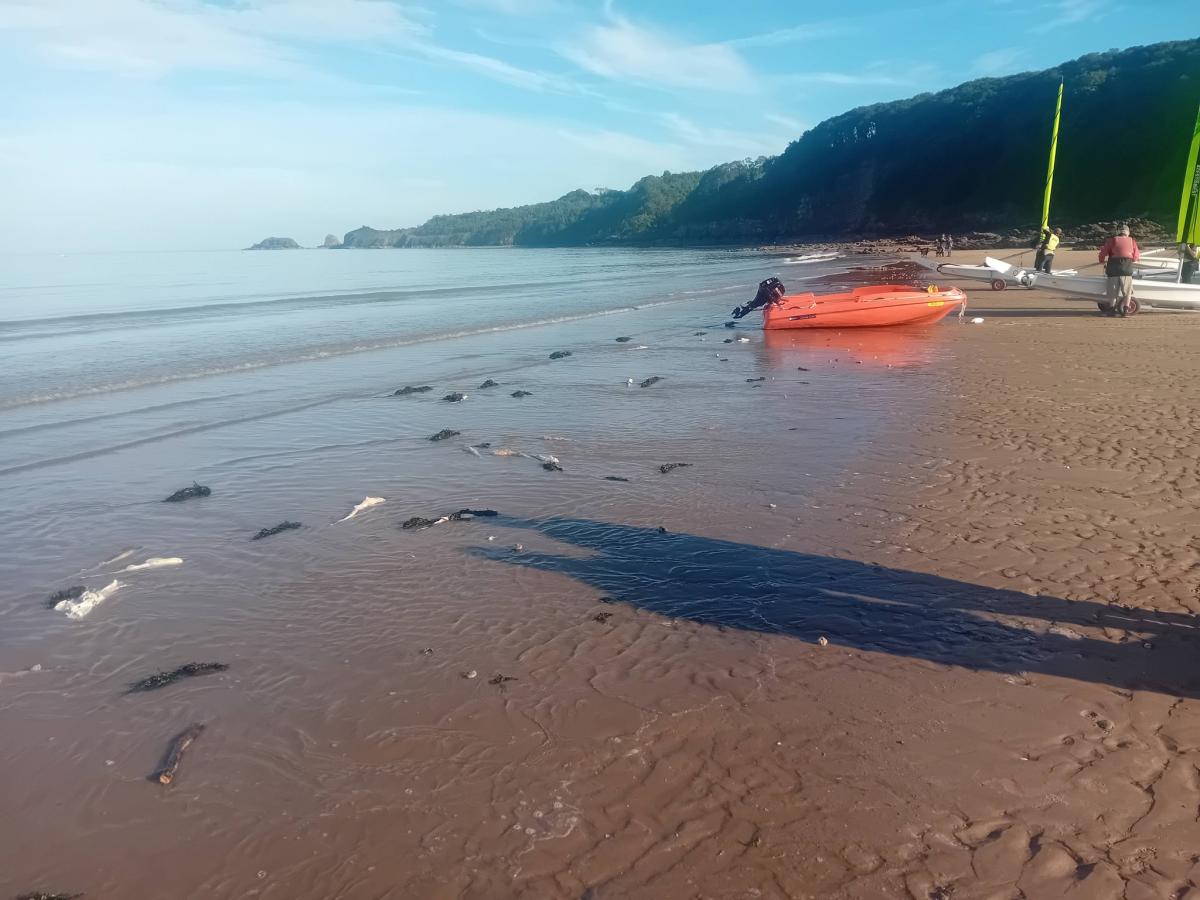
HUNDREDS of dead dogfish have washed up on a Pembrokeshire beach in a strange incident that has left locals and visitors searching for answers.
The fish, believed to be dogfish — a small species belonging to the shark family — were discovered scattered along Saundersfoot Harbour Beach on Thursday (May 21), with one witness estimating the carcasses stretched for around 500 yards.
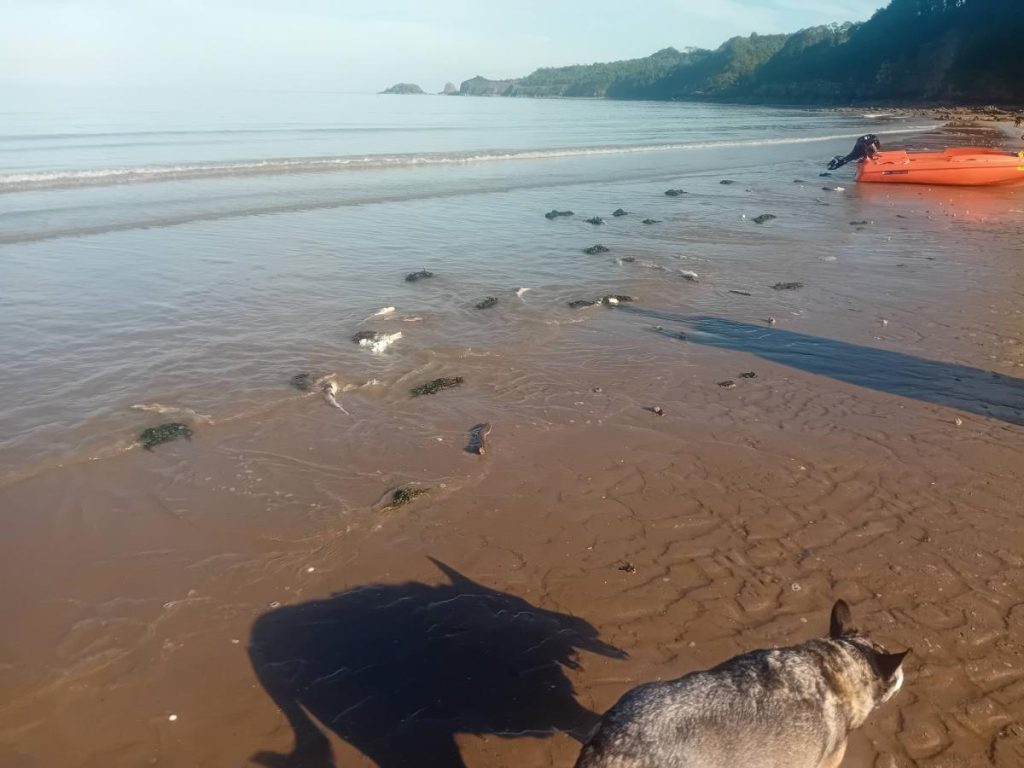
Holidaymaker Colin Hill, who came across the scene, said the scale of the wash-up was shocking, with large numbers of fish appearing to have washed in at roughly the same time.
While the exact cause remains unclear, early indications suggest the fish may have been discarded at sea before drifting ashore on changing tides.
Natural Resources Wales (NRW), which attended the scene, said there was no sign of a pollution incident.
A spokesperson for NRW told The Herald: “We investigated reports of dead fish at Saundersfoot and found no evidence of a pollution incident.
“The fish appear to be dogfish, and this is likely linked to fishing by-catch being discarded at sea.
“Tides have since cleared the majority from the shoreline and no wider environmental impacts were identified.”
Fishing link suspected
Marine experts say one of the most likely explanations is that the dogfish were unintentionally caught by fishing vessels targeting more commercially valuable species before being thrown back into the sea.
Dogfish, also known as catsharks, are common around the Pembrokeshire coast but are not generally landed commercially in large numbers.
However, local marine conservationist Cliff Benson of Sea Trust Wales said the scale of the incident appeared unusual.
“We quite often see dogfish or catsharks seemingly intent on suicide and beaching themselves, though nobody seems to know why,” he said.

“However, this is on a different scale and looks like they might have been caught by some fishing boat that was hoping to catch more commercial species and thrown overboard dead.”
He added that pollution was another possible explanation, although less likely if only one species had been affected.
Not the first time
Pembrokeshire has seen smaller incidents involving dead dogfish washing ashore before, but similar mass strandings elsewhere in Wales have previously been linked to fishing activity.
In one case at Burry Port in 2019, fisheries experts suggested dead dogfish found on the shoreline had likely been dumped following the clearing of fishing nets. In Barry in 2021, hundreds more washed up, some still attached to hooks and tackle.
For now, the mystery remains unresolved — although NRW believes discarded fishing by-catch is the most likely explanation.
Caption:
Hundreds of dead dogfish washed up on Saundersfoot Harbour Beach on Thursday (Pic: Colin Hill).

Lifesaving charity warns of cold water shock risk despite rising temperatures
THE RNLI is urging people planning trips to the coast over the Bank Holiday weekend to choose lifeguarded beaches and follow essential water safety advice as warm weather draws crowds to the seaside.
With temperatures expected to rise across Wales, the lifesaving charity has warned that, although conditions may appear ideal, the sea remains dangerously cold and poses a serious risk of cold water shock.
The RNLI says the safest place to swim is between the red and yellow flags at lifeguarded beaches.
In Pembrokeshire, RNLI lifeguards will be on patrol at Whitesands, Newgale Central and Tenby South Beach throughout the May half-term, operating daily between 10:00am and 6:00pm.
Other lifeguarded beaches across Wales include Langland, Caswell, Aberavon, Pembrey, Three Cliffs and Port Eynon in Swansea; Barry Island, Coney Beach, Trecco Bay and Rest Bay in Bridgend; Llangrannog and Borth in Ceredigion; and Rhyl and Prestatyn in Denbighshire.
The RNLI is encouraging anyone unable to visit a lifeguarded beach to check local conditions before setting off, including tide times, weather forecasts and any safety signage.
Chris Cousins, the RNLI’s Regional Water Safety Lead, said: “There will likely be a huge number of people visiting the coast this weekend and we want everyone to remember Float to Live advice, which could save lives.
“Instinctively, most people who find themselves struggling in the water will begin to gasp, panic and try to swim or thrash about.
“We’re urging people to ignore this instinct and remember to float. Tilt your head back with your ears submerged, relax and try to breathe normally, and move your hands and legs to help you stay afloat if needed.”
He added that practising floating in a supervised setting, such as a swimming pool, could help prepare people in case they find themselves in difficulty.
‘Phone, Float, Throw’
The RNLI is also reminding the public to remember the “Phone, Float, Throw” guidance if they see someone struggling in the water.
People are advised to call 999 or 112 and ask for the Coastguard, encourage the casualty to float on their back, and throw something buoyant to them, such as a life ring.

The charity recently relaunched its “Float to Live” campaign, citing new research suggesting younger adults, particularly Generation Z, may underestimate the dangers posed by the coast.
According to the RNLI, there were 193 accidental drowning deaths in the UK in 2024, with men accounting for 84 per cent of fatalities. Men aged between 20 and 29 represented the highest risk group.
The RNLI’s beach lifeguard service is marking its 25th anniversary this year.
For more information on staying safe at the coast, visit the RNLI’s Float to Live campaign.


Local Government2 days ago
Youngest mayor in century takes office in Haverfordwest
Randell Izaiah Thomas-Turner makes history as town’s first millennial mayor and first from a diverse background HAVERFORDWEST has welcomed a...


Community2 days ago
Pembroke Fair set to return after last year’s success
STALL HOLDERS INVITED AS HORSE DRIVE PLANNED PEMBROKE Fair is set to return this weekend following the success of last...


Crime3 days ago
Neyland man accused of running over traffic worker’s foot
Jury hears conflicting accounts over roadworks incident in Milford Haven A NEYLAND man has appeared before Swansea Crown Court accused...

Community3 days ago
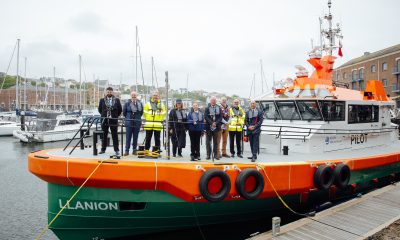
New pilot boat Llanion dedicated at emotional Milford Haven ceremony
Vessel dedicated at Mackerel Quay as Port marks major investment in safety and resilience MILFORD HAVEN’S new state-of-the-art pilot vessel...


Local Government3 days ago
Police and GoSafe to target speeding in Newport and Dinas
RESIDENTS’ concerns over speeding and anti-social driving have prompted planned enforcement action in the Newport and Dinas areas. Dyfed-Powys Police...

Community4 days ago
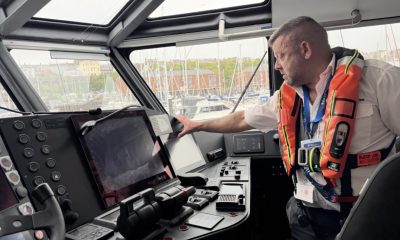
Safety first as Milford Haven’s new pilot boat marks end of troubled chapter
Gary Solomon, who was aboard St Davids during the 2016 collision, helped shape new self-righting vessel Llanion from conception to...


Crime4 days ago
Cocaine courier caught with £15,000 haul in Pembroke Dock
Defendant transported high-purity drugs from Cardiff to Pembrokeshire for £210 A PEMBROKESHIRE man caught transporting more than £15,000 of high-purity...


News4 days ago
Car bursts into flames near Redberth Croft as road closed after incident
Nobody injured after vehicle fire near A477 prompts emergency response A CAR was destroyed by fire near the entrance to...


News5 days ago
Welsh Labour unveils new Senedd spokesperson team
Ken Skates says Labour group will hold Plaid Cymru government to account WELSH Labour’s interim leader Ken Skates MS has...


Cymraeg5 days ago
Two new Milford Haven schools could be built and open by 2032
NEW SCHOOLS in Milford Haven won’t be built before 2030 at the earliest, and 2032 for a planned Welsh Medium...
-

 News1 day ago
Watchdog criticises health board over £10m GP contract checks
-
 Crime4 days ago
Farm owner in court after 26 dogs removed over welfare concerns
-

 News3 days ago
Paul Davies meets Openreach Cymru at the Senedd to discuss Full Fibre rollout
-
 Crime4 days ago
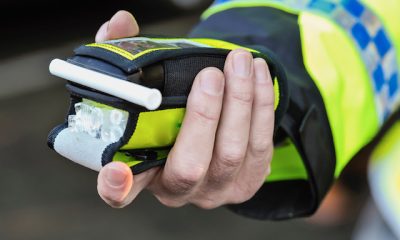
Tree surgeon sentenced for failing to provide breath test
-

 Crime4 days ago
Pembrokeshire teenager admits driving almost four times over drug-drive limit
-

 News4 days ago
Milford man admits handling stolen goods from three local properties
-

 Crime6 days ago
Builder jailed for £82,000 fraud affecting 18 victims
-
 Crime4 days ago
Pembroke Dock drink-driver arrested on Cleddau Bridge
Michael Davies
September 2, 2016 at 1:02 pm
Hang the bastard. Then’ friend’ too.
mitolyn official
January 27, 2026 at 9:15 pm
**mitolyn official**
Mitolyn is a carefully developed, plant-based formula created to help support metabolic efficiency and encourage healthy, lasting weight management.