


Sport
Tenby trounce Tycroes


By Jonathan Twigg
TENBY TOURERS sponsored Tenby United completed their home fixtures on Saturday (Apr 7) with an emphatic 47-5 demolishment of relegated Tycroes, running in six tries alongside 17 points from the boot of full back Craig Barnett.
Referee Lloyd Hughes from Taibach, Port Talbot was empathetic in keeping the game flowing on an excellent surface despite the horrendous recent weather, allowing both teams the opportunity to run with ball in hand with advantage, his demeanour one of autocratic control which has seen the engineer perform at championship level this season.
The red and blacks have stumbled in recent times, perhaps due to a shortage of front row forwards since injury ruled prop out Lewis Davies, although the return of former player Andrew Evans from Loughborough has helped the home side.
They had to elect to go for a passive scrummage set piece for the final minutes of the game much to the disgruntlement of the travelling visiting support, meaning very little as the game had been comprehensively put to bed.

Hooker Joe Poole was the Heywood Butchers man of the match for his all round play which saw Tenby dominate the line out, his throwing accuracy supported by robust action on the fringes of the gain line and high tackle count, which undid the Ammanford village sides dominant start.
Poole, a student at Swansea University also had a magnetic pair of hands to offload passes before contact, a mantra which coaches Chris James and Andrew Morgan have instilled throughout the team.
Led by Johnnie Morgan at outside half it took a quarter of an hour for his side to open the scoring, weathering the black shirted visitors driving play, where they turned down three points from in front of the posts after outside half James Owen long range penalty attempt after three minutes bounced off the cross bar from the halfway line.
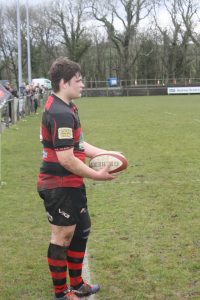
Man of the match: Tenby Hooker Joe Poole
Flanker Andrew Cooke, like Poole was in the thick of the defensive number 8 Darryl John was held up over the try line, the ensuing scrum set piece saw the home eight establish a game marker from which they had a platform from which to build, winger Jordan Asparrassa scooting down the touchline as he combined well with diminutive scrum half Matthew Morgan.
Both had excellent games running with ball in hand and willing to take the opposition on from the front foot, rewarded with touchdowns and without Poole’s work rate off the ball may well have tucked into the steaks from Heywoods Butchers themselves.
Skipper Luke Hansford scored the opening try just after the first quarter, as his fellow forwards controlled possession driving forward in pods, well drilled and setting the ball back on a plate for Morgan to use.
The flankers touchdown close to the posts came when he clambered through the strewn bodies to cross, full back Craig Barnett landing the conversion, which he did again four minutes later after robust centre Pat Roberts broke through some weak opposition tackling to run in from 20 metres as the ground beneath him held firm after the sterling work undertaken by Boots of Lydstep who manicure the ground.

A killer third try came two minutes before the interval, when Barnett entered the line at pace and timed his pass beautifully to draw the final man and allow winger Yannik Parker to pin back his ears and cross unopposed, Barnett completed the scoring meaning the second period was about the ‘Seasiders’ ensuring maximum points with a bonus point fourth try.
This was achieved within five minutes of the restart, centre Moritz Neuman the catalyst, working well with his skipper Morgan at outside half, Poole linking into the traffic alongside Roberts and number 8 Roy Osborne, who was credited with the all-important score.
An appreciative crowd led by the match sponsors Scaffold 2000 alongside the ‘scoreborad regulars’ minded little that Barnett’s conversion struck the left upright as Tycroes visibly tired allowing Tenby to dictate the play, at pace and with vision as the Morgan brothers, alongside Parker took opportunities to turn the opposition on their heels.
Evans and his fellow prop Ethan Morgan continue to ensure set piece parity as Luke Dedman and replacement second row Jack Clancy stood tall in the line out, Poole with a nigh on perfect throwing record and Cooke able to link play between forwards and backs superbly.
Centre Elean Griffiths was instrumental in stemming the tide for Tycroes, but neither he or his back three could stem the try count, Asparrassa showing a clear pair of heels to touchdown and scrum half Morgan breaking clear with runners either side as options, he sold a lovely dummy to full back Scott Bowen to race clear from 25 metres.
Barnett had converted before Tycores centre Matthew Lemon scrambled over wide out after some sustained driving from his forwards with number 8 John a strong ball carrier, some pride restored for the divisions bottom of the table side.
Coaches Chris James and Andrew Morgan have brought an attacking game plan to Heywood Lane over the past two seasons, encouraging the ball when possible to be kept out of contact areas and running space, Cooke and Roberts combining well which released Asparrassa once again, to score, Barnett missed the difficult conversion as Tenby had to opt for passive scrums for the final throws of the game and from a defensive set piece on their own five metre line Osborne picked up at the base and set his back division in motion.
Handling at pace with the vision to attack space they spread the ball through the hands and when play switched back across the field second row Deadman was able to race 20 metres from the half way line, drawing the cover defence and popping a pass to Osborne to round off a length of the field play which he started, Barnett adding the coup de grace before Hughes shrill blast ended the home fixtures for the season at Heywood Lane.
James on conclusion of the game said: “No negatives from the performance as we put together a complete team performance, where the players were never afraid to back their own skills set. We have been on a losing run stretching over the international period but always maintained confidence in our style of rugby and we can look forward to our final four fixtures on the road without fear.”
The first of those sees them travel to the Ranch on Saturday (Apr 21) to take on Llanelli Wanderers before heading to Parc Lloyd Thomas the week after to tackle Crymych, both sides sitting below Tenby in the league table and needing a full head of steam to overhaul them.










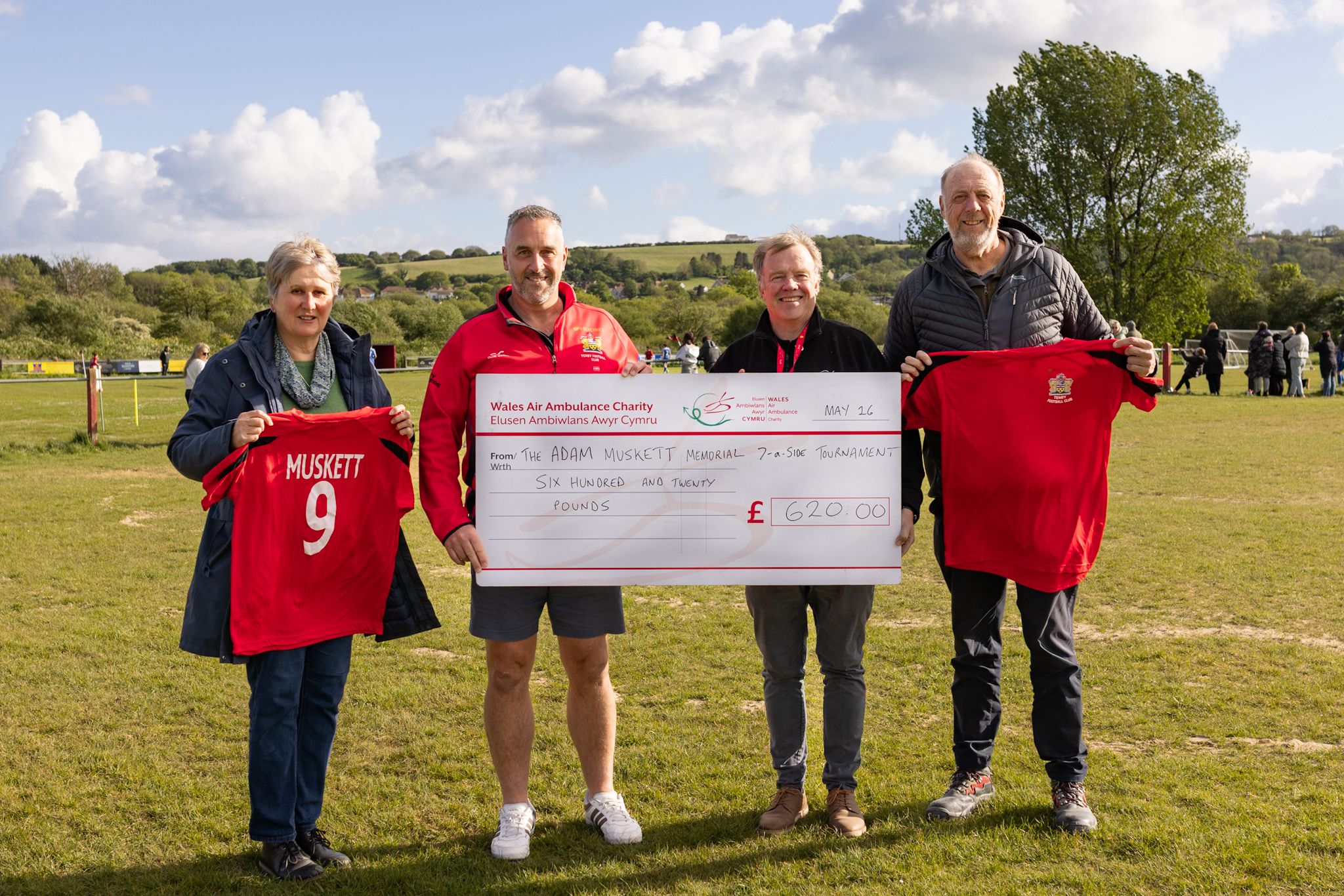
Annual event will honour popular young footballer while raising funds for Wales Air Ambulance
FOOTBALLERS, friends and families from across Pembrokeshire will come together next month to celebrate the life of a much-loved local sportsman at the second Adam Muskett Memorial 7-a-side Tournament.
The event, organised by Tenby AFC, will take place at The Clicketts Playing Fields on Saturday, July 25, bringing together teams for a day of football, remembrance and fundraising in memory of Adam Muskett.
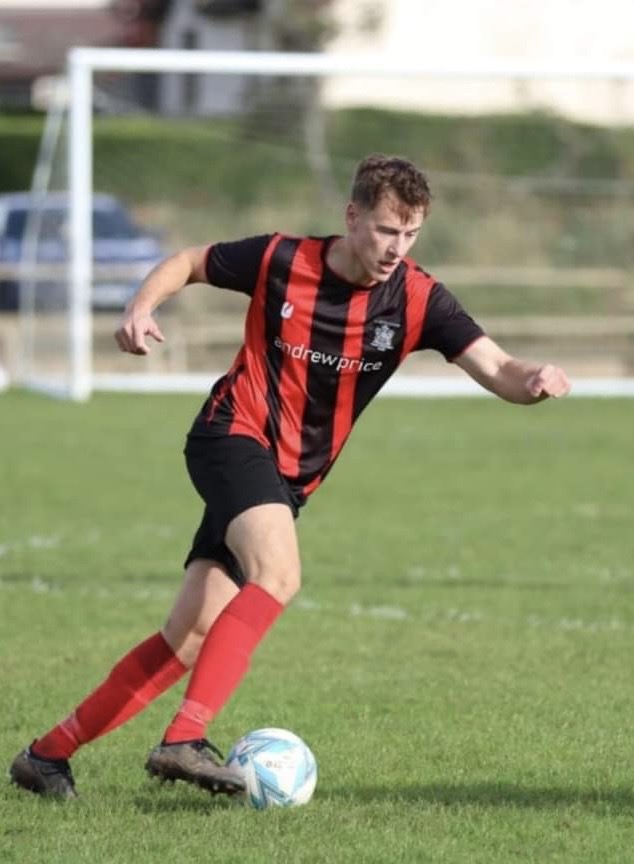
Adam, 27, tragically lost his life alongside his girlfriend, Katie Worrell, 25, in a road traffic collision in June 2024. The tournament was established by his football club as a lasting tribute to his passion for the game and the impact he had on those around him.
Last year’s inaugural event proved a great success, raising £620 for Wales Air Ambulance. Following the positive response from players, supporters and the wider community, Tenby AFC has committed to making the tournament an annual fixture.
Recently, Adam’s parents, Helen and Andrew Muskett, joined Tenby AFC secretary Gareth Noot in presenting a cheque to Wales Air Ambulance Regional Fundraising Manager Mike May.
Speaking ahead of this year’s tournament, Helen and Andrew said: “As a family, we are extremely grateful to Gareth and the members and players at Tenby AFC for setting up this tournament as a tribute to Adam, and for all their support over the last two years.
“In particular, Gareth has been amazing and has worked incredibly hard, in such a respectful and considerate way, to support us in this and other matters.
“Last year’s tournament was such an enjoyable day, and we want to thank everyone who attended or contributed in any way. We especially want to thank the participating players, the referees, and those who helped at the entrance and with refreshments. It was wonderful to see so many families there.
“It really was a very special day that meant an awful lot to us as a family and a fitting tribute to Adam, who was passionate about football.”
Supporting a lifesaving charity
The family said they were keen for Wales Air Ambulance to remain the main beneficiary of the fundraising efforts.
They added: “We wanted Wales Air Ambulance to benefit from the funds raised because they helped Katie at the time of the collision, and Adam would have wanted them to be the first benefactor of the tournament.
“Our heartfelt thanks go to everyone involved, and we hope the tournament will continue for many years to come.”

Wales Air Ambulance is a consultant-led service that brings hospital-standard emergency care directly to patients across Wales. Working in partnership with the NHS Emergency Medical Retrieval and Transfer Service (EMRTS), its crews can provide advanced critical care at the scene of an incident, including anaesthesia, blood transfusions and minor surgical procedures.
Mike May, Regional Fundraising Manager for Wales Air Ambulance, said: “It’s humbling to hear that Adam’s club, family and friends will continue to come together to hold an annual tournament in his memory. It’s a touching tribute.
“We are deeply grateful that Adam’s family has chosen to support Wales Air Ambulance through this tournament following the care provided at the time of the collision.
“We hope as many people as possible support this event in honour of a very popular young man who was passionate about football.”
Teams invited to enter
The tournament is open to registered senior men’s football clubs. Each squad can register up to ten players and the entry fee is £50 per team.
Organisers are hoping for another strong turnout and a day that not only celebrates football, but also keeps Adam’s memory alive while supporting a charity that provides lifesaving care throughout Wales.
For more information or to enter a team, email [email protected] or call 07815 189374.
Photo caption: Helen and Andrew Muskett with Gareth Noot, Secretary of Tenby AFC, and Mike May of Wales Air Ambulance during the cheque presentation following last year’s tournament fundraising success.
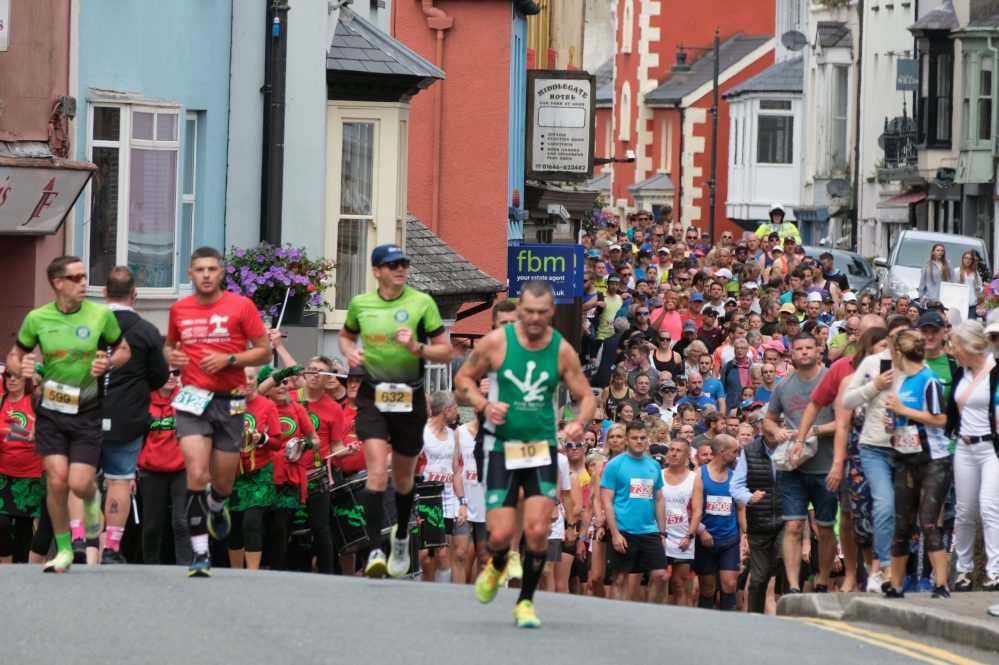
Three days of swimming, cycling and running will once again transform Tenby into one of the UK’s biggest endurance sporting festivals
TENBY is preparing to welcome thousands of athletes and spectators from across the UK and around the world as the Long Course Weekend returns to Pembrokeshire from Friday, June 26 to Sunday, June 28.
Now firmly established as one of Europe’s largest participation sporting events, Long Course Weekend Wales combines swimming, cycling and running challenges over three days, attracting everyone from elite athletes to first-time competitors.
Unlike a traditional triathlon, competitors can enter one, two or all three disciplines, choosing distances that suit their ability. Those who complete the full long-course distances across all three days earn the coveted fourth medal, one of the event’s most sought-after prizes.

Three days of endurance
The weekend begins on Friday evening with the Wales Swim off Tenby’s famous North Beach.
Athletes will take to the waters of Carmarthen Bay in a range of distances, including the iconic 2.4-mile swim, while younger participants will have the chance to get involved through the popular LC Kinder event.
Saturday is dedicated to cycling, with thousands of riders expected to tackle the Pembrokeshire countryside during the Wales Sportive. Routes cater for a variety of abilities, from recreational cyclists to seasoned endurance competitors taking on the full long-course challenge.
The weekend reaches its climax on Sunday with a series of running events, including a 5K, 10K, half marathon and full marathon.
The marathon route is regarded as one of the most scenic and demanding road races in Wales, taking runners through some of Pembrokeshire’s most spectacular coastal and rural scenery before the final run back into Tenby and the cheers of thousands of spectators.
A major boost for the local economy
Long Course Weekend has become one of Pembrokeshire’s most important annual events.
Hotels, guest houses, campsites, restaurants, cafés and shops across Tenby, Saundersfoot and the wider county benefit from the influx of visitors, many of whom stay for several nights.
For many businesses, the event provides a welcome boost at the start of the summer season, filling accommodation and generating significant spending across the local economy.
The event has also helped establish Tenby as one of Britain’s leading destinations for endurance sport alongside the annual Ironman Wales competition.

Spectators welcome
One of the defining features of Long Course Weekend is the support provided by local communities.
From the swim start on North Beach to villages along the cycling and running routes, competitors are encouraged by thousands of spectators throughout the weekend.
The finish-line atmosphere in Tenby is widely regarded as one of the highlights of the event, with runners and cyclists greeted by packed crowds as they complete their challenge.
Families, residents and visitors are encouraged to come along and support participants, with viewing areas available throughout the course.

Road closures and travel advice
Residents are being urged to plan journeys carefully throughout the weekend.
Organisers have confirmed that the Wales Sportive cycling event will once again operate without full road closures, although motorists should expect increased numbers of cyclists on roads across south Pembrokeshire and are urged to drive with extra care.
Traffic restrictions and road closures will, however, be in place around Tenby and along parts of the running routes on Sunday.
Drivers should allow extra travel time and check the latest information from organisers before setting out.
Emergency access arrangements will remain in place throughout the weekend and organisers have worked closely with emergency services, local authorities and transport providers to minimise disruption while ensuring participant safety.
What to expect
For three days, Tenby becomes the centre of the endurance sports world.
Visitors can expect a festival atmosphere throughout the town, with athletes arriving from across Britain and overseas, cafés and restaurants bustling with activity, and competitors of all ages taking on personal challenges.
Some will be chasing podium places. Others will simply be aiming to cross the finish line.
Whatever their goal, Long Course Weekend continues to showcase Pembrokeshire at its best, combining world-class sporting competition with some of the finest scenery in Wales.
As thousands gather once again on the county’s coastline this weekend, organisers are promising another unforgettable celebration of endurance, determination and community spirit.
Long Course Weekend 2026 at a glance
Friday, June 26
- Wales Swim
- LC Kinder children’s events
Saturday, June 27
- Wales Sportive cycling events
Sunday, June 28
- 5K run
- 10K run
- Half marathon
- Full marathon
Location: Tenby and surrounding Pembrokeshire routes
Spectators: Free to attend
Advice: Check road closure information before travelling and allow extra time for journeys throughout the weekend.

Saundersfoot extend Division One lead as Cresselly III continue unbeaten run
SAUNDERSFOOT strengthened their position at the top of Division One in the Thomas Carroll Pembroke County Cricket League with a convincing 145-run win over Burton.
Tom Mansbridge led the way with 86 as Saundersfoot posted 219-6, before Burton were bowled out for 74. Ollie Cook finished unbeaten on 20 and took 3-17, while Sam Franklin added 20 and 2-17.
Carew also enjoyed a strong afternoon, bowling Herbrandston out for 77 before reaching 79-2 to win by eight wickets. George Waters was the standout performer with 7-15, while Morgan Grieve made an unbeaten 61.
Cresselly kept themselves in the Division One chase with an eight-wicket win over Lawrenny. Mike Shaw took 4-10 before Tom Murphy’s unbeaten 105 saw Cresselly home.
Narberth beat Whitland by 103 runs, while St Ishmaels defeated Neyland by four wickets.
Division One results
| Fixture | Result |
|---|---|
| Saundersfoot 219-6 v Burton 74 all out | Saundersfoot won by 145 runs |
| Carew 79-2 v Herbrandston 77 all out | Carew won by eight wickets |
| Cresselly 178-2 v Lawrenny 173 all out | Cresselly won by eight wickets |
| Whitland 108-9 v Narberth 211-4 | Narberth won by 103 runs |
| St Ishmaels 139-6 v Neyland 137-8 | St Ishmaels won by four wickets |
Division One table
| Pos | Team | Pld | Points |
|---|---|---|---|
| 1 | Saundersfoot | 9 | 148 |
| 2 | Carew | 9 | 126 |
| 3 | Neyland | 9 | 117 |
| 4 | Cresselly | 9 | 116 |
| 5 | Burton | 9 | 99 |
| 6 | Herbrandston | 9 | 95 |
| 7 | Narberth | 9 | 78 |
| 8 | St Ishmaels | 9 | 64 |
| 9 | Whitland | 9 | 49 |
| 10 | Lawrenny | 9 | 47 |
Hook stay top in Division Two
HOOK remain top of Division Two after a dramatic one-wicket win over Johnston.
Johnston were bowled out for 137, with Callum James taking 4-26 and Brennan Martin 3-37. Hook then edged home on 141-9, helped by Aled Phelps’ 68.
Haverfordwest kept up the pressure with a seven-wicket win over Pembroke. Simon Williams took 5-11 and Fin Ateyo 4-19 before Ben Field’s unbeaten 43 guided Haverfordwest to victory.
Cresselly II beat Llangwm by 11 runs, Fishguard defeated Pembroke Dock by 18 runs, and Llechryd beat Llanrhian by 71 runs.

Division Two results
| Fixture | Result |
|---|---|
| Llangwm 155 all out v Cresselly II 166 all out | Cresselly II won by 11 runs |
| Pembroke Dock 57 all out v Fishguard 75 all out | Fishguard won by 18 runs |
| Pembroke 93 all out v Haverfordwest 94-3 | Haverfordwest won by seven wickets |
| Hook 141-9 v Johnston 137 all out | Hook won by one wicket |
| Llechryd 204-6 v Llanrhian 133 all out | Llechryd won by 71 runs |
Division Two table
| Pos | Team | Pld | Points |
|---|---|---|---|
| 1 | Hook | 9 | 138 |
| 2 | Haverfordwest | 9 | 133 |
| 3 | Johnston | 9 | 131 |
| 4 | Cresselly II | 9 | 129 |
| 5 | Pembroke | 9 | 129 |
| 6 | Fishguard | 9 | 93 |
| 7 | Pembroke Dock | 9 | 73 |
| 8 | Llanrhian | 9 | 73 |
| 9 | Llangwm | 9 | 70 |
| 10 | Llechryd | 9 | 65 |
Laugharne lead Division Three
LAUGHARNE stayed top of Division Three with a five-wicket win over Carew II.
Carew II were bowled out for 128 before Laugharne reached 129-5. Callum Collins-Davies took 4-13, Joe Hodges claimed 3-33 and finished 21 not out, while Matt Tait made an unbeaten 53.
Hundleton beat Kilgetty by one wicket in a close contest, Lamphey defeated Stackpole by eight wickets, Pembroke II beat Burton II by seven wickets, and Haverfordwest II beat Saundersfoot II by 43 runs.

Division Three results
| Fixture | Result |
|---|---|
| Laugharne 129-5 v Carew II 128 all out | Laugharne won by five wickets |
| Hundleton 164-9 v Kilgetty 163-5 | Hundleton won by one wicket |
| Stackpole 112-8 v Lamphey 113-2 | Lamphey won by eight wickets |
| Burton II 146 all out v Pembroke II 150-3 | Pembroke II won by seven wickets |
| Haverfordwest II 133 all out v Saundersfoot II 90 all out | Haverfordwest II won by 43 runs |
Division Three table
| Pos | Team | Pld | Points |
|---|---|---|---|
| 1 | Laugharne | 9 | 143 |
| 2 | Carew II | 9 | 113 |
| 3 | Kilgetty | 9 | 113 |
| 4 | Pembroke II | 9 | 112 |
| 5 | Lamphey | 9 | 110 |
| 6 | Saundersfoot II | 9 | 91 |
| 7 | Burton II | 8 | 87 |
| 8 | Hundleton | 9 | 78 |
| 9 | Haverfordwest II | 9 | 76 |
| 10 | Stackpole | 8 | 35 |
Division Four remains tight
LAWRENNY II remain top of Division Four, although they had no game against Carew III.
Narberth II recorded a heavy win over Crymych, making 216-7 before bowling Crymych out for 58 to win by 158 runs. Manu Iddagoda made 62 and Arron Keane 57.
Neyland II beat Hook II by seven wickets, Herbrandston II defeated Llechryd II by 85 runs, and Haverfordwest III beat St Ishmaels II by 41 runs.
Division Four results
| Fixture | Result |
|---|---|
| Lawrenny II v Carew III | No game |
| Narberth II 216-7 v Crymych 58 all out | Narberth II won by 158 runs |
| Neyland II 184-3 v Hook II 182-6 | Neyland II won by seven wickets |
| Herbrandston II 216-6 v Llechryd II 131 all out | Herbrandston II won by 85 runs |
| Haverfordwest III 128-9 v St Ishmaels II 87 all out | Haverfordwest III won by 41 runs |
Division Four table
| Pos | Team | Pld | Points |
|---|---|---|---|
| 1 | Lawrenny II | 8 | 120 |
| 2 | St Ishmaels II | 9 | 119 |
| 3 | Narberth II | 9 | 114 |
| 4 | Hook II | 9 | 109 |
| 5 | Herbrandston II | 9 | 104 |
| 6 | Neyland II | 9 | 103 |
| 7 | Crymych | 9 | 92 |
| 8 | Llechryd II | 9 | 85 |
| 9 | Haverfordwest III | 9 | 84 |
| 10 | Carew III | 8 | 45 |
Cresselly III stay unbeaten
CRESSELLY III continued their unbeaten Division Five campaign with a 15-run win over Llangwm II.
Cresselly III made 190-6, with Steffan Jenkins scoring 57, Ollie Toy 47 and George Davies 32. Llangwm II replied with 175 all out, despite Toby Asson’s 68 and Bill Brant’s 40.
Llanrhian II beat Pembroke Dock II by three wickets, helped by Michael Lawrence’s unbeaten 43 and 2-6. Pembroke III defeated Whitland II by 67 runs, with Harry Penniket making 48.
Division Five results
| Fixture | Result |
|---|---|
| Cresselly III 190-6 v Llangwm II 175 all out | Cresselly III won by 15 runs |
| Llanrhian II 104-7 v Pembroke Dock II 102 all out | Llanrhian II won by three wickets |
| Pembroke III 128-8 v Whitland II 61 all out | Pembroke III won by 67 runs |
| Llechryd III v Hundleton II | No game |
Division Five table
| Pos | Team | Pld | Points |
|---|---|---|---|
| 1 | Cresselly III | 8 | 146 |
| 2 | Llangwm II | 8 | 113 |
| 3 | Llanrhian II | 8 | 108 |
| 4 | Whitland II | 9 | 106 |
| 5 | Pembroke III | 8 | 79 |
| 6 | Pembroke Dock II | 9 | 63 |
| 7 | Llechryd III | 7 | 58 |
| 8 | Hundleton II | 7 | 28 |
Haverfordwest IV lead Division Six
ONLY one Division Six match was completed, with Haverfordwest/Cresselly beating Lamphey II by eight wickets.
Lamphey II were bowled out for 89 before Haverfordwest/Cresselly reached 90-2. Tom Rowlands was unbeaten on 66, while Dan Cole finished 12 not out and took 2-13.
Whitland III’s match with Haverfordwest IV was abandoned, as was Kilgetty II’s fixture against Laugharne II. Neyland III had a bye.
Division Six results
| Fixture | Result |
|---|---|
| Whitland III v Haverfordwest IV | Match abandoned |
| Kilgetty II v Laugharne II | Match abandoned |
| Lamphey II 89 all out v Haverfordwest/Cresselly 90-2 | Haverfordwest/Cresselly won by eight wickets |
| Neyland III | Bye |
Division Six table
| Pos | Team | Pld | Points |
|---|---|---|---|
| 1 | Haverfordwest IV | 8 | 101 |
| 2 | Lamphey II | 7 | 100 |
| 3 | Whitland III | 8 | 93 |
| 4 | Neyland III | 8 | 84 |
| 5 | Haverfordwest/Cresselly | 7 | 70 |
| 6 | Laugharne II | 8 | 65 |
| 7 | Kilgetty II | 8 | 23 |
The results and tables cover Week Nine fixtures played on Saturday (June 20).



News5 hours ago
Bus overturns in major incident near Kidwelly
All passengers rescued as emergency services remain at scene A BUS overturned on the A484 between Kidwelly and Ferryside on...


Community1 day ago
Tenby Summer Spectacular cancelled amid council row over harbour access
Organisers say popular charity events cannot safely go ahead without clear powers to control crowds TENBY ROUND TABLE has announced...


News1 day ago
Motorcyclist dies after four-vehicle crash on A40 in Carmarthenshire
A MOTORCYCLIST has died following a four-vehicle collision on the A40 between St Clears and Whitland. Dyfed-Powys Police said the...


News1 day ago
Rhun ap Iorwerth urges new deal for Wales after Starmer quits
First Minister says next Prime Minister must focus on greater powers, fair funding and respect for Wales’ democratic mandate FIRST...


News1 day ago
How Labour’s landslide victory unravelled in just two years
Prime Minister announces resignation after losing support within his own party as Andy Burnham emerges as overwhelming favourite to take...


News2 days ago
Long Course Weekend set to bring thousands to Pembrokeshire
Three days of swimming, cycling and running will once again transform Tenby into one of the UK’s biggest endurance sporting...


Community2 days ago
The gentle giant behind the tattoos
Pembrokeshire security worker Josh Davies praised for professionalism, kindness and proving first impressions can be wrong JOSH Davies is hard...


Charity3 days ago
Toy Story fans fill charity toy box at Haverfordwest cinema
Donations pour in for SNAP Specialist Play as families embrace Toy Story 5 launch A TOY STORY-themed charity appeal at...


Community3 days ago
Lord Rhys emerges from the mist in St Davids
Giant puppet begins historic journey marking 850 years since the first Eisteddfod MIST swirled around St Davids Cathedral on Friday...


News4 days ago
Tragic tribute paid to Haverfordwest man after A4075 collision
FAMILY REMEMBERS “KIND AND LOVING” CALLUM HANSON THE FAMILY of a 22-year-old man from Haverfordwest who died following a road...
-

 Crime5 days ago
Milford Haven man jailed for breaching domestic violence protection order
-

 News5 days ago
Crash on Freeman’s Way causes school-run chaos across Haverfordwest
-

 Crime7 days ago
Man wanted by court after failing to attend hearing over alleged shop thefts
-
 Crime7 days ago
Man banned from roads after drink-driving offence
-

 Crime7 days ago
Man jailed after admitting strangulation and assaults
-

 Crime7 days ago
Drug trafficker must repay £33,000 after court rules he made nearly £500,000
-

 Crime7 days ago
Man sentenced over stalking campaign and lock knife offence
-

 Crime7 days ago
Woman admits assaults on police officers during incident in Haverfordwest