


Farming
NRW looks to develop partnerships

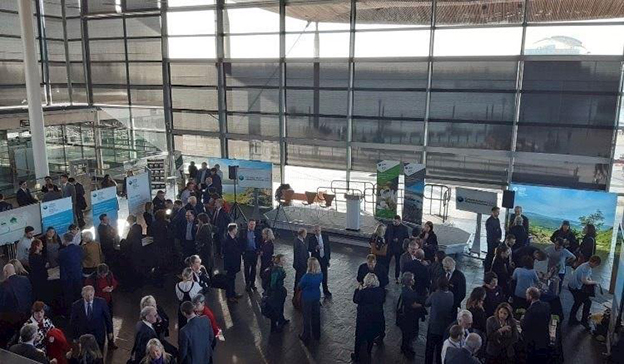
AN EVENT to celebrate collaboration and developing partnerships to meet the growing challenges facing the Welsh environment has taken place at The Senedd.
Hosted by Natural Resources Wales (NRW) and sponsored by the Minister for the Environment, Energy, and Rural Affairs Lesley Griffiths AM, the Making the Connections event focussed on how NRW works with other organisations for a greener, safer and prosperous Wales.
NRW’s Chief Executive Clare Pillman explained: “Each week, indeed every day, we are witnessing new global and national commitments for nature and the environment – and that is both challenging and exciting.
“And I’m glad to see that Wales – and NRW – is at the forefront of making these commitments.
“But of course, we can’t do this alone, to succeed we need to build positive working relationships focussing on customer service and working in collaboration with partners old and new and this is what this event is all about.”
Following keynote speeches by NRW’s Chair Sir David Henshaw, Clare Pillman and the Minister, an informal networking session took place where guests were able to learn more about specific areas of partnership working.
Topics including waste crime, tourism, timber sector, land management, education, health and wellbeing, metal mines, flooding and LIFE projects were represented by organisations as diverse as the Welsh Revenue Authority, Confor, Dwr Cymru Welsh Water, Brecon Beacons, Pembrokeshire and Snowdonia National Parks, Met Office, Public Health Wales, Coal Authority, Cardiff County Council and the farming unions.
Lesley Griffiths, the Minister for Environment, Energy and Rural Affairs said: “I am pleased NRW is taking this opportunity to showcase the work they carry out with their partners and for us all to have this opportunity to build networks and new partnerships.
“It is vital we all work together to reverse the effects of climate change and respond to the challenges of the climate emergency.”
The Minister also took the opportunity to thank NRW staff for their ‘expertise and professionalism’ in protecting communities from the effects of climate change, their work to tackle pollution which harms habitats and species and the complex policy and evidence work behind Wales’ drive to achieve net-zero emissions.
The Environment Act makes collaborative working a legal requirement in Wales and the interest in the Making the Connections event demonstrates its importance in developing innovative and sustainable solutions.
In his closing remarks, Sir David Henshaw said: “The challenges we face are considerable but so are the opportunities and we have, amongst us all, is a remarkable wealth of knowledge and ingenuity on what needs to be done.”
“So, our message is straightforward, not only do we want to develop partnerships, we want to make it easy for others to partner with us for the benefit of both the natural environment and for everyone who lives in or visits Wales.”

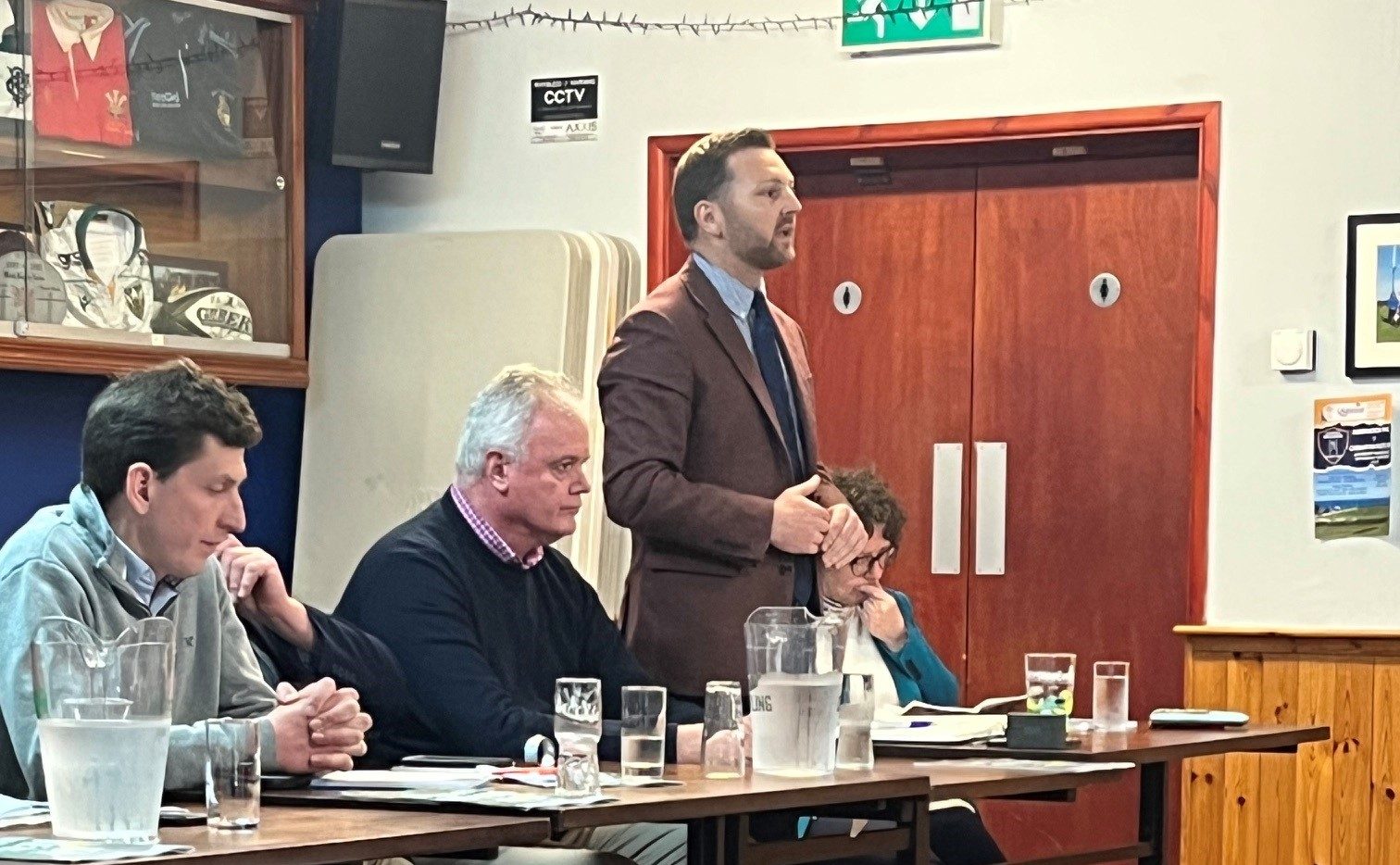
Conservative candidate says farmers feel under pressure as parties battle over support, regulation and the future of Welsh agriculture
FARMERS from across the region raised concerns about rising costs, regulation and future support during an agricultural hustings in Aberaeron on Tuesday (Apr 14).
The event, jointly hosted by the Farmers’ Union of Wales, NFU Cymru and Ceredigion Young Farmers’ Clubs, brought together members of the farming community to question candidates on the challenges facing the sector ahead of the Senedd election.
Among those responding was Samuel Kurtz, Conservative candidate for Ceredigion Preseli Pembrokeshire, who said the mood in the room reflected growing frustration among farmers.
Mr Kurtz said: “The hustings made one thing very clear: farmers feel let down, ignored and under increasing pressure from Labour in Cardiff Bay and in Westminster.
“As the Shadow Minister for Rural Affairs, I have been warning for some time that the direction of travel is wrong. Farmers are being asked to do more and more with less and less support.

“Rising costs, burdensome regulation and uncertainty over future funding are placing real strain on farm businesses and family livelihoods.”
He said many in the industry were worried that current policies could undermine food production and place further strain on rural economies.
Mr Kurtz also raised concerns about long-term food security, saying farmers wanted stronger backing for domestic production and more confidence about the future.
He said: “Our farmers are the backbone of rural Wales. They produce our food, support local jobs and care for our countryside.

“But right now, too many feel that decisions by Labour, backed by Plaid Cymru and the Liberal Democrats, are being imposed on them rather than made with them.
“That has to change.”
The Welsh Conservatives say their proposals for the sector include an extra £100 million for the agriculture budget over the next Senedd term, placing food security and productivity at the heart of the Sustainable Farming Scheme, increasing the amount of Welsh food served in schools and hospitals, and moving away from an all-Wales NVZ policy in favour of a more targeted, catchment-based approach.

The party has also pledged to continue campaigning against the so-called family farm tax and to take stronger action on bovine TB in livestock and wildlife.
Mr Kurtz said: “We need a government that backs farmers, not one that creates barriers and uncertainty.
“We will continue to fight for a better deal for rural Wales and ensure that farmers’ voices are heard loud and clear.”
The hustings formed part of wider engagement with the agricultural sector during the election campaign, with farming remaining one of the key issues in rural parts of west Wales.
While Mr Kurtz used the event to attack Labour’s record in Cardiff Bay and Westminster, the discussion also reflected broader concern within the industry over funding, regulation and the future direction of farm policy in Wales.


PLANS for a rural enterprise dwelling to support a Pembrokeshire horticultural business are being recommended for approval despite concerns from the local community council.
In an application recommended for approval at the April meeting of Pembrokeshire Coast National Park’s development management committee, Southern Roots Organics/Awen Organics, through agent Preseli Planning Ltd, seeks permission for a rural enterprise dwelling, track extension, and associated works at Eithin Farm, Felindre Farchog, near Nevern.
This application is being presented to the Development Management Committee as local community council Nevern has objected to the application raising material planning matters, contrary to the officer recommendation for approval.
An officer report says Eithin Farm comprises about 25 acres of agricultural land, with an additional seven acres to be rented by the applicants; the applicants running a horticultural business from the site, using multiple polytunnels and employing irrigation systems which require careful management.
The report says the business has been trading for over three years and can support a full-time worker, meeting criteria which addresses planning for sustainable rural communities. The proposal is said to meet these requirements, and the officer’s report confirms a genuine need for the dwelling.

Nevern, in its objection, said: “The living accommodation is supposed to be part of the business, it needs to be closer to the sheds, making the whole enterprise more aesthetically pleasing. The area designated for future seasonal agricultural workers would be an areas that would be more appropriate for a traditional cottage. A restriction on the house, a tied house needs to be considered.”
Objections to the plan have also been received from members of the public raising concerns including foul water disposal and the application “has nothing to do with the new current business”.
However, a number of representations have expressed support for the application. Issues raised include the benefit of applicants living on site, helping to reduce travel and carbon emissions, and confirming support for local, small-scale horticulture, and the contribution the business makes to the community.
The report says there is an identified need for a rural worker’s dwelling, especially due to the need to quickly respond to changes in crop conditions and potential failures in irrigation or ventilation systems.
It concludes: “The evidence submitted with this application, having been assessed by PCNPA’s Agricultural Advisors, is sufficient to demonstrate that an essential need exists for a rural enterprise dwelling, and that the proposal meets the tests set out in [policy].
“The siting and design of the dwelling are considered acceptable with no concerns in relation to landscape impact, amenity or biodiversity. Overall, the proposal is considered to be acceptable and a recommendation to grant permission is made.”
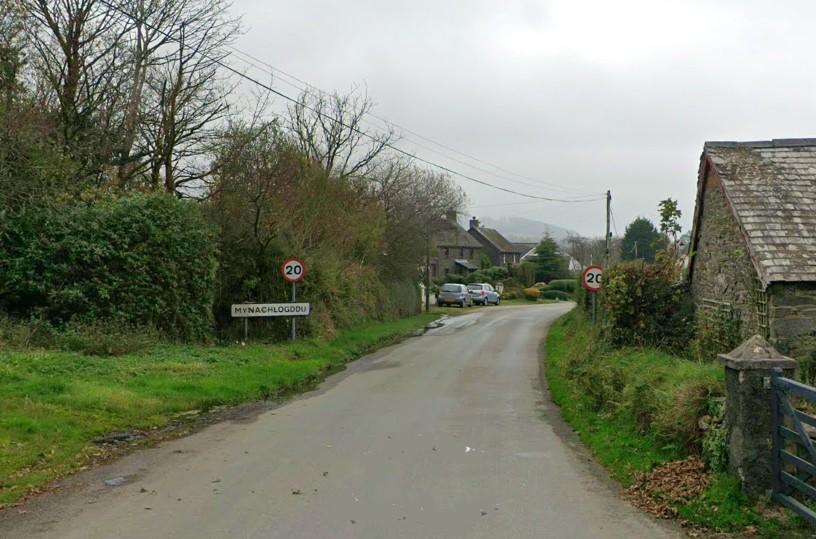
A CONDITION restricting a rural Pembrokeshire home to agricultural workers-only has been removed after its occupants lived in breach of that for some two decades.
In an application to Pembrokeshire Coast National Park, Richard Tadman and Rebecca Brinton, through agent Carver Knowles, sought a certificate of lawfulness for non-compliance of an agricultural/forestry occupancy condition for Brynmelyn, Mynachlogddu.
The condition restricting the occupancy was part of a consent for the farmhouse granted back in 1985.
An application for a certificate of lawfulness allows an applicant to stay at a development if they can provide proof of occupancy without any enforcement challenge over a prolonged period.
A supporting statement accompanying the application said evidence had been gathered to verify that since May 2006 the property has been occupied in breach of that condition, Ms Brinton purchasing the property that year, with Mr Tadman living there until 2022 and Ms Brinton continuing to do so.
When Mr Tadman was living at Brynmelyn he was self-employed as a mechanic, and Ms Brinton has not worked in agriculture or forestry, other than the couple keeping a few animals including chickens, ducks, turkeys, and pigs for a short period from 2008 until 2010 when the pigs had to be culled following a TB outbreak, the poultry succumbing to foxes.
The statement said council tax payment records to Pembrokeshire County Council showed the occupancy from 2006, adding that many of the previous owners apart from the original has not got an agricultural worker connection either,
An officer report recommending approval, which led to the issuing of a certificate of lawfulness, said: “The occupation of Brynmelyn of persons not employed in agriculture or forestry has been continuous for a period in excess of 10 years. It therefore represents a use unauthorised by the Town and Country Planning Act 1990.
“The use of the dwelling exceeds the time limit for the Local Planning Authority to take any enforcement action, in accordance with Town and Country Planning Act 1990 (as amended) and / or the preceding Town and Country Planning Act 1971. This authority considers that a Lawful Development Certificate can be issued.”




Community17 hours ago
Fire leaves Letterston families homeless after homes destroyed
Two houses lost and a third badly smoke-damaged as villagers rally to support those affected THREE families have been forced...

Community2 days ago
Hippo bones put Wogan’s Cave at centre of major new dig
Five-year project beneath Pembroke Castle could transform understanding of prehistoric Britain A MAJOR new archaeological project has been launched at...


Crime2 days ago
Man found staggering in street after brutal caravan attack
Victim suffered fractured wrist and suspected broken jaw after assault in Pembroke Dock A MAN was found staggering around Pembroke...

News3 days ago
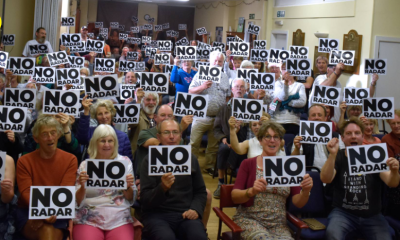
Labour rift erupts over DARC as campaigners say Morgan’s move is too little, too late
Anti-radar group says First Minister’s call for a pause falls far short of what angry Pembrokeshire residents are demanding A...

Business3 days ago
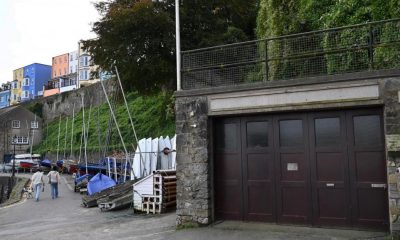
Tenby harbour RNLI building takeaway allowed after appeal
A REFUSED scheme for a takeaway food kiosk at a former lifeboat store in Tenby’s seaside harbour, has now been...


Community4 days ago
Family safe after major house fire in Letterston, community told
Memorial hall opened to help those affected after blaze in Station Road area A FAMILY escaped without injury after a...


News4 days ago
Haverfordwest County AFC escapes winding-up order but ordered to pay costs
Club avoided liquidation in case remained live until it came before a judge at the High Court in London A...


News4 days ago
Seal pup’s 120km swim ends in rescue and release
Young grey seal found weak at St Brides Bay after remarkable journey from Cornwall is now back in the wild...


Crime4 days ago
Woman who called for help spared jail over blade offence
Court hears Haverfordwest defendant was in severe mental distress and carrying razors to harm herself A HAVERFORDWEST woman who contacted...


Community4 days ago
Spitfire latest: Pembrokeshire flypast looks more likely this afternoon
THE LATEST public updates suggest the iconic Spitfire is now expected to leave RAF Valley at around 2:00pm today (Apr...
-

 Business5 days ago
A proper Pembroke local: Inside the warm welcome of The Old Cross Saws Inn
-

 Crime7 days ago
Over 500 arrests at latest Palestine Action protest in London
-

 Sport6 days ago
Grand Slam win for Pembrokeshire rugby ace
-

 Community5 days ago
Doorstep warning issued after reports of suspicious callers in Pembrokeshire
-

 Business3 days ago
Milford Haven dry dock pitched as home for giant £480m superyacht yard
-

 Crime5 days ago
Romino’s licence revoked after illegal workers found and fire risks exposed
-

 Politics4 days ago
Welsh Lib Dems promise childcare boost, social care reform in manifesto launch
-
 News7 days ago
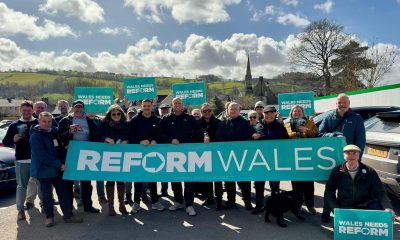
Reform attacks Plaid on spending and immigration ahead of Senedd poll