

News
Truss unveils plan to cap domestic gas and electricity bills at £2500 per year from October


ON THURSDAY morning, September 8, the Prime Minister unveiled her big idea to help UK families cope with spiralling energy costs over the next two years.
Mrs Truss said domestic gas and electricity bills in the UK will be capped at £2500 per year from October in a statement to the House of Commons.
The announcement means that families will only pay twice as much for their energy than they did last year.
The price cap is around £1,000 less than that already announced.
It’s still about £500 more than at present.

As well as households, businesses are also expected to receive some help. Many firms are currently facing even sharper rises than households, and many fixed-rate deals for business expire this October, exposing thousands of firms to full costs that could rise by four or five times or more.
She did not provide details of relief for businesses, apart from a brief mention that a similar measure would provide for six months of protection and targeted support for businesses most at risk.
Otherwise, Liz Truss kicked support for business into the long grass for cutting by Jacob Rees Mogg.
She said she would “not give in to the other side” on windfall taxes on energy firms as “that would undermine the national interest by disincentivising energy companies we need to invest in this country.
“We are doing important business to help people and businesses get through this winter and winter whilst helping Britain secure its long-term energy supplies.
“There will be as cost to this intervention, but we are facing a global energy crisis.”
Preseli Pembrokeshire MP Stephen Crabb praised the PM and said to the House: “Doesn’t this demonstrate Mr Speaker that Conservative Governments do not stand-by when help is needed.”

Shock data released this week shows that 355,000 companies with a turnover higher than £1m are designated as high energy users – industries such as steel, glass, concrete, and paper production.
Of those, an estimated 75,972 are at risk of insolvency, and 26,720 could fail because of energy costs.
That’s in addition to the 26,000 insolvencies already predicted this year.
Without a large-scale support package from the government, more businesses will fail than during the pandemic and any other recession.
A business turning over a million pounds two years ago would have spent around 8% of that on energy costs and made profits of around £90,000.
If the cost of energy doubles to 16%, that instantly wipes out profitability, and they’re straight into a scenario where it threatens the viability of the business within a year.
Beyond the large, energy-intensive companies, smaller companies with turnover under £1m were also at risk of failure, data analytics firm Red Flag Alert said on Tuesday (Sept 6).
In Pembrokeshire, some firms have already closed their doors – one example is the popular Haven Brasserie in Nolton Haven, which said it would shut for “reasons of economic uncertainty”.
The hospitality sector, which is a huge part of the local economy, is facing a triple threat of increasing energy bills, higher supply and staffing costs, and a fall-off in consumer spending, squeezed by inflation.
Red Flag Alert calculates businesses overall will need £100bn a year in support to tackle the rise in energy bills.
The government is already under pressure over how it will finance a promised package of support for households while sticking to promises to cut taxes.
Responding to the PM’s announcement, opposition leader Keir Starmer said the argument against a windfall tax was nonsense and that energy companies’ own announcements showed investment would not be deterred.
He said the PM was focused on protecting the excess profits of energy companies who reaped their unplanned benefit from Russian aggression. At the same time, ordinary families would end up repaying the money she’d borrowed years ahead through their bills.
Keir Starmer said that strategy was a tax on families instead of hitting big corporations who had failed to invest money in energy security and infrastructure.











Magistrates found Robert Hedley placed the opposing player in a headlock before jumping on his back and gouging his eyes
A LETTERSTON footballer has been found guilty of assaulting an opposing player during a match at St Clears last summer.
Following a two-day trial at Haverfordwest Magistrates’ Court, Robert Hedley, aged 42, was convicted of assaulting Liam Morley-Trivett and causing him actual bodily harm.
The court heard that Hedley, of Wesley Way, Spittal, grabbed Mr Morley-Trivett in a headlock before jumping onto his back and gouging at his eyes.
Mr Morley-Trivett suffered injuries including blurred vision as a result of the assault.
Delivering the verdict, the presiding magistrate said the defence had provided differing accounts of what happened and where the two players had been positioned on the pitch.
By contrast, the magistrates found the prosecution witnesses had given credible and consistent accounts of Hedley jumping onto Mr Morley-Trivett’s back and gouging his eyes.
“We are satisfied beyond reasonable doubt that the defendant caused the injuries and, as a result, we find him guilty,” the magistrate said.
Hedley will be sentenced on Thursday, July 16, after magistrates requested an all-options pre-sentence report from the probation service.
He was released on conditional bail, with the requirement that he cooperate with probation ahead of sentencing.

Solvent wind-down will end nearly 11 years of light aircraft engineering and support, with hangar operations stopping in August
A SPECIALIST Pembrokeshire aviation company has announced that it is to close its Haverfordwest Airport operation after directors concluded that it was no longer commercially viable.
Metal Seagulls Ltd confirmed on Monday (July 13) that it will begin a voluntary and solvent wind-down, bringing nearly 11 years of light aircraft engineering, fabrication and builder support to an end.
The company expects to suspend operations from its airport hangar at the end of August, with its machinery, tooling and production equipment now being offered for sale.
Metal Seagulls stressed that the decision was not the result of insolvency and that the business would be closed in an orderly manner over the coming months.
Directors said the decision followed a detailed examination of operating costs, together with personal challenges which had affected the company’s ability to continue running its workshops in their current form.
Jonathan Porter, director of Metal Seagulls Ltd, said: “We are sad to see Metal Seagulls close its hangar doors after nearly eleven years of service, but it is the right decision with the economic and personal challenges faced by the company and its directors at this time.”
Mr Porter suffered a leg injury in 2025 and continues to experience mobility problems. The company said this had prevented him from providing significant physical support to the workshops during the past nine months.
Fellow director Patricia Porter said the decision had not been taken lightly.
“This has not been an easy decision, but after a thorough review of our cost base, the directors believe it is the right one for the business,” she said.
“We are grateful to our customers, suppliers and the wider light aviation community for their support over the years, and we intend to work closely with clients during the wind-down to keep disruption to a minimum, ensuring where possible ongoing support as applicable.”
Founded in 2016, Metal Seagulls has operated from Haverfordwest Airport since 2021.
The family-run company has supplied parts, engineering services, CNC production, custom fabrication and practical support to aircraft builders, manufacturers and specialist operators.

Its customers and programmes have extended far beyond Pembrokeshire, reaching across the UK, Ireland, Iceland, the Falkland Islands and parts of Africa.
The company has also worked to encourage young people and under-represented groups to consider careers in aviation and engineering. It previously hosted public events and educational visits at its Haverfordwest workshops.
Its closure will therefore represent the loss of a distinctive specialist engineering and aviation presence at the airport.
A substantial collection of manufacturing machinery is now available for sale, including a Kimla CNC routing, milling and cutting system and a 120-tonne Morgan Rushworth CNC press brake used to produce specialist light aircraft components.
The production equipment can be sold separately or as an established light aviation fabrication cell, potentially accompanied by introductions to existing customers and production programmes.
Other assets being offered include aircraft engine cowling moulds, an electric forklift, a box pan folder, an English wheel, a manual beading machine, an industrial guillotine, a plasma cutter and table, workshop racking, a drill press, a band saw and a media blasting cabinet.
The equipment is being offered on an as-seen and where-is basis, subject to contract.
The directors said they would do everything reasonably possible to support customers and partners during the transition.
Details have not yet been released about the number of jobs or contractors affected by the closure.
Asset enquiries can be directed to Jonathan Porter, with contact details on the Metal Seagulls Facebook page.
Additional GP and health checks welcomed as BMA warns more than half of Welsh doctors cannot routinely meet demand
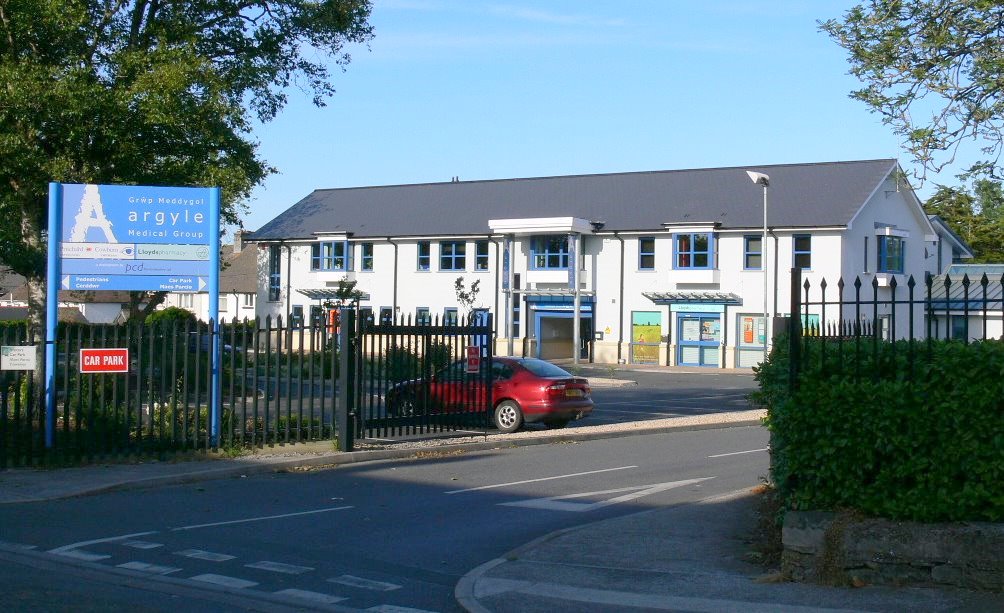
THERE are signs of improvement at one of Pembrokeshire’s most heavily pressured GP practices, but fresh figures suggest the problems facing Argyle Medical Group are far from resolved.
Henry Tufnell MP has welcomed the introduction of a new appointment system at the Argyle Street surgery in Pembroke Dock, together with what he described as the arrival of an additional doctor and the rollout of free health screening for patients aged over 65.
The Mid and South Pembrokeshire MP said he had received positive feedback about the practice’s new booking arrangements, following months of concern over difficulties securing appointments.
Argyle Medical Group introduced its Anima online triage system on June 10. It replaced the previous online system and was intended to reduce the familiar 8am rush for appointments.
Patients submit details of their medical problem online, after which the request is assessed and directed to the most appropriate clinician or service. Those unable to use the internet can still contact the surgery by telephone and reception staff can complete the request on their behalf.
The practice says it aims to assess requests on the same day, although some routine matters may take longer.
However, the system does not remove the underlying issue of limited capacity.
Argyle has warned that Anima may close to further medical submissions when the number of requests reaches the maximum level the practice believes it can safely manage.
Patients may then have to try again on the following working day, although those with urgent concerns are advised to contact the surgery, NHS 111 or emergency services as appropriate.
The pressure is also being increased by the continuing closure of St Oswald’s Surgery in Pembroke, which is part of Argyle Medical Group.
The branch remains closed for maintenance work and is currently not expected to reopen until September 2026.
Argyle Medical Group serves more than 22,000 patients across the Pembroke and Pembroke Dock area. Previous figures raised in the Senedd indicated that the practice had nine registered GPs, giving it one of the highest patient-to-doctor ratios in Wales.

Mr Tufnell’s announcement that another doctor has joined the practice will therefore be welcomed, although it is not yet clear whether the appointment is permanent or full-time.
The developments come as new research from BMA Cymru Wales paints a bleak picture of general practice across the country.
A survey of 221 Welsh GPs found that 54 per cent believed patient access was routinely inadequate when compared with demand.
A further 63 per cent said excessive workloads were routinely or constantly affecting patient care, while 70 per cent said the pressure was having a similar effect on their own wellbeing.
Practices are also making difficult financial decisions to remain viable. The survey found that 43 per cent had frozen recruitment, 31 per cent had delayed investment in buildings, technology or facilities, and 23 per cent had reduced services such as minor surgery and shared-care arrangements.
Dr Gareth Oelmann, chair of the BMA’s Welsh GP committee, said demand was far outstripping the capacity available within surgeries.
He called for sustained investment to allow practices to recruit more doctors, improve services and plan for the future.
Welsh Conservatives have blamed what they described as years of political mismanagement for the situation.
Natasha Asghar MS, the party’s Shadow Minister for Health and Social Care, said: “These findings are deeply worrying but, sadly, they won’t come as a surprise to patients who are struggling to get a GP appointment.
“When GP practices cannot recruit staff, are forced to freeze investment and are even cutting services just to keep their doors open, it is patients who pay the price through longer waits and poorer access to care.
“If we are serious about shifting more healthcare into the community and reducing pressure on hospitals, then general practice must be properly resourced.”
For Argyle patients, the new booking system and reported recruitment of another doctor represent positive steps.
The more important test will be whether patients experience sustained improvements, whether the system regularly reaches its daily limit, and whether the practice can recruit and retain enough clinicians to meet the needs of its large patient population.



Crime23 hours ago
Teenager tells jury he took knife to school to ‘show off’ to friends
Boy accused of attempting to murder Milford Haven teacher says he ‘never wanted to injure’ her A TEENAGE boy accused...


Local Government2 days ago
Calls grow for independent investigation into Manorbier school closure
Councillor alleges misleading figures, inadequate insurance and poor treatment of staff CALLS for an independent investigation into the controversial closure...


Community2 days ago
Neyland Carnival hailed a huge success after streets fill with colour and crowds
NEYLAND CARNIVAL organisers have thanked the community, volunteers and local businesses who helped make this year’s event a memorable success....


Community2 days ago
Tenby Summer Spectacular: Anger grows over ‘disaster waiting to happen’ warning
A growing backlash has followed police calls for the event’s licence to be revoked, with supporters questioning why authorities failed...


Charity3 days ago
RSPB secures ‘missing link’ to reconnect wildlife habitats in Carmarthenshire
RSPB CYMRU has purchased a 96-hectare upland site in Carmarthenshire, describing it as a vital step towards reconnecting one of...


Crime4 days ago
Ann Widdecombe: Welsh politicians pay tribute as murder probe launched
Prime Minister Sir Keir Starmer has praised the former minister’s “conviction and dedication”, while political figures in Wales remembered her...


News4 days ago
Solardo pulls out of Haverfordwest show as organisers offer full refunds
Headline act confirms non-appearance as Park House Series announces major event changes DANCE music duo Solardo will no longer perform...


Local Government4 days ago
Conservatives win Pembroke Dock seat as Reform stalls and Dowson polls just 11
Jamie Street takes Market ward with a 43-vote majority as Reform finishes fourth despite its major Senedd breakthrough two months...

Health4 days ago
Hospital ward closed after highly contagious scabies outbreak
Hywel Dda confirms wider rise in cases across Carmarthenshire, Pembrokeshire and Ceredigion as patients and staff are offered treatment A...
Crime5 days ago
Teacher stabbing trial: The first week of evidence
Jury hears accounts of alleged planned classroom attack, teacher’s fear she was dying, and boy’s words after leaving school A...
-

 News7 days ago
Questions raised over Hamilton Accies finances after club’s Haverfordwest friendly
-
 Farming5 days ago
Working Carmarthenshire farm opens gates to visitors with new holiday cottages
-

 Entertainment6 days ago
Swing and big band classics heading to Torch Theatre
-

 Sport5 days ago
Rising rally star claims maiden Mini Rally Challenge victory
-
 Farming5 days ago
Outer Hebrides stickmaker to make final Royal Welsh Show appearance
-

 Crime5 days ago
Greenacres confirms seized dogs are safe as investigation continues
-
 Sport5 days ago
Bluebirds give new home strip first run-out
-

 Crime7 days ago
Carmarthenshire rapist jailed for 22 years for child sex offences