


News
Fairer pay increase possible for Pembrokeshire nurses, says Plaid


LOCAL Plaid Cymru politicians have reiterated calls for the Welsh Government to deliver a better pay offer to NHS nurses in Pembrokeshire – utilising existing reserves and unallocated funding.
Information obtained by the party from the Finance Minister proves that the Welsh Government has sufficient money to offer an 8% pay increase to nurses – more than 3% above what is currently on the table.
The current pay offer from the Welsh government provides around 4.8% uplift on average for NHS staff. To arrive at an 8% initial offer would require an extra £176m in the current financial year.
Plaid Cymru says that the money could come from a combination of the £152.3m of currently unallocated funding in the Welsh Government’s budget, a draw down from the Wales Reserve in addition to any projected under-spends in current departmental budgets.
Plaid Cymru have been critical of the Welsh Government’s current offer on the table – a one-off payment to nurses of an unspecified amount – which will do nothing to improve the long-term sustainability of the profession, nor will it help attract new entrants.

The impact on next year’s budget of an increased pay offer could be funded through a combination of reduced reliance on private sector agency staff and progressive use of the Welsh Government’s income tax powers.
These latest calls follow strikes by NHS nursing staff across Pembrokeshire and the whole of Wales in December, protesting against poor wages and chronic staff shortages.
The Royal College of Nursing (RCN) has recently indicated it’s “prepared to be real about that economic climate” and is willing to negotiate on pay.
Cefin Campbell, Plaid Cymru Member of the Senedd for Mid & West Wales said: “Time and time again, Plaid Cymru have called on the Welsh Government to use all the levers at their disposal – from taxation, reserves to reallocation – to secure our hardworking NHS nurses and staff in Pembrokeshire get the pay rise they deserve and so desperately need.
These latest findings regarding the sizeable unallocated funding in the Welsh Government’s budget shows that a fairer pay award is not only essential, it’s also possible. Whilst the Tories have starved Wales’ budgets for over a decade, it’s Labour who have been responsible for running the NHS in Wales for the last 25 years. They must take responsibility and deliver a fairer pay offer to our nurses and NHS staff.”
Leader of Plaid Cymru, Adam Price MS added: “Nurses need fair pay, and this pay needs to be awarded in a way that helps ensure sustainability of the profession.
“A one-off payment will not help keep nurses in the job, nor will it attract new people into nursing. Our NHS is nothing without its workers, and making a substantially improved pay offer – which is completely achievable – would show that the Welsh Government is committed to investing in the future of this essential public service on which we all depend.”


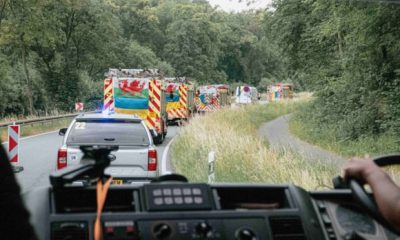







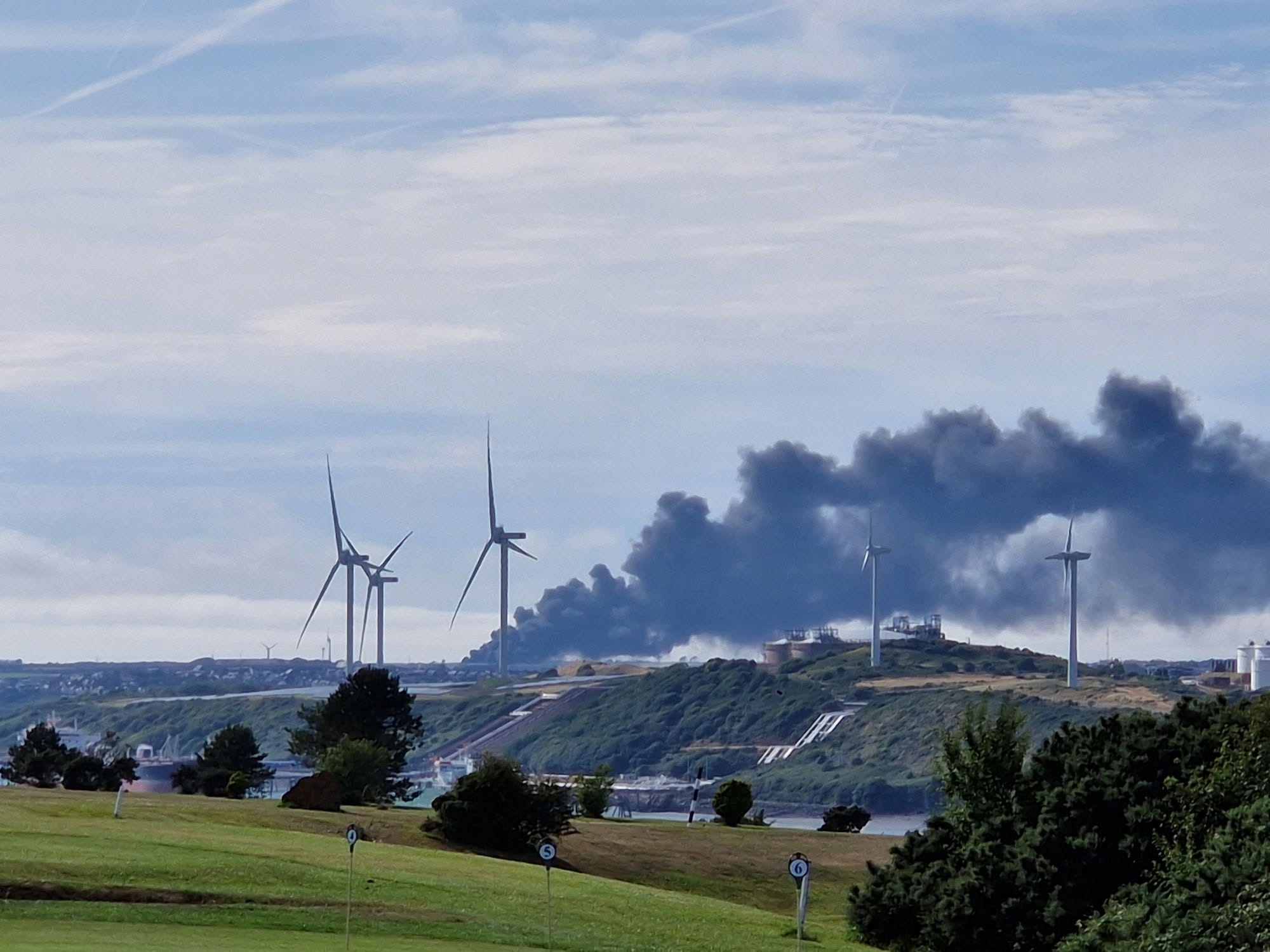
Fire involved decommissioned oil tank containing residual crude oil and around 60 cylinders
A MAJOR incident declared during a fire at the Impala Terminal in Milford Haven has now been rescinded, with emergency services saying crews are making good progress.
Mid and West Wales Fire and Rescue Service said it was called at 5:11pm on Monday, July 6, to reports of a fire at Impala Terminals Infrastructure UK Ltd at Robeston West.
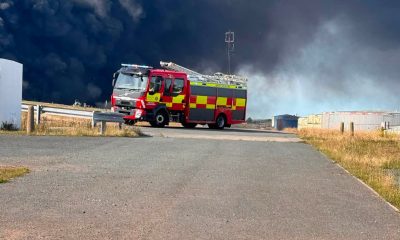
Crews from Milford Haven, Haverfordwest and Pembroke Dock remain at the scene.
The fire service has confirmed that the blaze involves a decommissioned oil tank containing residual crude oil and approximately 60 cylinders, including a mixture of propane and oxygen cylinders.
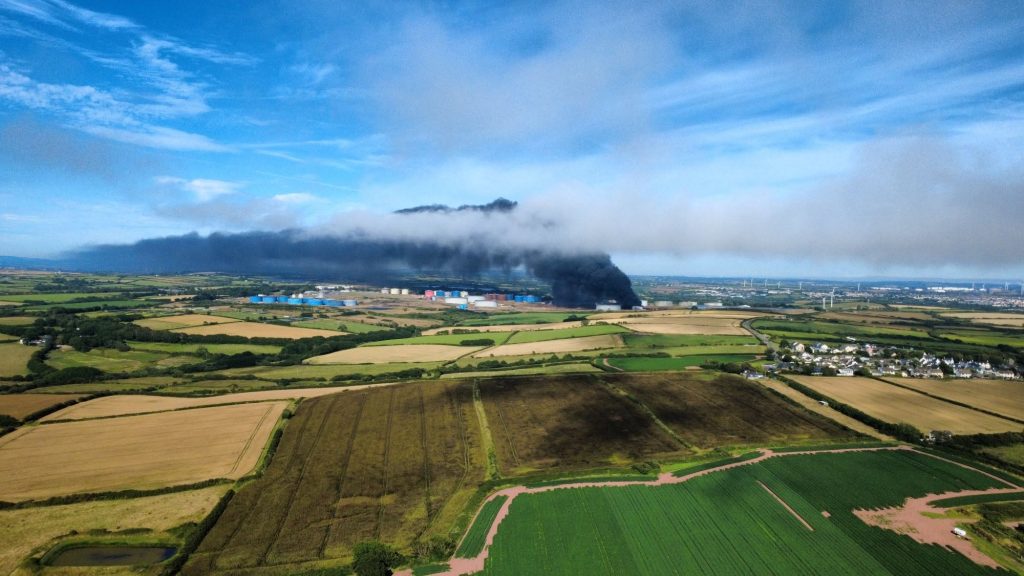
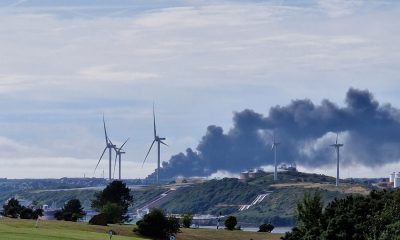
A large plume of black smoke has been visible from the area.
All persons have been accounted for.
Dyfed-Powys Police said it received reports of the fire at around 5:10pm and officers attended swiftly, working with emergency service partners as part of a coordinated multi-agency response.
One casualty has been reported. They are believed to have sustained minor injuries and are receiving appropriate care.
Resources from the Welsh Ambulance Service University NHS Trust attended the scene to provide additional support, but were not required to convey any patients to hospital.
Pembrokeshire County Council emergency planning officers have joined the multi-agency response, while council highways staff assisted emergency service colleagues with road closures around the Impala facility.
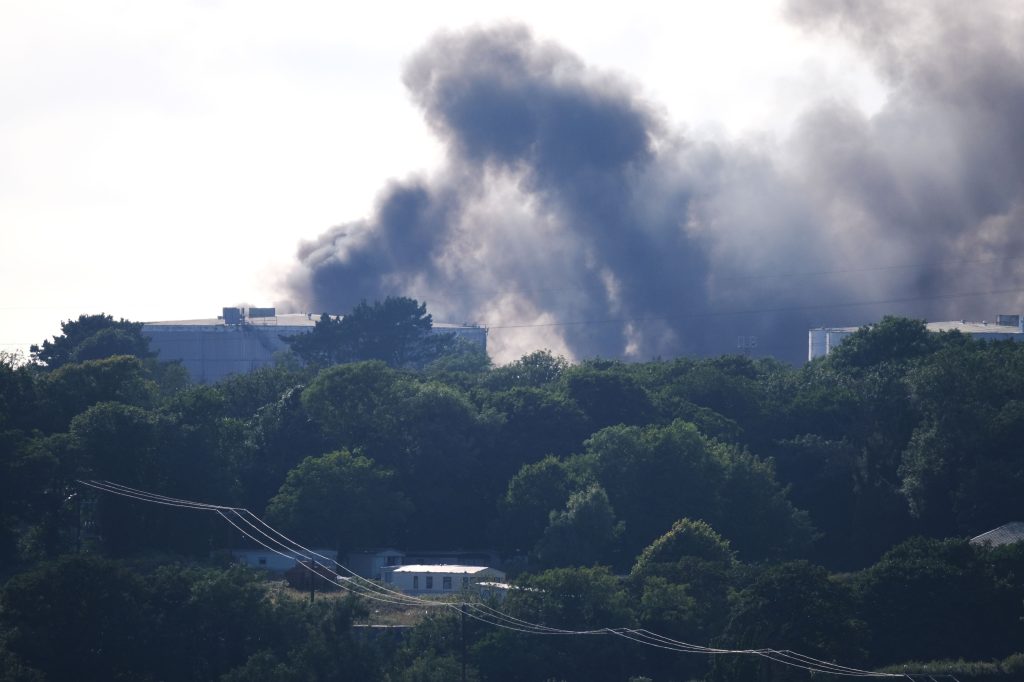
Roads in the area have now reopened. However, emergency services and partner agencies remain at the scene and are continuing to manage the incident safely.
Officials say there is not believed to be a wider risk to the public at this time.

Members of the public are still being asked to avoid the immediate area where possible and allow access for emergency service vehicles. Local residents are advised to keep windows and doors closed if there is thick smoke nearby.
Natural Resources Wales has also confirmed it is aware of the incident and was involved in a multi-agency meeting this evening.
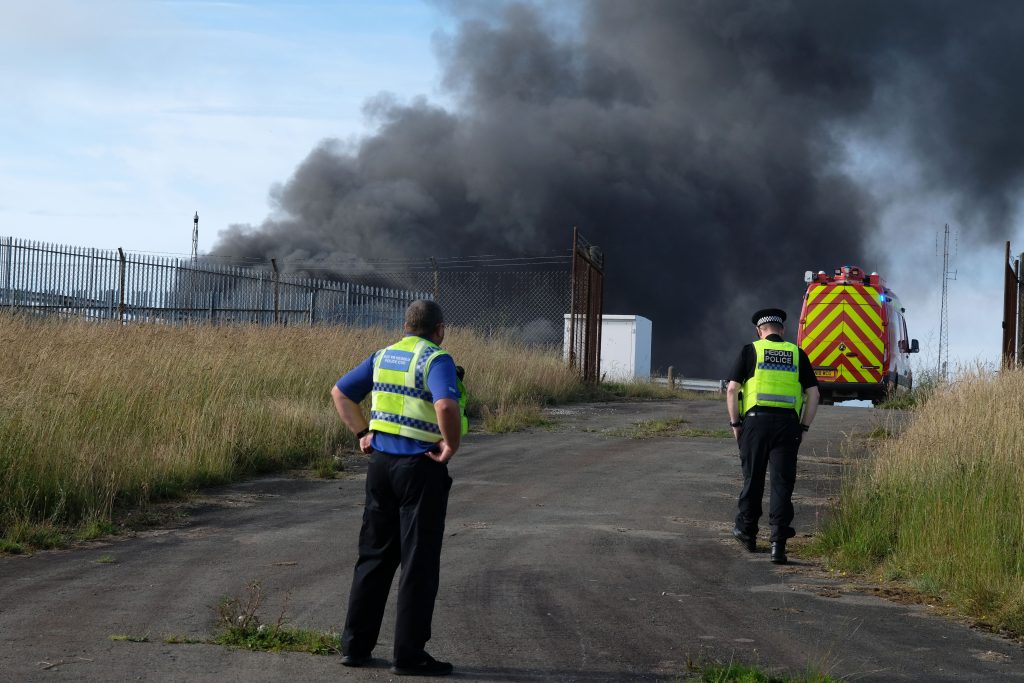
NRW said Mid and West Wales Fire and Rescue Service is leading on the incident, including communications. The environmental regulator said the fire service had not requested its attendance at the site, but officers would attend if asked.
The Herald earlier reported that the fire was understood to have started in the area of a tank at the rear of the facility where dismantling work was taking place. The official update has now confirmed the incident involves a decommissioned oil tank containing residual crude oil.
Further updates will be provided as information becomes available.
Images: Martin Cavaney and others
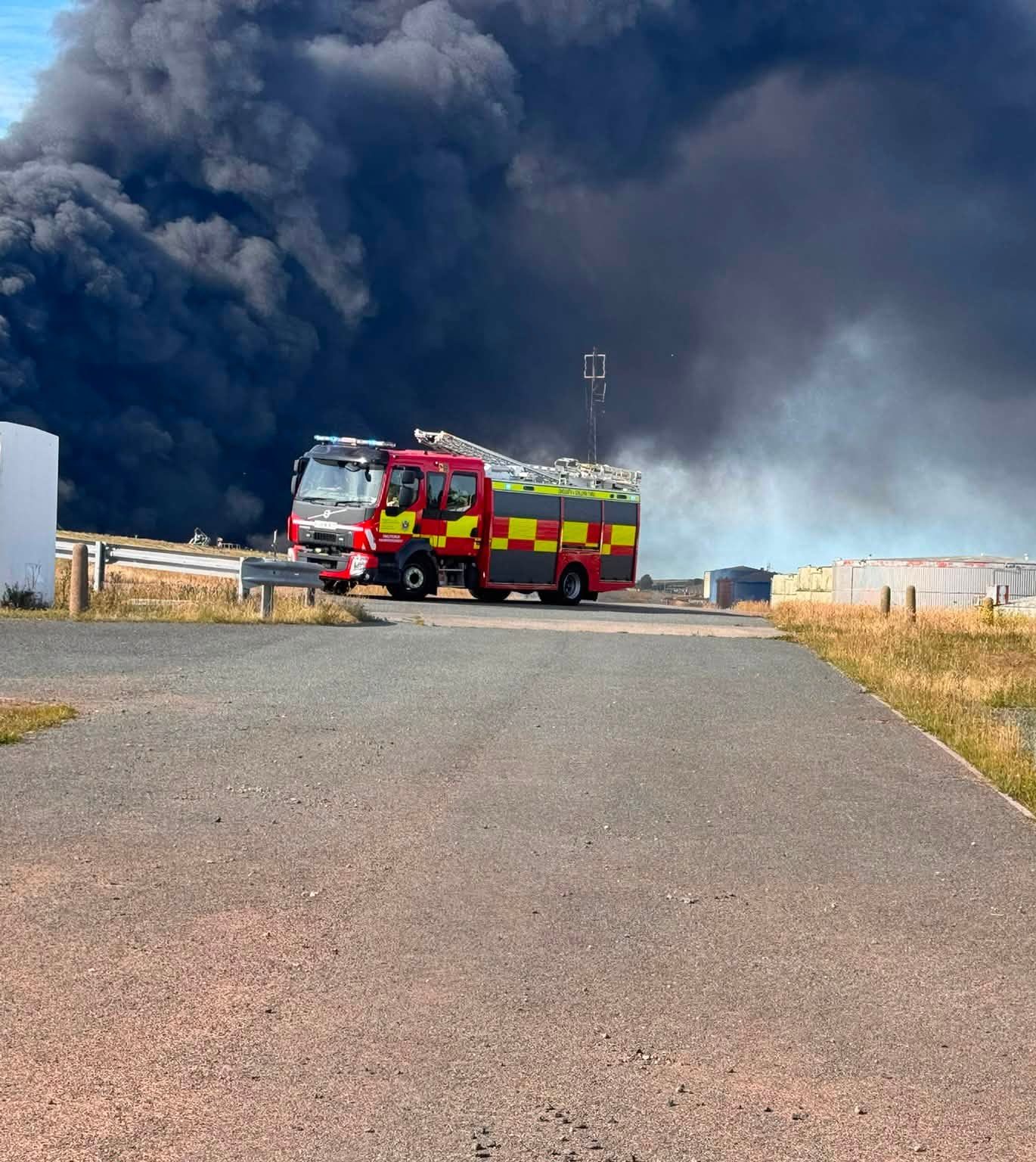
Black smoke seen for miles as emergency services respond to incident at former Puma Energy site
A LARGE fire has broken out at the Impala Terminal in Milford Haven this evening, sending a thick plume of black smoke high above the town and across the Haven waterway.
Multiple fire appliances have been seen heading to the site, with police closing roads in the immediate area while emergency services deal with the incident.
The Herald understands that the fire started in the area of Tank 10, at the rear of the facility, where demolition work was being carried out.
Sources have told The Herald that the tank was in the process of being dismantled and that cutting gear was being used at the time. The tank is understood to have been empty, but there may have been oil residue or sludge beneath or within the structure.
This has not yet been officially confirmed by the fire service, police, or the site operator, and the exact cause of the fire remains unconfirmed.
Pictures and video from the scene show a large column of black smoke rising from the industrial site, visible from Milford Haven, Neyland, Pembroke Dock and other areas around the Haven.
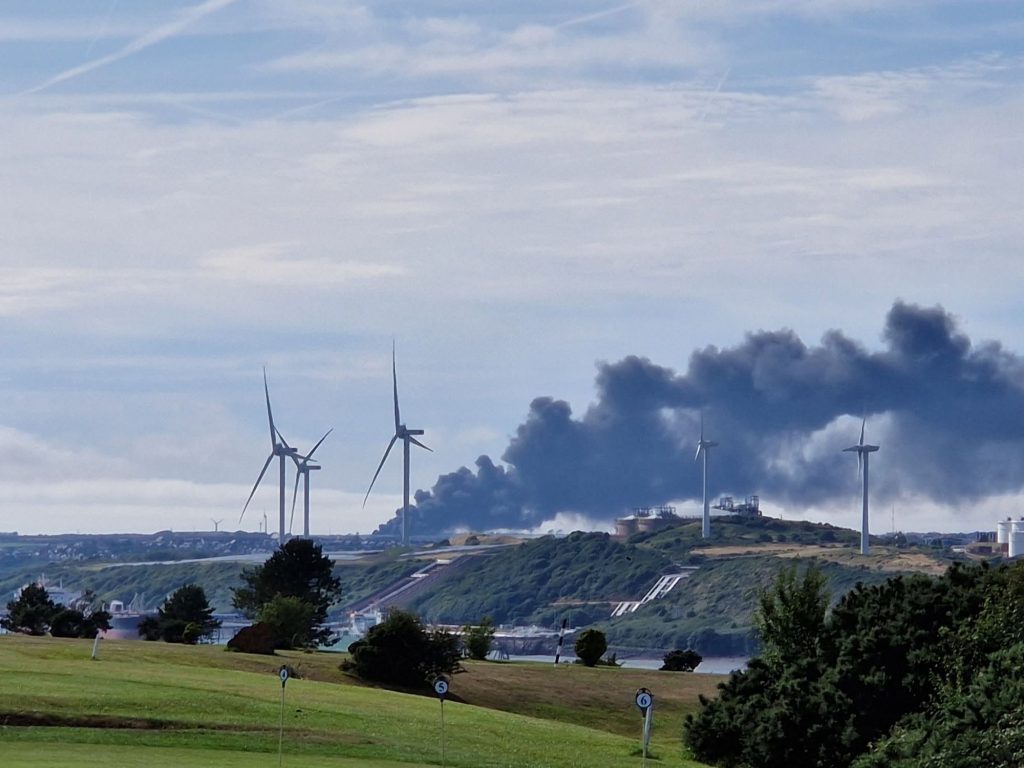
Members of the public are being urged to avoid the area and allow emergency services to work. As a precaution, anyone living nearby should keep windows and doors closed until further guidance is issued.
The site, still widely known locally as Puma Energy, is now operated as the Impala Terminal. It occupies part of the former Milford Haven oil refinery, which ceased refining operations before the site was converted into a fuel storage and distribution terminal.
The terminal has long been associated with the import, storage and distribution of petroleum products, with a large number of tanks, pipeline systems and jetty infrastructure forming part of the wider Milford Haven energy complex.
Milford Haven remains one of the UK’s most important energy ports, with oil, gas and fuel infrastructure playing a major role in the local economy for decades.
The Herald has contacted the emergency services and site operators for an official update.
Natural Resources Wales has confirmed it is aware of the incident and was involved in a multi-agency meeting this evening.

A spokesperson said Mid and West Wales Fire and Rescue Service is leading on the incident, including communications.
NRW said the fire service had not requested its attendance at the site, but officers would attend if asked. The environmental regulator said it had no further comment at this stage.
Impala Terminals said: “We can can confirm that an incident has occurred at our Milford Haven Terminal on 6 July at 17:10hrs.
“The Site Emergency Team and Emergency Services are managing our response to the emergency.
“We can confirm that all employees and contractors are accounted for.
“Our first priority is to protect the safety of our people, the surrounding community and the environment.
“At this stage it is not possible to confirm any further details. Any further updates will be provided in due course.”
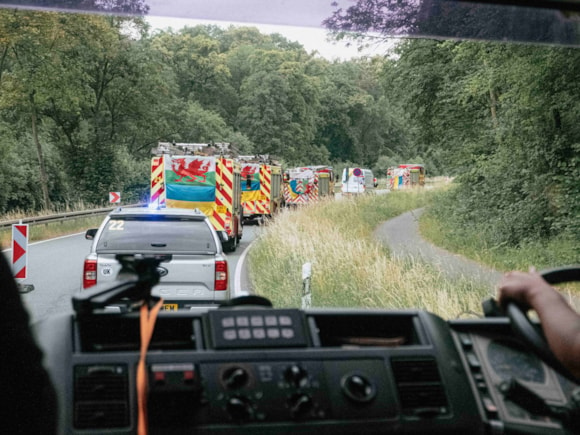
MID AND WEST WALES FIRE AND RESCUE SERVICE has helped deliver a major convoy of firefighting vehicles and equipment to Ukraine, four years on from the start of the full-scale Russian invasion.
The latest convoy, the ninth of its kind, left the UK on Monday, 29 June and reached the Polish border with Ukraine on Thursday, 2 July, where vehicles and equipment were handed over to Ukrainian partners.
The operation was sponsored by the Ministry of Housing, Communities and Local Government and FIRE AID, and delivered through a national partnership involving National Resilience, the National Fire Chiefs Council, UK International Search and Rescue, and fire and rescue services from across England and Wales.
The convoy delivered 21 fire vehicles, including 17 fire engines, as well as more than 2,300 pieces of essential firefighting equipment. The donations will help replace critical resources lost during the war.
Since 2022, the UK fire and rescue community has donated 169 vehicles and more than 220,000 pieces of equipment to Ukraine.
Mid and West Wales Fire and Rescue Service was represented on the convoy by Watch Manager Robert Kershaw.
He said: “I am incredibly proud of our Service’s commitment to supporting the charity and helping get vital aid to Ukraine.
“This mission holds a very special place in my heart, as my family hosted a Ukrainian family for a year, who we now consider our own.
“Knowing the impact of this conflict first-hand makes me even more grateful to work alongside colleagues who are dedicated to helping Ukrainian emergency services protect lives.”
Previous donations from UK fire and rescue services are already making a significant difference on the ground. Vehicles delivered through earlier convoys have responded to more than 6,000 incidents, while more than 2,500 Ukrainian firefighters have been equipped with fully operational PPE and breathing apparatus.
Ukrainian fire and rescue services continue to face severe pressure. According to the State Emergency Service of Ukraine, 481 fire stations have been destroyed, with a further 106 in occupied territories. A total of 1,792 fire vehicles have also been lost.
Since the full-scale invasion began, 122 firefighters have been killed and 629 injured, with three still in captivity. The figures were correct as of 22 June 2026.

Despite these losses, Ukrainian firefighters continue to work on the frontline, saving lives, protecting infrastructure and responding to emergencies while under constant threat.
Around 80 volunteers from across the UK fire and rescue community took part in the convoy, giving their time to prepare, drive and deliver the appliances and equipment.
Fire and rescue services involved included Derbyshire, Essex, Hampshire, Hereford and Worcester, Kent, Lancashire, London, Merseyside, Mid and West Wales, North Wales, North Yorkshire, South Wales, South Yorkshire, Staffordshire, Surrey, West Midlands and West Yorkshire.
National Fire Chiefs Council Chair Phil Garrigan said: “The UK Fire and Rescue community remains unwavering in its support for colleagues in Ukraine.
“Four years on from the start of the full-scale invasion, Ukrainian firefighters continue to operate in the most challenging and dangerous conditions imaginable.
“This ninth convoy demonstrates the enduring commitment of UK fire and rescue services to stand shoulder to shoulder with our Ukrainian counterparts.
“The equipment being donated will help replace vital resources lost during the conflict and ensure firefighters can continue their life-saving work.
“This is about firefighters supporting firefighters. It is a powerful example of friendship that transcends borders.
“It is crucial we recognise the challenges our colleagues face and that we continue to play our part.”
FIRE AID Ukraine Lead Oksana Romanukha said: “We are once again seeing the extraordinary solidarity of communities right across the UK with Ukraine.
“These vehicles and equipment are lifelines, helping to save lives, protect firefighters and strengthen the resilience of communities under constant threat.
“We are deeply grateful to everyone across the fire and rescue community, and all those involved, who have made this collective effort possible.”
Minister for Building Safety, Fire and Democracy Samantha Dixon said: “Ukraine has faced unimaginable suffering, and we remain unwavering in our support.
“This convoy will deliver the critical equipment needed to help Ukraine’s Fire Service save lives, respond to attacks and protect their communities.
“I’m proud of the brave volunteers from across our Fire and Rescue Service, as well as all the organisations which have played a role in mobilising these vital assets, making sure support reaches those who need it most.”


News6 hours ago
Major incident stood down after fire at Impala Terminal in Milford Haven
Fire involved decommissioned oil tank containing residual crude oil and around 60 cylinders A MAJOR incident declared during a fire...

News9 hours ago
Large fire breaks out at Impala Terminal in Milford Haven
Black smoke seen for miles as emergency services respond to incident at former Puma Energy site A LARGE fire has...


Crime12 hours ago
Prosecution outlines ‘planned attack’ as Milford Haven teacher stabbing trial opens
Jury hears teenager allegedly brought kitchen knife into school before teacher was stabbed in the head THE JURY in the...


Crime15 hours ago
Boy, 15, denies attempted murder of Milford Haven teacher in ‘horrifying’ attack
Swansea Crown Court hears dramatic opening of trial over February stabbing A 15-YEAR-OLD boy from Milford Haven has gone on...


Crime1 day ago
Fishguard man cleared after five years in prison refused compensation again
Brian Buckle’s case raises fresh questions over justice system that says a man can be cleared by a jury but...


Crime2 days ago
Wales’ police commissioners to face MPs over future of policing
WALES’ four Police and Crime Commissioners are to be questioned by MPs next week as major changes to the way...


Crime2 days ago
Man in critical condition after serious assault in New Quay
A 20-YEAR-OLD man remains in a critical condition in hospital after being seriously assaulted in New Quay. Dyfed-Powys Police said...


Community2 days ago
Kilgetty and Begelly tractor run raises funds for local charities
Around 70 tractors joined the annual charity road run, hosted by the Begelly Arms Hotel THE ANNUAL Kilgetty and Begelly...


Community2 days ago
Milford Haven Carnival brings colour, music and crowds to the town
MILFORD HAVEN was filled with colour, music and community spirit on Saturday as the town’s annual carnival brought crowds onto...


News3 days ago
A40 closed near Llandeilo following collision
A SECTION of the A40 in Carmarthenshire has been closed in both directions following a collision. The road is currently...
-

 Crime6 days ago
Estate agent banned after drug-drive crash in Milford Haven
-
 Crime7 days ago
Eight guilty over ‘industrial scale’ cocaine conspiracy into Pembrokeshire and Carmarthenshire
-

 Crime6 days ago
Men threatened to have prisoner killed in chilling phone call to his father
-
Crime7 days ago
Judge calls pensioner a ‘dirty old man’ as he avoids jail for exposing himself to women
-

 Entertainment5 days ago
Pembrokeshire DJ lands record deal with London dance label
-
 Education5 days ago
Council deputy leader moves to halt Stepaside school closure plan
-

 Education7 days ago
School leaders call for more support after Estyn finds RSE provision varies across Wales
-

 Crime6 days ago
Pembrokeshire dairy farmer banned after drink-drive offence