

News
Unite members to fight job losses and blast furnace closures


AROUND 1,500 Tata steelworkers based in Port Talbot and Newport Llanwern have voted decisively for industrial action over the company’s plan to close its blast furnaces and shed 2,800 jobs.
It is the first time in over 40 years that Port Talbot steelworkers have gone on strike.
The ballot for strike action by members of Unite, the UK’s leading union, closed today with workers voting in favour of industrial action over Tata’s ‘disastrous’ plans. This was despite Tata threatening the workers with the loss of enhanced redundancy pay if they did.
Unite said Tata has other choices after the union secured a commitment from Labour that it will invest £3 billion in UK steel, compared to the £500 million pledged by the current government.
Unite general secretary Sharon Graham said: “This is an historic vote. Not since the 1980s have steel workers voted to strike in this way. This yes vote has happened despite Tata’s threats that if workers took strike action, enhanced redundancy packages would be withdrawn. Unite will be at the forefront of the fight to save steelmaking in Wales. We will support steel by all and every means.

“Other EU countries are transitioning their steel industries while retaining and growing their capacity because they know steel has a bright future – a tenfold increase in demand is predicted in the coming years. In the UK, Tata’s plans and those of the government reflect the short-term thinking of a clapped-out disinterested government marking time to a general election.
“In contrast Labour have done the right thing and committed £3 billion to UK steel following intense discussions with Unite.
“The average age of a Unite Port Talbot worker is 36. Workers and the communities of Port Talbot and Llanwern are looking to the years ahead. They know that with the right choices steelmaking capacity and jobs can be kept and the benefits of growing the industry grasped.
“In the crucial weeks to come, Tata’s workers and Unite will put up picket lines to prevent the company from taking this disastrous path.”
At the Tata plant in the Netherlands, the blast furnaces are being kept open and jobs protected as the company builds an electric arc furnace and invests in hydrogen DRI technology. In Germany, a single plant produces more steel than the whole of the UK industry put together.
Dates for strike action scheduled to cause maximum impact will be announced soon.
Unite Wales regional secretary Peter Hughes said: “Tata has employed everything from bribes to threats to discourage our members from industrial action. They will not be intimidated into standing by while Tata attempts to carry out an act of devastating industrial vandalism against their jobs and communities, inflicting untold harm on the Welsh economy and the UK’s national interest.

“Our members have their union’s absolute support in striking to stop these cuts – Unite is backing them every step of the way.”
Responding to news that Unite steelworkers have voted to strike over job losses at Tata Steel in Port Talbot, Paul Davies MS, Shadow Minister for Economy, said: “Steelworkers in Port Talbot are understandably very concerned about their futures, and our thoughts are with them.
“The Welsh Conservatives are proud that the UK Conservative Government has stepped up to put over half a billion pounds on the table to save steel jobs in Port Talbot.
“It’s time for the Labour Welsh Government, which hasn’t put a penny on the table in years, to scrap the pet projects and support our steelworkers instead.”
Tom Giffard MS and Altaf Hussain MS, Senedd Members for South Wales West, added: “This is clearly a very difficult time for the communities in and around Port Talbot and everything must be done to support everyone impacted.”
Meanwhile steelworkers’ union Community has urged its members to take a stand in support of the steel industry as it launches its ballot for industrial action at Tata Steel UK today.
The union is balloting members in response to Tata’s bad deal for steel, a proposal which would remove the UK’s virgin steelmaking capacity and result in the loss of thousands of steel jobs. The bulk of the job losses would be at Port Talbot and Llanwern, with further losses at other Tata Steel sites across the UK.
Community has highlighted that Tata’s proposals for decarbonisation on the cheap would lead to the closure of Blast Furnace 4 at Port Talbot, the pausing of steel production for three years, the closure of Llanwern’s cold mill, and the building of an untested 3mt Electric Arc Furnace with no secured scrap supply.
Community Union General Secretary Roy Rickhuss said: “We’ve said it before and we’ll say it again: Tata’s bad deal for steel would be a hammer blow for our steel industry. It would see vital skilled jobs lost, and dirty steel products imported from overseas. The loss of primary steelmaking capacity would make Britain an outlier on the G20, and would weaken national security in an increasingly uncertain world. That’s to say nothing of the devastation that would be wrought on communities built on steel in South Wales and beyond.
“Tata’s plan is bad for jobs, bad for the environment and bad for Britain. It’s unviable, undeliverable and unacceptable, and our members won’t be bullied or intimidated into accepting it.
“Industrial action is always a last resort for any worker, but our members know that we now have to fight to save our industry, and we must every tool at our disposal to apply pressure on Tata to change course. We are urging our members to vote ‘Yes’ and ‘Yes’ for industrial action, and we urge the company to look again at our Multi-Union Plan – a credible alternative to Tata’s plan which safeguards primary steelmaking capacity and avoids compulsory redundancies.”
Community’s National Officer for Steel, Alun Davies, said: “Steelworkers now have a chance to be a part of history and to take a stand to protect our vital steel industry. No steel job is safe under Tata’s bad deal for steel, and it’s imperative that we all band together as one at this critical time.
“Future generations will ask what we did in when our jobs and communities were threatened by Tata’s and the Government’s dirty and damaging deal which leaves no steel job safe. We’ll be able to proudly answer them that we did not go gently into the night, that we stood up for our proud industry, and that we took action to forge a future for steel when it mattered most. That’s why we are asking our members to vote ‘Yes’ and ‘Yes’ in the ballot which opens today.”
The ballot opens today, 11th April, and will run for a month.


County ranks third in UK study thanks to low light pollution, dark-sky campsites and coastal landscapes
PEMBROKESHIRE has been named the third-best county in the UK for a summer stargazing and camping trip.
The county achieved an overall score of 8.1 out of 10 in research examining light pollution, summer weather, campsite availability and access to nearby walking routes.
Only Devon and Dorset ranked higher.
Pembrokeshire recorded a Bortle scale score of 3.91, indicating relatively low levels of light pollution and favourable conditions for seeing stars and, on clear nights, the Milky Way.
A lower Bortle score represents darker skies, with ratings of around 4.5 or below generally considered suitable for good stargazing.
The research found that Pembrokeshire has around 120 campsites, including seven identified as particularly suitable for observing the night sky.
The county also recorded an average summer temperature of 17.1°C, with clear or partly clear skies expected on around 52.8% of days during July and August.
Its average chance of precipitation during the same period was calculated at 28.4%.
The study highlighted the Pembrokeshire Coast National Park as one of the county’s strongest attractions for stargazers, with Bortle scale readings in some areas falling as low as 3.5.
The combination of remote coastal locations, limited artificial lighting and a wide choice of campsites was said to make Pembrokeshire one of the UK’s best destinations for spending a night under the stars.
Devon topped the rankings with a score of 8.5, followed closely by Dorset on 8.4.
Carmarthenshire was placed joint sixth with a score of 7.8, while Ceredigion ranked joint eighth on 7.7.
The research was commissioned by Admiral Casino and analysed 35 UK counties.
Researchers compared light pollution levels, summer temperatures, rainfall probabilities, cloud cover, the number of dark-sky campsites, nearby hiking trails and overall campsite availability.
Data was collected in June 2026.
Detectives say inquiry is moving “at a significant pace” after 26-year-old man arrested on suspicion of murder is ruled out
THE MURDER investigation into the death of former Conservative minister and Reform UK campaigner Ann Widdecombe has taken a dramatic new turn after the only suspect arrested in the case was released from custody and eliminated from police enquiries.
Devon and Cornwall Police confirmed early on Saturday morning (July 11) that the 26-year-old man arrested on suspicion of murder on Friday is “no longer part of the investigation”.
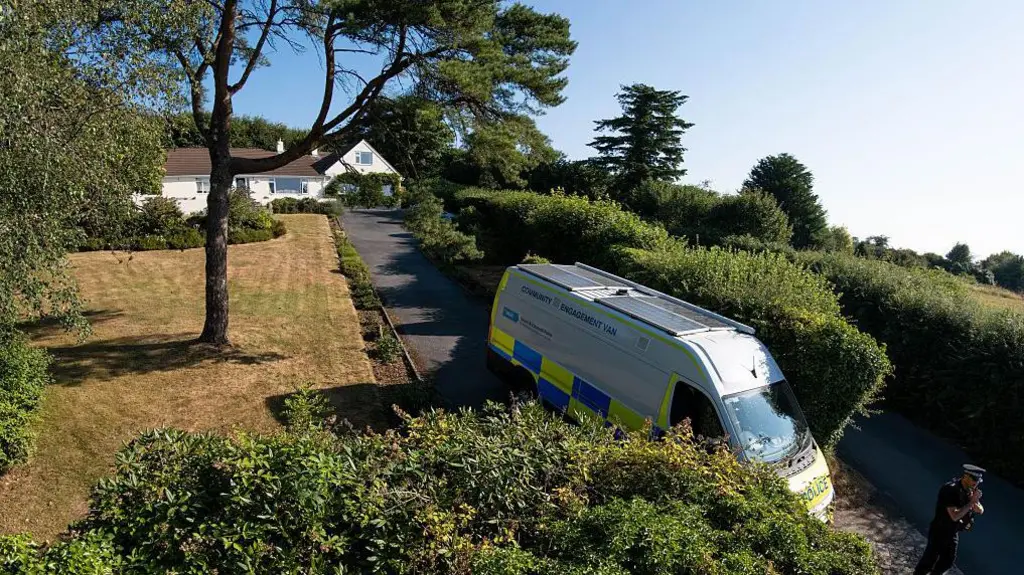
The development leaves detectives searching for the person responsible for the death of the 78-year-old former MP, who was found dead with serious injuries at her home on Dartmoor.
Assistant Chief Constable Matt Longman said detectives remained focused on identifying those responsible.
He said: “Our priority remains identifying those responsible and ensuring that all available evidence is thoroughly examined.
“Detectives continue to carry out numerous enquiries as part of the ongoing investigation and we remain committed to establishing the full circumstances surrounding the incident.”

Last known movements emerge
New details have also emerged about Widdecombe’s final known communications.
The former minister appeared on TalkTV on Wednesday morning, discussing Reform UK leader Nigel Farage.
Later that day she was reportedly due to take part in a video interview for a Channel 5 current affairs programme.
According to reports, a researcher exchanged messages with Widdecombe shortly after midday, with her final known response received at 12.19pm.
A further message sent shortly before a scheduled Zoom interview went unanswered.
Television presenter Dan Walker later revealed that concerns were raised after Widdecombe failed to join the programme and stopped responding to messages.

The information has since been passed to police as part of the investigation.
Found with serious injuries
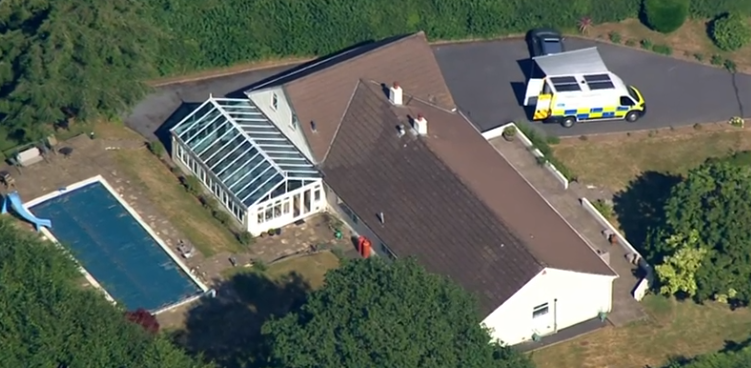
Police were called to Widdecombe’s home, known as Widdecombe’s Rest, in the village of Haytor on the edge of Dartmoor, at around 11.40am on Thursday after concerns were raised.
Officers attended alongside the ambulance service and discovered Widdecombe had suffered serious injuries and had died at the scene.
Her death was initially announced publicly on Friday morning by her management team, which at the time made no mention of suspicious circumstances.
However, just hours later, Devon and Cornwall Police confirmed that detectives from the Major Crime Investigation Team had launched a murder inquiry.
A 26-year-old man was arrested in Newton Abbot on Friday afternoon before being released overnight.
Police presence remains
A large police cordon remains in place around the property, with forensic officers continuing examinations throughout Saturday.
Road closures are still in force around the scene while officers carry out house-to-house enquiries and review CCTV and other evidence.
Police have stressed there is currently no indication the incident was politically motivated and it is not being treated as terrorism-related.
Mr Longman said the investigation was still in its early stages but was progressing rapidly.
“We are deploying all of the necessary resources to find out exactly what has happened,” he said.
Tributes continue
Tributes have continued to pour in from across the political spectrum.
Prime Minister Sir Keir Starmer described the death as “really shocking news” and said he had spoken with political leaders including Conservative leader Kemi Badenoch and Reform UK leader Nigel Farage.
Home Secretary Shabana Mahmood called the circumstances “extremely distressing” and urged the public to avoid speculation.
In Wales, Reform UK Wales described Widdecombe as “a true patriot and a fierce champion of Brexit”.
Senedd members Laura Anne Jones and Llŷr Powell also paid tribute, while former Welsh Conservative leader Andrew RT Davies said: “You always knew where you stood with Ann.”
Community in shock
Residents in Haytor have spoken of their disbelief at events in what is normally regarded as one of Devon’s safest rural communities.
Neighbour Christine Maloney said locals frequently left doors and cars unlocked.
“It’s very, very safe around here,” she said. “I leave my car open, I leave my front door open – not now.”
Another resident, Simon Gilbert, said: “She didn’t deserve to die like that.”
Widdecombe moved to the property in 2008 after retiring from Parliament, naming it Widdecombe’s Rest because, she said at the time, it would be “the rest of my life”.
Police have appealed for anyone with information, dashcam footage or CCTV from the Haytor area to contact officers immediately.
Anyone with information is asked to contact Devon and Cornwall Police quoting the incident.
Five people are now in custody following a collision involving a car and an off-road motorcycle
THREE more men have been arrested after an 18-year-old died following a collision between a car and an off-road motorcycle in Gorseinon.
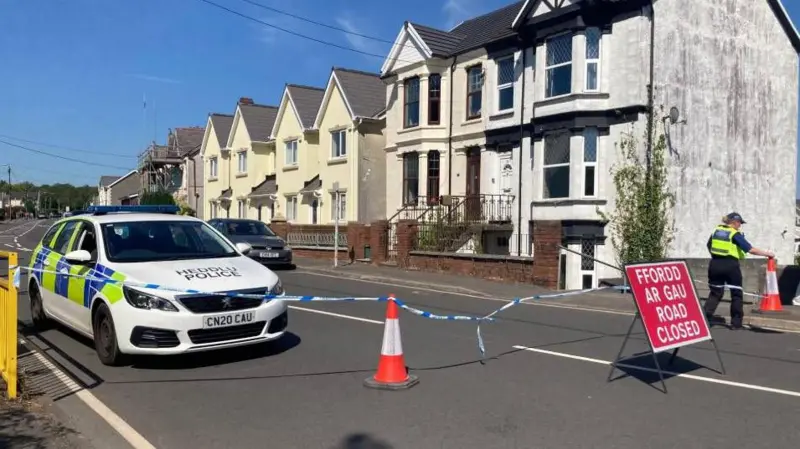
South Wales Police were called to Pen Cae Crwn Road at around 12:58pm on Thursday, where the teenager, who is believed to have been from Swansea, was pronounced dead at the scene.
A second man, aged 19, was taken to hospital with injuries.
Two 18-year-old men were arrested on suspicion of murder on Thursday.
Police confirmed on Friday that a further three arrests had been made.
A 33-year-old man from Gorseinon was arrested on suspicion of murder.
A 38-year-old man from Gowerton and a 38-year-old man from Mount Pleasant were arrested on suspicion of assisting an offender.
The latest arrests bring the total number of people detained in connection with the investigation to five.
Several roads in the area remained closed on Friday morning while officers continued their investigation.
Cordons had been removed from some streets, although traffic cones, road signs and police tape remained at the roadside.
Gorseinon Rugby Club chairman Ian Murphy said the local community had been left in “deep shock”.
He said: “For youngsters to get involved in a tragedy like this is shocking and disturbing, very disturbing for us all.
“Everybody was talking about it. All the roads were closed by police and ambulances, so it took a while for it to sink in what was going on.
“We were aware that there might have been a chase involving a car and a motorbike, and the full tragedy unfolded from there.”
South Wales Police has not confirmed the circumstances leading up to the collision, and enquiries remain ongoing.



Crime24 hours ago
Ann Widdecombe: Welsh politicians pay tribute as murder probe launched
Prime Minister Sir Keir Starmer has praised the former minister’s “conviction and dedication”, while political figures in Wales remembered her...


News1 day ago
Solardo pulls out of Haverfordwest show as organisers offer full refunds
Headline act confirms non-appearance as Park House Series announces major event changes DANCE music duo Solardo will no longer perform...


Local Government1 day ago
Conservatives win Pembroke Dock seat as Reform stalls and Dowson polls just 11
Jamie Street takes Market ward with a 43-vote majority as Reform finishes fourth despite its major Senedd breakthrough two months...
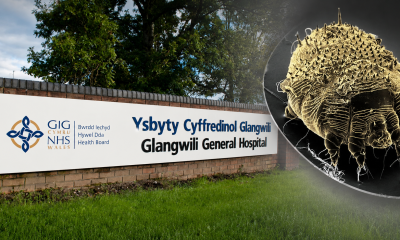

Health1 day ago
Hospital ward closed after highly contagious scabies outbreak
Hywel Dda confirms wider rise in cases across Carmarthenshire, Pembrokeshire and Ceredigion as patients and staff are offered treatment A...


Crime2 days ago
Teacher stabbing trial: The first week of evidence
Jury hears accounts of alleged planned classroom attack, teacher’s fear she was dying, and boy’s words after leaving school A...


Community2 days ago
Haverfordwest Castle refurbishment reaches new heights as roof goes on
Major milestone reached in project to transform historic gaol building into flagship visitor attraction A MAJOR milestone has been reached...


Business3 days ago
Pembrokeshire lands £98m share of Wales marine energy boom
New industry report says county has received the second highest level of marine energy investment in Wales, supporting more than...
Crime3 days ago
First aider tells jury teacher was “crying, shaking” after classroom stabbing
A SCHOOL first aider has told a jury that teacher Vicki Williams was “crying, shaking” and in “complete shock” after...


Crime4 days ago
Teacher feared she was dying after Milford Haven classroom stabbing
A TEACHER allegedly stabbed in the head at Milford Haven Comprehensive School told a jury she feared she was dying...


News4 days ago
Farage to resign as MP and fight Clacton by-election amid finance row
NIGEL FARAGE has announced he will resign as MP for Clacton and stand again in the by-election he intends to...
-
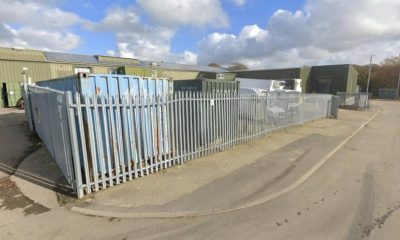
 Farming4 days ago
Pembrokeshire slaughterhouse given urgent improvement rating after audit failure
-

 Entertainment3 days ago
Swing and big band classics heading to Torch Theatre
-
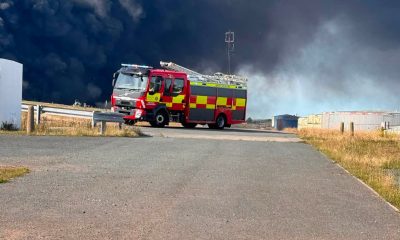
 News5 days ago
Large fire breaks out at Impala Terminal in Milford Haven
-
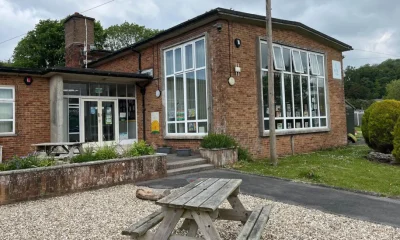
 Education5 days ago
Council failed Welsh language standards over school closure
-

 Community7 days ago
Milford Haven Carnival brings colour, music and crowds to the town
-

 News4 days ago
Questions raised over Hamilton Accies finances after club’s Haverfordwest friendly
-

 News4 days ago
From boccia to boxing: ALN multisport events give youngsters chance to try activities
-
 Entertainment5 days ago
Crymych Arms to host weekend of local music, food and drink