

Business
Welsh Water wins share of £40m to tackle environmental challenges


An innovative solution that could save Welsh Water two tonnes of carbon per year through transforming the management of organics during the treatment of drinking water, is one of the winners of a £40 million competition from Ofwat, the economic water regulator.
Welsh Water provides safe and reliable drinking water to over 1.4 million homes and businesses, making it the sixth largest of the 23 water companies in England and Wales. The not-for-profit water company has water treatment works where raw water is treated to make it safe enough to drink, which supplies over 800 million litres of water every day through a network covering 27,000km. By the time water reaches rivers, reservoir or aquifers, water already contains a wide variety of substances including organics which determines its quality. It absorbs dirt, dust and gases from the air, debris and bacteria from the ground, and soluble minerals from rocks.
At a water treatment works, the main objective is to remove bacteria and other unwanted substances from raw water through a drinking water treatment process. Granular activated carbon (GAC) is used during this treatment process to remove organics from the raw water– an exhaustive process that means the GAC requires thermal regeneration every three years.
The current process is carbon intensive, creating around two tonnes of carbon per year costing around £1m per year to manage. The solution proposed by Welsh Water’s innovation team and partners including Swansea University and Panton McLeod, seeks to investigate ways to regenerate GAC in situ, reducing both financial costs and carbon footprint before proposing a recommended solution that can be adopted by Welsh Water and shared with the wider industry.
Paul Gaskin, Research and Innovation Manager of Water Services at Welsh Water said: “We are excited to be leading this project to investigate transformative ways of regenerating granular activated carbon locally. This project is an example of Welsh Water’s commitment to finding innovative solutions to environmental challenges, whilst bringing the wider industry along with us. This project ties in with our 2050 vision to become a truly world class, resilient and sustainable water service for the benefit of future generations. Along with our partners working on this project, this funding will help us tackle a key challenge faced by the entire water industry.”

Helen Campbell, Senior Director, Ofwat said: “There are big challenges in the water industry that must be solved, some are well known, and others are less so. In our fourth Water Breakthrough Challenge we called for solutions with potential to deliver wide-scale, transformational change for customers, society and the environment – and that’s exactly what today’s winners have done. From raingardens to prevent flooding to green energy from treated sewage, innovations to cut the water sector’s carbon footprint to robots that patrol the pipe network, the winners are all helping shape a more sustainable and efficient water sector.”
Welsh Water is also partnering with others in the industry on other innovative projects including rainwater harvesting, robotic solutions for rising water mains and no-dig leak repair.
The Water Breakthrough Challenge is part of a series of competitions from Ofwat, run by Challenge Works with Arup and Isle Utilities, designed to drive innovation and collaboration in the sector to benefit individuals, society and the environment.
It supports initiatives that help to tackle the biggest challenges facing the water sector, such as achieving net zero, protecting natural ecosystems and reducing leakage, as well as delivering value to society.
For more information, visit: https://waterinnovation.challenges.org/breakthrough4/

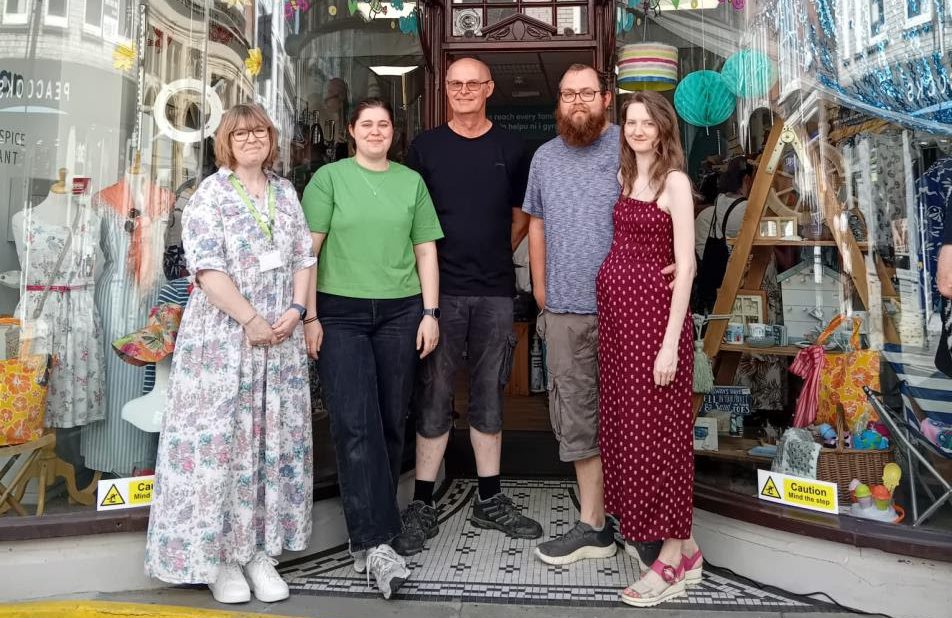
Long-serving supporters Diane and Emily Lloyd cut the ribbon as the children’s hospice charity begins a new chapter in the town
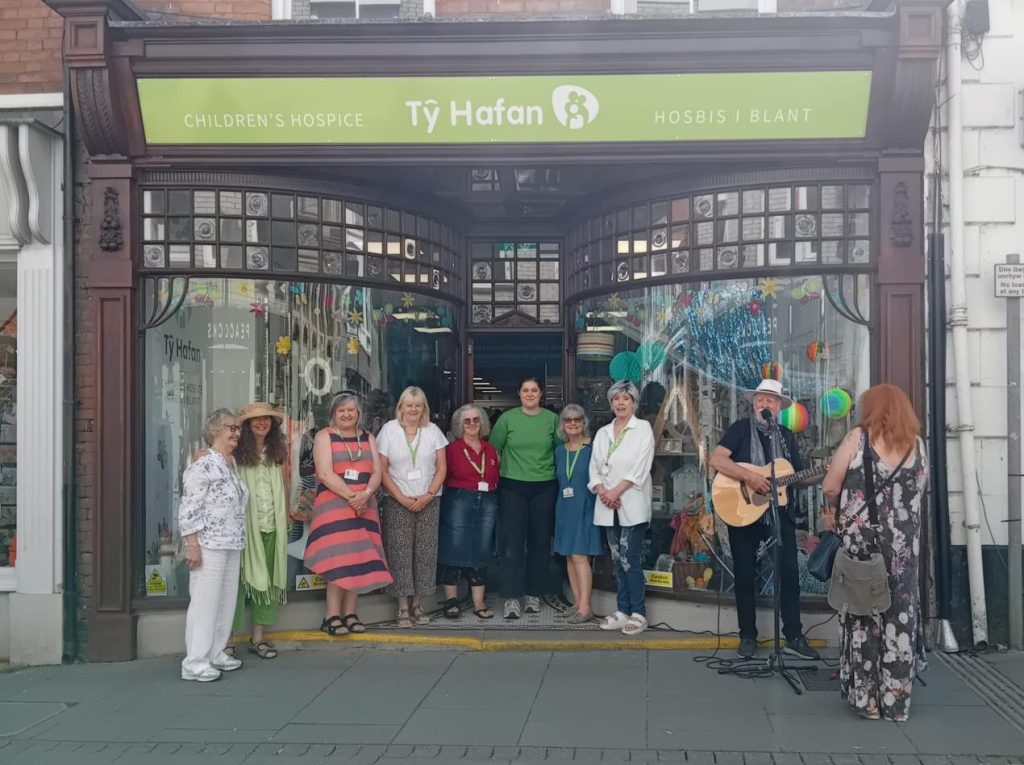
TY HAFAN has officially opened its newly relocated charity shop in the centre of Cardigan, marking the latest chapter in its long-standing relationship with the town and surrounding communities.
Diane Lloyd and her daughter Emily, both dedicated supporters of Tŷ Hafan Children’s Hospice, cut the ceremonial ribbon at the new premises at 25 High Street on Friday, July 10.

Diane has worked for the charity for 22 years, while Emily has volunteered for Tŷ Hafan for the past 11 years.
The charity currently supports 22 families caring for children and young people with life-shortening conditions in the Ceredigion Penfro Senedd constituency. A further 17 families continue to receive bereavement support.
Maree Thomas, regional sales manager for Tŷ Hafan, thanked the community, volunteers and businesses that helped make the relocation possible.
She said: “I’d like to thank everyone who joined us on this exciting occasion as we opened our newly relocated Cardigan Tŷ Hafan store.
“We’ve been present on this high street for over 30 years, with the first few years spent in a tiny cabin and the last 22 years in the smaller shop just down the road.
“None of this would have been possible without the wonderful Lloyd family and other local supporters, who were among the first fundraisers for Tŷ Hafan.”
She also thanked the shop’s volunteers, landlord Andrew, local companies, donors, customers and supporters who helped with the move.
“Your support means that we can walk alongside every family that needs us,” she said.
“Our shops play an important part in raising funds and awareness of the hospice. Right now, we are only supporting one in ten families who have a child whose life will be short.
“Our ambition is that when a child’s life will be short, no family should have to live it on their own.”

During the past year, the Cardigan community has contributed around 3,000 volunteer hours, donated 2,000 bags of goods and purchased approximately 3,000 items from the charity.
The move to larger premises will allow the shop to display and sell more donated goods, helping to raise additional funds for hospice care.
Shop manager Diane said: “I would like to thank the local community for its massive support over the past 30 years, right from when we started in a little cabin in the market to our lovely new shop on the High Street.
“I’d also like to thank my absolutely amazing volunteers. Some have been with me for more than ten years and some have been here since the shop opened. Without them, we simply could not do what we do.”
Emily said volunteering had given her the opportunity to help families while also being part of a friendly and welcoming team.
She said: “I love volunteering for Tŷ Hafan. It’s great fun, it keeps me busy and you know you’re making a difference for local families with children who have life-shortening conditions.
“We’re always looking for more volunteers, so anyone who would like to join us can email [email protected] or call 02920 532255.”
Musician Mark Watkin Price also performed during the opening celebrations, singing and playing guitar for visitors and supporters.
The new shop is expected to begin trading seven days a week and includes a dedicated donation drop-off area at the rear of the premises.


A CALL to extend a Pembrokeshire “boutique nature retreat destination” previously featured in the Sunday Times with further holiday cabins, a mobile sauna and padel courts has been lodged with county planners.
In an application submitted to Pembrokeshire County Council, Paul Cleaver of Wilder Retreats, through agent Hayston Developments & Planning Ltd, seeks permission for two holiday cabins, a mobile sauna and the conversion and extension of an existing building to padel courts and changing rooms to form phase 2 of the existing Wilder Retreats holiday cabins and complex, on land at the former agricultural/ forestry works depot, Solbury Road, Tiers Cross.
Padel is a racquet sport that combines elements of tennis and squash.
A supporting statement said of Wilder Retreats, an ecotourism destination located on 20 acres of rewilded land: “Since opening, the business has established itself as one of Wales’ leading boutique nature retreat destinations — demonstrating how sensitive, high-quality tourism development can work in harmony with landscape, ecology and local economy.
“The business has attracted national press coverage from publications including the Sunday Times and Coast Magazine.”
It said the existing business “was conceived from the outset as an ecotourism model — one that funds and enables genuine environmental restoration through sustainable commercial activity, working towards ecological targets set by Kite Ecology including native woodland planting, wildflower meadow creation and habitat corridor development”.
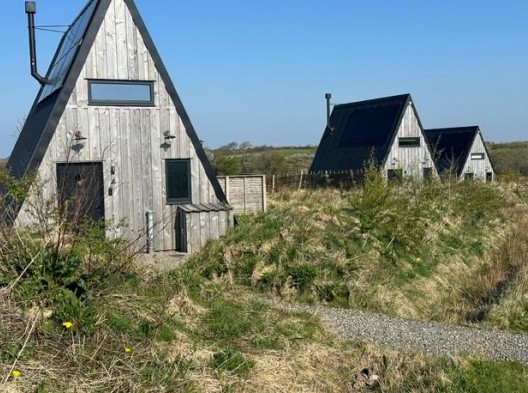
The Phase 2 developments proposed are: two additional A-frame cabins in addition to the existing six; Wilder Woodland Sauna, a commercial woodland sauna; and Wilder Padel Club, two covered LTA (Lawn Tennis Association) compliant padel courts with associated clubhouse facilities, that re-uses a redundant shed and yard in the client’s ownership.
The two additional A-frame cabins will be operated by Wilder Retreats Ltd as an extension of the existing accommodation business. Wilder Woodland Sauna and Wilder Padel Club will each operate as independent businesses under separate limited companies.
“Together, the three proposals reinforce one another: the cabins bring more guests to the site; the sauna and padel give those guests — and local residents — more reasons to visit and to stay longer,” the statement says, adding: “All three operate independently but collectively strengthen the economic, social and environmental case for this site as a model of sustainable rural tourism.”
The site was previously lawfully occupied by the applicant’s tree works consultancy and land management business until this subsequently relocated a few years ago.
Although the site has since been occupied by a motorcycle business, that business has been given notice to vacate but will trade until early 2027.
The application proposal is supported by a letter from Tennis Wales, the national governing body for Padel, one of the fastest growing sports in the country, which fully supports the principle of creating two padel courts, saying: “Creating more Padel courts, which can be used throughout the year, is critical to sustaining this growth.

“These new facilities will enable more adults and juniors to enjoy, compete and experience the game of Padel in line with Tennis Wales Vision and Mission which is to see ‘Padel opened up’.”
The application will be considered by county planners at a later date.

A NEW development agency will “improve productivity”, according to a Welsh Government minister – but opponents have dubbed it “yet another quango”.
Enterprise, connectivity, and energy minister Adam Price outlined his plans in the Senedd on Tuesday July 7.
He said: “Less than three weeks into this administration, we announced the most ambitious economic goal in Wales in two decades; namely, halving Wales’s productivity gap with the UK within ten years.
“If we are going to meet that challenge, we need a fundamental change in how we approach economic development in Wales. The proposed new agency will be a key driver in achieving that change.”
Mr Price previously faced criticism on his plans when he raised the proposal in the Senedd last month.
Reform’s shadow minister for economy and transport, Jason O’Connell, then described the idea of a new agency as “another unnecessary bureaucratic quango”.
Speaking in the Siambr, Mr Price said: “Creating a new development agency is a crucial part of driving the positive changes in productivity that we need. But it needs to be a much wider, collective effort across Wales.
“We need – collectively and collaboratively – to look at the current landscape and work with local and regional partners to create an economic development system where roles are clear and we’re all working together as one team for the people of Wales.”
As set out in Plaid’s 100 day plan, the party will be establishing an “expert panel” to advise the development of the new agency, which he confirmed will be chaired by Jonathan Lewis.
He said: “The appointment of the chair of the panel to advise on the remit and operating model of the new agency is a key stepping stone in the journey towards making Wales the best place in the United Kingdom to start a business, to grow a business, and to invest in a business.”
The minister told colleagues he would confirm the full membership of the panel in the coming weeks.

Reform’s Jason O’Connell told the Siambr that it was a “shame” MSs were once again debating “the creation of yet another quango”.

Noting the importance of scrutiny for “better government”, Mr O’Connell accused Plaid Cymru of denying the chamber that scrutiny.
He said: “If taxpayers are funding this new development agency, then they deserve transparency. Minister, you say you want the new agency to provide support, advice and guidance, but you’ve said nothing about how.
“So, let me give you a suggestion. Decades ago, Welsh Labour scrapped the Welsh Development Agency, WDA1. They promised a simpler, better support mechanism for Welsh businesses. But instead, we’ve got a patchwork of organisations: Business Wales for advice, the Development Bank of Wales for finance, and now what we’re proposing is WDA2 to sit on top. The current system is too confusing.”
Reform’s shadow economy minister then claimed Business Wales returns £18 of economic value for every £1 that’s invested. He also questioned Mr Price on why he has no plans to bring Business Wales into the new WDA to make things “less confusing and more accessible”.
Responding, Mr Price said his government “absolutely” wants to make sure businesses can access a “streamlined level of support”.
Mr O’Connell also asked about attracting inward investment to Wales, noting the “real test” is whether that investment becomes “rooted across Welsh communities up and down the country”.
He said: “In the last WDA, Wales welcomed major international employers, created thousands of jobs, and celebrated new investment, as short-lived as it was.
“But those companies moved production elsewhere when the government reduced the support. They took high-paying jobs with them, because their supply chains were never truly anchored in Wales, and it was easy to do so.”
The Pontypridd Cynon Merthyr MS drew attention to the Irish economy where “inward investors are expected to work with local suppliers, strengthen domestic supply chains, and create opportunities for already-established local businesses in that country to grow alongside them”.
Mr Price noted his agreement with the shadow minister on the need to be strategic about inward investment.
He said: “Foreign direct investment has a role in any economy, but we need to actually focus it on those areas that will be more embedded – through supply chains, as he suggests – in the Welsh economy that actually build on our existing and possible future strengths.”

Labour’s Shav Taj said her party shares Plaid Cymru’s ambition for a “new type of Wales, a reinvigorated Wales, a Wales that attracts more investment and ultimately creates good jobs”.
The Labour spokesperson for economic transformation told the Siambr that what the people of Wales want to know is what “meaningful difference” these internal arrangements will make.
She also drew attention to the work of the previous Labour government in ensuring a strong economy for Wales, including setting up the Development Bank of Wales and hosting the Wales investment summit.
Ms Taj said it’s the “practical” questions that are important and pressed Mr Price on when the new agency will get staff, whether they will be new staff or shuffled from other departments, and how much the new agency will cost the Welsh public.
She also pushed for confirmation on the “constitutional status” of the agency, notably whether the Senedd will need to legislate “at some point” for it to get going.
Ms Taj added: “Ultimately, this is about jobs, jobs for the future, high-skilled jobs, and young people in Wales are really watching to see whether or not your government is going to do any better than we did.”
Mr Price responded: “They [development agencies] have played a central role in virtually anywhere that you can think about in the nations and regions that have closed an economic gap, and few of those nations or regions that have had one have got rid of them.
“We’re one of the few exceptions. There may be a reason for that, and I suggest it’s because they are an incredibly valuable tool.
“Do you need to get the design right? Absolutely. The right relationship in terms of how arm’s length it is from government but how close it is from a government – getting that right is absolutely important and it’s one of the key questions that we’ve already done a lot of thinking on, and we will continue as we go through the design process.”
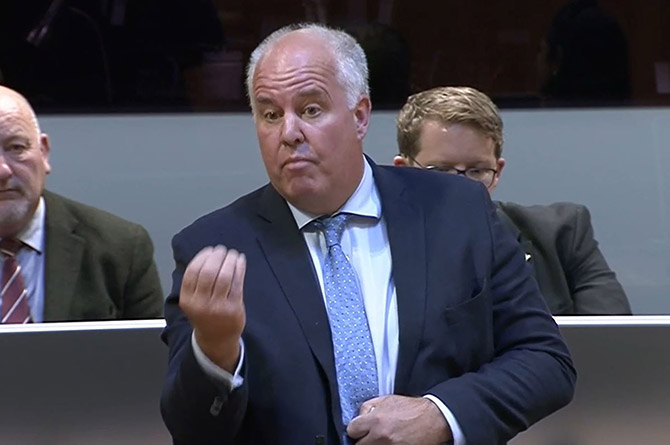
Pen-y-Bont Bro Morgannwg MS, Andrew RT Davies, expressed the Conservatives support for “the principle” but said there was “too much blank space” around the new agency.
He asked Mr Price for a timeframe in which he expects to bring the organisation into existence, whether it be 12 months, two years, or by the end of this Senedd term
Mr Davies also questioned the cost and said: “I’m not going to ask you for every pound, shilling and pence, but can you give an indication on what your thinking is of the type of budget that you will make available to the organisation?”
He continued: “When we look at the old WDA, it had a complete offer, from building industrial sites, gaining the planning permission and promoting foreign direct investment.
“Does this organisation, in your mind, need to do all that, or will it be more specific in what it does about promoting Wales as a destination for inward investment? And when we look at the organisation, are we thinking of an organisation that will look like Natural Resources Wales with a remit letter, or will this be a unique organisation that hasn’t been seen in the Welsh public landscape before?”
Mr Price confirmed the new agency will be a statutory body, and said he plans to bring forward legislation “fairly soon”.
He also noted the Welsh Government’s ambition for the new agency to be operational “as soon as possible”, but said he could not provide a specific date.



Crime11 hours ago
Ann Widdecombe: Welsh politicians pay tribute as murder probe launched
Prime Minister Sir Keir Starmer has praised the former minister’s “conviction and dedication”, while political figures in Wales remembered her...


News14 hours ago
Solardo pulls out of Haverfordwest show as organisers offer full refunds
Headline act confirms non-appearance as Park House Series announces major event changes DANCE music duo Solardo will no longer perform...


Local Government16 hours ago
Conservatives win Pembroke Dock seat as Reform stalls and Dowson polls just 11
Jamie Street takes Market ward with a 43-vote majority as Reform finishes fourth despite its major Senedd breakthrough two months...


Health16 hours ago
Hospital ward closed after highly contagious scabies outbreak
Hywel Dda confirms wider rise in cases across Carmarthenshire, Pembrokeshire and Ceredigion as patients and staff are offered treatment A...


Crime2 days ago
Teacher stabbing trial: The first week of evidence
Jury hears accounts of alleged planned classroom attack, teacher’s fear she was dying, and boy’s words after leaving school A...


Community2 days ago
Haverfordwest Castle refurbishment reaches new heights as roof goes on
Major milestone reached in project to transform historic gaol building into flagship visitor attraction A MAJOR milestone has been reached...


Business3 days ago
Pembrokeshire lands £98m share of Wales marine energy boom
New industry report says county has received the second highest level of marine energy investment in Wales, supporting more than...
Crime3 days ago
First aider tells jury teacher was “crying, shaking” after classroom stabbing
A SCHOOL first aider has told a jury that teacher Vicki Williams was “crying, shaking” and in “complete shock” after...


Crime3 days ago
Teacher feared she was dying after Milford Haven classroom stabbing
A TEACHER allegedly stabbed in the head at Milford Haven Comprehensive School told a jury she feared she was dying...


News3 days ago
Farage to resign as MP and fight Clacton by-election amid finance row
NIGEL FARAGE has announced he will resign as MP for Clacton and stand again in the by-election he intends to...
-

 Farming4 days ago
Pembrokeshire slaughterhouse given urgent improvement rating after audit failure
-

 Entertainment3 days ago
Swing and big band classics heading to Torch Theatre
-

 Education5 days ago
Council failed Welsh language standards over school closure
-

 News4 days ago
From boccia to boxing: ALN multisport events give youngsters chance to try activities
-

 News4 days ago
Large fire breaks out at Impala Terminal in Milford Haven
-

 Community6 days ago
Milford Haven Carnival brings colour, music and crowds to the town
-

 News3 days ago
Questions raised over Hamilton Accies finances after club’s Haverfordwest friendly
-
 Farming1 day ago
Working Carmarthenshire farm opens gates to visitors with new holiday cottages