


Health
NHS performance: Ambulances tied up as hospitals burst at the seams


- A NEW set of Welsh NHS performance data was released today (Thursday, June 20), and it contains more bad news.
The Welsh Government described the data as “disappointing”.
WG “LACKS GRIP” ON FUNDAMENTALS
Sam Rowlands MS, the Conservatives’ Shadow Health Minister, said: “These atrocious statistics show that the NHS is going backwards under Labour.
“Two-year waiting lists have increased for the first time in two years.
“Keir Starmer has called Labour-run Wales his blueprint for what a UK Labour Government would look like: these figures are a stark warning for the whole UK.”

Mabon ap Gwynfor MS, Plaid Cymru’s health spokesperson, said: “Labour’s complete mismanagement of the NHS in Wales has left us with waiting lists at the highest on record, targets for diagnosis and treatment are being consistently missed, and people are getting stranded in A&E departments for hours on end.
“It’s no wonder that we have such astronomical waiting times when the government has failed to deal with problems in primary care and social care.
“Until the government gets to grip with these fundamental problems, then waiting lists will continue to climb.”
A Welsh Government spokesperson said: “We have made it a priority to reduce long waiting times, and today, the Cabinet Secretary for Health met with health board chairs to instruct them to redouble their efforts to tackle these.
“These figures show the NHS is continuing to manage incredible demand for urgent and emergency care – the number of immediately life-threatening 999 calls in May was 25% higher than the previous year, and demand is nearly two-and-a-half times higher than pre-pandemic levels.”

THE LOCAL PICTURE: HOSPITALS
Over 30% of patients waiting to start treatment in the Hywel Dda UHB area have been waiting for over 36 weeks.

The Health Board has the second-highest proportion of the population waiting to start therapy. In practical terms, that means that around 4,000 people are yet to get the therapy they need.
The number of patients told they did not have it fell. However, the number of patients starting treatment has remained stable for years.
With rising demand for cancer diagnosis and treatment and no improvement in the numbers starting treatment, performance against the target for treating cancer dropped.
At least 75% of patients should start treatment within 62 days of first being suspected of cancer.
Only 42% of cancer patients in the Hywel Dda UHB area started treatment within the target time. To meet a revised target of 80% by 2026, Hywel Dda UHB will have to increase its performance by almost 100%.
The Welsh Government’s performance target for patients waiting to start treatment for less than 26 weeks is 95%.
No Health Board is close to meeting that target, although Hywel Dda UHB is the second-best performer—just over 50% of patients start treatment within six months.
Despite a dramatic fall in the number of inpatient beds in Hywel Dda UHB’s hospitals over the last six years, the number of inpatient admissions rose sharply in April, placing even greater pressure on chronically overstretched staff and resources.
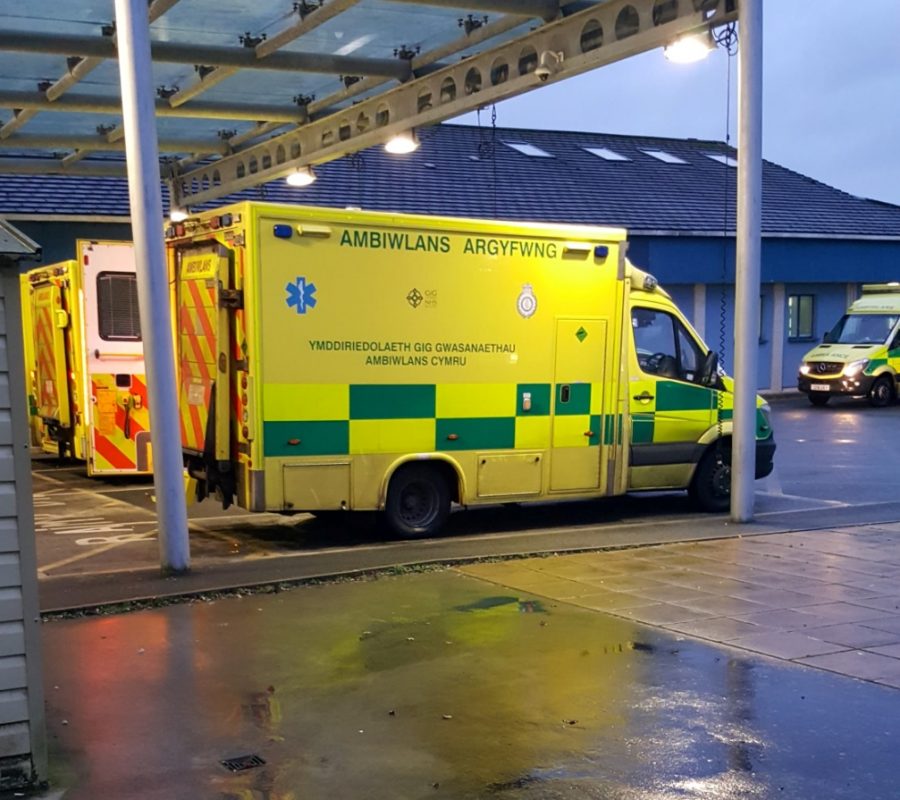
THE LOCAL PICTURE: AMBULANCES
The percentage of red emergency calls being met within eight minutes fell across Wales.
The ambulance performance target is for 65% of all red calls to be attended to within eight minutes.
Across Wales in May, there were 5,110 red (life-threatening) calls to the ambulance service, 13.9% of all calls.
45.8% of red calls received an emergency response within eight minutes, 2.2 percentage points lower than in April.
In the Hywel Dda UHB area, 47.6% of red calls received an emergency response within 8 minutes, compared to a sharply reduced number of calls in the red category.
Examining more detailed data for the Hywel Dda UHB area demonstrates the pressure on emergency hospital admissions and the knock-on effect on the ambulance service.
When an ambulance takes a patient to hospital, admission is supposed to take place within 15 minutes of arrival, with the ambulance returning to service 15 minutes after that.
In the Hywel Dda UHB area, ambulances were tied up beyond those markers for almost 4,000 hours beyond expected admission and return to on-call.
Fewer than 18% of patients conveyed to a Major Injury Department were admitted within 15 minutes. For Major Acute Units, that turnaround was even worse, at barely 15.5%.
Once cleared, however, well over 80% of ambulances were back out on call.
Diving deeper into the data, we see that just over 1,700 patients travelled by ambulance to major emergency, major acute, and maternity and mental health units.
By a very crude piece of arithmetic, we can calculate that if those 1700 patients accounted for the 4000 hours of “lost time”, the handover stats would be even more shocking, with an average turnover of over two hours.
Moreover, localised data shows that 35.6% of all people who are attended by an ambulance go to a hospital using other means of transport.
A CRISIS ACROSS THE BOARD
The issue could not be clearer: delays at hospitals are keeping ambulances off the road.
The upward pressure on A&E services caused by the collapse of out-of-hours primary care (GPs, etc) is driving up attendance at all hospital A&Es.
The lack of beds is driving up a backlog of treatment. The lack of clinical staff means more junior staff fulfil tasks -including initial diagnoses- formerly taken by clinicians and registered nurses. Consolidating rural services on an urban model is making things worse.
Whatever the cure for the disastrous condition of the Welsh NHS, money will not be enough to turn around decades of decline.















Cancer treatment targets missed again as opposition says Plaid must share responsibility for health service performance
NHS WALES is facing renewed pressure after the latest performance figures showed waiting lists rising, cancer treatment targets being missed again and more patients waiting over 12 hours in emergency departments.
The figures come as the Welsh Government announced an additional £145m for NHS Wales, including £100m to reduce waiting times and £25m for new surgical hubs.
In April, performance against the 62-day target for patients starting cancer treatment fell to 56.7%, well below the 75% target.
In Swansea Bay, just 48.4% of cancer patients began treatment within the target time.
Treatment waiting lists also increased, with 680,003 patient pathways recorded in April. The estimated number of individual patients waiting for treatment stood at 536,500.
Two-year waits rose to 3,694. In England, the comparable figure was 191.
Emergency care also came under further strain in May. The proportion of patients spending less than four hours in Welsh emergency departments fell to 64.4%, against a target of 95%.
A total of 11,066 patients waited 12 hours or more before being admitted, transferred or discharged, up from 10,287 in April. The target is zero.
Ambulance performance remained under pressure. For red calls, the median response time improved to nine minutes and 12 seconds, but the 90th percentile increased to 22 minutes and 39 seconds, meaning response time targets were still not met.
Welsh Conservative criticism
The Welsh Conservatives said the figures showed a “worrying backslide” in NHS performance and accused Plaid Cymru of sharing responsibility for the state of the health service.
Natasha Asghar MS, Welsh Conservative Shadow Cabinet Secretary for Health and Social Care, said: “These figures show a worrying backslide in NHS performance in Wales. Cancer treatment times have fallen, waiting lists have risen, two-year waits are up and more patients are being left waiting over 12 hours in emergency departments.
“Plaid Cymru cannot escape responsibility for this. They propped up the previous Welsh Labour Government by backing their budgets and are now in Government themselves. Patients across Wales need action, not more talk of improvement.

“Whilst any extra funding for the NHS is welcome, £145m will not be enough unless it is accompanied by urgent reform, a comprehensive workforce strategy and real delivery for patients.
“The Welsh Conservatives have been clear that the Welsh Government needs to declare a health emergency in our NHS. We need more beds in our hospitals, a robust NHS workforce and a serious plan to cut waiting lists and to support our emergency departments.”
Funding announced
The Welsh Government says the extra £145m will support work to reduce waiting times and improve access to treatment.
Of that, £100m has been allocated to reducing waiting lists, while £25m will be invested in new surgical hubs.
Health leaders have welcomed the additional funding, but warned that money alone will not solve the pressures facing hospitals, GP services, social care and emergency departments.
The latest figures are likely to increase pressure on ministers to show clear progress before the winter, when demand on the NHS is expected to rise further.
Welsh Government response
The Welsh Government said the figures related to April, before the new administration took office, and showed that both treatment waiting lists and the longest waits had increased.
Health and Care Minister Mabon ap Gwynfor said too many people were waiting too long for treatment, and said emergency care performance was not yet at the level patients and staff should expect.
He said: “Our focus is clear — cut waiting times, prioritise those who have been waiting the longest, improve access to services and build an NHS that can keep up with demand in the long term.
“To bring waiting times down and keep them down, we need to change the way the NHS works — making sure patients move through the system more smoothly, from their first referral all the way to treatment.
“We’ve got a plan to do this, working with the fantastic NHS staff right across Wales. The £145 million we’re announcing today will be important in tackling the waiting list and waiting times and helping people be seen quicker.”
The Welsh Government said £100m would be used to help reduce waiting lists and waiting times, £25m would be invested in new surgical and diagnostic hubs, and £20m would go towards essential maintenance across the NHS estate.
NEW funding of £145 million has been announced for NHS Wales as ministers seek to cut waiting times, improve hospital facilities and increase capacity across the health service.
The package, announced as part of the Welsh Government’s Supplementary Budget for 2026 to 2027, includes money to reduce waiting lists, develop surgical and diagnostic hubs, and carry out essential maintenance across the NHS estate.
Health leaders and nursing representatives have welcomed the investment, but warned that money for buildings, equipment and waiting list initiatives must be backed by a wider plan for staffing, primary care, community services and social care.
The Welsh NHS Confederation said the additional funding was welcome, but called for a “whole-system” approach to health and care.
Its director, Darren Hughes, said: “NHS leaders in Wales welcome this additional funding for the NHS to reduce waiting times and make essential maintenance across the NHS estate.
“We also welcome the Health and Care Minister’s focus on developing a long-term strategy to address waiting times. We agree that a long-term solution is required to build sustainable capacity and drive whole-system improvements.”
Mr Hughes said strengthening primary and community care would be essential, including programmes designed to move more services closer to people’s homes.
He added: “Alongside improvements in primary care, we must also prioritise the social care sector.
“We would also welcome a broader and more balanced approach to how NHS and social care performance is measured and published. Focusing solely on waiting times does not provide a complete picture, and there needs to be more comprehensive data published across the breadth of the NHS and social care services.”
The Royal College of Nursing Wales also welcomed the investment, but warned that new facilities alone would not reduce waiting lists unless there were enough appropriately trained staff to run them.
Nicola Williams, Executive Director of RCN Wales, said investment in surgical and diagnostic hubs and essential maintenance had the potential to reduce delays, improve patient experience and increase NHS capacity.
But she said: “Buildings and equipment alone will not reduce waiting lists.
“Delivering sustainable improvements depends on having the right, appropriately trained and skilled workforce in place, and nurses will play a pivotal role in the provision of safe, effective and efficient care.”
RCN Wales said nursing staff across Wales were reporting rising patient complexity and demand, missed breaks, and difficulty providing the level of care patients need.
The union also raised concerns that newly qualified nurses had faced uncertainty about securing permanent employment, despite continued pressure on services.
Ms Williams said Wales could not afford to lose the talent and commitment of a generation of nursing graduates.
She added that any move towards strengthening primary and community care must be matched by investment in the nursing workforce needed to deliver those services.
The announcement will now raise questions about how much of the funding will reach west Wales, and whether Hywel Dda University Health Board patients will directly benefit from any new surgical or diagnostic hub.
No specific locations for the proposed hubs have yet been confirmed.
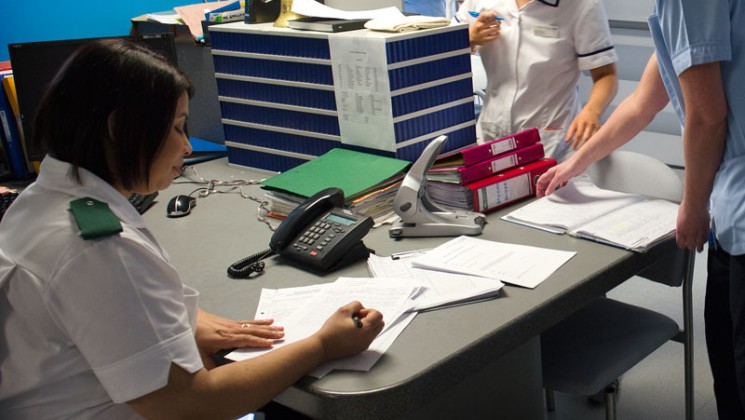
NEW NHS funding must be matched by proper workforce planning if it is to cut waiting lists and improve patient care, nursing leaders have warned.
The Royal College of Nursing Wales has responded to a Welsh Government announcement of an additional £145 million investment in NHS Wales.
The package includes £100 million in revenue funding to reduce waiting times, £25 million capital funding for new surgical and diagnostic hubs, and £20 million for essential maintenance across the NHS estate.
The Welsh Government says the investment is intended to increase capacity, speed up diagnosis and help more patients receive planned treatment more quickly.
Up to ten surgical and diagnostic hubs are expected to be developed across Wales over the next four years. These facilities are designed to carry out high-volume planned treatment and tests away from the day-to-day pressure of emergency hospital care.
But RCN Wales said the success of the plan would depend not only on buildings and equipment, but on having enough trained staff to run the services safely.
Nicola Williams, Executive Director of RCN Wales, said: “RCN Wales welcomes this additional investment in NHS Wales and the Welsh Government’s commitment to reducing waiting times and improving patient care and outcomes.
“Investment in surgical and diagnostic hubs, alongside funding for essential maintenance, has the potential to significantly improve our population’s health, reduce delays, improve experiences and increase NHS capacity.
“However, buildings and equipment alone will not reduce waiting lists. Delivering sustainable improvements depends on having the right, appropriately trained and skilled workforce in place, and nurses will play a pivotal role in the provision of safe, effective and efficient care.”
She said robust workforce modelling and planning would be “critically important” if the hubs were to achieve their ambitions.
The announcement comes as RCN Wales joins healthcare leaders, employers and government representatives at a Graduate Summit to discuss employment opportunities for this year’s nursing graduates.
RCN Wales said it welcomed the Welsh Government’s focus on the issue, but warned that newly qualified nurses had faced uncertainty about securing permanent employment despite continuing pressure across NHS services.

Ms Williams said: “Nursing staff are telling us consistently and across Wales that, despite there being no vacancies, there is insufficient staff to meet increasing patient complexity and demand.
“Nurses are going without breaks and feel most shifts that they are unable to give the care that patients need.
“It is therefore deeply concerning that newly qualified nurses have faced uncertainty about securing substantive employment.
“Wales cannot afford to lose the talent, skills and commitment of a generation of nursing graduates that our health and care services desperately need.”
RCN Wales said retaining newly qualified nurses was essential for the future sustainability of NHS and social care services.
The union also welcomed the Welsh Government’s commitment to strengthening primary and community care, but said any shift towards treating people closer to home must be matched by investment in the nursing workforce.
Ms Williams added: “Nurses are central to delivering care closer to home and helping people stay healthier for longer.
“Any shift in resources towards primary care must be matched by investment in the nursing workforce needed to deliver these ambitions.”
The key question for west Wales is whether any of the proposed surgical or diagnostic hubs will be located in the Hywel Dda area, and whether Pembrokeshire patients will see a direct benefit from the new funding.
No specific locations have yet been confirmed.
RCN Wales said it looked forward to working with the Welsh Government and health service partners to ensure the investment delivered lasting improvements for patients and supported the nursing workforce on which those improvements depend.



News5 hours ago
Motorcyclist, 22, dies in A4075 crash in Pembrokeshire
A 22-year-old woman remains in hospital after two-vehicle collision A MOTORCYCLIST has died following a serious two-vehicle crash on the...


Community6 hours ago
Why police will be visiting every home in Pembrokeshire
New operation aims to knock on more than 257,000 doors across Dyfed-Powys over the next three years DYFED-POWYS POLICE has...


Crime9 hours ago
Prisons at breaking point: MPs warn Wales is paying the price of a failing system
Frozen healthcare budgets, overcrowded jails, homelessness on release and mounting pressure on staff are undermining rehabilitation across Wales, according to...


News22 hours ago
Brexit at 10: How Britain was sold a dream that cost us dearly
A decade after the referendum, the promised benefits remain hard to find while the economic costs are increasingly difficult to...


Crime1 day ago
Worcestershire man jailed after violent attack on woman in Tenby
Defendant was already serving a suspended sentence when serious assault took place A WORCESTERSHIRE man has been jailed for more...


Climate1 day ago
Offshore wind ‘could bring new generation of jobs to Milford Haven’
Pembrokeshire ports and Celtic Sea projects placed at centre of Wales’ green energy ambitions MILFORD HAVEN and Pembroke Dock could...


Community2 days ago
Police officer hailed hero after midnight sea rescue in Milford Haven
PC swam 100 metres offshore to save distressed woman heard calling for help in darkness A DYFED-POWYS POLICE officer has...


Local Government2 days ago
Security privately arranged by Mayor at Beating of the Bounds
HAVERFORDWEST TOWN COUNCIL has confirmed that security personnel seen at this year’s Beating of the Bounds were privately arranged and...


Business3 days ago
Celtic Freeport five-year plan puts Milford Haven at centre of green energy future
Strategy promises investment, skilled jobs and new supply chains, but major barriers remain over grid connections, planning and delivery THE...


Education3 days ago
Closure of Ysgol Clydau approved after emotional council debate
COUNCILLORS WARNED RURAL COMMUNITIES WILL REMEMBER DECISION PEMBROKESHIRE councillors have voted to close Ysgol Clydau following an emotional debate over...
-

 Community4 days ago
Pembrokeshire Chess Club crowned Welsh champions
-
Local Government2 days ago
Security privately arranged by Mayor at Beating of the Bounds
-

 Crime10 hours ago
Milford Haven man jailed for breaching domestic violence protection order
-

 Education6 days ago
Diocese threatens legal action as Manorbier school closure battle intensifies
-

 Crime2 days ago
Man wanted by court after failing to attend hearing over alleged shop thefts
-

 Local Government6 days ago
Taxi suspended after county-wide licensing checks
-
 Crime2 days ago
Man banned from roads after drink-driving offence
-

 Crime2 days ago
Man jailed after admitting strangulation and assaults