


News
Ambulance service ‘unacceptable’

THERE was widespread expectation that the publication of the latest ambulance waiting times for Wales would reveal a disastrous slump in performance. 
That expectation has been met in spades.
There is a 65% target for ambulances to reach the most serious cases within eight minutes. The most recent figures reveal that what the Welsh Ambulance Service Trust (WAST) says is ‘an unacceptable level of service delivery’ meant that only 42.6% achieved the target time.
Pembrokeshire’s figures at 52.2%, while better than the Welsh average, are still markedly below the performance target.
Shadow Health Minister Elin Jones of Plaid Cymru said: “After recent reports of ambulances queuing outside A&E departments we suspected that today’s ambulance response times would be bad, but I am stunned by how bad they are. In June 2014 the Health Minister told us that he would implement urgent improvements to the service by September last year, but that hasn’t happened. The Welsh Government has failed to manage the service to meet the demand placed upon it. Peaks in demand happen during the winter months happen every year, and the Labour Government should be prepared for this. Instead, paramedics and A&E staff have to take pressure off other parts of the NHS. It is not their fault.”
She concluded: “The capacity of social care and community hospitals has been cut, which has put A&E services under unbearable pressure. The Minister should be focusing on resurrecting social and community care in order to ease the unbearable pressure on A&E and paramedics.”
Citing unprecedented call numbers, Tracy Myhill, Interim Chief Executive of WAST claimed: “When you break down our ‘Red’ calls into Red 1’s (immediately life-threatening, e.g. cardiac arrest) and Red 2’s (serious but less immediately time critical, e.g. suspected stroke), we performed much better on the higher acuity Red 1 calls (57.9%) than the Red 2 calls (40.6%). While this is still not where we’d like performance to be, it demonstrates that we are still reaching the majority of our most critically ill patients within eight minutes. The pressure across the unscheduled care system in December was immense.”


PAUL SARTORI Hospice at Home is calling on the community to help keep end-of-life care moving across Pembrokeshire as it launches an urgent appeal to fund a replacement for its essential Equipment Loan Van.
The appeal, which went live on Friday, April 10, 2026, will run until December 1, 2026, with the aim of raising £40,000 to replace the vital vehicle and safeguard the future of the service.
Every day, families across the county face some of the hardest moments of their lives while living with terminal illness or saying goodbye to a loved one. Paul Sartori Hospice at Home believes everyone deserves dignity, comfort and choice at the end of life, and its Equipment Loan Service plays a crucial role in making that possible.
At the heart of this service is the charity’s van, which delivers essential equipment free of charge directly to people’s homes. From hospital-style beds and wheelchairs to commodes and pressure-relieving mattresses, these items enable patients to remain in familiar surroundings, close to the people they love.
The service often responds on the same day, ensuring urgent needs are met quickly. By providing the right equipment at the right time, the team helps prevent unnecessary hospital admissions and supports faster hospital discharges, giving people the chance to spend precious time at home.

Beyond deliveries, the team also shows families how to use the equipment, supports safe transfers where needed, and fills critical gaps that statutory services are unable to meet. For many people, this service provides something truly invaluable: dignity, independence and comfort during end-of-life care.
However, the current Equipment Loan Van is now reaching the end of its working life, putting this lifeline service at risk. To continue operating safely and efficiently across Pembrokeshire, the charity urgently needs to replace it with a reliable, roadworthy vehicle.
Pat Coombs, Clinical Coordinator and Equipment Facilitator at Paul Sartori Hospice at Home, said: “This van is essential to the care we provide. Every day, we see the difference it makes, helping people return home from hospital, supporting families to care for loved ones, and making sure patients can remain where they feel most comfortable.
“It is not just about delivering equipment; it is about delivering dignity and choice at the end of life. Without a reliable van, we simply cannot respond as quickly or effectively as people need us to.”
The charity is encouraging individuals, businesses and community groups to get involved and support the appeal. Donations of all sizes will help ensure that no one in Pembrokeshire has to face the end of life without the care and equipment they need.
To support the campaign and help fund a new Equipment Loan Van, visit: www.justgiving.com/campaign/equipmentloanvan


Extra patrols launched after social media alert in aftermath of Tenby stabbings
POLICE intervened after an online warning raised fears of a planned fight involving young people in Pembroke Dock.
The development came in the immediate aftermath of the shocking stabbings of four youths at Tenby railway station on Tuesday night, which have caused serious concern across Pembrokeshire.
Pembroke Dock and Pembroke Police said they were made aware of social media posts suggesting a fight had been arranged for Friday afternoon (Apr 10), and that the reports were treated with “the utmost seriousness”.
The Herald understands concerns were flagged directly to Dyfed-Powys Police after troubling material was seen online, including a post warning parents about an alleged planned fight in Memorial Park, Pembroke Dock.
The post urged parents to check their children’s phones and referred to claims that children as young as nine could be involved, with allegations that knives were being discussed in group chats on social media.

In a statement, BCU Commander for Pembrokeshire, Superintendent Louise Harries said: “These reports have been treated with the utmost seriousness, and our priority is to ensure the safety of residents in this area, as well as disrupting any kind of violent or anti-social behaviour that occurs.
“Today, our officers have taken proactive measures to identify those involved in the planned activity, and have spoken to each young person, along with their parents and guardians.
“I’d like to thank the young people involved for co-operating with our officers and for their understanding of the potential dangers and risks posed by planning such an event.
“To provide further reassurance, officers and Neighbourhood Policing Teams will carry out patrols of the area and will be happy to speak with any members of the community about any concerns they may have.

“As we come to the end of the Easter holidays, I continue to urge parents, carers, and guardians to be aware of their children’s whereabouts.”
Police said neighbourhood officers would carry out extra patrols in the area to provide reassurance and deter any further anti-social or violent behaviour.
The latest development is likely to deepen fears of further youth disorder following the serious violence in Tenby earlier this week.

Anyone with concerns or information is asked to contact Dyfed-Powys Police via 101 or online. In an emergency, always dial 999.

FINAL-YEAR student nurses training in west Wales say they are facing the “very real possibility” of unemployment after being told a key recruitment process has been delayed because of a shortage of available posts.
Members of the S23 Adult Nursing cohort based in Carmarthen have written to The Herald describing growing alarm and frustration after being informed that streamlining, the process used to match newly qualified nurses to jobs, had been postponed for a second time.
The cohort said the delay had left students fearing they could complete three years of demanding training only to find there were no jobs waiting for them in the NHS in Wales.
In a letter sent to The Herald, the students said: “We are not writing this letter out of anger, but out of deep desperation and disappointment. After all our hard work, we are now being faced with the very real possibility of unemployment.”
The students said they had spent the past three years training and working across hospital and community settings, carrying out the full range of duties expected of nursing staff while completing the 2,300 hours required to qualify.
They said that had meant working days, nights, weekends and holidays, missing important family events, and taking on emotionally and physically demanding duties without pay.
The cohort wrote: “We have cleaned bodily fluids, administered medication, witnessed and assisted in surgical procedures, dressed wounds, rehabilitated patients and performed CPR. We have supported patients and families across all stages of life, from supporting new mothers to holding a patient’s hand as they take their last breaths.”
They added: “We have done all this, without salaries, driven by the belief in our NHS, our desire to serve our wider community, and our understanding that we, as nurses, are in high demand.”
However, students say that confidence has now been shaken.

They told The Herald that on Monday, April 7, many were preparing to enter streamlining the following day when they received an email stating that the planned date of April 8 would no longer go ahead.
Instead, the process has been pushed back until May 11 because the number of available roles is said to be significantly lower than the number of graduating students.
Students say they have been warned that even with the delay, the problem is not expected to be resolved.

There are 23 student nurses in the Carmarthen adult nursing cohort alone. One student told The Herald the issue is likely to affect far more people across Wales, including students on adult, paediatric, mental health and learning disability pathways.
She said there are an estimated 130 adult nursing students across Carmarthen and Swansea campuses, although the full number affected across all courses and universities is not yet known.
The students said they are now facing uncertainty over how they will support themselves once student funding comes to an end.
They wrote: “We have spent three years being unable to take on regular work, in order to prioritise our studies. When our student funding ends, how will we survive? How will we support our families?
“How have we been able to train for jobs that don’t exist?”
The cohort said they had been led to believe that training as nurses would provide a clear path into employment, particularly as those receiving NHS bursary support are expected to work in Wales for two years after qualifying.
Although the Royal College of Nursing has reportedly indicated that students who fail to secure a role would not be required to repay their funding, the cohort says this does not address the wider problem.
They stressed that they do not blame their university, which they said had been “honest, transparent and supportive” throughout the course, but said urgent action was now needed.
The students are calling for answers on why there was so little warning, whether newly qualified nurses will be allowed to seek work outside Wales if no posts are available, and why so many students continue to be recruited into nursing courses if there are not enough jobs at the end of training.
One student told The Herald she was willing to speak publicly about the issue. She said the cohort has already sent its letter to members of Hywel Dda University Health Board and is in the process of sending it to others across Wales, including the university, the Welsh Government and the RCN.
So far, she said, only the RCN has responded.
The Herald has approached Hywel Dda University Health Board, Health Education and Improvement Wales, the Welsh Government and the Royal College of Nursing for comment.



Community3 hours ago
Police intervene after post raises fears of planned Pembroke Dock fight
Extra patrols launched after social media alert in aftermath of Tenby stabbings POLICE intervened after an online warning raised fears...

Crime5 hours ago
Man arrested after alleged child sexual assault in Haverfordwest
Police enquiries ongoing after incident in Castle Square A MAN has been arrested after an alleged sexual assault of a...


Crime2 days ago
Four youths stabbed at Tenby railway station as two arrested
British Transport Police lead investigation after serious disorder involving group of youths FOUR youths suffered stab wounds during a major...

News2 days ago
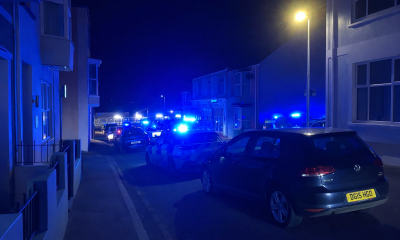
Major emergency response in Tenby after incident near train station
Witnesses report injuries as police and ambulance crews remain at scene on Warren Street POLICE and ambulance crews remain at...


News2 days ago
Haverfordwest County AFC faces High Court winding-up threat from HMRC
Chairman says issue has been dealt with, but winding-up notice is still listed ahead of High Court hearing HAVERFORDWEST County...


Local Government2 days ago
Food hygiene checks have not been carried out in parts of a Welsh county since 2019
FOOD hygiene checks have not been carried out in parts of a Welsh county since 2019 due an inspection backlog,...


Local Government2 days ago
Bridge works on Neyland-Burton road to continue into late April
Council says safety repairs remain on programme but traffic lights will stay in place as major bridge scheme moves into...


Charity3 days ago
Angle RNLI answers string of call-outs across the Milford Haven Waterway
Volunteer crew launched for searches, police incidents, a medical evacuation and a grounded yacht during a busy spell from mid-February...


Charity3 days ago
St Davids RNLI launches on Easter Monday after drifting kayak spotted off Solva
Missing vessel recovered near shore after coastguard confirms it had been reported lost days earlier ST DAVIDS RNLI launched on...


News3 days ago
Diesel nears £2 a litre in Pembrokeshire as drivers scramble for cheaper fuel
Johnston forecourt hits 194.9p while wide price gaps and rush to fill up pile pressure on motorists across the county...
-

 News6 days ago
Accommodation providers in Wales will be required to register under new law
-
Crime2 days ago
Four youths stabbed at Tenby railway station as two arrested
-

 Entertainment7 days ago
From Milford Haven to the world: The story of The Evolution Experience
-

 News4 days ago
Eluned Morgan targets Haverfordwest as Welsh Labour fights to hold its ground
-

 Community4 days ago
Johnston FC pays tribute after sudden death of Rhyan Nolan, 27
-
News2 days ago
Haverfordwest County AFC faces High Court winding-up threat from HMRC
-
Local Government2 days ago
Bridge works on Neyland-Burton road to continue into late April
-

 Crime7 days ago
Six-year jail term a warning to drug dealers, says police