


News
New Sainsbury’s and housing estate get the go ahead


 720 new houses to include 180 ‘affordable homes’
New £30m Haverfordwest supermarket promises 310 jobs
Plans include petrol station, sewage plant and roundabout
Council admits ‘slightly negative’ effect on the town centre
PEMBROKESHIRE County Council’s planning committee gave the provisional go ahead for a major development of over seven hundred houses, and full planning permission for Sainsbury’s to build a £30m flag ship store and petrol station on green field on Tuesday. The site, to the north of Thomas Parry Way in Haverfordwest, has been earmarked for development for nearly ten years.

The multi million pound scheme promises bring 310 permanent and part time retail jobs to Haverfordwest as well as creating further employment over the lengthy construction phase of the project.
In the face of objections form the Haverfordwest Civic Society, two local councillors and some nearby residents, Cllr Brian Hall told a packed committee room: “What message does a refusal to this application send to a major developer. This is a massive injection of cash. Haverfordwest is supposed to be the county town, but it has now slipped.”
Joking that Pembroke Dock had now taken over as the new shopping destination of Pembrokeshire Cllr Hall said: “This development will bring a massive amount of jobs and by building these projects is how we get out of economic recession.”
“This project will lead to a massive increase in footfall to Haverfordwest. At the moment, people are encouraged to travel east to Carmarthen” he added.

“I have the great pleasure in moving this application for approval” Cllr. Hall concluded.
Committee member Cllr Peter Stock said: “I have looked at this very carefully and although we need to look after the existing residents we have to consider that there are not enough plots in Haverfordwest. We as a Council, recognise the need for building.”
He continued: “My great love is for both Pembrokeshire and Haverfordwest, and I would die for those two places. What we are trying to do is improve the centre of our town, and here’s an opportunity to work with a major developer. We are loosing out to Carmarthen at the moment.”

Cllr Stock said: “Car parking in Haverfordwest is also a concern. In summer months every car park is chock-a-block. This new development adds free three hour car parking spaces within walking distance of the town centre. Haverfordwest Chamber of Trade supports this development. They know this development will draw people into the town centre. For too many years we have let our river go. We need plans to strengthen it. We can take this as a chance to put things right. No one complains about Tesco! Sainsbury’s will not have so many houses next to it as Tesco.”
He finished: “I have got to support this, but I will be careful to safeguard the residents.”
Councillors Lyndon Frayling, IPPG, and Thomas Tudor, Labour, were given permission address the Planning Committee because their wards were in or near the development site. They said the project would not be in the interests of the residents of Oakwood Grove, Sycamore Grove and Slade lane areas. Cllr Frayling said: “The location of this development is detrimental to nearby houses, there will be a high level of traffic, noise pollution and light pollution from the supermarket. There are also concerns that a roundabout will cause long delays encouraging people to drive back onto City Road rather than use Thomas Parry Way, which was designed as a relief road. I advise refusal for those reasons.”
Cllr. Tudor spoke of “the serious detrimental effects” of the development on its neighbours and highlighted evidence from New Scientist about a study in France where researchers found that “Children living next door to a petrol station had a quadrupled risk of leukaemia. And the risk of developing acute non-lymphoblastic leukaemia was seven times greater compared with children who lived in the same area, but not next to a petrol station.”
Councillor Tom Tudor read a letter of objection he had sent to the planning department which we have reprinted in full in the letters pages of this edition.
Cllr. Sue Perkins countered these arguments by saying: “I have a Tesco in my ward but no problems with lighting or noise pollution. It will be fine.”
David Jones, agent for Conygar, the company developing the site told the committee: “I commend the council’s officers for a report on this development which is coherent and well balanced. It includes a number of robust submissions. Financial realities have meant that there has been little progress with this site in seven years. Sainsbury’s now makes this all possible. The new store will cross-subsidises the wider development. This project includes 180 affordable homes, a new sewerage treatment works, a £30m investment by Sainbury’s and a further investment of £5m-£6m in additional infrastructure for the town. This development will bring further choice, reduced prices for consumers and help prevent the leakage of business to other counties through this truly sustainable development. Sainsbury’s in the UK’s greenest grocer. They stock over 3,000 locally sourced products and are the biggest buyer of Welsh lamb.”
Richard Evans, retired, who lives at one of the houses nearest to where the supermarket will be built raised objections. “I think the greater majority of people think that supply already outweighs demand where supermarkets are concerned. I have read the Council report. It states ‘there is no retail need for a large store at Slade Lane South’.
Mr Evans also questioned if there was a need for new houses in the area: “Cawdor barracks will be closing soon putting the whole of the Cashfields Estate onto the housing market” he said.
“In the documentation we can see that all sorts of environmental considerations have been made for badgers, foxes and other wildlife, but not much consideration for the residents who will be blighted by this totally unnecessary development plan. This is another nail in the coffin for our town. The Haverfordwest Civic Society discussed this on March 6, and concluded that there is no need for this development and recommended refusal.
Cllr Pugh said at the meeting: “The deliverability of hosuing is important. The proposal will deliver housing at a time when there are currently 4068 people on the housing waiting list in Pembrokeshire. We live in a county where housing is desperately needed. In regards to the retail, I have had meetings with the Chamber of Trade and Town Council . The Chamber of Trade see this as a key development for the centre.”
“This is a huge investment showing confidence in Haverfordwest. I have no hesitation in supporting this” he added.
Cllr Keith Lewis added his view: “I find myself at the end of such eloquence its left me with little to say. Let’s make it clear to the developer that we welcome this project. Cllr Frayling make good paints on behalf of the residents but the planning department will take into consideration the points that he raised. Additional car parking on the town side would be a good idea, to help people get to the units in the town centre. That will secure Haverfordwest town centre for years.”
He concluded with a demand to his fellow Councillors: “Lets grasp this with two hands and say YES! We’ll go ahead with it!”
On a vote, the application for the homes and supermarket were passes unanimously with one member, Cllr. Price, obtaining because of a financial interest.


New fund would expand toy libraries and automatically register babies for library cards
EVERY child in Wales will have an equal right to read and play, regardless of their background, under plans announced by Welsh Labour today.
The party says that if it is re-elected in the next Senedd term, it will introduce a new programme aimed at improving access to books and toys for families across the country.
The proposals include automatic registration for a library card for every child in Wales when a baby’s birth is registered, the creation of a nationwide network of 100 toy libraries, and a new Children’s Reading and Play Fund. The fund would help pay for toys and increase the number of children’s books available in both public and school libraries.
Welsh Labour says the measures are designed to ensure that children from all backgrounds have access to resources that support learning, creativity and early development.
Cabinet Secretary for Education Lynne Neagle said the plans would help ensure no child misses out on opportunities because of their family’s financial circumstances.

“Every child in Wales should have access to books and toys, regardless of their background. No child should have to go without because their family can’t afford them,” she said.
“Books and toys are a vital part of growing up. The new Children’s Reading and Play Fund would ensure this is a right for every child in Wales and help reduce costs for families.”
Toy libraries operate in a similar way to traditional libraries, allowing families to borrow toys and return them after use. While some toy libraries already exist in parts of Wales, access is currently patchy.
Welsh Labour says its proposal would establish a national network of 100 toy libraries to ensure a more consistent offer across the country. Under the plan, the libraries would work together and receive national support and promotion.

The party argues that improving access to books and play materials can help support early literacy, learning and social development for young children while easing financial pressure on families.
Further details about the proposed Children’s Reading and Play Fund are expected to be set out as part of Welsh Labour’s programme for the next Senedd term.

Community hub supporting more than 700 people a month recognised at West Wales health and social care awards
PLANED has won the Working in Partnership Award at the West Wales Regional Health and Social Care Awards, held at Canolfan Pentre Awel.
The awards were hosted by the West Wales Regional Partnership Board and recognise projects that demonstrate strong collaboration across health, social care and community organisations.
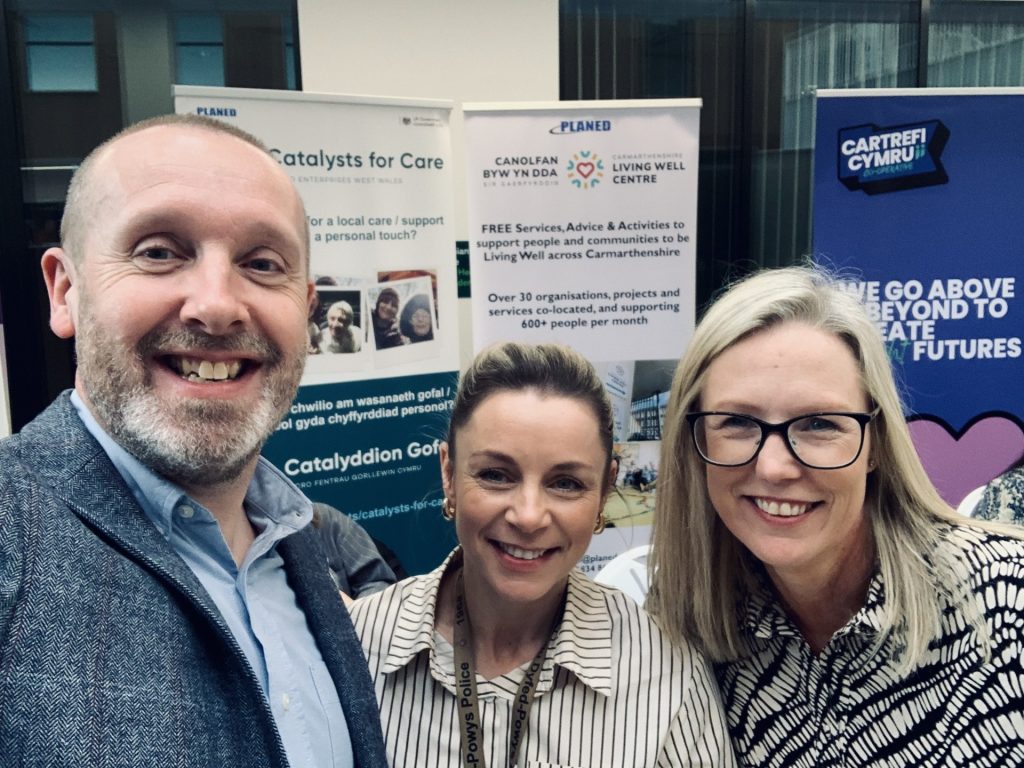
The award celebrates the success of the Carmarthenshire Living Well Centre, a project led and managed by PLANED which has become a key hub for community support in the county.
The centre brings together a range of organisations and initiatives offering advice, wellbeing activities and support services free of charge to local residents.
PLANED said the success of the centre has been built on strong collaboration with the many projects and organisations based there, all working together to support communities across Carmarthenshire.

More than 700 people each month now access services at the centre, taking part in group sessions, receiving advice and support, and benefiting from a wide range of community-led activities.
The organisation said the award recognises not only PLANED’s leadership in developing and managing the centre, but also the collective effort of the partners delivering services from the facility.
PLANED added that it will continue seeking further funding to support the development of the centre so it can expand its work and help even more people in the future.
Representatives from the organisation said it was great to see so many partners and familiar faces at the awards ceremony, adding that the recognition belongs to everyone involved in delivering the project.

RESIDENTS across parts of south Pembrokeshire have reported unusually loud explosions over the past week as military exercises take place at the Castlemartin Training Area.
The Ministry of Defence confirmed that live firing has been underway at the range between Monday (Mar 2) and Friday (Mar 6) as part of routine training for armoured units.
People living in Milford Haven, Neyland and surrounding communities said the blasts were noticeably louder than usual, with some reporting that the noise could be heard clearly indoors.
One resident in Milford Haven told The Herald that the sound carried across the Haven during the week.
“I’ve lived here for years and you always hear the range from time to time, but this week it seemed much louder than normal. You could hear it clearly inside the house.”
The Castlemartin Range Complex, located on the south Pembrokeshire coast between Bosherston and St Govan’s Head, is one of the UK’s main live-fire training areas for armoured units.
According to the official MOD firing notice for March, a range of weapons systems are being used during the exercises, including 120mm tank guns, mortars and heavy machine guns.
The 120mm main gun used by modern battle tanks produces extremely powerful shockwaves which can carry significant distances, particularly across water.
During some training periods the range operates during normal daytime hours, typically 7:30am to 4:45pm, but certain exercises include 24-hour firing sessions.
For safety reasons, several roads and footpaths in the Castlemartin area are closed during firing periods, including the road from Bosherston to St Govan’s Chapel and access to parts of the coastline.
A sea danger area is also enforced several miles offshore while the exercises are underway.
Castlemartin has been used by the military since the 1930s and is regularly used by armoured units training with Challenger tanks before deployment on operations or major exercises.

Live firing is scheduled to continue at intervals throughout March.



News2 hours ago
Reform energy policy raises questions for Milford Haven and Celtic Freeport ambitions
PLANS outlined in Reform UK’s Welsh manifesto have sparked debate over how the party’s energy policies could affect the future...


Crime5 hours ago
Man who threatened to kill police during Milford Haven standoff avoids jail
Judge tells defendant his ‘erratic and reckless’ behaviour caused serious disruption to emergency services A MILFORD HAVEN man who threatened...


Crime7 hours ago
Police investigating nightclub assault in Saundersfoot
POLICE are appealing for information following a serious assault at a nightclub in Saundersfoot which left two people with significant...


News1 day ago
Greens oppose US space radar plan for St Davids Peninsula
CANDIDATE CRITICISES DARC PROPOSAL THE GREEN PARTY has voiced strong opposition to plans for a major US military radar installation...


Crime1 day ago
Chinese intelligence probe reaches Dyfed-Powys Police area
Counter-terror officers arrest man in Powys as part of national security investigation THREE men have been arrested in Wales and...


Crime1 day ago
Man sentenced after punching convicted paedophile in Haverfordwest pub
A HAVERFORDWEST man has been sentenced after punching a convicted paedophile inside a town centre pub. Haverfordwest Magistrates’ Court heard...


Health2 days ago
Davies and Kurtz attack ‘fantasy hospital’ pledge for west Wales
Senedd Members demand immediate investment in Withybush and Bronglais as election campaign intensifies SENEDD Members Paul Davies and Samuel Kurtz have launched a fresh...


Health2 days ago
Hywel Dda warns of ‘significant pressure’ as A&E departments remain packed
Patients urged to use NHS 111 as Withybush, Glangwili and Bronglais face continued strain HYWEL DDA University Health Board has...


News3 days ago
War stops Qatar gas: Milford Haven LNG supplies disrupted
UK energy security concerns grow after shutdown at major export facilities ENERGY bills in the UK could rise sharply after...


Community3 days ago
Martyn Butler dies aged 71 months after Haverfordwest visit
Co-founder of Terrence Higgins Trust attended local plaque unveiling honouring friend Terry Higgins A LEADING figure in the UK’s response...
-

 Community6 days ago
St David’s Day parade brings colour and celebration to Haverfordwest
-

 Crime3 days ago
Nine deny Class A drugs conspiracy as case set for Crown Court trial
-

 On The Road6 days ago
The Complete Guide to Choosing the Right Alloy Wheels
-

 Health3 days ago
Welsh Labour launches Senedd campaign with £4bn hospital pledge
-
Crime5 hours ago
Man who threatened to kill police during Milford Haven standoff avoids jail
-

 Sport3 days ago
New arrival celebrated at Bridge Meadow
-

 Education3 days ago
School in lockdown after reported phone threat
-
Community3 days ago
Martyn Butler dies aged 71 months after Haverfordwest visit