


News
Credit union membership tops 9,000


 THE NUMBER of people in mid and west Wales that save or take loans with their local credit union has topped the 9,000 mark. Between them, they have nearly £5½m in savings and over £3½m in loans.
Vanessa Owens, operations manager at West Wales Credit Union said,
“With Christmas approaching and cold weather adding to the cost of fuel bills, the winter months can be a difficult period financially. It’s good to see people in Mid and West Wales turning to credit unions as a viable alternative to pay-day loans companies or to save with, in the run-up to Christmas and beyond.”
The Welsh Government supports credit unions to encourage for people in Wales to develop a saving habit and to help provide alternative sources of credit to form other higher-cost lenders, such as pay day loan companies.
Wales-wide figures released today show that Christmas savings with Wales’s credit unions has topped the £1m. Over 2000 people have Christmas savings accounts with credit unions in Wales and have put away an average of £515 each since January this year.

Unlike banks and payday loans companies, the maximum interest rates credit unions can set on loans and savings are set out in law. As well as loans, Welsh credit unions also offer regular savings accounts, for both adults and under 18s, and Christmas savings accounts. Across Wales, more than 60,000 people are members of credit unions.
The Minister for Communities and Tackling Poverty, Jeff Cuthbert said:
“More and more people are turning to their local credit union as a way to save and we want to help this sector to continue to grow so that even more Welsh people have the option of saving and obtaining loans at a fairer interest rate.
“The money you save is given in loans to people you have a link with. If you borrow money, the interest you pay goes to the people who save, not to share holders. Either way, the money stays in Wales and is of benefit to other people in Wales.

“Many people are facing tough times and the rise of pay day lenders continues. We are working to help people manage their money in a better way in the hope they never have to turn to such companies. Whilst credit unions are not the sole answer to payday lenders, they integral to people accessing low-cost credit and advice to managing their finances.”


FINAL-YEAR student nurses training in west Wales say they are facing the “very real possibility” of unemployment after being told a key recruitment process has been delayed because of a shortage of available posts.
Members of the S23 Adult Nursing cohort based in Carmarthen have written to The Herald describing growing alarm and frustration after being informed that streamlining, the process used to match newly qualified nurses to jobs, had been postponed for a second time.
The cohort said the delay had left students fearing they could complete three years of demanding training only to find there were no jobs waiting for them in the NHS in Wales.
In a letter sent to The Herald, the students said: “We are not writing this letter out of anger, but out of deep desperation and disappointment. After all our hard work, we are now being faced with the very real possibility of unemployment.”
The students said they had spent the past three years training and working across hospital and community settings, carrying out the full range of duties expected of nursing staff while completing the 2,300 hours required to qualify.

They said that had meant working days, nights, weekends and holidays, missing important family events, and taking on emotionally and physically demanding duties without pay.
The cohort wrote: “We have cleaned bodily fluids, administered medication, witnessed and assisted in surgical procedures, dressed wounds, rehabilitated patients and performed CPR. We have supported patients and families across all stages of life, from supporting new mothers to holding a patient’s hand as they take their last breaths.”
They added: “We have done all this, without salaries, driven by the belief in our NHS, our desire to serve our wider community, and our understanding that we, as nurses, are in high demand.”
However, students say that confidence has now been shaken.
They told The Herald that on Monday, April 7, many were preparing to enter streamlining the following day when they received an email stating that the planned date of April 8 would no longer go ahead.
Instead, the process has been pushed back until May 11 because the number of available roles is said to be significantly lower than the number of graduating students.
Students say they have been warned that even with the delay, the problem is not expected to be resolved.

There are 23 student nurses in the Carmarthen adult nursing cohort alone. One student told The Herald the issue is likely to affect far more people across Wales, including students on adult, paediatric, mental health and learning disability pathways.
She said there are an estimated 130 adult nursing students across Carmarthen and Swansea campuses, although the full number affected across all courses and universities is not yet known.
The students said they are now facing uncertainty over how they will support themselves once student funding comes to an end.
They wrote: “We have spent three years being unable to take on regular work, in order to prioritise our studies. When our student funding ends, how will we survive? How will we support our families?
“How have we been able to train for jobs that don’t exist?”
The cohort said they had been led to believe that training as nurses would provide a clear path into employment, particularly as those receiving NHS bursary support are expected to work in Wales for two years after qualifying.
Although the Royal College of Nursing has reportedly indicated that students who fail to secure a role would not be required to repay their funding, the cohort says this does not address the wider problem.
They stressed that they do not blame their university, which they said had been “honest, transparent and supportive” throughout the course, but said urgent action was now needed.
The students are calling for answers on why there was so little warning, whether newly qualified nurses will be allowed to seek work outside Wales if no posts are available, and why so many students continue to be recruited into nursing courses if there are not enough jobs at the end of training.
One student, Robynne Williams, told The Herald she was willing to speak publicly about the issue. She said the cohort has already sent its letter to members of Hywel Dda University Health Board and is in the process of sending it to others across Wales, including the university, the Welsh Government and the RCN.
So far, she said, only the RCN has responded.
The Herald has approached Hywel Dda University Health Board, Health Education and Improvement Wales, the Welsh Government and the Royal College of Nursing for comment.

Van driver charged after two-vehicle collision on Maudlands stretch of road
A MOTORCYCLIST was airlifted to hospital with serious injuries following a two-vehicle collision on the B4333 near Capel Iwan on Wednesday morning (Apr 8).
Dyfed-Powys Police said officers were called just after 7:00am to the crash on the Maudlands stretch of road. The collision involved a white Mercedes Sprinter van towing a trailer and a black Triumph motorbike.
The rider of the motorbike was taken to hospital by air ambulance, where he remains under treatment for serious injuries.
Police confirmed that the driver of the van, José Fernando Rey Fernández, aged 45, was arrested following the incident. He has since been charged with causing serious injury by careless driving, remanded in custody, and was due to appear before Aberystwyth Magistrates’ Court.
The road was closed for several hours while specialist collision investigators carried out enquiries. It reopened at around 3:50pm.
Witness appeal
Officers are appealing for anyone who saw either vehicle before the collision to come forward. They are particularly keen to hear from anyone with dash-cam footage, CCTV, or doorbell video covering the area at the time.
Anyone with information is asked to contact Dyfed-Powys Police quoting reference DP-20260408-055.

First Minister Eluned Morgan says renewables, apprenticeships and retraining will drive growth, while warning that rival parties risk business confidence
WELSH LABOUR has set out a fresh pitch to voters on jobs, apprenticeships and green industry ahead of the Senedd election, with First Minister Eluned Morgan claiming her party offers the stability needed to attract future investment to Wales.
During a visit to electrical firm Dec Elec in Aberdare on Thursday (Apr 9), the Welsh Labour leader met staff and apprentices to discuss expansion opportunities linked to renewable energy infrastructure and skills development.

The visit formed part of Labour’s wider economic message for the election campaign, with the party promising a new industrial strategy for Wales, more apprenticeships and a long-term retraining scheme for workers whose industries are changing.
Speaking during the visit, Baroness Morgan said Welsh Labour wanted to “move into the next chapter of the Welsh economy” by investing in what she described as “the jobs of the future”.
She said the party’s plans would include a new industrial strategy, further apprenticeship opportunities in areas such as renewables and planning, and a “Lifelong Retraining Guarantee” aimed at helping workers adapt at any stage of their careers.
Labour has also pledged to create a National Jobs Council chaired by the First Minister, deliver 100,000 all-age apprenticeships over the next Senedd term, and speed up the planning system to support economic development.
Other promises include a new strategy for vocational education and training, targeted support for the South Wales Valleys, backing for Welsh steel through public procurement, and work to unlock major projects in north Wales including Wylfa and the proposed AI Growth Zone.
At the Aberdare visit, third-year apprentice Jordan said his apprenticeship had helped him gain practical skills that would have been difficult to learn in the classroom alone. He said expanding apprenticeships would help more young people gain hands-on experience and improve their chances of finding work.
Labour also used the visit to draw political dividing lines with its opponents. Baroness Morgan claimed Reform UK’s opposition to net-zero projects would put jobs at risk, while also arguing that Plaid Cymru’s support for independence and its approach to renewable energy could deter business investment.
Those claims are likely to be strongly contested during the campaign, with opposition parties expected to argue that their own policies would provide a better route to economic growth, energy security and stronger public services.
The row underlines how jobs, industrial policy and the future of green investment are set to become major battlegrounds in the run-up to polling day.
Welsh Labour is seeking to present itself as the party of economic continuity and managed transition, while opponents are likely to question whether its record in government matches the scale of the promises now being made.



Crime1 hour ago
Man arrested after alleged child sexual assault in Haverfordwest
Police enquiries ongoing after incident in Castle Square A MAN has been arrested after an alleged sexual assault of a...


Crime2 days ago
Four youths stabbed at Tenby railway station as two arrested
British Transport Police lead investigation after serious disorder involving group of youths FOUR youths suffered stab wounds during a major...


News2 days ago
Major emergency response in Tenby after incident near train station
Witnesses report injuries as police and ambulance crews remain at scene on Warren Street POLICE and ambulance crews remain at...


News2 days ago
Haverfordwest County AFC faces High Court winding-up threat from HMRC
Chairman says issue has been dealt with, but winding-up notice is still listed ahead of High Court hearing HAVERFORDWEST County...


Local Government2 days ago
Food hygiene checks have not been carried out in parts of a Welsh county since 2019
FOOD hygiene checks have not been carried out in parts of a Welsh county since 2019 due an inspection backlog,...


Local Government2 days ago
Bridge works on Neyland-Burton road to continue into late April
Council says safety repairs remain on programme but traffic lights will stay in place as major bridge scheme moves into...


Charity3 days ago
Angle RNLI answers string of call-outs across the Milford Haven Waterway
Volunteer crew launched for searches, police incidents, a medical evacuation and a grounded yacht during a busy spell from mid-February...


Charity3 days ago
St Davids RNLI launches on Easter Monday after drifting kayak spotted off Solva
Missing vessel recovered near shore after coastguard confirms it had been reported lost days earlier ST DAVIDS RNLI launched on...


News3 days ago
Diesel nears £2 a litre in Pembrokeshire as drivers scramble for cheaper fuel
Johnston forecourt hits 194.9p while wide price gaps and rush to fill up pile pressure on motorists across the county...


News4 days ago
St Davids Cathedral marked Easter Sunday with full day of worship
FROM dawn vigil to choral evensong, the cathedral welcomed worshippers for one of the most important days in the Christian...
-

 News6 days ago
Accommodation providers in Wales will be required to register under new law
-
Crime2 days ago
Four youths stabbed at Tenby railway station as two arrested
-

 Entertainment7 days ago
From Milford Haven to the world: The story of The Evolution Experience
-

 News4 days ago
Eluned Morgan targets Haverfordwest as Welsh Labour fights to hold its ground
-

 Community4 days ago
Johnston FC pays tribute after sudden death of Rhyan Nolan, 27
-
News2 days ago
Haverfordwest County AFC faces High Court winding-up threat from HMRC
-

 Crime7 days ago
Six-year jail term a warning to drug dealers, says police
-
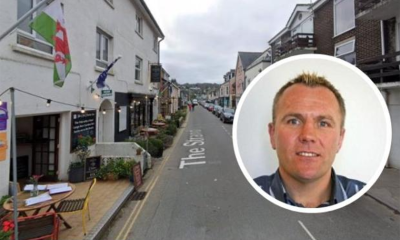
 Business5 days ago
Harbwr Brewery plans for Saundersfoot Old Chemist pub
KevinSof
March 17, 2026 at 1:06 pm
Figuring out the perfect CBD [url=https://www.cornbreadhemp.com/pages/what-are-the-best-thc-edibles-for-beginners ]What are the best THC edibles for beginners?[/url] dosage is a individual journey that hinges on aspects like body weight, metabolic rate, and expected outcomes. Specialists encourage starting with a minimal dose and steadily increasing until the preferred effect is achieved. Keeping a brief journal can help track results over time. Consistency is critical — cannabidiol works best when given time to build in the system.