


News
New year’s honour for acclaimed novelist


 MANORBIER-based librettist, music critic and writer Paul Griffiths was a New Year’s recipient of the OBE for his services to music, literature and composition.
An award-winning novelist and renowned expert on modern classical music, Mr Griffiths is the former music critic of the New Yorker magazine and the author of The Penguin Companion to Classical Music.
An adaptation of his novel let me tell you by Danish composer Hans Abrahamsen received its world premiere performed by the Berlin Philharmonic Orchestra on December 20, 2013.


Campaigners say mast rent reforms have damaged cooperation between operators and landowners as rural Wales continues to struggle with patchy mobile coverage
CAMPAIGNERS representing rural landowners have launched a new website aimed at gathering evidence about what they describe as a “broken mast policy”, which they say is contributing to poor mobile coverage across parts of Wales, including Pembrokeshire.
The campaign comes amid fresh analysis highlighting persistent connectivity problems in rural areas. Research by broadband intelligence firm Ookla shows that large parts of West Wales continue to lag behind the UK average for mobile download speeds. In many parts of Pembrokeshire, typical mobile data speeds are reported to sit in the mid-teens to low-twenties megabits per second, with widespread mobile “not-spots” where coverage drops out altogether.
Local residents and businesses have long complained about unreliable signal in rural parts of the county. Coastal communities, farming areas and smaller villages often struggle with patchy reception, particularly during busy tourist periods when networks come under additional strain.
Campaigners say the situation has been made worse by changes introduced under the Electronic Communications Code reforms in 2017, which significantly altered the way telecoms operators pay landowners who host mobile phone masts.
Before the reforms, landowners typically received commercial rents for hosting telecommunications infrastructure. However, the updated legislation aligned mast rents more closely with the value of the land itself rather than the commercial benefit to the operator. In many cases this has led to payments being reduced by as much as ninety per cent when existing agreements are renewed.

Landowner groups say the changes have damaged relationships between network operators and site providers, making negotiations over new sites and renewals more difficult.
A spokesperson for the campaign said the new website will allow landowners across the UK to submit evidence and case studies about how the policy has affected the rollout of mobile infrastructure.
They said: “Many rural landowners feel they have been pushed into a David versus Goliath battle with telecoms operators. The reforms drastically reduced mast rents and undermined long-standing agreements, which has damaged cooperation just at the time when better mobile connectivity is needed most.
“We are launching this platform so that landowners can record what is actually happening on the ground. Without fair relationships between site providers and operators, the rollout of modern mobile networks will continue to face unnecessary barriers.”

The campaigners argue that the breakdown in trust between operators and landowners risks slowing the expansion of mobile networks in rural areas, including the rollout of newer technologies such as 5G.
Although mobile companies say the reforms were intended to reduce the cost of infrastructure and accelerate deployment, critics argue that in practice the changes have led to legal disputes, stalled negotiations and delays to upgrades.
For counties like Pembrokeshire, where the geography is already challenging, the issue has particular significance. The county’s rugged coastline, dispersed rural settlements and areas of national park land can make it more difficult and expensive to install new masts or upgrade existing ones.

Industry and government have acknowledged the scale of the rural coverage problem. The UK Government’s Shared Rural Network programme is currently working with mobile operators to extend coverage across the countryside by upgrading existing masts and building new sites.
The programme aims to eliminate many of the UK’s so-called “partial not-spots”, where customers can only access one mobile network. However, much of the initiative is focused on expanding 4G coverage rather than directly funding widespread 5G deployment.
As a result, many rural communities are still waiting for the faster speeds and lower latency promised by next-generation mobile networks.
Local businesses say improved connectivity is increasingly essential to the county’s economy. Tourism operators rely heavily on mobile networks for bookings and contactless payments, while farmers and rural enterprises are increasingly using digital tools and connected equipment that require reliable mobile data.
Campaigners behind the new website say they hope the evidence gathered from landowners will help policymakers better understand the practical challenges facing rural connectivity.
They warn that unless the policy framework governing mast sites is reviewed, ambitions to expand mobile infrastructure across rural Britain may be harder to achieve.
Industry bodies and government officials maintain that the reforms were designed to make it easier and more affordable to deploy digital infrastructure. Landowner groups, however, insist that the changes have had unintended consequences and may ultimately slow the rollout they were meant to accelerate.
For communities across Pembrokeshire still struggling with unreliable signal, the debate over mast policy could play an important role in determining how quickly faster and more reliable mobile coverage arrives in the years ahead.


A CARDIFF man who used fake identities on dating sites to defraud three women of almost £50,000 has been jailed.
Rodney Roberts, aged 40, of Trowbridge, Cardiff, was sentenced at Newport Crown Court to five years and one month in prison after pleading guilty to fraud by false representation.
Officers from the Proactive Economic Crime Team at the Tarian Regional Organised Crime Unit (ROCU), working with South Wales Police, found that Roberts defrauded three victims of a combined £49,580 between 2021 and 2024. He contacted the women through online dating and social media platforms while using the false name “Paul Smith”.
Roberts first contacted a victim in February 2021. He initially claimed to be an American from California working in the UK as an attorney and financier. He later told the victim this was merely a cover story and that he was in fact an intelligence agent. Roberts claimed that because of his work he did not have direct control of his finances and asked the victim for financial help.
During the relationship he persuaded the woman to invest money in a fictitious investment company. He also assisted her in selling her home so she could invest more money into the scheme and encouraged her to open a bank account in her name for him to use. Unknown to the victim, Roberts also opened a cryptocurrency account in her name.
Roberts contacted a second victim in October 2022. Again he encouraged her to invest in what he claimed was a lucrative opportunity promising high returns. He showed her screenshots which appeared to show the investment growing in value, but these images were fabricated. Throughout the relationship Roberts repeatedly gave excuses for why he was unable to repay the money.
He contacted a third victim in March 2024, this time claiming to be an American television producer working for the BBC on a two-year visa. Roberts told the victim he was struggling to access his American bank accounts and asked for money to help him put down a deposit on a flat. As before, he used fake screenshots of accounts to convince her the investment was genuine, before providing excuses as to why the borrowed money could not be returned.
The third victim eventually became suspicious and carried out online searches, which led her to two historic news reports detailing previous fraud offences committed by Roberts under the alias Paul Smith. She then contacted South Wales Police.
Detective Constable Amanda Davies, of Tarian ROCU, said romance fraud was a growing and highly damaging crime.

“Offenders deliberately exploit trust and vulnerability,” she said. “Victims are often left with not only significant financial losses but also psychological distress and embarrassment, which can prevent them from reporting the offence.
“I am pleased with the sentence handed down today and hope it sends a message to others who would behave in such an abhorrent way for financial gain.
“I would also like to recognise the courage shown by the victims in helping us pursue a conviction and bring Roberts to justice.”

DC Davies urged anyone forming relationships online to remain cautious.
“Common warning signs include requests for money, reluctance to meet in person or by video call, or pressure to keep a relationship secret. Another warning sign is ‘love bombing’, where a new or prospective partner overwhelms someone with excessive attention, affection or grand gestures early in the relationship.
“Fraudsters are skilled at creating narratives that sound believable. If something feels too good to be true, trust your instincts and speak to friends or family.
“If you believe you may have been a victim of romance fraud, report it to Action Fraud.”
She added that Tarian ROCU would continue to pursue fraudsters and bring them before the courts.
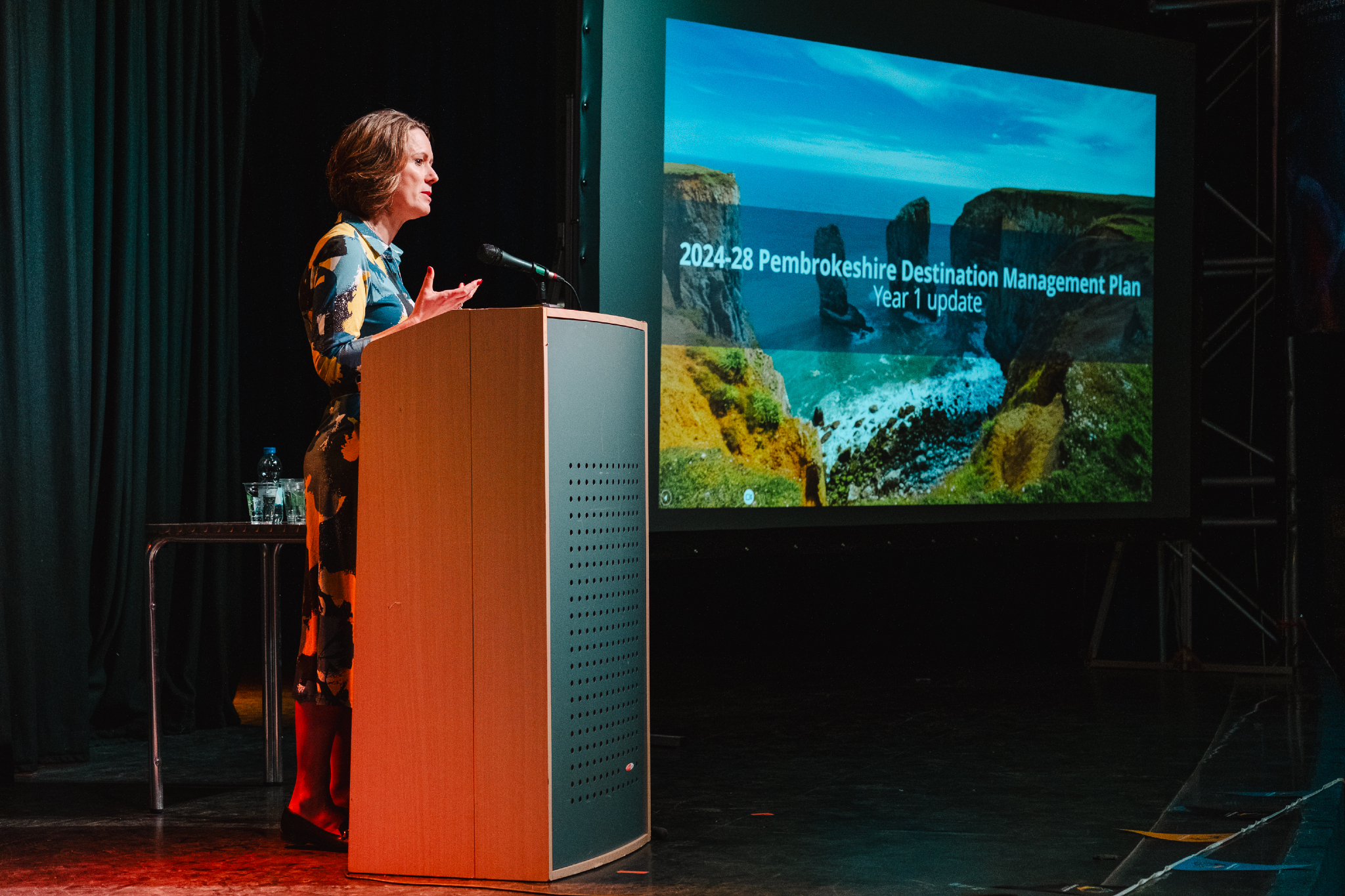
VISIT PEMBROKESHIRE will host a highly anticipated political Q&A session at its upcoming Tourism Summit 2026, giving tourism businesses the opportunity to engage directly with candidates standing in the forthcoming Senedd elections this May.
As Wales’ first and only hybrid Destination Management Organisation, Visit Pembrokeshire brings together both public and private sector partners to support and develop the region’s visitor economy. This collaborative approach will be reflected in the format of this year’s summit, which combines leading industry speakers with a dedicated political panel discussion.
The Q&A session will provide a platform for tourism operators and industry professionals to raise key issues affecting the sector, while offering political candidates the opportunity to outline how their respective parties plan to support Pembrokeshire’s most significant economic driver.

Tourism businesses across the county continue to navigate a changing policy landscape and wider economic pressures. These include the 182-day rule for self-catering accommodation, rising operating costs, the proposed Visitor Levy, and increasing regulatory and licensing requirements.
For many operators, these pressures come alongside ongoing challenges such as recruitment difficulties, seasonality, energy costs and the need to maintain year-round viability for the many small and family-run businesses that form the backbone of Pembrokeshire’s visitor economy and rural communities.
The session will explore how the sector can work collaboratively with policymakers to support a thriving visitor economy while delivering Visit Pembrokeshire’s shared ten-year vision of becoming a world leader in regenerative tourism.
Neil Kedward, Chair of Visit Pembrokeshire’s Board of Directors, said: “Tourism is Pembrokeshire’s largest economic driver and supports thousands of local jobs, businesses and communities. With the upcoming Senedd elections, this summit provides an important opportunity for the sector to engage directly with those who may help shape the policies that affect our long-term future.
“We want our political representatives to succeed, and that means ensuring they are properly informed, connected to the businesses on the ground, and able to hear first-hand about the opportunities and challenges facing the industry. Creating space for open dialogue like this is an essential part of modern politics, particularly at a regional level where the impact of decisions is felt most directly.
“Our hope is that these conversations help build stronger understanding and partnership between tourism businesses and policymakers as we work together towards a thriving and regenerative visitor economy.”
Emma Thornton, Chief Executive of Visit Pembrokeshire, added: “The Tourism Summit is designed to bring together the people shaping the future of Pembrokeshire’s visitor economy. By inviting political candidates to hear directly from tourism businesses, we are creating an open platform for meaningful discussion about both the challenges and opportunities facing the sector.
“Pembrokeshire has an incredibly strong tourism industry, and collaboration between business, government and communities will be essential in ensuring it continues to grow in a sustainable and responsible way while achieving our shared long-term vision for the visitor economy.”
The Visit Pembrokeshire Tourism Summit 2026 will bring together tourism operators, policymakers and industry leaders from across Wales for a day of insight, discussion and networking focused on the future of the region’s visitor economy.
The event is proudly supported by Barclays, whose sponsorship reflects a shared commitment to supporting local businesses and the continued growth of Pembrokeshire’s visitor economy.
Tickets are available now via Eventbrite.




Education11 hours ago
Manorbier school closure approved while insurance claim still unresolved
Council confirms negotiations with insurer ongoing following 2022 fire PEMBROKESHIRE COUNTY COUNCIL has confirmed that negotiations with its insurer over...


Crime1 day ago
‘Knife attack’ at Spittal property leaves man in hospital
POLICE have arrested a woman following what is being described as a ‘knife attack’ at a property in Spittal on...


Community1 day ago
Pembrokeshire to receive its first banking hub in Pembroke Dock
LINK, the UK’s Cash Access and ATM network, has today announced local people and businesses in Pembroke Dock will benefit from a new banking...


Health3 days ago
Future of Withybush Hospital petition sparks urgent call for Senedd debate
CALLS have been made for an urgent debate in the Senedd over the future of services at Withybush Hospital as...

Crime3 days ago
Man jailed after threatening to chop teen’s ears off in drunken phone call
17-year-old victim said she feared for her life after a series of threats A MAN who threatened a teenage girl...


Sport3 days ago
Sean Bowen set for historic Welsh clash at Cheltenham Gold Cup
PEMBROKESHIRE jockey Sean Bowen could be part of a historic all-Welsh showdown when he lines up in the Cheltenham Gold...


Community3 days ago
Tenby still waiting as Wales hits 50 rural mobile mast upgrades
Seaside town plagued by signal congestion again absent from latest government-backed coverage improvements A NEW milestone in the UK Government’s...


Crime4 days ago
Man raped 15-year-old girl in caravan while she was on family holiday in west Wales
Jury convicts Pendine man after court hears he raped intoxicated teenager in caravan during family holiday A MAN who raped...


Community4 days ago
Crash sparks fresh questions over future of former Haverfordwest library
CONCERNS have been raised about the future of a distinctive Haverfordwest building after a car crashed into it last week,...

Community5 days ago
Councillors vote to close Ysgol Clydau despite community concerns
Petition and protests fail to prevent closure of small rural school near Tegryn PEMBROKESHIRE COUNTY COUNCIL has voted to close...
-

 Local Government1 day ago
Register now to vote in May’s Senedd election
-

 Health4 days ago
Women’s health services ‘expanding’ across mid and west Wales says Health Board
-
Community5 days ago
Councillors vote to close Ysgol Clydau despite community concerns
-

 Education6 days ago
New partnership launched to tackle Wales’ growing student support gap
-

 Comment5 days ago
Manorbier deserved honesty — not false hope
-

 Charity6 days ago
RSPCA responds to Reform UK Wales manifesto on animal welfare
-

 Entertainment6 days ago
Evening with rugby legend Shane Williams coming to Milford Haven
-

 Crime3 days ago
Former Pembrokeshire Army officer stripped of MBE after fraud conviction