Connect with us
Advertisement
Advertisement

News

Stranded man and child airlifted from Broad Haven South

Published

on

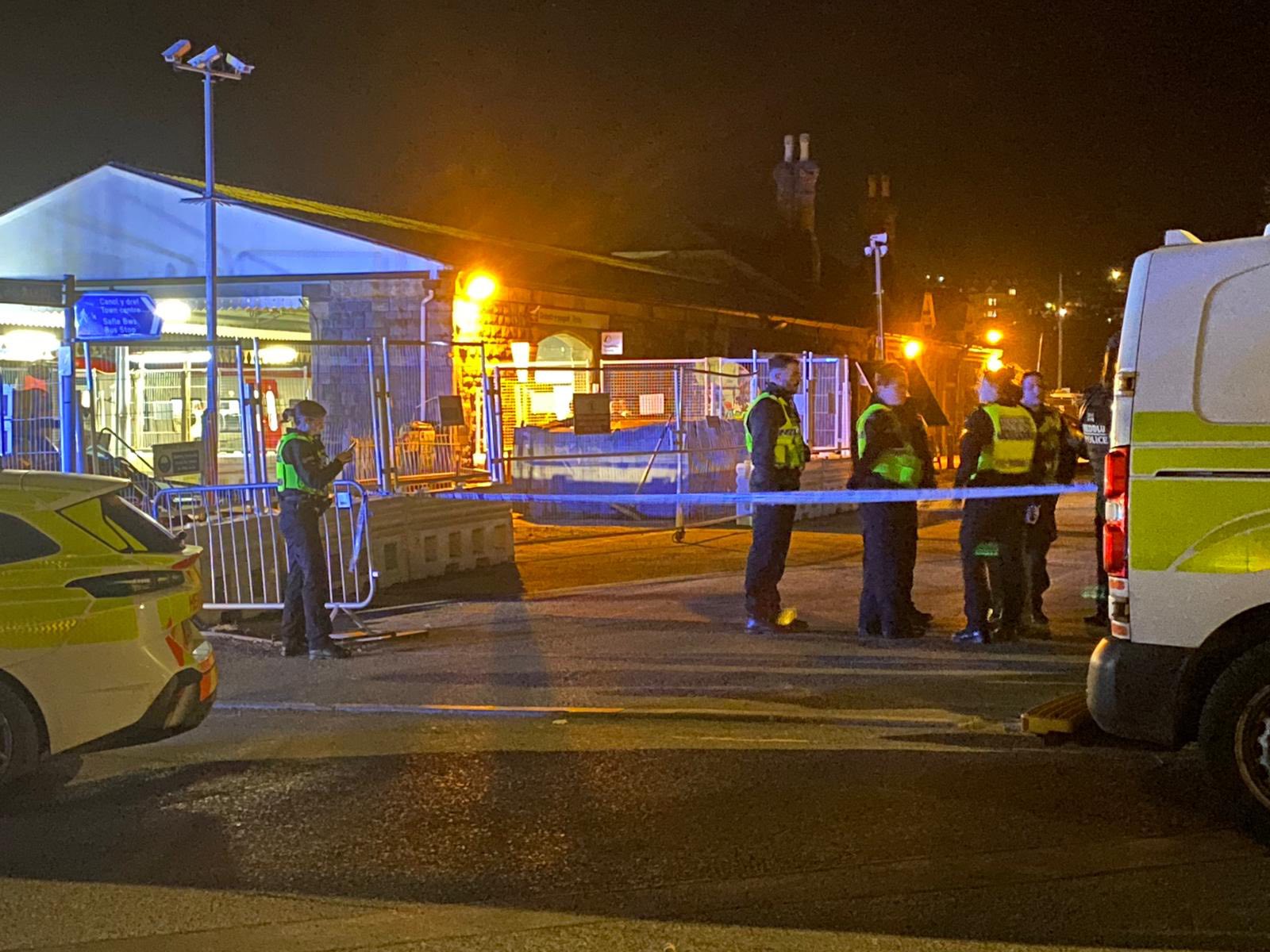
IMG_7619TENBY’S RNLI all-werather lifeboat was requested to launch following a report to Milford Haven Coastguard that an adult and child had been washed off rocks in heavy seas at Broad Haven South on Friday (Aug 19) at 5:35pm.

The lifeboat was on the water within minutes, with the volunteer crew making best speed towards Broad Haven, some 11 miles west of Tenby.

When the lifeboat was a few miles from the scene, further details came through from Milford Haven Coastguard stating that Coastguard Teams on shore had confirmed that the casualties had managed to climb a rock offshore from Broad Haven.

helicoopter2.JPG.gallery

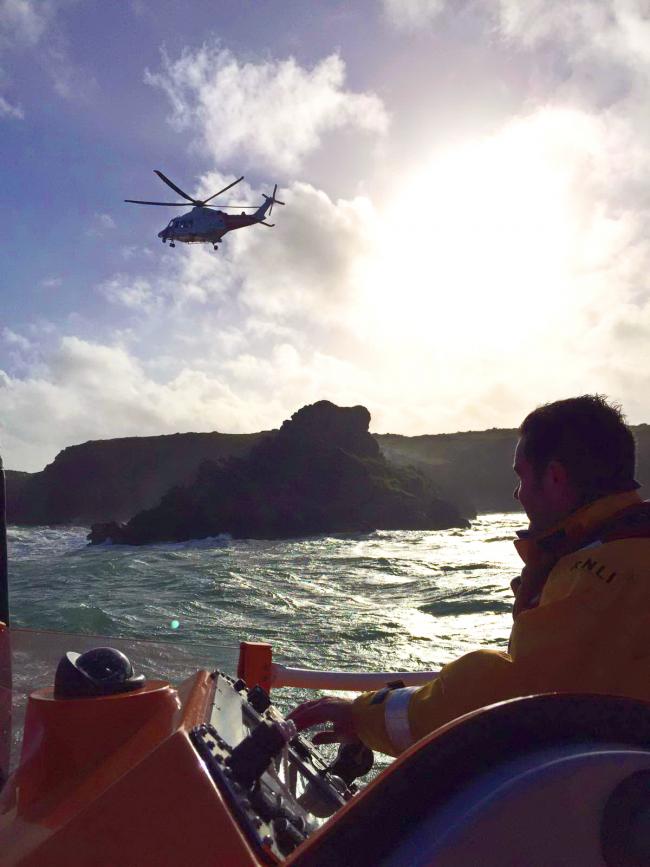
However, they said there was an 8ft swell pounding the rocks, meaning that rescue by sea was probably not possible so the Coastguard Search and Rescue helicopter from St Athan, Rescue 187 was tasked. The Haydn Miller was requested to stand off and provide safety cover.

The helicopter was overhead fifteen minutes later and lifted both casualties to safety, before dropping them ashore to the awaiting Coastguards and Paramedics.

The lifeboat was then released and returned to station.

 

Click to comment

Leave a Reply

Your email address will not be published. Required fields are marked *

Health

Withybush: From full district hospital to “salami-sliced” services

Published

on

How Pembrokeshire’s main hospital has changed over more than a decade

WITHYBUSH HOSPITAL reopened in 1979 as Pembrokeshire’s flagship district general hospital, providing consultant-led maternity, a Special Care Baby Unit, 24-hour inpatient children’s services, emergency general surgery and comprehensive emergency care.

For decades it functioned as the county’s main acute hospital.

Today it still delivers vital care — but its role has changed significantly.

Over the past 12 years, a series of decisions have altered the scope of services, with campaigners describing the process as the gradual “salami-slicing” of the hospital.

Health leaders say changes have been driven by patient safety concerns, national workforce shortages and the need to deliver sustainable specialist services.

Critics argue the cumulative effect has been a steady centralisation of care away from Pembrokeshire, particularly towards Glangwili Hospital in Carmarthen.

The latest decision to remove emergency general surgery has brought that long-running debate sharply back into focus.

Timeline: How services have changed

2014 — Consultant-led maternity and SCBU withdrawn

One of the most controversial changes came when consultant-led obstetric services and the Special Care Baby Unit were removed.

They were replaced with a midwife-led unit for low-risk births only.

High-risk pregnancies, complex deliveries and babies needing specialist care were transferred to Carmarthen.

The decision triggered some of the largest healthcare protests ever seen in Pembrokeshire, with marches, public meetings and petitions to the Welsh Government.

Although later evaluations reported high satisfaction among women using the midwife-led unit, concerns about travel distances and emergency risks persisted.

For many residents, this moment marked the beginning of a wider shift in the hospital’s role.

2014 — Inpatient children’s ward closed

The same year saw the removal of 24-hour inpatient paediatric services.

A Paediatric Ambulatory Care Unit was introduced instead, initially operating from 10:00am to 10:00pm, providing assessment and short-stay treatment but no overnight admissions.

Children requiring inpatient care were transferred to Glangwili Hospital.

Campaigners warned the paired maternity and paediatric changes were the “thin end of the wedge.”

2016 — Paediatric unit hours reduced

Opening hours for paediatric ambulatory services were reduced further to approximately 10:00am to 6:00pm because of staffing shortages.

The change was described as temporary at the time.

Staffing improvements announced in 2025 allowed the service to expand again, but full inpatient paediatric provision has not returned.

Late 2010s — Plans raise fears of hospital downgrading

The Hywel Dda University Health Board launched its “Transforming Clinical Services” programme, exploring major changes across west Wales hospitals.

Some options would have reduced Withybush to a community-style hospital with fewer acute functions, while concentrating specialist care elsewhere.

Plans also included a proposed new regional “border hospital” serving Pembrokeshire and south Ceredigion, potentially near Narberth or St Clears.

Public opposition was intense.

Hundreds attended protests in Haverfordwest and across the county, while Senedd petitions attracted significant support.

The proposed new hospital remains years away, with funding and timelines uncertain.

2019–2023 — Workforce pressures and RAAC crisis

Recruitment difficulties persisted across multiple specialties, reflecting wider NHS workforce shortages.

The discovery of reinforced autoclaved aerated concrete (RAAC) created major operational disruption, with more than 100 beds affected at various stages.

Ward closures, temporary relocations and ongoing remediation works continued into 2025 and 2026.

Healthcare Inspectorate Wales inspections also highlighted pressures on emergency department capacity, patient flow and governance during winter demand surges.

2025 — Consultation on nine “fragile” services

The Health Board consulted communities on potential changes affecting nine services including emergency general surgery, stroke care and critical care.

Officials described the services as fragile and at risk of becoming unsustainable in their existing form.

More than 190 alternative ideas were submitted by the public during the consultation process.

February 2026 — Emergency general surgery removed

Following a two-day board meeting on Feb 18 and 19, emergency general surgery operations were removed from Withybush.

Patients requiring emergency surgery will now be transferred to other hospitals, mainly Glangwili.

Same-day emergency care services are expected to be strengthened locally.

Board members were told the decision was about improving quality and safety.

Health Board Chief Executive Phil Kloer said proposals were aimed at improving care for patients, while clinicians raised concerns about alternative models such as alternating emergency surgery between hospitals on different weeks.

Political backlash and reactions

Local Senedd Member Paul Davies said he was “appalled” by the decision.

He said: “I’m appalled that Hywel Dda University Health Board has voted to remove general emergency services from Withybush Hospital — but I’m not surprised.”

Plaid Cymru representatives also expressed disappointment, with calls for the decision to be reconsidered.

Earlier in January 2026, Mr Davies and fellow Senedd Member Samuel Kurtz had warned that maintaining emergency services at Withybush was a “red line.”

Mr Davies has said he will now seek Welsh Government intervention.

The “salami-slicing” argument

Campaign group Save Withybush Action Team (SWAT) has used the phrase “salami slicing” for more than a decade.

The term reflects the belief that no single decision closes the hospital — but each change reduces its capability, making further changes easier.

Campaigners have previously warned this could create a cycle where:

• services reduce
• recruitment becomes harder
• fragility increases
• further centralisation follows

Health Board leaders reject the accusation, saying decisions are based on clinical evidence, workforce realities and patient safety.

Rural realities driving concern

Pembrokeshire’s geography plays a major role in public anxiety.

The county is large and rural, with limited public transport and long travel distances to alternative hospitals.

Campaigners argue centralisation risks:

• longer ambulance journeys
• delays in time-critical conditions
• additional hardship for elderly or low-income residents
• challenges during winter weather
• increased pressure during tourist season population surges

Critics also warn that removing services can undermine the long-term sustainability of the emergency department, even where no formal A&E closure is proposed.

What services remain at Withybush

Despite the changes, the hospital continues to provide major local healthcare services including:

• a 24-hour emergency department
• same-day emergency care
• a midwife-led maternity unit
• outpatient clinics and diagnostics
• some planned and elective treatments

However, it no longer operates as the comprehensive district general hospital it once was.

A debate far from over

For many residents, Withybush is more than a hospital.

It represents fairness, access and confidence that rural communities receive equal healthcare provision.

The tension between clinical centralisation and local provision remains one of the most politically sensitive issues in west Wales.

The latest decision is unlikely to be the final chapter.


Continue Reading

Health

Withybush loses emergency surgery in shock health board decision

Published

on

Paul Davies vows Senedd fight as fears grow over travel times and patient safety

PEMBROKESHIRE patients will be forced to travel further for lifesaving treatment after a controversial decision to remove emergency general surgery services from Withybush Hospital.

The move was confirmed following an extraordinary two-day meeting of the Hywel Dda University Health Board held on Wednesday and Thursday (Feb 18–19), where senior officials took decisions on nine services as part of the organisation’s long-running Clinical Services Plan.

The decision has sparked immediate political backlash, with local Senedd Member Paul Davies condemning the outcome and warning it represents another major blow to healthcare provision in Pembrokeshire.

Paul Davies MS: “Extremely angry” at the announcement.

Mr Davies said: “I’m extremely angry that Hywel Dda University Health Board has once again decided to remove services from Withybush Hospital,” he said.

“Patients will now have to travel for emergency general surgery services and it’s another example of the Health Board doing whatever it wants, against the will of the people of Pembrokeshire.

“This is the latest in a long line of services that has been stripped from the hospital over the years and is further evidence that the Health Board is pushing a centralisation agenda that punishes the people of Pembrokeshire.”

Clinical Services Plan

Last year, the Health Board consulted communities across west Wales on proposed changes to nine services considered “fragile and in need of change,” including critical care, dermatology, emergency general surgery, endoscopy, ophthalmology, orthopaedics, stroke, radiology and urology.

The consultation covered the region’s four main hospitals — Withybush in Haverfordwest, Glangwili in Carmarthen, Prince Philip in Llanelli and Bronglais in Aberystwyth.

Health chiefs previously said the services were selected because of risks around sustainability, staffing and the ability to deliver safe, timely care.

During the consultation process, communities submitted around 190 alternative ideas, later narrowed down to 22 potential options for consideration by board members.

What the decision means

Following the board’s decision, emergency general surgery operations will no longer take place at Withybush Hospital.

However, the Health Board says same-day emergency care (SDEC) services at Withybush will be strengthened.

For the other hospitals in the region, there will be no change to emergency general surgery provision, apart from an expansion of same-day emergency care at Glangwili Hospital.

Board members stressed that the changes would not happen immediately.

Chief Executive Phil Kloer told the meeting the proposals were aimed at “improving the quality of service for the public,” adding that a Pembrokeshire-preferred option — alternating emergency surgery between Withybush and Glangwili on different weeks — had raised safety concerns among clinicians and managers.

Other service changes

The board also backed changes to critical care services.

Under the plans, intensive care provision will remain unchanged at all hospitals except Prince Philip Hospital in Llanelli, where the intensive care unit will be replaced by an enhanced care unit, with the sickest patients transferred elsewhere.

Political backlash

Mr Davies said he was “appalled” by the outcome.

“The Health Board is obsessed with removing services from Pembrokeshire and has spent years downgrading and removing services from Withybush Hospital,” he said.

“As one constituent has rightly said, the Board should be rebranded the Carmarthenshire Health Board, as it continues to strip assets from other hospitals in west Wales.”

He warned the decision could undermine emergency care locally.

“Removing general emergency services critically undermines the sustainability of Withybush Hospital’s A&E department and will result in patients having to be transported for urgent treatment.

“This is not acceptable – I will be taking this to the Welsh Government and urging Ministers to intervene and stop the Health Board from making this catastrophic decision.”

Wider concerns

The removal of emergency general surgery from Withybush is likely to reignite long-running concerns about healthcare access in west Wales, particularly around travel distances, ambulance pressures and the resilience of rural health services.

Campaigners have repeatedly warned that losing specialist services increases risks for patients facing time-critical conditions.

A full statement from the Health Board is expected following the conclusion of the meeting.

Board papers and meeting information are available via the Health Board website.


Continue Reading

News

Ministers admit some 20mph limits too low — but reject policy U-turn

Published

on

What the document actually says — and what it does not

THE WELSH GOVERNMENT published a review in February 2026 examining the impact of the default 20mph speed limit on Wales’ trunk road network.

Trunk roads are major routes managed directly by the Welsh Government rather than by local authorities.

The review follows the introduction of Wales’ default 20mph policy in September 2023, which changed the default speed limit on restricted roads — generally those with street lighting — from 30mph to 20mph.

Importantly, the document is not a review of the entire national 20mph policy. Instead, it focuses specifically on whether certain sections of trunk road were appropriate at 20mph.

Key findings

Some trunk road sections may be unsuitable at 20mph

The Welsh Government acknowledges that when the default limit was introduced, it also affected certain trunk road sections that may be more suitable at higher speeds.

The review identifies locations where a return to 30mph is being considered.

Examples mentioned include sections of the A483 and A494.

These are proposals only. No automatic changes will occur.

The overall 20mph policy remains in place

The review does not recommend scrapping the default 20mph policy.

Instead, it forms part of an ongoing process to refine how the policy is applied in practice.

Guidance issued in 2024 already allowed local authorities to exempt roads from the 20mph limit where appropriate.

Implementation will take time

Any changes to trunk road speed limits require:

• Detailed assessment
• Safety checks
• Legal traffic orders
• Public consultation

As a result, any alterations are likely to take months or longer to complete.

Consideration of transition speeds

The review also examines whether transitions between 20mph and higher-speed roads should be improved to reduce driver confusion.

This could include the use of intermediate “buffer” speed limits where appropriate.

What the review does not say

The document does not state that:

• The national 20mph policy “went too far”
• The policy has failed
• The policy will be reversed
• The policy should be scrapped

Such claims are political interpretations rather than conclusions reached by the review itself.

Political reaction

The Welsh Conservatives have used the review to renew criticism of the policy.

Shadow Transport Secretary Sam Rowlands MS said the findings show the policy “went too far” and has harmed the Welsh economy.

He also referenced estimates suggesting a potential £9 billion economic impact — a figure previously cited in political debate around the policy.

The Welsh Government has consistently disputed claims of major economic harm.

Welsh Government position

Ministers maintain that the 20mph policy aims to:

• Reduce road collisions and injuries
• Improve safety for pedestrians and cyclists
• Encourage active travel
• Improve public health outcomes

Early government data has suggested reductions in collisions and casualties on roads where speeds were lowered.

Officials argue that refining limits on specific roads is part of normal policy development rather than evidence the policy itself is flawed.

Wider context

The default 20mph policy has been one of the most controversial transport measures introduced in Wales in recent years.

Public reaction has included petitions calling for reversal, political debate in the Senedd, local authority reviews of road classifications, and an ongoing national discussion about safety versus convenience.

The Welsh Government review confirms that some individual trunk road sections may have been set too low when the default 20mph policy was introduced.

However, the document does not conclude that the overall policy was a mistake.

Instead, it represents a refinement process, with possible targeted changes rather than any reversal of national policy.

Political parties continue to interpret the findings differently, reflecting the wider debate about speed limits in Wales.

The Cabinet Secretary confirmed the review is now complete and that targeted changes to some trunk road speed limits are being proposed following detailed assessment.


Continue Reading

Health40 minutes ago

Withybush loses emergency surgery in shock health board decision

Paul Davies vows Senedd fight as fears grow over travel times and patient safety PEMBROKESHIRE patients will be forced to...

Local Government6 hours ago

Milford Haven Hakin by-election candidates confirmed

THE LIST of candidates standing in the upcoming Pembrokeshire County Council by-election for the Milford Haven: Hakin ward has been...

Crime2 days ago

Telecom vandal admits causing £33,000 damage to Pembroke Dock network

Fibre cables cut in early-morning incident that triggered major service disruption A PEMBROKE DOCK man has admitted causing more than...

Community2 days ago

Smiles all round for Pancake Day celebrations in Tenby

TENBY was filled with laughter, cheers and the smell of freshly cooked pancakes on Tuesday (Feb 17) as the town’s...

Crime2 days ago

Man charged with GBH with intent following incident involving ‘Pembrokeshire Patriot’

Defendant remanded in custody as case linked to police raids on Friday A MAN has been charged with causing grievous...

Business3 days ago

Svitzer crews at Milford Haven vote for industrial action in pay dispute

Union ballot raises concerns over potential disruption at key UK energy port SVITZER crews working in the Port of Milford...

Crime3 days ago

Pembroke Dock raids: One man in court today as three released on bail

Update follows major Gordon Street operation reported on Friday ONE man is due to appear in court today (Monday, Feb...

Local Government3 days ago

Ex-councillor Brian Rothero disqualified for three years after code breaches upheld

Second tribunal sanction in weeks deepens long-running town council turmoil A FORMER Neyland town councillor has been banned from holding...

News4 days ago

Sea Empress: 30 years since the grounding that transformed safety in Milford Haven

Human error, storm conditions and salvage decisions combined in one of Britain’s worst maritime disasters THIRTY years ago this week,...

Health5 days ago

NHS pay row erupts as ministers confirm 3.3% rise

Unions warn award amounts to real-terms cut as inflation remains above headline figure NHS staff across Wales will receive a...

Popular This Week