


News
Withybush takes part in emergency exercise

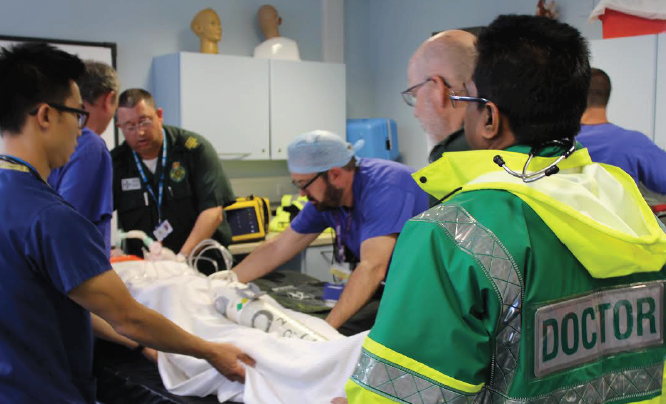

Emergency exercise: Testing skills under pressure
MEDICS based at Withybush General Hospital in Haverfordwest have taken part in a multi-agency simulation aimed at testing their clinical skills under pressure.
Dr Antony Mathew, an Emergency Department (ED) consultant at Withybush, led a team of ED and anaesthesia doctors and nurses during the exercise, which saw them working alongside paramedics from the Welsh Ambulance Service Trust and the Emergency Medical Retrieval and Transfer Service (EMRTS Cymru) critical care team.
The challenging scenario tested their skills in dealing with a ‘patient’ with a life-threatening head injury, who required life-saving resuscitation and time-critical transfer to University Hospital Wales, Cardiff, for neurosurgical care.
The aim of the exercise – which took place within the Withybush Clinical Skills Lab – was to reinforce EMRTS Cymru’s aim of developing an innovative healthcare culture, leading to more efficient teamwork, and improved clinical care for the most critically ill and injured patients across Wales.
Dr Mathew said: “It’s really important for us to be able to take part in exercises like these which help to improve the way we work within various hospital teams, and with retrieval services like EMRTS. It also helps us to understand the capabilities of EMRTS as well.”

With support from Medical Illustrator Steve Atherton, the training was recorded to allow medics to review real-time clinical handovers, resuscitation and retrieval processes using video playback. A debriefing session was subsequently led by Dr James Chinery, from EMRTS Cymru, in the emergency department.
Dr Chinery said: “As well as the emergency medical services we provide, EMRTS Cymru also aims to play an important role in supporting education and training in critical care across Wales.
“Working on a ‘live’ simulation with colleagues from Withybush and the Welsh Ambulance Service offered valuable realistic training which will enhance the skills and knowledge of everyone who took part. This will undoubtedly benefit the people of Wales and the quality of treatment that they receive.”
This is the third Insitu-Sim engagement event between EMRTS Cymru, WAST and NHS Wales. In the coming months, visits to Bronglais, Bangor, Rhyl and Bridgend are being actively planned.

Launched in April 2015, EMRTS Cymru provides pioneering emergency medical care across Wales. This includes pre-hospital critical care and time-critical transfers for all age groups. The Service is made up of consultants and CCPs (paramedics and nurses) who are able to deliver innovative emergency treatments previously not available outside of a hospital environment. The EMRTS medics travel on board the Wales Air Ambulance Charity helicopters and in a fleet of Rapid Response Vehicles which enable them to reach the scene of a medical emergency as fast as possible.
Dorian James, the Welsh Ambulance Service’s Locality Manager for Pembrokeshire, said: “While the exercise might look and feel very dramatic, the reality is that our crews and fellow clinicians encounter scenarios like this every day, all over Wales.
“These exercises are designed to strengthen inter-agency working and enable colleagues to deliver the best possible care to those who are unfortunate enough to need it. It also gives each agency a snapshot of one other’s capabilities and more importantly gives us all the chance to work together in a real environment.”



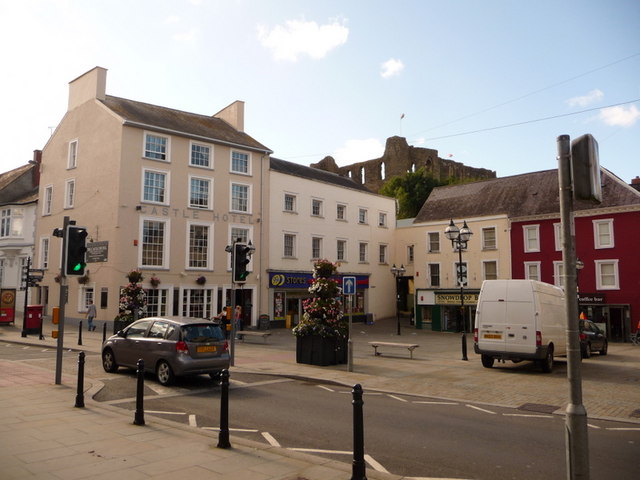
Police enquiries ongoing after incident in Castle Square
A MAN has been arrested after an alleged sexual assault of a child in Haverfordwest town centre.
Dyfed-Powys Police said officers were called to Castle Square at around 2:00pm on Tuesday (Apr 7).
The force said a 50-year-old man was arrested on suspicion of a sexual offence against a child and has since been released on conditional bail.
The child’s grandfather told The Pembrokeshire Herald that he saw what he believed to be inappropriate contact between the man and the child before members of the public intervened.
Dyfed-Powys Police said enquiries are ongoing.

A police spokesperson said: “Dyfed-Powys Police received a report of an alleged sexual assault of a child in Castle Square, Haverfordwest at around 2pm on Tuesday, April 7.
“A 50-year-old man was arrested on suspicion of a sexual offence against a child and has since been released on conditional bail.
“Enquiries are ongoing.”

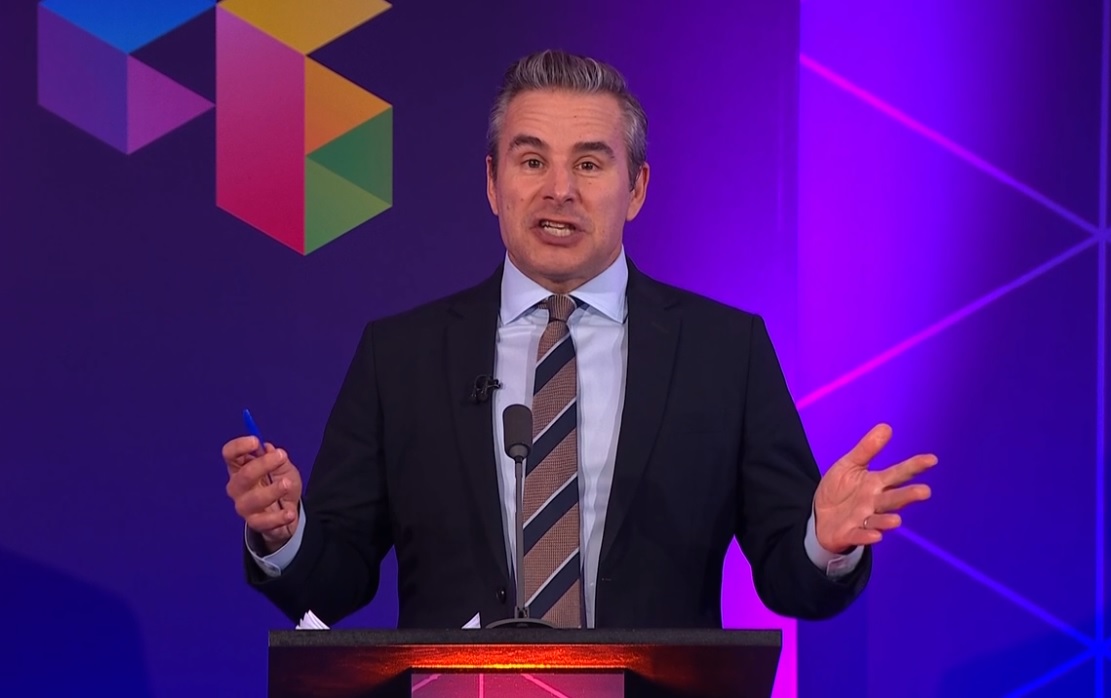
Audience in Haverfordwest pressed politicians on the NHS, tourism, education, AI and trust in politics
PEMBROKESHIRE was thrust into the heart of the Senedd election campaign on Wednesday night (Apr 8) when BBC Wales brought its Your Voice Live: Ask the Leader programme to Pembrokeshire College in Haverfordwest. Three party leaders — Darren Millar of the Welsh Conservatives, Jane Dodds of the Welsh Liberal Democrats and Rhun ap Iorwerth of Plaid Cymru — each took the stage in turn to answer questions from a live studio audience.
The programme gave each leader just under half an hour to respond to whatever the audience wanted to ask, and the result was a lively, often sharp exchange focused on issues with particular relevance in Pembrokeshire and west Wales.

Healthcare under pressure
The strongest theme of the night was the state of the NHS.
Darren Millar was first to face the audience and was immediately challenged by Chloe Richards, an NHS nurse, who said the service was at breaking point and asked what his party would do in its first 100 days to fix it.
Millar said Wales was facing a genuine health crisis and argued that a Welsh Conservative government would declare a national health emergency and increase bed numbers in hospitals and community hospitals. He said ambulances were being delayed because patients could not be moved through the system quickly enough, and insisted that restoring capacity was the immediate priority.

But the answer did not go unchallenged. Richards told him that, while she agreed the NHS was in crisis, she did not feel he had explained how the staff shortages needed to support more beds would actually be solved.
That set the tone for much of the evening. Other audience members raised the lack of integration between health and social care, long ambulance waits, and the pressure on frontline staff. One woman described waiting four-and-a-half hours for an ambulance for her mother while fearing she may have suffered a stroke.
Millar replied that the biggest problem facing ambulance crews was the inability to hand patients over quickly outside busy hospitals, and repeated his claim that Wales needed urgent action rather than small-scale reform.
Tourism and the cost of living
The debate then moved on to jobs, tax and the cost of living, with clear local relevance for Pembrokeshire.

Millar set out a tax-cutting programme, including a proposed cut to the basic rate of income tax, a cap on large council tax rises and opposition to future fuel duty increases. He said the money would come from cutting waste, reducing bureaucracy and scrapping what he described as unnecessary Welsh Government spending.
Tourism quickly became part of the conversation. Lavinia Bourne challenged him to say more about how communities dependent on tourism and farming would be supported. Another audience member cited a sharp fall in furnished holiday lets in Pembrokeshire and Carmarthenshire and asked directly whether the Conservatives would abolish the tourism tax.
Millar said they would. He argued that tourists were being unfairly blamed for wider housing problems and said overnight visitors were vital to local pubs, shops, restaurants and the wider rural economy. He made clear that he saw tourism as a positive force for Wales and not something to be punished.

Trust, accountability and Reform
The mood of the audience grew tougher as the discussion turned to trust in politics.
Martin Jones asked why communities should believe yet more promises before an election when earlier promises of investment had failed to materialise. Presenter Nick Servini also challenged Millar’s attempt to portray the Conservatives as outsiders in Welsh politics, pointing to the party’s long record in government at Westminster.
Millar responded that Wales had been held back by decades of Labour rule in Cardiff Bay, backed at times by Plaid Cymru and the Liberal Democrats, and argued that devolved powers were strong enough to deliver real change if used properly.
Reform UK also hung over the exchange. Asked why right-leaning voters should back the Conservatives rather than Reform, Millar said there was only one Conservative party on the ballot paper and attacked Reform over standards and credibility.
His final questions focused on younger voters. When first-time voter Joshua Robson asked what his number one priority for Wales would be, Millar said it was fixing the NHS first, then getting Wales back to work and improving the economy. Robson then pointed out that young people rarely spoke positively about the Conservatives, leaving Millar to end with a direct appeal for younger voters to join his party.
Jane Dodds puts social care at the centre
Jane Dodds began with a question from Gillian Davis, who raised the intense pressure on GP surgeries and asked what could be done about closures, shortages and poor access.
Dodds said GPs were on the frontline of healthcare and needed more support, more funding and more incentives to stay in local communities. But it was clear from the outset that her central argument was about social care.
She said social care was the key to easing pressure across the entire health system. In her view, too many people were ending up in hospital unnecessarily, while too many others were stuck in beds because there was no care package in place to get them safely home.
That point was reinforced by a retired NHS worker in the audience, who said too many people were being admitted to hospital when they did not need to be there, and too many others were staying in acute beds long after they should have gone back into the community.
Dodds said there were 1,400 people in Welsh hospitals who should not have been there that evening, but who were unable to leave because they were waiting for assessments or carers. She argued that properly funded social care would ease pressure at both the front and back doors of hospitals, reduce delays for ambulances and help tackle corridor care.
Pressure on GP surgeries
The discussion around primary care then took on a strongly local and practical edge.
Davis, who works in a GP surgery, said a team of about six receptionists had dealt with around 2,500 calls in one day after the bank holiday. She said that patients trying to get a telephone appointment with one GP partner were already being told to wait until June, with face-to-face appointments taking even longer.
It was one of the clearest illustrations of the strain facing frontline services and reflected what many in Pembrokeshire will recognise from their own experience of trying to access local healthcare.
Dodds accepted that social care alone would not solve the pressure on GP practices. She said more money had to go directly into front-line services, more GPs had to be trained and rural communities needed stronger incentives to attract doctors. She also acknowledged the abuse that some reception staff face from frustrated patients and said it was unacceptable.
Would voters accept a tax rise?
One of the most politically risky moments of the evening came when Dodds was pressed on how she would pay for her plans.
She accepted that the Welsh Liberal Democrats could be the only party in the election arguing openly for a tax rise. She said that if the Welsh budget did not provide enough money for social care, her party would support a temporary increase of one penny on income tax, ring-fenced specifically for that purpose.
Dodds defended that position by saying it was dishonest for parties to promise tax cuts while also claiming they could protect public services. It was one of the clearest dividing lines of the night, and it set her apart from Millar’s tax-cutting pitch.
AI, social media and schools
Dodds was then asked how Wales should prepare young people for a future shaped increasingly by artificial intelligence.
She took a generally optimistic view, saying Wales should not fear AI but should get ahead of the changes it will bring. She said the country should consider creating a centre of excellence on AI, with training and courses to help young people prepare for the jobs of the future.
But audience member Janetta Warden was clearly uneasy. She said she worried AI could become an extension of the damaging aspects of social media and that children were already relying too heavily on technology to do their thinking for them.
That led into a wider exchange about education. A school governor from Pembroke said he was less concerned about AI than about the basic standard of education in Wales, arguing that schools should be aiming for the top rather than falling behind.
Dodds agreed that education was fundamental to Wales’ future. She linked good schools to stronger communities, better jobs and the hope that more young people would be able to stay in Wales rather than feeling they had to leave.
Plaid Cymru challenged on local healthcare
Rhun ap Iorwerth’s appearance began with a question that could hardly have been more relevant to west Wales.
Gemma Davies asked about the long distances many patients have to travel for hospital care and what could be done for those who do not drive. Ap Iorwerth said the issue involved transport, local standards of care and the need to rebuild confidence in services closer to home.
He said Plaid Cymru wanted to reduce waiting times now while also building a more sustainable health service for the future, with stronger primary care through GPs, dentists, opticians and pharmacists helping people earlier before hospital treatment became necessary.
Withybush concerns raised
Davies then made the question far more personal and local.
Pregnant with her first child, she said she could choose to give birth in the midwife-led unit at Withybush Hospital, but that doing so brought real anxiety because the unit was not consultant-led and because of concern about what would happen if complications arose and urgent transfer was needed.
It was one of the most powerful moments of the programme because it went straight to a concern that has echoed around Pembrokeshire for years: whether local people can still feel fully confident in the care available close to home.
Ap Iorwerth responded sympathetically and accepted the importance of maintaining confidence in local health provision, while also recognising that some specialist services would always have to be provided elsewhere.
Confidence, jobs and a national partnership
As his section continued, ap Iorwerth touched on a wider range of Plaid Cymru priorities, including health, waiting times, education standards, better jobs and childcare.
When he was asked to boil it all down to one central aim, he said that if he became First Minister he would want to look back in four years and say he had helped raise confidence in what Wales could achieve together.
He said he did not believe in a government that imposed things on people, but in one that worked in partnership with them. Asked whether a Plaid Cymru-led government would serve only Plaid voters, he replied that it would govern for all of Wales, regardless of how people voted.
Audience keeps the pressure on
If the three leaders were the stars of the broadcast, the Pembrokeshire audience was the driving force.
This was not a tame or passive crowd. Questioners repeatedly challenged vague answers, rejected political slogans and dragged the discussion back to the realities of life in west Wales. Healthcare dominated, but the questions also ranged across tourism, rural economies, housing, trust in politics, education and the future facing younger generations.
Several of the strongest moments came not from the politicians but from audience members describing real experiences: an NHS nurse frustrated by broad promises, a woman left waiting hours for an ambulance, a GP surgery worker overwhelmed by thousands of calls, and an expectant mother worried about the risks of maternity care far from specialist support.
For Pembrokeshire viewers, that local dimension was what made the programme stand out. National party leaders were not debating in the abstract. They were being asked to respond directly to problems people here know well.
Second programme next week
The Haverfordwest debate was the first of two BBC Wales specials ahead of the Senedd election.
The second programme, featuring Welsh Labour, Reform UK and the Wales Green Party, will be broadcast from Llandudno at 8:00pm on Wednesday, April 15.
BBC Wales’ visit to Pembrokeshire College turned Haverfordwest into a stage for one of the key election debates of the campaign. Darren Millar made the NHS his central theme, promising a declared health emergency, more hospital beds and a strongly pro-tourism, tax-cutting agenda. Jane Dodds put social care at the centre of her argument, openly defending the possibility of a temporary tax rise to fund it and calling for more support for GPs, schools and communities preparing for technological change. Rhun ap Iorwerth was pressed hardest on local healthcare and distance from services, with Withybush Hospital emerging as a powerful local concern, before setting out a broader message about confidence, partnership and national ambition. Through it all, the audience ensured the debate stayed rooted in Pembrokeshire realities rather than party scripts.
The programme is available to view on Iplayer.
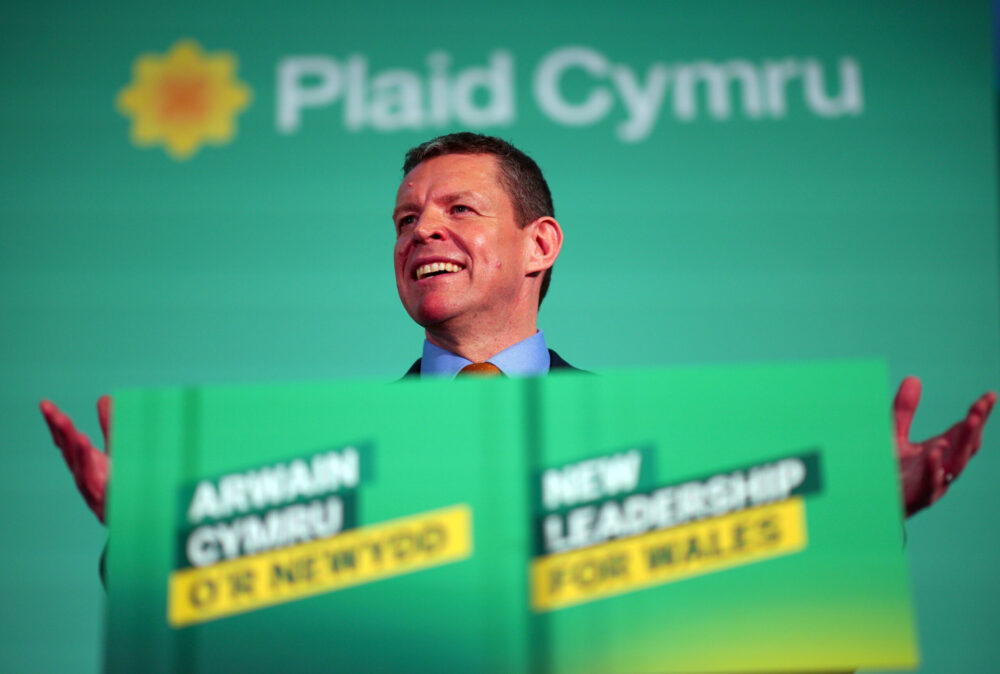
Party promises action on childcare, health, education and energy as Labour and the Liberal Democrats question independence and costings
PLAID CYMRU has launched its Senedd election manifesto with a pledge to offer what it calls a new direction for Wales, setting out policies on childcare, the NHS, schools, the economy and energy while also reaffirming its long-term belief in Welsh independence.
The party says its programme is designed to tackle pressures facing families and public services, while giving Wales a more ambitious sense of purpose after years of Labour-led government. Among its main promises are expanded childcare support, action to improve standards in education, measures aimed at strengthening the economy, and a greater focus on energy security and public benefit from renewable developments.
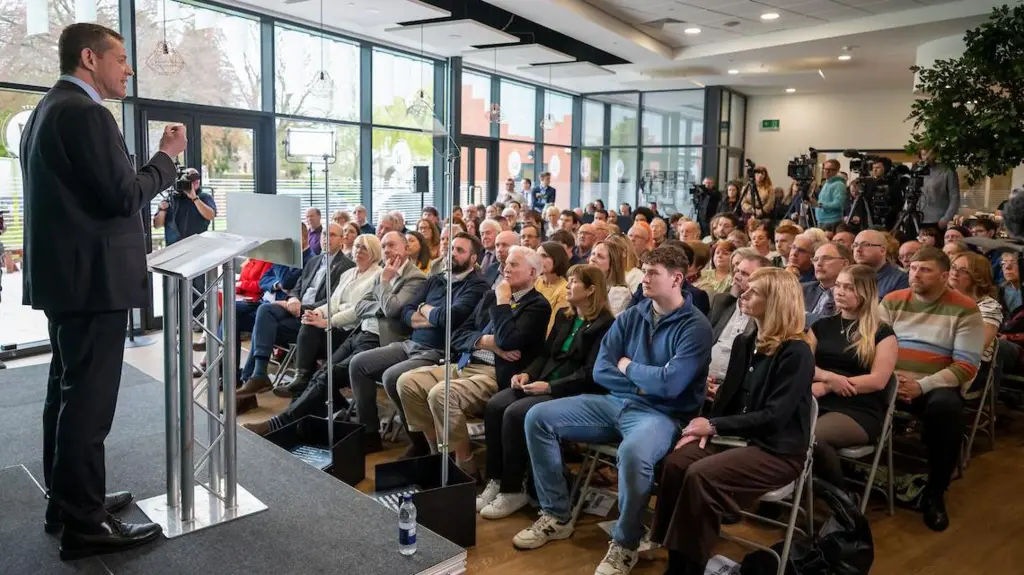
Plaid is presenting the manifesto as both a plan for immediate government and a statement of longer-term national ambition. The party argues that Wales needs practical change now, but also a serious debate about how the country is governed and what powers it should hold in the future.
A central part of Plaid’s pitch is childcare. The party says it wants to widen support for families with younger children, arguing that this would help parents return to work, ease household pressure and improve early years outcomes. It is also promising a stronger focus on schools and living standards, while seeking to position itself as the party of change at a time when many voters are frustrated with the status quo.
On the NHS, Plaid says Wales needs urgent improvement and a fresh approach to delivery. On the economy, it is promising policies intended to support Welsh businesses and keep more wealth within Welsh communities. On energy, the party is seeking to link net zero ambitions with greater control over how renewable power is developed, who benefits from it, and how the returns are shared.
Plaid’s manifesto also makes clear that the party remains committed to independence as its long-term constitutional goal. It says Wales should be able to shape its own future more fully and sets out further steps towards that objective, even though the main emphasis of the launch has been on day-to-day issues affecting voters now.
That stance has brought immediate criticism from Welsh Labour and the Welsh Liberal Democrats.
Welsh Labour accused Plaid of not being straight with voters, arguing that while the party has sometimes tried to place less emphasis on independence during the campaign, the manifesto itself clearly points towards it. Labour also challenged Plaid’s presentation of the election battle and questioned whether some of its headline pledges, especially on childcare, could realistically be funded.
The Welsh Liberal Democrats also attacked Plaid’s constitutional position, saying the party was not being honest about the cost of its push for independence. They argued that public attention and resources should remain firmly focused on strained services such as the NHS and schools.
Plaid, however, is likely to argue that its critics are trying to reduce a much broader policy platform to a single constitutional question. The party’s message is that its manifesto is not simply about independence, but about using Welsh government more boldly and more effectively to improve everyday life.
The political divide is therefore becoming clear. Plaid wants voters to see its manifesto as a serious programme for change, combining support for families and public services with a wider national vision. Labour and the Liberal Democrats, by contrast, are trying to persuade voters that Plaid’s plans come with unanswered questions over honesty, affordability and priorities.
With the Senedd election approaching, Plaid’s launch has opened one of the first major arguments of the campaign — not only about independence, but about who has the clearest and most convincing plan for Wales.


Crime2 days ago
Four youths stabbed at Tenby railway station as two arrested
British Transport Police lead investigation after serious disorder involving group of youths FOUR youths suffered stab wounds during a major...

News2 days ago
Major emergency response in Tenby after incident near train station
Witnesses report injuries as police and ambulance crews remain at scene on Warren Street POLICE and ambulance crews remain at...


News2 days ago
Haverfordwest County AFC faces High Court winding-up threat from HMRC
Chairman says issue has been dealt with, but winding-up notice is still listed ahead of High Court hearing HAVERFORDWEST County...

Local Government2 days ago
Food hygiene checks have not been carried out in parts of a Welsh county since 2019
FOOD hygiene checks have not been carried out in parts of a Welsh county since 2019 due an inspection backlog,...


Local Government2 days ago
Bridge works on Neyland-Burton road to continue into late April
Council says safety repairs remain on programme but traffic lights will stay in place as major bridge scheme moves into...

Charity3 days ago
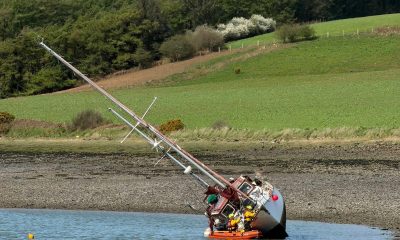
Angle RNLI answers string of call-outs across the Milford Haven Waterway
Volunteer crew launched for searches, police incidents, a medical evacuation and a grounded yacht during a busy spell from mid-February...

Charity3 days ago
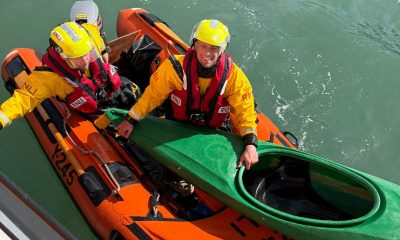
St Davids RNLI launches on Easter Monday after drifting kayak spotted off Solva
Missing vessel recovered near shore after coastguard confirms it had been reported lost days earlier ST DAVIDS RNLI launched on...

News3 days ago
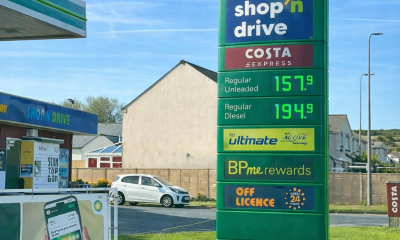
Diesel nears £2 a litre in Pembrokeshire as drivers scramble for cheaper fuel
Johnston forecourt hits 194.9p while wide price gaps and rush to fill up pile pressure on motorists across the county...

News4 days ago
St Davids Cathedral marked Easter Sunday with full day of worship
FROM dawn vigil to choral evensong, the cathedral welcomed worshippers for one of the most important days in the Christian...


Crime4 days ago
Neyland man spared immediate jail over aggravated vehicle taking
Defendant given a suspended prison sentence after magistrates heard the offence was serious enough to cross the custody threshold KRISTIAN...
-
 News6 days ago
Accommodation providers in Wales will be required to register under new law
-
Crime2 days ago
Four youths stabbed at Tenby railway station as two arrested
-

 Entertainment7 days ago
From Milford Haven to the world: The story of The Evolution Experience
-
 News4 days ago
Eluned Morgan targets Haverfordwest as Welsh Labour fights to hold its ground
-

 Crime7 days ago
Driver spared jail after crash killed young couple
-
 Community4 days ago
Johnston FC pays tribute after sudden death of Rhyan Nolan, 27
-
News2 days ago
Haverfordwest County AFC faces High Court winding-up threat from HMRC
-

 Crime7 days ago
Six-year jail term a warning to drug dealers, says police