


Politics
UK at serious risk of chronic democratic decline, ex-counter-extremism tsar warns


A FORMER counter-extremism chief warned the growing threat of online disinformation and misinformation creates a “permissive environment” for extremism to flourish in the UK.
Sara Khan, who led a 2024 review for the UK Government, gave evidence as the Senedd’s equality committee launched an inquiry into social cohesion on March 3.
Dame Sara raised concerns about an “evolving and accelerated extremism landscape”, with significant growth in the far right and extreme narratives becoming “mainstreamed”.
She said: “We’re seeing, I think, quite stark warnings about growing levels of disillusionment with democracy, distrust in our democratic institutions.”
She told the committee that trust in government is at an all-time low, with falling levels of trust in the police, media and other institutions.

Dame Sara warned: “I think the UK is at serious risk of chronic democratic decline. What I showed in my review was that Whitehall simply does not have a strategic approach to A, measure this but B, to also prevent and respond to it.”
Jenny Rathbone, who chairs the committee, asked what action, if any, the UK Government has taken or committed to in response to the review which focused on England.
Dame Sara said she has not had any response to the report’s 15 recommendations, which were published in March, warning of a lack of a counter-extremism strategy since 2021.
“That’s quite concerning,” she said. “Firstly because obviously there was the riots in the summer which affected 27 towns and cities, luckily not in Wales, but in parts of Northern Ireland and, of course, England, Many of which I predicted in my report.

“There have been many examples of similar but smaller disturbances, riots [and] violent protests that have broken out.”
The former counter-extremism commissioner told the committee that the summer riots should not have been a shock to Westminster, with many early warning signs flashing.
Dame Sara raised comments from Ken McCallum, MI5’s director-general, who warned of a three-fold increase in under-18s being radicalised over the past three years.

She said: “The scale and pace of threats … – whether it’s extremism, … technological threats – threats that are seeking to undermine social cohesion, they are moving at a rapid pace and I feel the UK Government doesn’t seem to understand the seriousness.”
Dame Sara questioned whether the Online Safety Act 2023 will effectively deal with disinformation because it falls into a “legal but harmful” category.
She said: “It will be very interesting to see how Ofcom responds … particularly now when, for example, Meta has said ‘we’re now going to remove all fact checkers’ … that inevitably will mean more disinformation online, so that challenge undoubtedly is going to get worse.”
Dame Sara raised the example of disinformation that Axel Rudakubana, the Cardiff-born perpetrator of the Southport stabbings, was an illegal immigrant.
She said disinformation on one far-right X account received about five million impressions within two hours of the attack and, according to a poll, people increasingly believe the false claims.
She pointed to last month’s BBC Wales investigation on Patriotic Alternative, a far-right group, which was involved in fuelling disturbances and anger surrounding Southport.
Dame Sara said: “You’re seeing what we call salad bar or pick‘n’mix extremism, which is where individuals pick and select from different extremist ideologies.”
She also raised the threat of “incel” (involuntarily celibate) extremism – “this really pernicious and violent hatred towards women by men”.
Dame Sara said: “I think we’re going to see worsening extremism, we are definitely seeing a growing acceptance of extremist narratives in a way that we weren’t seeing 20 years ago.”
She added: “The growing threat of disinformation, misinformation … create a permissive environment for extremism to flourish, as well as disillusionment with democracy.”
She told the committee: “There is no doubt that social media is playing a very critical role in undermining social cohesion but I would not put it to just social media alone.”
Dame Sara made a case for “deliberative democracy”, giving citizens a more meaningful role in public decision-making, with research showing it enhances public trust in government.
She said: “Why do people feel that their voices are not heard? The idea that people’s voices are only heard once every five years when there’s a general election – I don’t think that’s acceptable, I just don’t think that’s good enough.”



A CALL by a Pembrokeshire shooting club for more disability-friendly facilities has been given the go-ahead by county planners.
In an application to Pembrokeshire County Council, Haverfordwest Target Shooting Club, through agent Andrew Sutton Architecture, sought permission for an extension to existing target shooting club building at The Firing Range, Withybush Road, Haverfordwest to improve accessibility and internal facilities, together with associated landscaping works.
A supporting statement said: “The club’s own published history states it was founded in 1968, moved from the Drill Hall to the old wartime airfield butts at Withybush by the early 1970s, and had developed facilities over time, including the clubhouse by 1999. The established leisure/community use has existed on the site for a number of years and the proposal does not seek to intensify the core activity beyond that already authorised/established.”
It added: “The primary objective of the scheme is to improve inclusive access to the club’s facilities for disabled users and those with reduced mobility. The internal arrangement will provide adequate entrance and lobby space, clear accessible routes and appropriately designed sanitary accommodation, including an accessible wetroom/shower and separate WC.”
It also said accessible parking and surfacing designed to provide a firm, even, slip-resistant route from parking to the principal entrance.
It added: “The Equality Act 2010 places duties on service providers to make reasonable adjustments so that people with additional access needs are not placed at a substantial disadvantage.
“The proposal is therefore a positive enhancement to a community/leisure facility and supports wider policy objectives for inclusive environments.”
It went on to say: “The club operates within a highly controlled environment, and the proposed works will maintain and enhance safety and security measures.”
The application was conditionally approved by planners.


A HEALTH board has been criticised by Audit Wales after GP contracts worth more than £10m were awarded without sufficient due diligence checks.
Aneurin Bevan University Health Board allowed a GP partnership associated with eHarley Street Primary Care Solutions to take on eight GP contracts in south-east Wales, with a combined annual value of around £10.1m.
Audit Wales said the board should have carried out greater scrutiny before approving the arrangements, including checks on financial resilience, workforce plans, business risks and the partnership’s ability to manage several practices at once.
However, the watchdog found no evidence of fraud and noted the board was dealing with significant pressure in general practice, including vacant contracts and limited interest from other bidders.
The report said weaknesses in governance and scrutiny contributed to later disruption and uncertainty for patients and staff when problems emerged.
Concerns included financial and workforce pressures, unpaid invoices, and issues relating to tax and pension payments. Some contracts were later handed back, requiring the health board to step in to protect services.
Natasha Asghar MS, Welsh Conservative Shadow Cabinet Minister for Health and Social Care, said the findings were “deeply concerning”.
She said: “Patients and staff were left facing disruption and uncertainty because proper scrutiny was not carried out before these contracts were awarded.
“The Welsh Conservatives believe lessons must be learned to ensure robust checks are in place, protect frontline services and restore confidence in primary care across Wales.”
Aneurin Bevan University Health Board accepted the recommendations and said it had already strengthened its processes.
Audit Wales said the case highlighted the need for stronger checks before GP contracts are transferred, particularly when a single partnership is taking on multiple practices in a short period.

THE WELSH CONSERVATIVES have called on the Welsh Government to clarify whether new Equality and Human Rights Commission guidance will be implemented in schools across Wales.
Shadow education minister Sam Rowlands MS has written to Cabinet Minister for Education and the Welsh Language Anna Brychan MS following the UK Supreme Court ruling on the Equality Act.
Mr Rowlands said schools, teachers, governors and parents needed clear answers on how the guidance would apply in practice, including on single-sex spaces, safeguarding, changing facilities and sports participation.
He said: “Parents, teachers and pupils deserve clarity from the Welsh Government.
“Schools cannot be left in limbo while ministers avoid making a decision on such an important safeguarding and legal issue.
“The Equality Act applies in Wales, and schools now need clear guidance on what this means in practice.”
In his letter, Mr Rowlands asks whether updated guidance will be issued to schools in Wales, whether schools will be expected to amend existing policies, and what advice will be given to headteachers on safeguarding and compliance with the Equality Act.
He also asks whether the Welsh Government intends to diverge from the approach set out by the EHRC.
The letter says schools and parents require “clear and consistent guidance” to ensure the rights, dignity and safety of all pupils are respected.


Local Government2 days ago
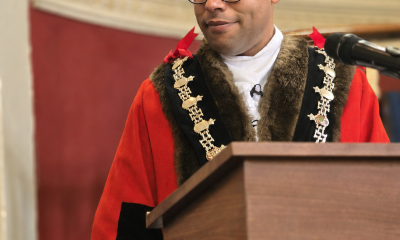
Youngest mayor in century takes office in Haverfordwest
Randell Izaiah Thomas-Turner makes history as town’s first millennial mayor and first from a diverse background HAVERFORDWEST has welcomed a...


Community2 days ago
Pembroke Fair set to return after last year’s success
STALL HOLDERS INVITED AS HORSE DRIVE PLANNED PEMBROKE Fair is set to return this weekend following the success of last...


Crime2 days ago
Neyland man accused of running over traffic worker’s foot
Jury hears conflicting accounts over roadworks incident in Milford Haven A NEYLAND man has appeared before Swansea Crown Court accused...


Community2 days ago
New pilot boat Llanion dedicated at emotional Milford Haven ceremony
Vessel dedicated at Mackerel Quay as Port marks major investment in safety and resilience MILFORD HAVEN’S new state-of-the-art pilot vessel...


Local Government2 days ago
Police and GoSafe to target speeding in Newport and Dinas
RESIDENTS’ concerns over speeding and anti-social driving have prompted planned enforcement action in the Newport and Dinas areas. Dyfed-Powys Police...


Community3 days ago
Safety first as Milford Haven’s new pilot boat marks end of troubled chapter
Gary Solomon, who was aboard St Davids during the 2016 collision, helped shape new self-righting vessel Llanion from conception to...


Crime3 days ago
Cocaine courier caught with £15,000 haul in Pembroke Dock
Defendant transported high-purity drugs from Cardiff to Pembrokeshire for £210 A PEMBROKESHIRE man caught transporting more than £15,000 of high-purity...


News4 days ago
Car bursts into flames near Redberth Croft as road closed after incident
Nobody injured after vehicle fire near A477 prompts emergency response A CAR was destroyed by fire near the entrance to...


News4 days ago
Welsh Labour unveils new Senedd spokesperson team
Ken Skates says Labour group will hold Plaid Cymru government to account WELSH Labour’s interim leader Ken Skates MS has...


Cymraeg4 days ago
Two new Milford Haven schools could be built and open by 2032
NEW SCHOOLS in Milford Haven won’t be built before 2030 at the earliest, and 2032 for a planned Welsh Medium...
-

 Community7 days ago
Surfers take sewage protest to Broad Haven beach
-

 Crime3 days ago
Farm owner in court after 26 dogs removed over welfare concerns
-

 News2 days ago
Paul Davies meets Openreach Cymru at the Senedd to discuss Full Fibre rollout
-
 Crime3 days ago
Tree surgeon sentenced for failing to provide breath test
-

 News16 hours ago
Watchdog criticises health board over £10m GP contract checks
-

 Crime3 days ago
Pembrokeshire teenager admits driving almost four times over drug-drive limit
-

 News3 days ago
Milford man admits handling stolen goods from three local properties
-

 Crime5 days ago
Builder jailed for £82,000 fraud affecting 18 victims