

News
Volunteer officers give up time to police during the pandemic

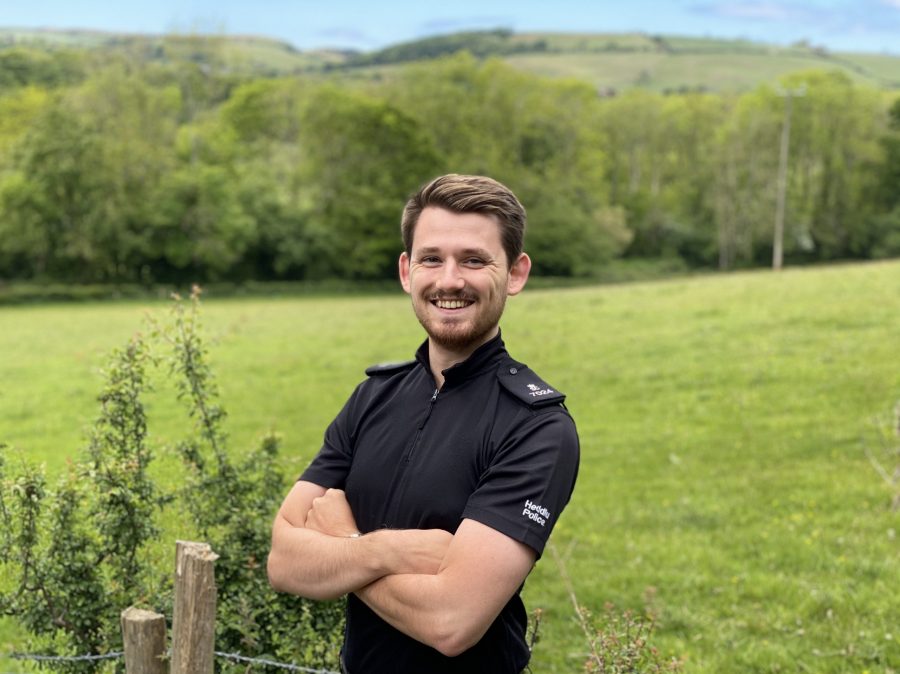
WHILE most people are staying home to stay safe, a small army of volunteers has been patrolling the streets to help protect communities.
Dyfed-Powys Police’s Special Constabulary has boosted numbers on the frontline, giving up hundreds of hours to support their regular colleagues in dealing with crime and enforcing new COVID-19 legislation.
Special Inspector Haydn Bradley-Davies is one of the 46 unpaid officers to step up during the pandemic, logging a mammoth 2,500 hours and carrying out 287 duties between them in April.
For S/Insp Bradley-Davies, 280 hours have been spent on duty since March 21 – five times the hours he would usually volunteer in a month.
Despite the added risks of patrolling and coming into contact with members of the public, he did not hesitate in offering his time. As he heads back to his regular full-time job, he’s given an insight into the challenges and rewards of being a Special during this extraordinary time.

He said: “I felt it was really important that I was helping the force out during its time of need, managing the new legislation and public order.
“When the new legislation was announced back in March, the Chief Constable sent a letter to Specials asking for assistance, and I felt it was essential that I helped out as much as I could.
“I knew the new rules would mean extra challenges for regular officers, who would be committed with road checks and additional patrols, as well as dealing with reports of crime. It was important to me to be able to do my bit to help my colleagues.”
Since March 21, S/Insp Bradley-Davies has attached himself to the Aberystwyth response code he usually volunteers alongside. When he would usually be working his desk job with the Welsh Government, he’s been responding to calls from the public, updating victims of crime on enquiries, protecting vulnerable people and implementing the new legislation.
Specials across the force have made seven arrests and assisted in 28, attended 25 domestic calls, carried out 656 vehicle stops, recorded five drug seizures and conducted 322 stop checks.
S/Insp Bradley-Davies said: “Enforcing the regulations has mainly involved educating members of the public in the Aberystwyth and North Ceredigion area of the new rules and their own responsibilities, as well as helping them understand what they should all be doing to protect themselves and others,” he said.
“This has been mainly via foot patrol in hotspots where there are likely to be more people, and also conducting static road checks to make sure people are only travelling for essential reasons.

“Alongside this, we’ve responded to high risk missing persons calls, assisted with scene guard following a sudden death, reports of criminal damage, burglaries and domestic incidents.”
Despite having four years of Special experience under his belt, this is the first time S/Insp Bradley-Davies has followed a shift pattern of six days on and four days off alongside his colleagues. And although he has made the most of the opportunity, he admits it hasn’t been without its challenges.
“I have worked with Code E for the majority of my specials career, so to be there with them every shift, seeing the challenges they face day to day, and to support them as much as I have was a huge pleasure,” he said.
“I’ve felt I have become so much closer to my colleagues over the past seven weeks. It’s very much like being part of a family being on shift, which has been the most enjoyable part.
“As someone who works and has always worked flexible working hours, I have found the move to a shift work pattern quite different. I’m used to the occasional night shift with my Special Constable role, but working a full pattern is challenging.
“I have enjoyed the experience, but I think it has shown me that I am not a shift person and I want to continue as a Special Constable working alongside my full time role.”
Dyfed-Powys Police currently has 88 Special Constables, who work across the force area. Many carry out the role alongside full time work and family commitments. For S/Insp Bradley-Davies and his colleagues, the opportunity to support his colleagues full time, on paid and unpaid leave, would not have been possible without the backing of their employers.
He said: “My employers at the Welsh Government have always been supportive of my role as a Special Constable and volunteering in general. Since the announcement of lockdown they have been even more supportive than normal, and allowed me to be released in order to assist Dyfed-Powys with their work.”
Special Chief Inspector Chris Evans thanked all Specials for the work they have carried out in recent weeks.
He said: “DPP Specials have been fantastic during this period. A huge thank you to them for all that they are doing.
“Thank you also to the employers of Specials who have supported their communities by allowing Specials to be on duty with the Employer Supported Policing scheme.”








NEW BBC documentary, Hunting the Spycammers, uncovers a dark online network in which footage filmed on hidden cameras in bedrooms, bathrooms, changing rooms and other private spaces is liked and shared.
Welsh presenter Jess Davies goes undercover to infiltrate this world and finds spycammers boasting about filming wives, girlfriends and strangers without their knowledge, including someone who plants spycams on a walking route to catch women stopping to wee in a bush where there are no public toilets.
Hunting the Spycammers will land on the BBC’s YouTube channels and BBC iPlayer on Wednesday 15 July. It is a co-commission by BBC Current Affairs and BBC Cymru Wales for BBC Three and is produced by Rock Paper Productions.
During her investigation, Jess discovers the range of spycam tech available – cameras disguised as everyday objects like pens, air fresheners and plugs. They’re cheap, easy to buy and almost impossible to spot. Jess speaks to one woman who went to the toilet while eating at a popular high-street restaurant chain and discovered a tiny camera hidden under the toilet seat that had the ability to livestream footage.
To get inside the world of spycammers, Jess teams up with investigative journalist Liam Connell. They discover a sprawling voyeur website – a hub from which users link to encrypted chat groups – and found evidence of illegal, non‑consensual footage being shared anonymously, including by users in the UK.
Posing as a new “spycammer” looking for advice, they infiltrate these groups from the inside. The evidence they uncover is deeply disturbing: perpetrators openly swapping stories of and tips on how to secretly film family members, partners, flatmates and strangers in private moments like sleeping, showering, changing – and boasting about the footage they captured.
For Jess, this investigation into spycams is personal: driven by her own experience of being secretly photographed naked while sleeping and the image shared on a private WhatsApp group. Speaking about what they discovered in their investigation, Jess said: “It’s a never-ending cycle of mass distribution of non-consensual content of women. It feels like these women are being hunted down and prayed upon.”
Jess confronts some of those who are behind the spycams to ask why they do it, if they know what they’re doing is illegal by capturing non-consensual footage, and whether they feel any sympathy for those who are being targeted.
Sian Harris, Commissioning Editor for BBC Cymru Wales, said: “Anyone who watches this film will relate to the horrific thought of being filmed by a secret camera in those private spaces: a bedroom, the shower, a changing room. Jess and Liam’s compelling investigation not only reveals this as a growing crime, but shines a light on the shady places where non-consensual videos are being traded and asks the questions we’d all want answers to about how and why is this happening.”
Hunting the Spycammers is produced by Rock Paper Productions, the Executive Producers are Cat Donohoe and Catherine Welton and the Producer/Director is Ally Roberts. The Commissioning Editors for the BBC are Rachel Platt and Sian Harris.

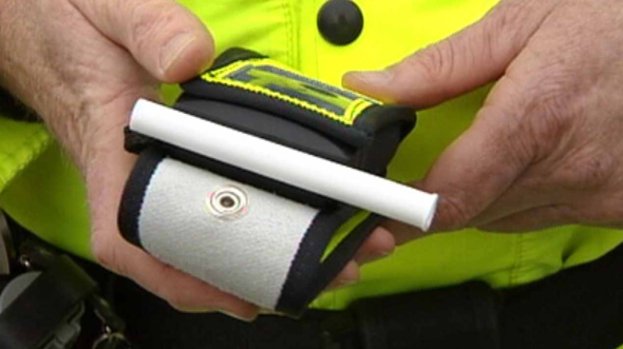
A HAVERFORDWEST man has been banned from the road for more than three years after admitting drug-driving.
Paul Smith, 39, of Cormorant Close, Haverfordwest, appeared before Llanelli Magistrates’ Court on Wednesday (Jul 8).
Smith pleaded guilty to driving a white Ford Transit on Crowhill Road, Haverfordwest, on January 25 with cannabis in his system.
The court heard that a blood test showed 17 microgrammes of Delta-9-Tetrahydrocannabinol per litre of blood, exceeding the legal limit.
Magistrates imposed an obligatory driving disqualification of 38 months.
Smith was also fined £120 and ordered to pay £85 prosecution costs and a £48 surcharge.
The court made a collection order, with deductions to be taken from benefits.
A HAVERFORDWEST man has admitted failing to provide a specimen and driving without insurance, but denies drink-driving and careless driving allegations.
Jack Mills, 26, of Flat 11, Glebe House, Winch Lane, Haverfordwest, appeared before Llanelli Magistrates’ Court on Wednesday (Jul 8).
The court heard that Mills admitted failing to provide a breath specimen for analysis at Cardigan on June 17, after being suspected of having driven a vehicle. He also admitted failing or refusing to provide a non-intimate sample for a Class A drug test while in police detention on the same date.
Mills also pleaded guilty to using a Ford Focus without third-party insurance at Bastleford, Rosemarket, on July 7.
He further indicated a guilty plea to fraudulently using a registration mark. The charge states that the Ford Focus’s correct registration was WL03 AHF, but it was being driven while displaying plates bearing the index T619 CKV.
However, Mills denied driving while over the alcohol limit at Rosemarket on July 7. The charge alleges he drove the Ford Focus on Bastleford, Rosemarket, with 44 microgrammes of alcohol in 100 millilitres of breath.
He also denied driving without due care and attention on the same road and date.
Mills was made subject to an interim disqualification and was remanded on unconditional bail.
He is due to appear before Haverfordwest Magistrates’ Court on September 7 for a two-hour trial.



Community2 hours ago
Haverfordwest Castle refurbishment reaches new heights as roof goes on
Major milestone reached in project to transform historic gaol building into flagship visitor attraction A MAJOR milestone has been reached...


Business1 day ago
Pembrokeshire lands £98m share of Wales marine energy boom
New industry report says county has received the second highest level of marine energy investment in Wales, supporting more than...


Crime1 day ago
First aider tells jury teacher was “crying, shaking” after classroom stabbing
A SCHOOL first aider has told a jury that teacher Vicki Williams was “crying, shaking” and in “complete shock” after...

Crime2 days ago
Teacher feared she was dying after Milford Haven classroom stabbing
A TEACHER allegedly stabbed in the head at Milford Haven Comprehensive School told a jury she feared she was dying...


News2 days ago
Farage to resign as MP and fight Clacton by-election amid finance row
NIGEL FARAGE has announced he will resign as MP for Clacton and stand again in the by-election he intends to...
Crime2 days ago
Teacher tells jury there were ‘no issues’ with accused pupil hours before ‘stabbing’
Milford Haven teacher gives evidence as trial of 15-year-old continues at Swansea Crown Court A TEACHER allegedly stabbed at Milford...


News3 days ago
Major incident stood down after fire at Impala Terminal in Milford Haven
Fire involved decommissioned oil tank containing residual crude oil and around 60 cylinders A MAJOR incident declared during a fire...

News3 days ago
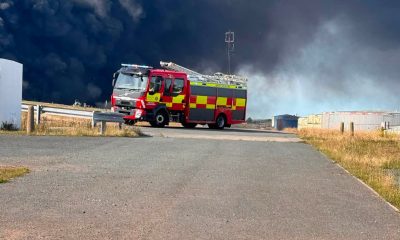
Large fire breaks out at Impala Terminal in Milford Haven
Black smoke seen for miles as emergency services respond to incident at former Puma Energy site A LARGE fire has...
Crime3 days ago
Prosecution outlines ‘planned attack’ as Milford Haven teacher stabbing trial opens
Jury hears teenager allegedly brought kitchen knife into school before teacher was stabbed in the head THE JURY in the...

Crime3 days ago
Boy, 15, denies attempted murder of Milford Haven teacher in ‘horrifying’ attack
Swansea Crown Court hears dramatic opening of trial over February stabbing A 15-YEAR-OLD boy from Milford Haven has gone on...
-
 Community6 days ago
Closure-threatened Stepaside school expected to remain open
-
 Education6 days ago
First Minister pressed on biological sex, additional learning needs, and NHS jobs
-

 Crime7 days ago
Llandeilo man accused of rape sent to Crown Court
-
 Community7 days ago
Saundersfoot Harbour regeneration project wins national planning award
-
 Education6 days ago
Education secretary vows to tackle ‘root causes’ of antisocial behaviour in schools
-

 Education6 days ago
Ysgol Glannau Gwaun celebrates prestigious Gold Active Travel award
-
News3 days ago
Large fire breaks out at Impala Terminal in Milford Haven
-

 Health6 days ago
NHS at 78: A moment to give back to the service Wales helped create