


Education
School defends Welsh-medium homework policy



Better for kids?: Welsh-medium schools
PRIMARY school children, whose first language is English, and who attend Welsh-medium schools are less likely to be top performers in core subjects. The figures were obtained by the BBC Wales show, released after a Freedom of Information request and were taken from a comparison of 25,000 pupils. The research is based on looking at how well 11 year olds are doing in English, Maths and Science, as well as first language Welsh in Welsh schools. The information covered 87% of children in Welsh-medium schools and 78% of pupils from English-medium schools.
Three groups of children were compared:
• Pupils in English-medium schools
• Pupils in Welsh-medium schools from Welsh-speaking homes
• Those in Welsh-medium schools from English-speaking homes. Better news was that, overall, when English is taken out of the equation, Primary school children from Englishspeaking homes who go to Welshmedium schools are less likely to underachieve than pupils in Englishmedium schools. Dr Mirain Rhys, research associate at Wales Institute of Social & Economic Research, is an expert on the issue and told The Herald: “Many of the concerns raised by English-speaking parents of pupils in Welsh medium schools were about children being able to complete their homework and having support from their parents. It’s an area which needs more research. When they don’t speak Welsh themselves it’s quite a worry. I know the Welsh Government and the Welsh Language Board used to have a helpline to helping pupils and parents – it’s initiatives like that that can help.”

Gwennol Ellis, head of Ysgol Bro Cinmeirch, Denbighshire (a welsh medium school), said: “We invest heavily in staffing. Through singing and oral work they become fluent in a year. The work sent home is to reinforce class work, and notes go home in English. Children are able to get on with their own homework. The aim is to get them to speak Welsh as if they were first language speakers. They are encouraged to speak Welsh with each other” Carla Bartlett, head of Welsh at Ysgol Gyfun Cymer, Rhondda, where 99% of pupils were from English speaking homes, also commented on the issue of homework being sent home in Welsh, telling The Herald: “I came from a background where my parents didn’t speak Welsh. I understand the parents can’t help with the language side, so homework is set appropriately. At the end of the day, the homework is for the children and not the parents.”
This newspaper was keen to find out how a local Welsh-medium school, Ysgol Glen Cleddau in Haverfordwest, managed pupils from English speaking backgrounds, which is 95% of their full register. Speaking exclusively with The Herald was head teacher, Mr Aled Davies who explained: “All subjects (other than English) are taught through the medium of Welsh, although aspects of subjects in Key Stage 2 (KS2) might be completed through the medium of English; extended pieces of writing in history ( e.g a letter or some narrative), the occasional science experiment, some problem solving in maths. Pupils are able to switch from one language to the other with ease which is what bilingualism is all about. By the end of KS2 they are able achieve good standards in both languages”. Mr Davies commented on the issue of homework in Welsh: “Homework would usually include; spelling lists, some maths (which would mainly be number work where either language could be used), reading in both languages, and work in log books (the Log Book includes little projects which would involve research in books or on the internet and parents would be able to assist and the recording might be through the medium of Welsh or English). Obviously we’d encourage parents to become involved in their children’s learning and we’d ensure that there was enough English medium homework available to enable them to do so”. He went on to discuss pupils’ access to English language skills acquisition, saying: “Pupils achieve high standards in English by the end of their time in this school. English is the mother tongue of most of our pupils, and they get ample time to develop their English oral skills outside school; at home, in sports clubs, with friends and relations.” “These skills would be honed in English language lessons at school; discussions, debates, dialogues, drama work etc. Of course they’re allowed to use conversational English (in and around school), but obviously they’re encouraged to speak Welsh. It is vitally important that pupils speak correctly in both languages. Their English and Welsh oral, reading and writing skills are developed side by side in school, and we encourage excellence in both languages. That is the essence of bilingualism.”

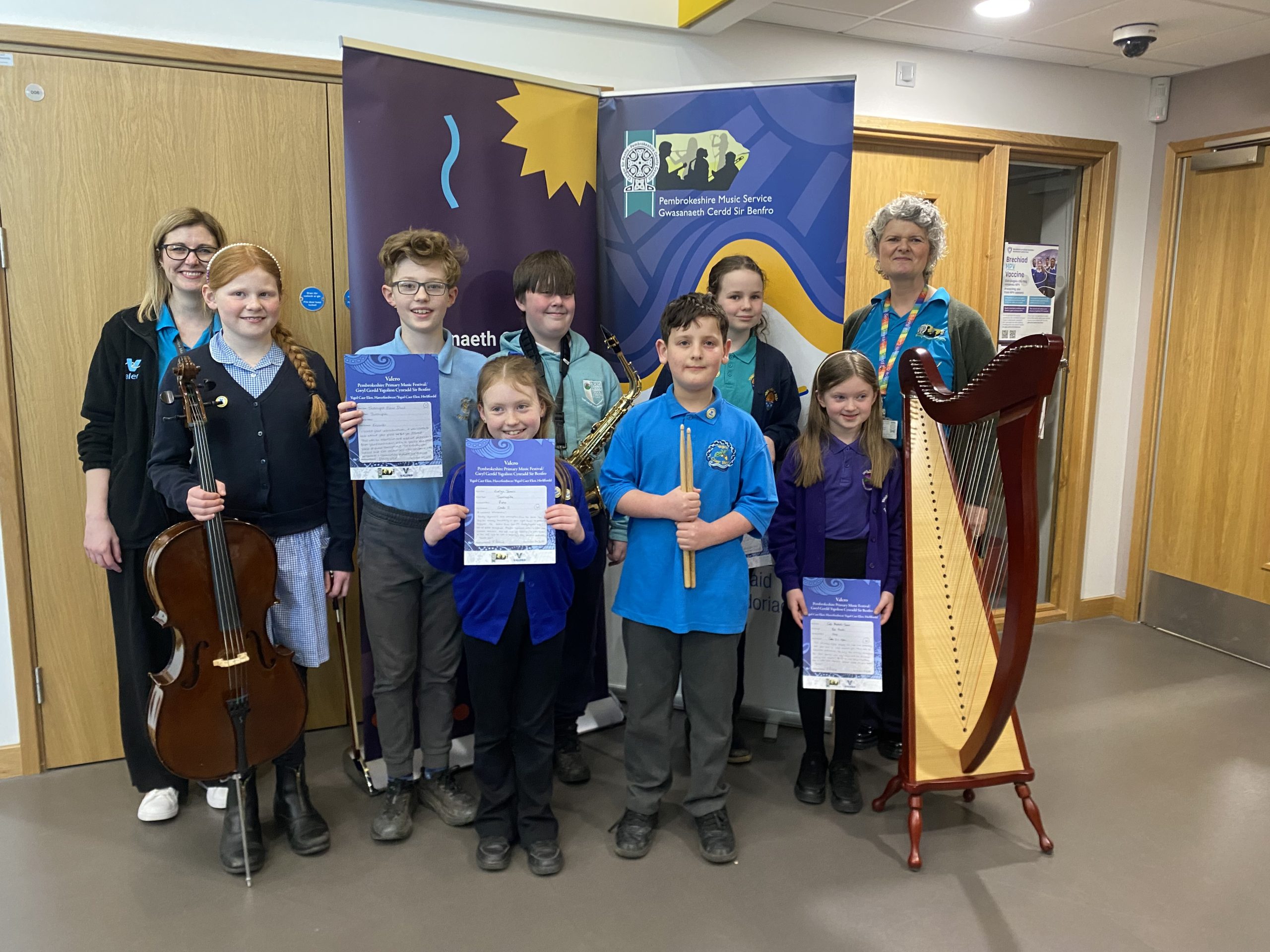
A RECORD number of young musicians from across Pembrokeshire took part in this year’s Valero Primary Music Festival, with nearly 600 pupils showcasing their talents.
The event, organised by Pembrokeshire Music Service, was held at Ysgol Caer Elen on Saturday (March 14), drawing a large and enthusiastic audience.
The festival’s overall winner was Hafan y Môr pupil Carys Meiring, who impressed judges with a standout trombone performance of Let’s Call the Whole Thing Off. She had earlier secured victory in the open brass class.

Young talent shines
The afternoon Spotlight concert opened with an energetic performance from the county’s Second Steps ensembles, bringing together young players from across Pembrokeshire.
Winners from the day’s open classes also took to the stage, highlighting the depth of musical talent across local schools.
Osian Kite, of Roch CP School, won the open woodwind class with a performance of Sentimental Serenade on alto saxophone.
Cadi Marshall-Jones, from Ysgol Bro Preseli, claimed the open piano and harp title with Over the Sea to Skye, while Roch CP School cellist Mari Broomfield won the open strings category with Vamoose.
In percussion, Ysgol Caer Elen’s Aled Hooper secured first place in the open class with a drum kit performance of Are You Gonna Go My Way.
The open ensemble prize went to Tavernspite pupils Finn Hickman and Evelyn James, whose piano duet of Handel’s Passacaglia impressed both judges and audience.
Building confidence through music
Head of Pembrokeshire Music Service, Philippa Roberts said the festival continues to play a vital role in developing young performers.
She said: “Pembrokeshire Music Service is proud to deliver the Valero Music Festival, offering an exciting opportunity to nearly 600 young performers from across the county.
“Providing children with the chance to perform, shine, and receive supportive feedback from professional musicians is incredibly powerful and helps build lasting confidence.

“In line with the Music Plan for Wales, we remain committed to creating meaningful musical experiences for children throughout Pembrokeshire. Our sincere thanks go to Valero for their fantastic support.”
The festival forms part of a wider effort to promote music education across Wales, encouraging participation and nurturing the next generation of performers.
Photo caption:
Talented performers: Overall winner Carys Meiring is pictured with fellow category winners and organisers (Pic: Pembrokeshire Music Service).
Extraordinary council meeting will consider objections before final ruling
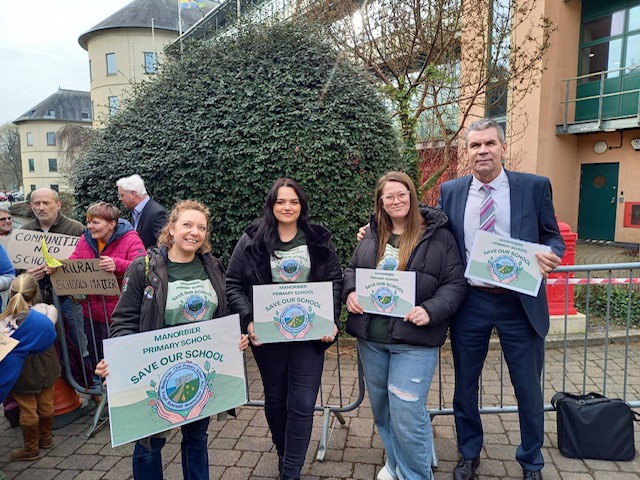
THE FUTURE of two Pembrokeshire schools will be decided in June, despite councillors already backing plans in principle to close them.
Pembrokeshire County Council has confirmed that an extraordinary Full Council meeting will take place on Monday (June 15) to consider objection reports relating to the proposed discontinuation of Ysgol Clydau and Manorbier Church in Wales VC School.
The meeting represents the final stage in the statutory process, where councillors will decide whether to proceed with closure after reviewing formal objections.
The Herald understands that the extraordinary session has been called because the timetable for the proposals does not align with regular council meeting dates.
Last chance to overturn decision
Although councillors have already voted in favour of closure in principle, the June meeting is not a formality.
Campaigners still have a narrow window to influence the outcome, with councillors able to change their position after considering objections and any new evidence.
In rare cases, proposals have been halted or reversed at this final stage — particularly where strong community opposition or concerns over the accuracy of data have been raised.
However, the earlier vote means the schools remain at significant risk, with the council having already indicated its preferred direction.
Political pressure building
The confirmation comes amid growing community concern and a mounting campaign to save Ysgol Clydau.

Campaign group Save Ysgol Clydau – Cadw Clydau yn Gadarn has described the situation as a “critical moment,” urging residents to challenge political parties ahead of the upcoming elections.
Supporters argue that the future of the school is closely tied to the survival of rural communities and the Welsh language.
The group has also thanked councillors — particularly members of the Independent group — for their support.

Decision looming
The June 15 meeting is expected to draw significant public attention, with strong attendance likely as councillors prepare to make a final, legally binding decision.
If approved, the proposal would result in the closure of both schools.


A PEMBROKESHIRE school and the council are providing reassurance after parents raised fears following an announcement that a Sikh pupil would be allowed to wear a ceremonial dagger for religious reasons.
An email sent to parents from the school’s headteacher said: “We have recently welcomed a Sikh family to our school community.
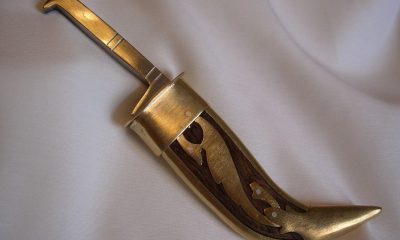
“As part of their faith, practising Amrhitrdhari Sikhs, over the age of 14, are required to wear certain symbolic items, one of which is the kirpan. In this case, the learner is wearing a small, sheathed ceremonial kirpan (that is secured and cannot be unsheathed). It is worn purely as a religious symbol and not as a functional item.
“We have taken appropriate steps to ensure that this is managed safely and in accordance with our safeguarding responsibilities, the laws of the United Kingdom, and our commitment to respecting the religious beliefs of all learners.
“We will continue to monitor this sensitively and appropriately.”

The kirpan is a mandatory article of faith worn by initiated (Amritdhari) Khalsa Sikhs, representing a commitment to spirituality, justice, and defending the innocent. Often a small steel or iron blade, it is one of the five Ks worn at all times by Sikhs.
It has been described as not a weapon of violence but a ‘weapon of grace,’ a symbol of courage, self-defence, and the duty to protect the weak and uphold justice.
Concerns have been raised by parents on social media, with one saying her daughter was made to take off her false nails she had got done for her birthday as the school classed them as “a dangerous weapon,” saying she refused and got sent home.
Another said: “Allowing that in a school? They planning on having a copper follow them everywhere every school day? Surely they cannot walk around with a blade in school, religious or not surely that’s not okay! I have absolutely no issue with any religion at all but that is dangerous for people, they could hurt someone whether accidental or intentional.”
The school’s uniform policy stresses: “Sikhism requires that a baptised Sikh should carry a comb (Khanga); steel bracelets (Kara) and a short sword or dagger (Kirpan). These additions to the jewellery / accessory rules are permitted, but any kirpan must be ceremonial: that is, safe and incapable of being used as a weapon.”
A Pembrokeshire County Council spokesman said: “The council is aware of the issue and provided guidance and advice to [the school].
“The school will follow their safeguarding process as outlined in the letter to parents and the council is satisfied that appropriate measures are in place at the school.”



News7 hours ago
St Davids Cathedral marked Easter Sunday with full day of worship
FROM dawn vigil to choral evensong, the cathedral welcomed worshippers for one of the most important days in the Christian...


Crime9 hours ago
Neyland man spared immediate jail over aggravated vehicle taking
Defendant given a suspended prison sentence after magistrates heard the offence was serious enough to cross the custody threshold KRISTIAN...

Health1 day ago
Crumbling NHS faces £1bn repairs bill in Wales
Senedd election promises collide with the harsh reality of ageing hospitals, fire safety concerns and a maintenance crisis stretching across...


News1 day ago
Emergency services respond to incident in Haverfordwest town centre
EMERGENCY SERVICES were called to an incident in Haverfordwest town centre on Saturday morning (Apr 4), with police and ambulance...
News1 day ago
Teenager intervenes after bridge incident
A TEENAGER was left shaken after stepping in to help a young woman in distress on Clay Lanes bridge in...


Crime3 days ago
Driver spared jail after crash killed young couple
A PEMBROKE DOCK driver who caused the deaths of a young couple in a road crash has been given a...


Entertainment3 days ago
BBC unveils major new Welsh dramas with Tenby set for prime-time spotlight
New crime series Old Town Murders and supernatural thriller The Witch Farm will both be filmed and set in Wales...


Health3 days ago
No jobs for new paramedics in Wales as graduates told to apply for technician roles
Students trained at public expense urged to take lower-grade jobs as anger grows over NHS workforce planning NEWLY qualified paramedics...


News4 days ago
Health minister refuses to act on Withybush despite 15,000-signature petition
Senedd pressure grows as Welsh Government declines to intervene over surgery fears THE WELSH GOVERNMENT has refused to step in...

Business5 days ago
Fishguard to Wexford rail tunnel plan backed by Elon Musk firm
Six-hour London to Dublin service proposed in £32bn project ahead of Senedd election PLANS for a rail tunnel linking west...
-

 News2 days ago
Accommodation providers in Wales will be required to register under new law
-
Business5 days ago
Fishguard to Wexford rail tunnel plan backed by Elon Musk firm
-

 Entertainment3 days ago
From Milford Haven to the world: The story of The Evolution Experience
-
Entertainment3 days ago
BBC unveils major new Welsh dramas with Tenby set for prime-time spotlight
-

 Charity6 days ago
RSPCA calls for stronger animal welfare measures as Welsh Labour launches manifesto
-
 Tourism7 days ago
Moving to Australia from the UK: What you need to Kknow
-
 Community7 days ago
Pembrokeshire school allows Sikh pupil to wear Kirpan
-
 News6 days ago
Labour promises 48-hour GP access as manifesto faces questions over delivery