


News
Mustang opens new construction hall


 ECONOMY Minister Edwina Hart opened the Construction Hall at Mustang Marine, Pembroke Dock as part of the planned expansion of the company last Monday.
Alongside the opening of the hall and unveiling of the plaque, Mustang Marine
also displayed their latest multi-purpose vessel, the SMV24 by Supacat, which is still being built and is the first of its kind. The main purpose of the vessel is to maintain wind farms at sea.
Kevin Lewis, managing director of Mustang Marine, told The Herald the early history of his company: “When I was around 15 years of age, I stood in a graving dock with my father where the last ships to be built in Pembroke Dock were. I told him that that was the business I wanted to be in.
“After being in the Royal Navy, I set up Mustang Marine in 1984 with a specific purpose of building boats, and here we are 30 years later, building boats that are big an substantial. The desire has almost been fulfilled.

“Mustang Marine has come to life over the years, and we now employ over 130 people. We have a desire to grown, though finance is tricky. We looked for partners to promote and expand, though we didn’t have to look far. The Milford Haven Port Authority joined with us and used their facilities in helping us expand.”
Mr Lewis added: “I would like to thank the team at Mustang. They are a very good and experienced team. They’ve put a lot of effort in”.
Cllr Jane Philips, mayor of Pembroke Dock, said: “I see this as job opportunities for Pembroke Dock and for the people of Pembrokeshire – this is what we need”.
All the digitaries were given a tour around the SMV24, where a Mustang Marine spokesman told the Herald: “We started it in February, but it still needs some work with the electrics, though it will be in the water between November 25 and November 28. This is the first of it’s kind and a letter of intent has been written to build another nine. The whole ship was done in house with our own local labour. We train the boys ourselves, who are all committed.”

The Herald was given an exclusive tour around the yard at Mustang Marine, where were shown all workshops and the slipway.
Robert Humphreys, Operations Director at Mustang Marine, told The Herald: “The slipway was extended the same time as the new fabrication. This is where we are building a 36ft Thames River cruiser. The slipway is a great place to build larger vessels as it’s fully covered and directly onto the water.
“We want the opportunity to build many more vessels than we currently are. We can’t build more than what we have done so far, as they take up so much time and space – we haven’t got the room to do it.”

The slipway at Mustang Marine is part of the original dockyard, dating back to the 19th century.
Mr Humphreys continued: “Here we can turn hard metal into complex shapes and do it within strict tolerances and exact standards. You can see the complexity of it just by looking at it. It’s a highly skilled and specialised thing to do.”
Mr Humphreys showed The Herald a number of workshops at Mustang Marine including Workshop 1, where the hull and first tier of the SMV24 was built.
“It took up the entire shed,” Mr Humphreys told The Herald. “We couldn’t have built anything bigger, though having this facility will help us to build bigger things.”


WELSH colleges are changing the way they tackle misogyny, harmful online behaviour and peer-on-peer abuse through an international project backed by Taith funding.
The collaboration, led by ColegauCymru, links further education colleges in Wales with partners in Canada to share practical approaches to promoting respectful relationships and improving learner wellbeing.
The project was developed following concerns highlighted by Estyn about peer-on-peer sexual harassment in further education settings.
It also supports Welsh Government priorities around tackling gender-based violence, improving learner wellbeing and creating safe, inclusive learning environments.
Five Welsh further education colleges worked with five colleges and universities in Canada through an international Community of Practice, allowing staff to share experiences, develop ideas and look at new ways of addressing common challenges.
Knowledge-sharing visits between Wales and Canada focused on issues including misogyny, harmful online content, peer-on-peer abuse and the need to engage young men in open conversations about relationships and masculinity.
One of the main lessons from the project was the importance of involving young men directly in discussions about healthy relationships, online influence and harmful attitudes.
The work has also led to wider partnerships with She Is Not Your Rehab, a New Zealand-based anti-violence movement, and Our Voice Our Journey, a youth-focused social impact organisation.
Working with these organisations, ColegauCymru delivered regional sessions in North and South Wales to help colleges promote respectful relationships and challenge misogyny.
At one event at Cardiff City Stadium, around 400 young men from across South Wales took part in discussions led by international speaker Matt Brown on misogyny, masculinity and respectful relationships.
Staff involved in the project say it has already influenced how colleges approach learner wellbeing, with greater emphasis on training, early intervention and embedding conversations about healthy relationships into college life.
Siân Holleran, International Project Manager at ColegauCymru, said: “Taith funding has been critical in enabling us to connect with international partners and bring global expertise into a national priority for Wales.

“This has created space for honest conversations, practical solutions and lasting change for both staff and learners, while also positioning Welsh colleges as leaders in addressing these shared challenges internationally.”
Welsh and Canadian participants also delivered a joint workshop at the ColegauCymru Annual Conference, where they shared recommendations and discussed future priorities for the sector.
Susana Galván, Executive Director of Taith, said: “This project reflects Wales’s growing role as a confident, internationally engaged nation. Organisations across Wales are using international partnerships to address shared challenges while developing approaches shaped around the needs of Welsh learners and communities.
“Through Taith, we are supporting a uniquely Welsh approach that combines global partnerships with a strong focus on equity, wellbeing and inclusion; helping ensure that international learning directly benefits people across Wales.
“It also demonstrates the growing international interest in learning from Wales, as we share our expertise while working together to address shared global challenges.”
ColegauCymru has since secured further Taith funding to expand the work, including the development of new bystander training for learners and staff across the further education sector in Wales.
The organisation says the next phase will help ensure the impact of the international collaboration continues to grow across Welsh colleges.

TWO brothers have been found guilty of causing the death of a well-known dad and rugby coach from Powys after their ‘reckless’ race ended in a head-on collision.
Abubakr Yusaf and Umar Yusaf denied that the manner of their driving was responsible for the death of Rhys Jenkins, and the serious injury of his son, however the strength of evidence gathered by Dyfed-Powys Police proved the brothers were to blame.
In an eight-day trial, Mold Crown Court heard how Abubakr, 30 and Umar, 34 were driving home from Aberystwyth to Manchester in separate cars when they started to race one another.
Witnesses said they had seen the brothers complete highly dangerous overtakes along the stretch of road, driving at excessive speed, tailgating, and flashing their headlights at other cars in an attempt to get past.
Shortly after both brothers took a bend in the road on the wrong side of the carriageway, Abubakr’s BMW collided head-on with a Toyota being driven by Rhys Jenkins on the Belan straight.
As other drivers stopped to help the dad and his son, both the brothers fled the scene in Umar’s Audi S4.
Emergency services attended, and Mr Jenkins was tragically confirmed to have died from catastrophic injuries. His nine-year-old son, who had been a passenger in the car, was air lifted to hospital, where he spent 10 days being treated for his injuries.
Within 40 minutes of the collision, 34-year-old Umar Yusaf drove back to the scene and told a PCSO the person responsible was with him.
The brothers were arrested on suspicion of causing death by dangerous driving, and an investigation was launched by Dyfed-Powys Police’s Serious Collision Investigation Unit.
Statements from a number of witnesses described the brothers’ manner of driving as ‘reckless’, ‘erratic’, and consistent with racing. It was determined that while Umar’s car was not directly involved in the collision, the ‘competitive’ nature of his driving with his brother contributed significantly to the fatal incident.
The brothers were charged with causing death by dangerous driving, causing serious injury by dangerous driving, and failing to stop after a road traffic collision.
Abubakr Yusaf was also charged with causing death while uninsured, drug driving and failing to provide a specimen for analysis.

Abubakr Yusaf was today found guilty of causing death by dangerous driving, causing serious injury by dangerous driving and causing death whilst uninsured.
Umar Yusaf was found guilty of causing death by careless driving and causing serious injury by careless driving.
They will be sentenced on Monday 27 July 2026.
Speaking about the impact of Mr Jenkins’ death on his family, PS Sara John from the Serious Collision Investigation Unit said: “The tragic and wholly preventable death of Rhys Jenkins has caused his two young boys and wife to suffer immeasurable grief.
“Today’s verdict has proven that Abubakr and Umar Yusaf are directly responsible for causing the death of Mr Jenkins, seriously injuring his young son and bringing complete devastation to their family.
“Both defendants have denied responsibility from the outset, despite overwhelming evidence that they were racing each other in a highly dangerous manner.
“Our investigation has been intensive and thorough, and I would like to thank the members of the public at the scene, and those who came forward with information to support the investigation and court proceedings that followed. Their input was paramount to the guilty verdict delivered today.
“I’d also like to thank all the officers and staff involved for their dedication to the case and ultimately securing this result.
“More importantly, I would like to commend the bravery and dignity shown by Rhys’s family during our enquiries and the criminal justice process – the strength they have shown having to sit through the trial listening to the evidence can only be described as extraordinary.”
Rhys’s wife, Carrie Jenkins, said: “Following the conviction, I would like to thank the court, the jury, the CPS, police and all those involved in this trial, including the many witnesses who came forward.
“The loss of Rhys in such an unexpected and unnecessary way has been devastating, but our focus as a family has been to rebuild our lives, and to make the most of each day, as Rhys would have wanted, with the support of our friends and community.
“I hope the publicity surrounding the Crown Court case highlights to others the dangers of driving at speed, and acts as a reminder that we all have a responsibility when we get behind a wheel.”
Joanne Brine, solicitor for Carrie Jenkins said: “This has been an unimaginably distressing time for Mrs Jenkins, coping with a life-changing situation which she has handled with courage and grace as she, her children and their wider family have come to terms with the devasting loss of a much-loved husband and father,
“Nothing will ever heal the overwhelming pain of his loss, but they continue to navigate their future in the best way possible, with the invaluable support of their wider community.
“We will continue to support the family as they pursue civil redress for the actions which lead to Rhys’ untimely death.”

DEFENCE SECRETARY John Healey has resigned in a major blow to Sir Keir Starmer, warning that the Government’s defence spending plans risk leaving Britain less safe at a time of growing international danger.
In a sharply worded resignation letter to the Prime Minister, Mr Healey said he could no longer support the Government’s Defence Investment Plan, arguing that the financial settlement failed to provide the Armed Forces with the resources needed to meet the threats facing the UK.
His departure is one of the most serious resignations of Sir Keir’s premiership and comes ahead of the expected publication of the long-delayed defence plan, which is intended to set out how Britain will rebuild military capability, improve readiness and respond to growing threats from Russia, instability in the Middle East, and wider global insecurity.
The row centres on the pace and scale of defence spending. Sir Keir has pledged to increase defence spending to 2.5% of GDP by 2027 and 3% by 2034, but Mr Healey had pushed for a faster rise, arguing that the pressure on the Armed Forces is immediate and cannot be pushed into the next decade.
The former Defence Secretary is understood to have wanted a stronger commitment to reach 3% by 2030, amid warnings that the Army, Navy and RAF face major gaps in equipment, personnel and readiness.
In his letter, Mr Healey criticised both Number 10 and the Treasury, saying the Prime Minister had been unable, and the Treasury unwilling, to provide the funding needed. He warned that the proposed settlement would force unacceptable choices, including risks to operational readiness and the safety of service personnel.
A resignation with real force
Cabinet resignations are not unusual in Westminster, but this one is different.
Mr Healey was not regarded as a loose cannon or serial rebel. He was seen as a loyal, experienced and serious figure, closely associated with Labour’s attempt to present itself as a responsible party of government on defence and national security.
That is why his resignation is so damaging.
He is not leaving over a personal scandal, a reshuffle grievance, or a minor policy disagreement. He is leaving while accusing the Government of failing to fund the defence of the country properly.
For any Prime Minister, that is a dangerous charge. For Sir Keir Starmer, who has repeatedly sought to present Labour as strong on national security, it is politically explosive.
The timing is also significant. Britain is preparing for a NATO summit next month, Ukraine remains at war with Russia, tensions in the Middle East remain high, and European countries are under growing pressure to take more responsibility for their own defence as US priorities shift.
Mr Healey’s resignation turns what had been a technical dispute between departments into a full political crisis.
The Treasury problem
At the heart of the row is a familiar Whitehall battle: the Ministry of Defence says the threats are growing and the money must follow; the Treasury says the public finances are already under severe pressure.
Rachel Reeves faces demands from every direction. The NHS, schools, local government, welfare, transport and energy all want more money. Defence is now making the same argument, but with one added warning: delay could have consequences not only for public services, but for national security.
That makes the politics difficult. Spending more on defence means either higher taxes, more borrowing, or cuts elsewhere.
But Mr Healey’s argument is that Britain no longer has the luxury of treating defence as something that can be fixed later. His central message is that the threat is now, but the money is being pushed too far into the future.
That “backloading” of funds is likely to become one of the key phrases in the argument. In simple terms, it means promising more money later while leaving the Armed Forces short in the immediate years ahead.
Why the military will be watching closely
The resignation also raises deeper questions about military confidence in the Government’s plans.
Reports that senior military figures have raised concerns about the funding settlement will add to the pressure on Downing Street. If service chiefs believe the money does not match the commitments being made, the issue becomes more than a political row. It becomes a question of whether ministers are asking the Armed Forces to do more than they are properly equipped to deliver.
The UK already has major defence pressures. The Army has shrunk significantly over recent decades. The Royal Navy faces demands across the Atlantic, the High North, the Gulf and Indo-Pacific. The RAF must maintain air defence, support NATO and contribute to operations overseas. Meanwhile, stockpiles, drones, air defence systems, cyber capability and industrial production have all become more urgent because of the war in Ukraine.
Ukraine has shown that modern war burns through equipment, ammunition and technology at a frightening rate. It has also shown that countries which enter a crisis with hollowed-out forces quickly discover that rebuilding military strength cannot be done overnight.
That is the deeper warning behind Mr Healey’s resignation.
Political reaction
The Conservatives are expected to seize on the resignation as proof that Labour cannot be trusted on defence. They will argue that if the Defence Secretary himself believes the Government is underfunding the military, the Prime Minister has a serious credibility problem.
Reform UK is also likely to attack Sir Keir from the right, claiming the Government is failing to protect the country while spending money on other priorities.
The Liberal Democrats may press for clarity on whether the Government’s commitments to NATO, Ukraine and UK defence can still be met.
Within Labour, the reaction may be more complicated. Some MPs will sympathise with Mr Healey’s warning, particularly those concerned about Russia and NATO. Others will worry that increasing defence spending faster could mean less money for public services and social programmes.
That internal tension could become difficult for Sir Keir. Labour came to power promising stability, competence and discipline. A Defence Secretary resigning over national security funding cuts directly against that image.
What Downing Street will say
The Prime Minister is likely to insist that the Government remains committed to the strongest possible defence of the UK and to meeting its spending targets.
Downing Street will argue that defence spending is rising, that the Government has already made major commitments, and that any plan must be financially credible.
It will also stress continued support for Ukraine and Britain’s role in NATO.
But that may not be enough to kill the story.
The problem for Sir Keir is that Mr Healey’s resignation letter gives the opposition a simple line of attack: if the Government’s own Defence Secretary says the plan is not good enough, why should the public believe it is?
What happens next
Sir Keir will now need to appoint a new Defence Secretary quickly. The replacement will face an immediate and difficult task: defend a Defence Investment Plan that helped drive out their predecessor.
That is not an easy starting point.
The new minister will have to reassure the Armed Forces, the defence industry, NATO allies and MPs that Britain’s defence plans remain credible.
They will also have to answer a blunt question: has the Government matched its military promises with the money required to deliver them?
This resignation will not disappear quickly. It goes to the centre of one of the biggest questions facing the UK: whether the country is prepared for the world it now lives in, rather than the safer world it wishes still existed.
For Sir Keir Starmer, the danger is clear. A Prime Minister can survive many rows over spending. But when a Defence Secretary resigns saying the country is being left less safe, the argument becomes far more serious.



Crime52 minutes ago
Man accused of six rapes including alleged Haverfordwest offence
A MAN has been sent to Crown Court accused of six rapes, including an alleged offence at a Haverfordwest campsite....


News2 hours ago
Childcare row erupts as Plaid faces questions over costs and delivery
Opposition parties clash over flagship pledge as Senedd debate exposes growing divisions PLAID CYMRU’S flagship promise to create what it...


Crime17 hours ago
Farmers fined in bovine TB scandal face fresh court action
Hartt family members listed at Haverfordwest Magistrates’ Court over unpaid penalties linked to major cattle prosecution TWO PEMBROKESHIRE farmers convicted...


Crime21 hours ago
Pembrokeshire child killer stabbed to death in prison cell, murder trial hears
Kyle Bevan, jailed for the murder of Haverfordwest toddler Lola James, was allegedly stabbed 25 times and left ‘as if...


News1 day ago
Pendine cliff fall victim recovering after major emergency response
A 22-YEAR-OLD man who suffered serious injuries after falling from cliffs overlooking Pendine Beach is recovering well following emergency surgery....


Community1 day ago
Commissioner launches free course to help tackle ageism in Wales
A NEW free learning course has been launched to help people across Wales recognise and challenge ageism. The Older People’s...


News2 days ago
First Minister challenged over jobs for student nurses
REFORM WALES has accused the First Minister of failing to guarantee jobs for student nurses in Wales, despite continuing pressure...
Crime2 days ago
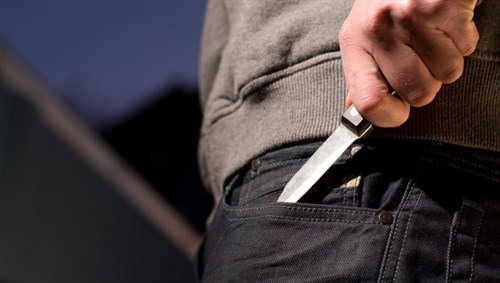
Knife blankets call as school staff face rising violence fears
GMB says protective equipment should be considered where risk assessments show staff could face blades SCHOOL staff should be given...


News2 days ago
Claire Archibald secures review of Milford Haven train times
RURAL TRANSPORT CONCERNS RAISED WITH TFW CLAIRE ARCHIBALD MS has secured a review of train times between Milford Haven and...


Crime2 days ago
PCC review calls for stronger youth crime prevention work
REPORT MAKES 13 RECOMMENDATIONS A REVIEW into crime and anti-social behaviour services for young adults has called for stronger prevention...
-

 Crime6 days ago
Paddleboard company owner loses bid to cut sentence over Haverfordwest tragedy
-

 Crime5 days ago
Milford Haven man admits harassment and assault
-

 News5 days ago
Community appeal for privacy after serious emergency in Pendine
-

 Crime3 days ago
Sex offender in senior role at Tenby family hotel
-

 Community3 days ago
Forgotten wartime archive found in Pembroke Dock attic after 80 years
-
Crime2 days ago
Families condemn failed appeal by paddleboard boss jailed over Haverfordwest tragedy
-

 Crime2 days ago
Haverfordwest pair accused of £80,000 rogue trading frauds
-

 Business5 days ago
Call for gym and Padel courts at Kiln Park Farm unanimously backed