


Revealing the cells behind the biological clocks of intertidal animals

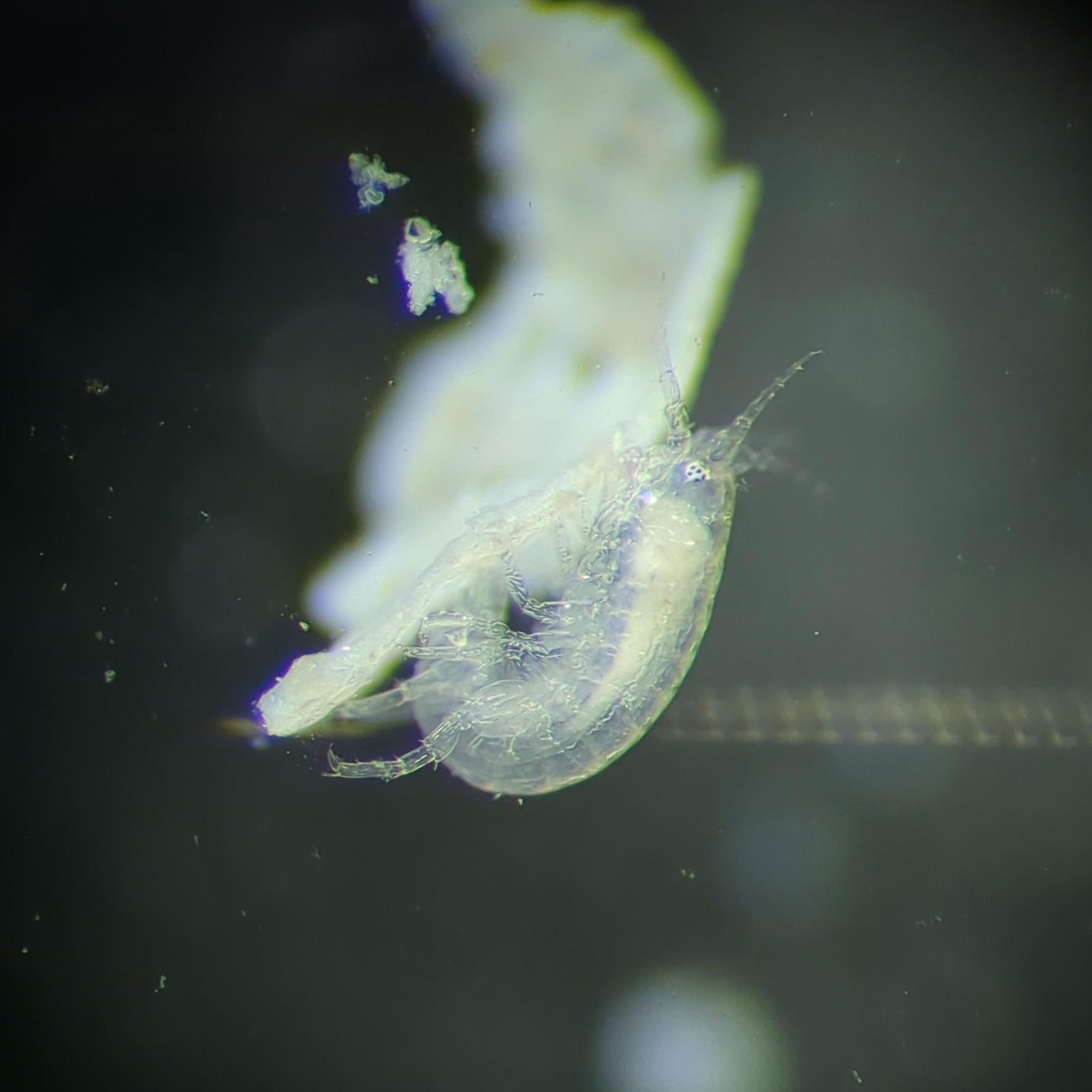
SCIENTISTS in Wales have identified the cells behind the bioclocks keeping time with tides in tiny marine organisms.
The biological clock of land animals is regulated by a circadian rhythm, with biological processes such as sleeping and waking, digestion and hormone release responding to the 24-hour cycle of light and darkness.
Intertidal organisms, on the other hand, regulate their biological processes to a 12.4 hour circatidal clock, which follows the ebb and flow of the tide, in addition to having 24 hour clocks. This allows them to survive in a temporally complex environment which is exposed at low tide and underwater at high tide.

In a paper published today (Thursday 8 May 2025) in Current Biology, researchers at the Medical Research Council Laboratory of Molecular Biology in Cambridge and Aberystwyth University reveal that they have identified the clock cells and genes they think are responsible for this tidal timekeeping.
The discovery marks a significant step forward in scientists’ understanding of how these natural biological clocks are orchestrated at the molecular and cellular level within the brains of intertidal organisms, and could provide insight to the evolution of biological clocks.

The researchers studied two species of crustaceans which inhabit the space between the high and low tide-lines -Eurydice pulchra, the speckled sea louse which is a marine relative of the woodlouse, and the amphipod Parhyale hawaiensis.
By manipulating the light regime that the animals were exposed to, and the maintenance or removal of tidal cues, the researchers were able to disentangle the cells responsible for the circadian and circatidal clocks in the organisms’ brains.
This allowed them to discover that the crustaceans have distinct circadian and circatidal cell groups, which adjust independently to light and to mechanical stimuli (tides).
Dr David Wilcockson, a marine biologist based at Aberystwyth University’s Department of Life Sciences, is a co-author of the paper. He said:

“For more than six decades marine biologists and chronobiologists have known about tidal clocks that regulate the life of coastal animals by studying rhythmic behaviours of numerous marine species. However, significant progress in understanding how these clocks work has been hampered because we have never found the cells that coordinate 12.4 hour behavioural rhythms.
“This discovery is significant because we can now tinker with the clockwork of these cells to better understand the mechanisms that have evolved to keep animals to tidal time. Many of these animals evolved many millions of years before land animals, making the clocks of marine species especially fascinating.”
Chee Ying Sia, a PhD student and joint first-author of the study from the Medical Research Council Laboratory of Molecular Biology in Cambridge, which led the research, said:

“It was exhilarating to identify, for the first time, a small cluster of cells capable of tracking the tidal time in the brains of intertidal crustaceans. These cells might just be the gateway to revealing the mechanisms of tidal timekeeping. The molecular rhythms that we see in these marine animals also hint at clock mechanisms that are different from what we have learned from circadian clocks of terrestrial model organisms.”
The research was funded by the UKRI Medical Research Council and Boehringer Ingelheim Fonds, and was led by Dr Michael Hastings (Cambridge).


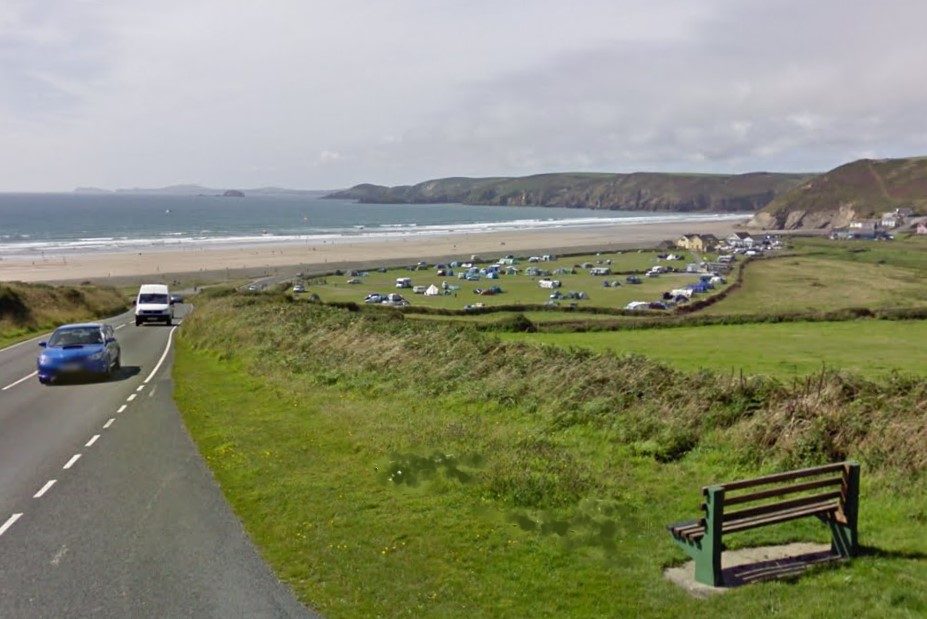
PLANS by a Vodafone phone company subsidiary to bring fibreoptic cables across the sea from Ireland to a Pembrokeshire seaside beach village in order to improve broadband coverage have been lodged.
In an application to Pembrokeshire Coast National Park, Apollo Submarine Cable Systems limited, through agent APEM Group, seeks permission for the construction of four underground telecom chambers and interconnecting ducts, along with Horizontal Directional Drilling (HDD) underneath Brandy Brook, Newgale, and the construction of one HDD bore-to-sea outfall.
A supporting statement accompanying the application says the scheme would form the onshore part of a project to bring a fibreoptic cable onshore from Kilmore Quay, Wexford, Ireland to a site at Newsurf Shop car park, Sands Café Car Park and Duke of Edinburgh Inn, Newgale.
It says the majority of the project is subterranean, with very minor above ground works are proposed, which comprise the installation of a manhole cover.
It adds: “To facilitate improved internet connectivity, the applicant is proposing the installation of a fibreoptic telecoms cable (the Beaufort cable) from Kilmore Quay, Wexford, Ireland to Newgale.
“The project is to facilitate the installation of the Beaufort cable, as it comes ashore in Wales and to link it into the wider network, which will be operated by Vodafone’s wholly-owned subsidiary Apollo Cable System Limited in the UK.”
It says the project would see three underground telecom chambers and a 120-metre interconnecting duct, the 87-metre HDD underneath Brandy Brook, launching from the receiver pit located within the Site, along with the construction of one HDD bore-to-sea outfall, in a subtidal area of Newgale bay, of approximately 920 metres, and one underground telecom chamber and interconnecting duct.
Citing a report on digital connectivity, it says 5G geographic coverage has seen improvements but is still relatively low at 57 per cent of Wales’ landmass, with 4G the primary service.
That report says there is a difference in full fibre coverage between urban and rural areas (83 per cent versus 59 per cent) and highlighting a need for further coverage.
On the scheme itself, the statement says short-term noise and disruption to local residents “is anticipated during the construction phase however this will be limited to 57 days,” adding: “The proposed drilling operations are not to be continuous and will be limited to approximately 20 minutes in each hour,” the works in total expected to last 91 days after which land will return to its former use without restrictions.
It goes on to say: “The HDD is specifically designed to mitigate the risk of any shoreward movement of the shingle bank and beach level changes. The use of HDD reduces the likelihood of potential environmental impact on the landscape and seascape.
“The project is not anticipated to interact with Brandy Brook. All drilling works will take place within excavated launch pits and all construction works will be confined to the hardstanding of the car park.”

The application will be considered by Park planners at a later date.

RHUN AP IORWERTH faced questions on safeguarding in Welsh schools, taxation and overseas spending during today’s First Minister’s Questions.
Facing colleagues in the Siambr, the Plaid Cymru leader defended the work of his Welsh Government.
The First Minister clashed once again with opposition leader Dan Thomas over the Welsh Government’s international relations budget.
During plenary on June 2, Mr ap Iorwerth referred to the £9m budget for international relations as “small change”.
Speaking in the Siambr today, Mr Thomas said: “It’s a sum that most people wouldn’t classify as small change and it’s money that Reform believes should be spent on employing newly-qualified nurses at a time when the NHS is on its knees.
“If £9 million to you is small change, surely you can find some small change at the back of the Welsh Government sofa and you can say to the student nurses that you will be able to guarantee them jobs when they graduate.”

The First Minister said his health minister had “already begun” work to ensure students could build careers in the NHS.
He added: “In terms of scales of spending on our overseas office it’s not that much more, is it, than the leader of your party [Nigel Farage] took to secure his own security, or was it to buy a house?”
The First Minister also faced questions on safeguarding arrangements in Welsh schools from Reform MS Andrew Griffin.
Mr Griffin highlighted the case of former headteacher Neil Foden, who was convicted in 2024 of sexually abusing four girls over a four-year period.
A Child Practice Review published in November 2025 found more than 50 opportunities to stop Foden had been missed.
Mr Griffin said: “While the criminal proceedings have been concluded, many questions remain about the actions, decisions and oversight of the Plaid Cymru-controlled Gwynedd Council. Public confidence can only be restored through full transparency and accountability.”

He called on the First Minister to support an independent review of Cyngor Gwynedd’s handling of the case.
Mr ap Iorwerth responded: “Everyone was appalled, of course, by the actions of Neil Foden, for which he is now being punished. And we remember the bravery of all those who came forward and spoke and assured that conviction.
“We have to now act on what came out of the child practice review. I was minded to pursue the avenue of a further inquiry, but we have to be guided by the views of the independent chair of that report, who advised that a further inquiry just would not add value in this space.
“What we need to do is to continue to fight for justice for these young people, and future young people, through the actions that we take in fostering a strong safeguarding culture, embedding accountability at every level, and now ensuring children’s voices shape decision making in future.”
Plaid Cymru’s Beca Brown asked what action the government would take to ensure lessons from the “Our Bravery Brought Justice” and “Clywch” reports were fully learned.
The First Minister said the government was “taking every possible step” to reduce the risk of similar cases happening again, including building a culture in which children and staff feel able to speak up.
Welsh Labour’s education and children’s spokesperson, Lynne Neagle, noted that the previous Labour administration had accepted every recommendation of the Child Practice Review and pressed the First Minister on whether his government would do the same.

Mr ap Iorwerth said: “We want to continue with and build on the work that had previously been done. Because we remind ourselves of the title of that report: ‘Our bravery brought justice’.
“Only part of the justice has been brought so far – the justice in ensuring that the perpetrator was found guilty and was imprisoned. The real justice is in making sure that we have the measures in place to stop this happening again.”
Welsh Conservative MS Sam Rowlands also asked whether the government would support a ban on smartphones in Welsh schools.
The First Minister said the government was “determined” to protect children and their education from the impact of mobile phones in schools.
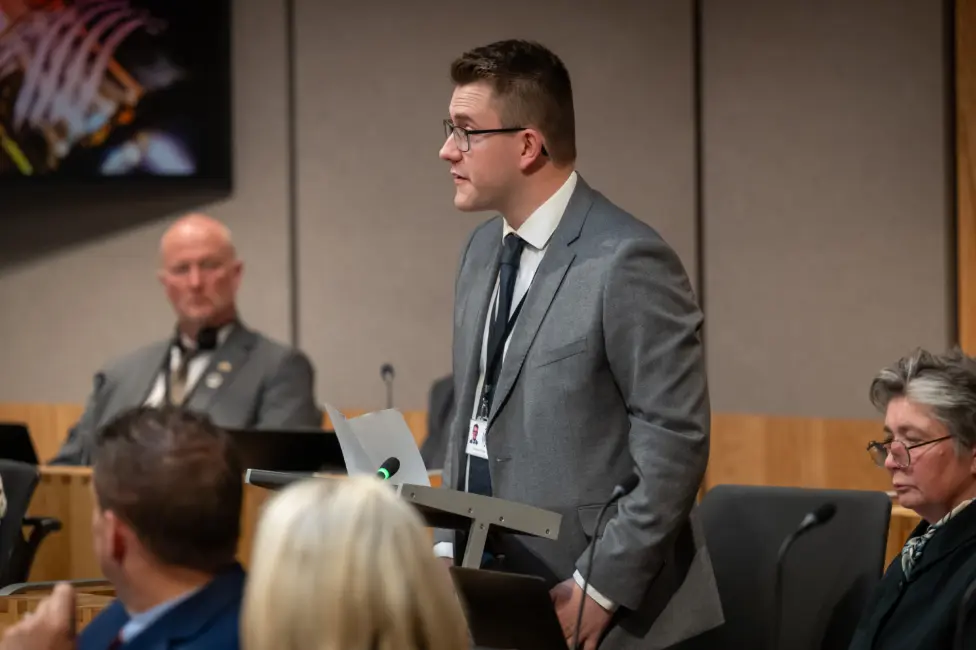
Reform MS Benjamin Mckenna asked what action the Welsh Government would take to minimise the tax burden in Wales.
He asked the First Minister to rule out introducing or increasing taxes during the current Senedd term.
Mr Mckenna said: “The First Minister has said previously that his government will not raise income tax.
“Previous governments in Wales have made similar commitments, but we still have seen taxes risen through new mechanisms, such as the tourism levy.
“Can the First Minister today confirm that his government will not be raising any taxes, new or existing, in Wales during this term?”
Mr ap Iorwerth reiterated there would be “no change to rates of income tax”.
He said: “We don’t have the tools to set a taxation system that works for Wales. I’ll say this: I want to bring in further taxation in Wales through a thriving economy and through businesses that flourish.
“But let me make it clear: taxation is a fundamental part of our democratic and governmental structures. What we should seek always, be that for individuals or for businesses, is fair taxation.”
Welsh Conservative finance spokesperson Peter Fox urged the government to review land transaction tax for first-time buyers and business rates. The First Minister said both would be reviewed.

Reform MS John Clark called for the tourism levy to be scrapped, describing it as “one of the biggest worries for businesses in [his] constituency”.
The First Minister defended the policy, saying: “We live in a beautiful country. We have facilities that lend themselves to tourism. I want to use the tourism levy in a way that improves the tourism offer.”
He added the levy could also help communities manage the impact of tourism while supporting the industry.
Welsh Liberal Democrat leader Jane Dodds described calls for tax cuts as “absolutely astonishing” and “completely reckless” at a time when public services are under pressure.

She said: “Let us also not forget that many of those calling for tax cuts were also among the strongest advocates of Brexit.
“Wales continues to pay the price of that decision, and recent analysis suggests that Brexit is costing the Treasury £90 billion every year, and Wales £3 billion every year, losing that revenue.
“So, would you agree with me, Prif Weinidog, that we need well-funded public services and that tax cuts should not be happening?”
The First Minister responded: “I certainly agree with the member about the damage of Reform policies, and Brexit is one of those, and remember that reducing income tax by 1p would have cost £299 million. Now, that would be to the detriment of public services in Wales and the people we are here to serve.
“I again reiterate that my belief is in a fair taxation system that’s also a realistic taxation system, that recognises the need to have not just well-funded, but well-run, public services. And this government is all about making sure that our public services are well run and that that is done within our means too.”


A HAKIN motorist has been banned from driving for three years after being caught behind the wheel with cocaine and benzoylecgonine in his system.
Mark Briskham, 53, of Waterloo Square, Wellington Road, Hakin, was stopped by police on January 5 as he drove a Ford Kuga along Steynton Road, near Milford Haven.
Blood tests carried out at the police station showed he had 800mcg of benzoylecgonine in his system. The legal limit is 50mcg.
He also had 64mcg of cocaine in his system. The legal limit is 10mcg.
Briskham pleaded guilty to two drug-driving charges when he appeared before Haverfordwest Magistrates’ Court this week.
Magistrates disqualified him from driving for three years, taking into account a previous drug-drive conviction from 2020.
He was also fined £120 and ordered to pay £85 costs and a £48 surcharge.cr



News16 hours ago
First Minister challenged over jobs for student nurses
REFORM WALES has accused the First Minister of failing to guarantee jobs for student nurses in Wales, despite continuing pressure...

Crime19 hours ago
Knife blankets call as school staff face rising violence fears
GMB says protective equipment should be considered where risk assessments show staff could face blades SCHOOL staff should be given...


News19 hours ago
Claire Archibald secures review of Milford Haven train times
RURAL TRANSPORT CONCERNS RAISED WITH TFW CLAIRE ARCHIBALD MS has secured a review of train times between Milford Haven and...


Crime19 hours ago
PCC review calls for stronger youth crime prevention work
REPORT MAKES 13 RECOMMENDATIONS A REVIEW into crime and anti-social behaviour services for young adults has called for stronger prevention...


Crime22 hours ago
Families condemn failed appeal by paddleboard boss jailed over Haverfordwest tragedy
RELATIVES SAY LATEST COURT BID HAS REOPENED PAIN AFTER FOUR DEATHS ON WESTERN CLEDDAU THE FAMILIES of victims of the...


Community2 days ago
Forgotten wartime archive found in Pembroke Dock attic after 80 years
Remarkable family collection reveals story of father and son who served through two world wars A REMARKABLE untouched family archive...


Crime2 days ago
Milford Haven woman left with facial fractures after drunken attack
A WOMAN in her late fifties suffered facial fractures after being repeatedly punched through the window of her car during...


Crime2 days ago
Sex offender in senior role at Tenby family hotel
CREST HOTEL GROUP says it is investigating safeguarding concerns after staff at the Imperial Hotel in Tenby raised alarm over...


Sport2 days ago
Runners tackle new route in Ras Y Castell 10k
MORE than 90 runners took to the streets and paths around Cardigan on Friday evening (June 5) for the annual...

Business3 days ago
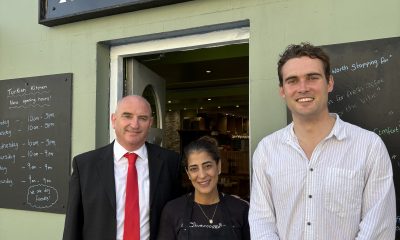
Turkish Kitchen reaches Welsh restaurant award semi-finals
Haverfordwest café praised as small independent business flies flag for Pembrokeshire A HAVERFORDWEST café has been named as a semi-finalist...
-
Crime5 days ago
Paddleboard company owner loses bid to cut sentence over Haverfordwest tragedy
-

 Crime4 days ago
Milford Haven man admits harassment and assault
-

 Crime7 days ago
Milford Haven man bit neighbour’s neck near cashpoint
-

 News3 days ago
Community appeal for privacy after serious emergency in Pendine
-

 Crime7 days ago
Pembroke Dock driver avoided jail after drug-drive crash
-

 Crime7 days ago
Dinas Cross man jailed over shop thefts
-
Crime2 days ago
Sex offender in senior role at Tenby family hotel
-
Community2 days ago
Forgotten wartime archive found in Pembroke Dock attic after 80 years